

 Freedom Index
Listen to the article
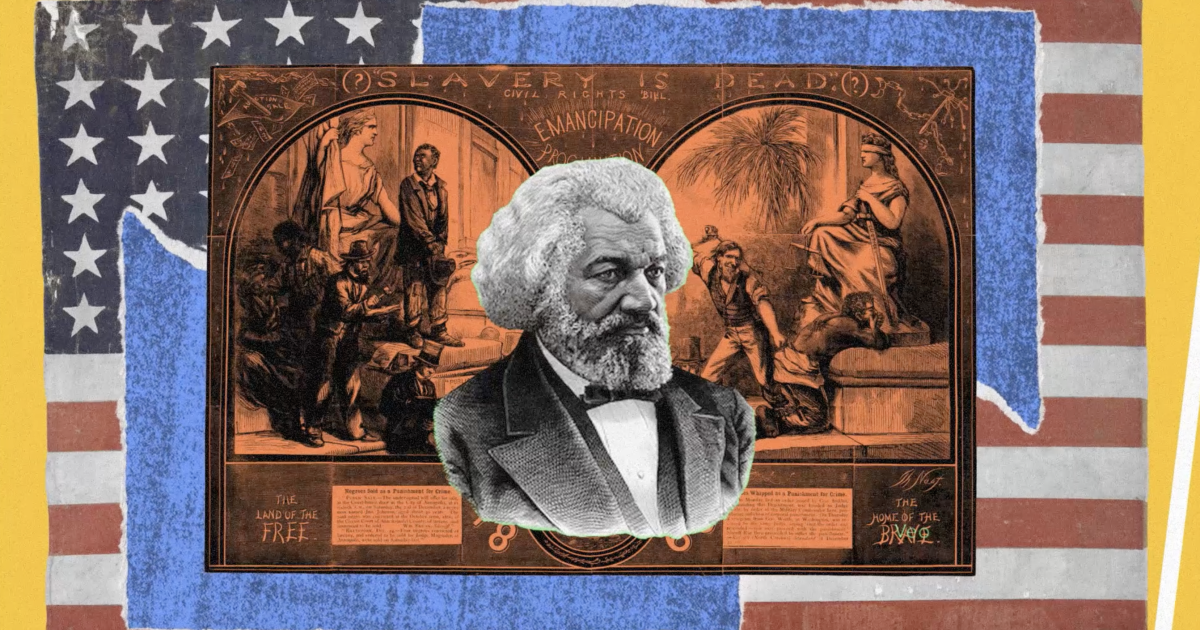
This year, the United States celebrates its 250th anniversary. To commemorate the occasion, FIRE is proud to present the limited series “Figures of Speech,” looking at the heroes and villains of free speech in American history. We began with Joseph McCarthy, the senator who scared America silent. Then we looked at Thomas Paine, American history’s winter soldier, and Woodrow Wilson, our worst president for free speech. Today we turn to Frederick Douglass, whose legacy represents the very best of what it means to be American.
In 1860, Frederick Douglass watched a violent pro-slavery mob storm the stage at the Tremont Temple Baptist Church in Boston before he could even begin speaking. Abraham Lincoln had just been elected to the presidency the month before on the promise to halt slavery’s expansion westward. In response, rumors spread from below the Mason-Dixon that South Carolina was convening to discuss secession. Other states were making similar calls to delegates. War was looming. The nation was a powder keg.
On top of this, the meeting — titled “How Can Slavery Be Abolished?” — was held on the anniversary of the execution of John Brown, one of the most divisive figures in America. Brown was a martyr to abolitionists, but a dangerous fanatic to conservatives who feared abolitionism would bring about civil war. The meeting almost immediately exploded into violence as the mob shouted, punched, and smashed chairs for three hours. Douglass actually fought his way to the rostrum “like a trained pugilist” before police cleared the area.
Douglass never expected to see such a display in a building that loomed so large over Boston life. With a parish of nearly 2,000 souls in the latter half of the 19th century, Tremont Temple was one of the most consequential buildings in the growing city. It was both a spiritual sanctuary and a lively debate hall. An epicenter of civic life and anti-slavery advocacy. Daniel Webster, Ralph Waldo Emerson, Harriet Beecher Stowe, and Lincoln himself had all spoken from the very same stage.
There was no reason to think the discussion that December night would boil over in the way that it did. But political tensions were higher than anyone realized at the time.
Such acts of censorship were commonplace in the early American republic. Since 1776, the question of what to do with American slavery had reached a frustrating stalemate. The escalating conflict between abolitionists and pro-slavery factions often resulted in the suppression of free speech and the press. Southern states went as far as to impose the death penalty for the circulation of pamphlets advocating for abolition or emancipation. In Congress, a gag rule was passed in 1836 prohibiting the discussion of slavery. Outside of legislative halls, pro-slavery mobs destroyed public property, burned newspaper offices to the ground, and killed abolitionists on both sides of the Mississippi.
This was the world that Douglass escaped to in 1838 after a lifetime in slavery. He was 21 years old when he fled Maryland’s eastern shore, boarding a northbound train to Baltimore. Disguised as a free black sailor, Douglass settled in New Bedford, Massachusetts, by way of New York, Philadelphia, and Wilmington. Learning from his mentor William Lloyd Garrison, Douglass became the face of the abolition movement.
To Douglass, free speech wasn’t a side issue. It was a weapon essential to the cause. “To utter one groan, or scream, for freedom in the presence of the Southern advocate,” Douglass said in a 1854 speech, “is to bring down the frightful lash upon their quivering flesh … The right of speech is a very precious one, especially to the oppressed.” Douglass knew that free speech is essential not for those in power, but for those who are not. If the enslaved could not speak for themselves, he would speak for them. And he did so for decades as the sectional tensions continued to rise.
Undeterred by the violent mob, Douglass found a new stage in Boston to deliver his remarks six days later. Returning to the city after being almost murdered. The recently built Boston Music Hall held over 2,500 people, even larger than Tremont Temple. This time, his planned remarks went off without a hitch. But before adjourning, Douglass extemporaneously addressed the mob’s successful efforts to shout down the Tremont event. The result is the most powerful defense of free speech in American history:
No right was deemed by the fathers of the Government more sacred than the right of speech. It was in their eyes, as in the eyes of all thoughtful men, the great moral renovator of society and government. Daniel Webster called it a homebred right, a fireside privilege. Liberty is meaningless where the right to utter one’s thoughts and opinions has ceased to exist. That, of all rights, is the dread of tyrants. It is the right which they first of all strike down. They know its power. Thrones, dominions, principalities, and powers, founded in injustice and wrong, are sure to tremble, if men are allowed to reason of righteousness, temperance, and of a judgment to come in their presence. Slavery cannot tolerate free speech. Five years of its exercise would banish the auction block and break every chain in the South. They will have none of it there, for they have the power. But shall it be so here?
Douglass’ “Plea for Freedom of Speech in Boston” is the rarest type of political oratory. It is a speech that is somehow both timeless and of a particular time. Drawing on the lessons of history, Douglass knew America’s free speech tradition was exceptional. The Old World had shown that “thrones, dominions, principalities, and powers” are sure to tremble at the thought of its subjects speaking their minds. Here in the New World, however, the Founders largely embraced dissent and dialogue. They knew that a republic would die without free speech and a free press. Not only that, there were no subjects here. Just citizens. In embracing the eternally radical idea that, as Jefferson said, “Almighty God hath created the mind free,” America stepped out of history and onto a new path.
Ida B. Wells: Journalist, activist, civil rights icon, and free speech hero
In 1892, a mob destroyed a Memphis newspaper after it published an anti lynching editorial. Through death threats and violence, they tried to erase journalist Ida B. Wells’s message. Instead, they made her fight impossible to ignore.
Read More
With every reason to hate the promise of America in light of its hypocrisy on the question of freedom, Douglass still believed that the Constitution was “a glorious liberty document” and that debate and dissent would help drag the country kicking and screaming towards the promise of the Declaration of Independence. He believed, above all, in the power of words to change human destiny. This was the same man who, as a child in Baltimore, used to carry pieces of bread in his pockets so that whenever he met poor white children in the street, he could trade them for reading lessons. Emancipating himself, Douglass kept his country, the New World, from retreating to the dogmas of the Old. He did so by exercising those sacred rights and never taking them for granted.
In our 250th year of independence, we often fail to follow Douglass’ example. We take for granted the beauty and power of free speech and press, these “homebred rights” and “fireside privileges.” Being born without them, Douglass knew how precious they were. He knew their power. He knew how they shaped the ongoing American story, and wielded them to make a more perfect union until his death in 1895. It is an example we can all look up to and emulate. Few figures in the American story loom as large as Frederick Douglass, and none exemplify the importance of free speech better.
Read the full article here
Fact Checker
Verify the accuracy of this article using AI-powered analysis and real-time sources.