

 Freedom Index
Listen to the article
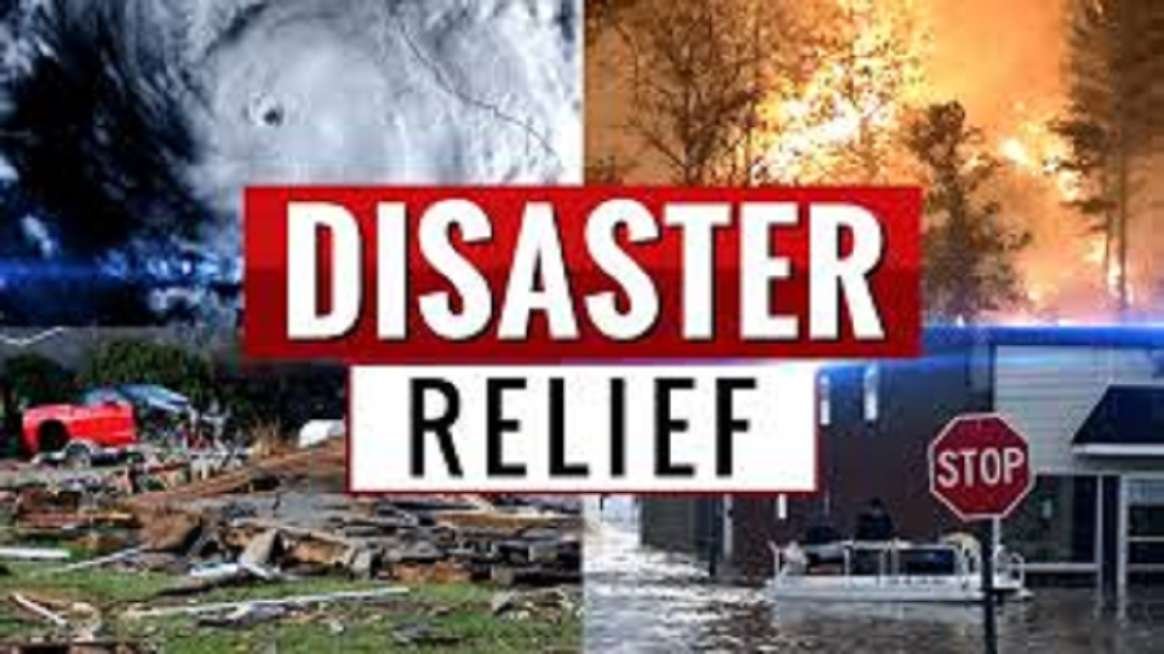
Earlier today, in Illinois v. FEMA a federal district court ruled the Trump administration cannot deny federal disaster relief aid to “sanctuary” states that limit assistance to federal efforts to deport undocumented immigrants. The suit was brought by twenty state governments, led by the state of Illinois, and by the District of Columbia. This is the latest in a long line of decisions striking down Trump Administration efforts to impose immigration-related conditions on federal grants to state governments, even though those conditions were never authorized by Congress.
Federal District Judge William E. Smith (a Republican George W. Bush appointee) ruled the Trump conditions violated the Spending Clause of the Constitution in three ways: the conditions are ambiguous, they aren’t related to the purposes of the grants in question, and they are onerous enough to be coercive:
First, the Court finds that the contested conditions are not reasonably related to the purposes of the grants to which they attach. DHS justifies the conditions by pointing to its broad homeland security mission, but the grants at issue fund programs such as disaster relief, fire safety, dam safety, and emergency preparedness. Sweeping immigration-related conditions imposed on every DHS-administered grant, regardless of statutory purpose, lack the necessary tailoring. The Spending Clause requires that conditions be “reasonably calculated” to advance the purposes for which funds are expended, [South Dakota v.] Dole, 483 U.S. at 209, and DHS has failed to demonstrate any such connection outside of a few programs like Operation Stonegarden. The Court therefore concludes that the conditions are overbroad and unrelated to the underlying programs.
Second, the Court finds that the conditions are coercive. The record shows that states rely on these grants for billions of dollars annually in disaster relief and public safety funds that cannot be replaced by state revenues. Denying such funding if states refuse to comply with vague immigration requirements leaves them with no meaningful choice, particularly where state budgets are already committed. The financial pressure here goes well beyond the “relatively mild encouragement” approved in Dole, 483 U.S. at 211, and amounts instead to “economic dragooning” of the sort condemned in NFIB [v. Sebelius], 567 U.S. at 582. The coercion is even more pronounced because the threatened funds involve essential public safety responsibilities rather than optional or peripheral programs.
Third, the Court holds that the conditions are unlawfully ambiguous. The Spending Clause requires clarity so that states may exercise their choice knowingly. Here, DHS required states to provide “cooperation” and participate in “joint operations” and
“information sharing,” but without defining what compliance entails. Likewise, the prohibition on operating programs that “benefit illegal immigrants” or “incentivize illegal immigration” provides no meaningful standards and is hopelessly vague. States cannot predict how DHS will interpret these vague terms, yet they risk losing billions in federal funding for any perceived violation. Such ambiguity deprives the states of the ability to make informed decisions, rendering the conditions constitutionally
invalid.
During Trump’s first term, his administration lost numerous lawsuits over issues like this one. Last November, I predicted we would see a repetition of this pattern in his second term. It wasn’t a hard prediction, and I don’t claim any great credit for it. Sure enough, Trump 2.0 has indeed lost multiple cases over its attempts to impose grant conditions on sanctuary jurisdictions. Today’s ruling follows a similar April decision addressing a variety of federal grants, and one in June dealing with transportation grants.
In the November 2024 post, I noted longstanding Supreme Court precedent holds that conditions on federal grants must 1) be enacted and clearly indicated by Congress (the executive cannot make up its own grant conditions), 2) be related to the purposes of the grant in question (here, transportation grants cannot be conditioned on immigration enforcement), and 3) not be “coercive.”
In the disaster aid case, the court seems obviously right to conclude the Trump conditions violated the first and second of these requirements. I would add that, in addition to being ambiguous, the conditions also were never authorized by Congress. And, Congress, not the executive controls the spending power.
Whether the disaster aid conditions are also “coercive” is more debatable. The Supreme Court’s jurisprudence on coercive grants is far from a model of clarity. NFIB v. Sebelius (2012), cited in today’s ruling famously held that a condition onerous enough to be a “gun to the head” is coercive, but doesn’t clearly explain exactly where the line between coercion and mere inducement is. I suspect that states actually vary as to the extent of their dependence on federal disaster aid, and therefore the conditions here may be coercive as to some states, but perhaps not others. Regardless, they were rightly invalidated on the other two grounds.
Today’s ruling also holds that the disaster aid conditions violated the Administrative Procedure Act. I will leave that issue to others with greater expertise. I will also pass by the procedural mootness issue addressed by the court.
There is, I think, a good policy argument for reducing federal disaster aid to state governments, and leaving most disaster relief to state, local, and private initiative. But that doesn’t mean the executive should be able to use disaster relief as leverage to control state policy on unrelated issues. More generally, as I have long argued, executive-imposed spending conditions are a major threat to both federalism and separation of powers. Today’s ruling, and others like it, help stave off that danger.
They also reinforce Steve Vladeck’s point that the judiciary is resisting Trump’s power grabs more effectively than many think. The second Trump Administration, like the first, keeps losing sanctuary city cases, and so far they have not tried to get them to the Supreme Court (probably because they know they are like to lose there, too). Because the issue has not reached the Supreme Court, and because there is so much else going in the news cycle, these cases have not attracted much public and media attention. But they nonetheless have substantial real-world effects. Had they gone the other way, Trump would have many more levers to compel state and local governments to do his bidding. That doesn’t mean courts are doing everything right (they aren’t), or that they can curb Trump’s illegal policies entirely on their own (the latter requires a strategy combining litigation and political action). But they are making a real difference.
For more on the issues at stake in these sorts of conditional spending cases, see my Texas Law Review article assessing litigation arising from Trump’s first-term attacks on sanctuary jurisdictions. In that article and other writings, I also explain why immigration sanctuaries (and conservative gun sanctuaries) are beneficial, and help protect our constitutional system.
Read the full article here
Fact Checker
Verify the accuracy of this article using AI-powered analysis and real-time sources.