Close Menu
FSNN | Free Speech News NetworkFSNN | Free Speech News Network
  • Home
  • News
    • Politics
    • Legal & Courts
    • Tech & Big Tech
    • Campus & Education
    • Media & Culture
    • Global Free Speech
  • Opinions
    • Debates
  • Video/Live
  • Community
  • Freedom Index
  • About
    • Mission
    • Contact
    • Support
Trending

Tether’s $344 million USDT freeze linked to U.S. ‘Economic Fury’ against Iran regime

2 minutes ago

Quantum computer breaks 15-bit elliptic curve cryptographic key

3 minutes ago

South Korea Arrests Man for a Fake AI Wolf Photo That Raised Alarms

5 minutes ago
Facebook X (Twitter) Instagram
Facebook X (Twitter) Discord Telegram
FSNN | Free Speech News NetworkFSNN | Free Speech News Network
Market Data Newsletter
Friday, April 24
  • Home
  • News
    • Politics
    • Legal & Courts
    • Tech & Big Tech
    • Campus & Education
    • Media & Culture
    • Global Free Speech
  • Opinions
    • Debates
  • Video/Live
  • Community
  • Freedom Index
  • About
    • Mission
    • Contact
    • Support
FSNN | Free Speech News NetworkFSNN | Free Speech News Network
Home»News»Global Free Speech»Exiled investigative journalist surveilled, doxxed by Belarusian state TV 
Global Free Speech

Exiled investigative journalist surveilled, doxxed by Belarusian state TV 

News RoomBy News Room2 hours agoNo Comments4 Mins Read1,468 Views
Share Facebook Twitter Pinterest Copy Link LinkedIn Tumblr Email VKontakte Telegram
Exiled investigative journalist surveilled, doxxed by Belarusian state TV 
Share
Facebook Twitter Pinterest Email Copy Link

Listen to the article

0:00
0:00

Key Takeaways

Playback Speed

Select a Voice

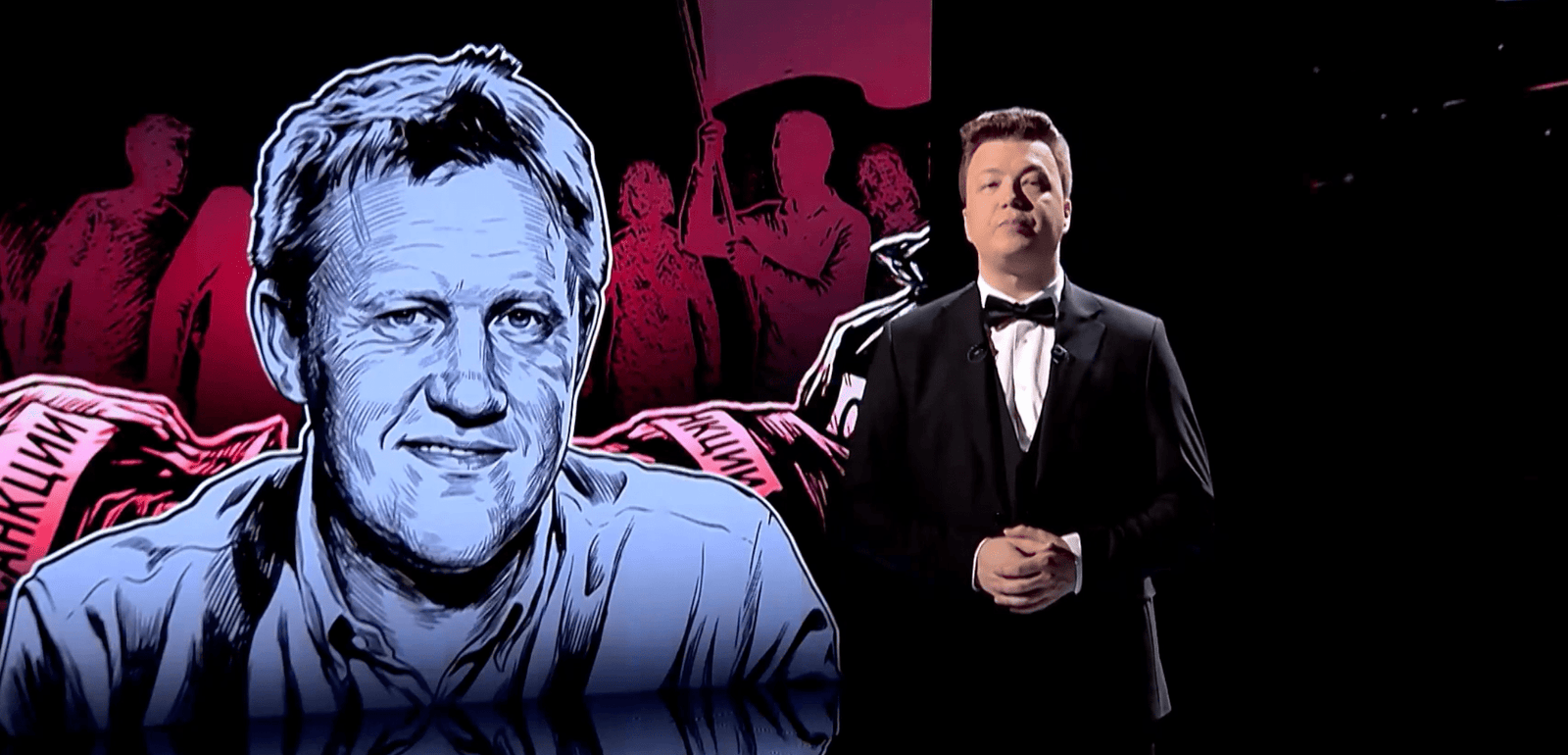
New York, April 24, 2026—CPJ is alarmed that the Belarusian state-owned TV channel STV broadcast the address and phone number of exiled investigative journalist Stanislau Ivashkevich, and shared personal information about 20 other journalists. We call on Polish authorities to thoroughly investigate allegations that Ivashkevich has been surveilled by Belarusian security services, and on Belarus to stop endangering exiled journalists immediately. 

In the April 2 broadcast, reviewed by CPJ, STV host Raman Pratasevich claimed that Ivashkevich’s work as the director of Belarus’ leading investigative media outlet, Belarusian Investigative Center (BIC), has “led to entire sectors of the Belarusian economy being added to the sanctions lists,” referring to EU and other countries’ sanctions. Pratasevich disclosed Ivashkevich’s alleged phone number and address, a practice known as doxxing, released private video recordings of both him and his son, and shared video instructions on how to access the apartment where, according to Pratasevich, Ivashkevich is currently residing in Warsaw. Pratasevich also showed surveillance footage taken in 2022 of what he said was the entrance of the former BIC office in Warsaw. 

Pratasevich said that 17 Belarusian (including Ivashkevich), one Ukrainian, and three Russian journalists tied to BIC were facing criminal cases for “calling for sanctions aimed at harming national security” and for “participating in an extremist group.” While the fact that several of these journalists were facing criminal cases in absentia had already been made public in 2024, it is not clear whether Pratasevich’s claims related to new charges. 

“It is deeply shocking to see doxxing of exiled journalists broadcast on state television in Belarus, along with general threats and intimidation,” said Fiona O’Brien, CPJ’s regional director for Europe and Central Asia. “That Raman Pratasevich — himself once a victim of Belarusian transnational repression — should now be amplifying government efforts to intimidate independent media abroad is extremely chilling, and his actions directly put individual journalists at risk. We call on host governments including Poland to ensure robust protections are put in place for those targeted, and on Belarus to immediately cease its pursuit of journalists.”

Ivashkevich told CPJ in mid-April that he was planning to file a report with the Polish police and the prosecutor’s office about his alleged surveillance. 

In addition to Ivashkevich, Pratasevich listed 12 exiled journalists who he said are working with BIC, and shared their dates of birth and of departure from Belarus: Hanna Shabeta, Siarhei Chaly, Alena Charniauskaja, Mikalai Davidchyk, Alina Janchur, Aliaksei Hulitski, Lola Buryjeva, Sviatlana Yatskova, Yana Mitskievich, Ihar Kulei, Usevalad Shlykаu, and Krystsina Charniauskaya. At least one of them — Mitskievich — is a pseudonym used by a BIC journalist.

Pratasevich also listed four exiled journalists who allegedly left BIC in 2023 to create the investigative media outlet Buro Media — Aliaksandr Yarashevich, Volha Ratmitrava, Kseniya Viaznіkoutsava, and Aliaksei Karpeka — as well as three Russian journalists and Ukrainian journalist Maksym Savchuk as working for BIC.  

Both BIC and Buro Media are labeled as “extremist” in Belarus. 

Pratasevich — whose detention in May 2021 following the diversion by Belarus of a Lithuania-bound commercial flight to the capital, Minsk, caused a global outcry — was the chief editor of two popular Telegram channels that covered protests against the contested August 2020 reelection of Belarusian President Aleksandr Lukashenko. 

In May 2023, a court in Minsk sentenced him to eight years in jail on charges ranging from “organizing mass protests” to “leading an extremist group.” He was pardoned by Lukashenko less than three weeks later. In October 2025, Lukashenko said Pratasevich had been working as an employee of Belarus’ intelligence service, which Pratasevich confirmed. In December 2025, he started working for STV. 

Belarus has been harassing journalists in exile with criminal cases in absentia, opaque investigations, intimidation of their families, and property seizure. According to CPJ research, as of April 24, authorities had opened criminal cases against more than 80 exiled Belarusian journalists and at least 23 journalists were behind bars in the country.

CPJ emailed the Belarusian Investigative Committee, the law enforcement agency in charge of pretrial proceedings, and STV for comment but did not receive a reply. CPJ could not find contact information for Pratasevich. Poland’s National Police force told CPJ it was not yet aware of a criminal complaint being filed. Poland’s general prosecutor’s office told CPJ that its inquiry “[had] been forwarded to the national prosecutor’s office, which has jurisdiction over the matter, for appropriate action.”

Read the full article here

Fact Checker

Verify the accuracy of this article using AI-powered analysis and real-time sources.

Get Your Fact Check Report

Enter your email to receive detailed fact-checking analysis

5 free reports remaining

Continue with Full Access

You've used your 5 free reports. Sign up for unlimited access!

Already have an account? Sign in here

Share. Facebook Twitter Pinterest LinkedIn Tumblr Email Telegram Copy Link
News Room
  • Website
  • Facebook
  • X (Twitter)
  • Instagram
  • LinkedIn

The FSNN News Room is the voice of our in-house journalists, editors, and researchers. We deliver timely, unbiased reporting at the crossroads of finance, cryptocurrency, and global politics, providing clear, fact-driven analysis free from agendas.

Related Articles

Global Free Speech

Ugandan journalists face up to 20 years in jail under draconian foreign agents bill

6 hours ago
Global Free Speech

A soldier stands guard by a charred vehicle after it was set on fire, in Cointzio, Mexico, Feb. 22, 2026, following the death of the leader of the Jalisco New Generation Cartel, Nemesio Oseguera, known as “El Mencho.” Photo by: AP Photo/Armando Solis, File When I heard the horrifying news of tourists being shot at the Teotihuacán pyramids in Mexico (one Canadian woman was killed), I was struck by a detail – the number of people who wished to remain anonymous when interviewed by the media. I probably shouldn’t have been surprised. For years Mexico was the deadliest place to be a journalist – the media caught between murderous cartels and corrupt officials. The country no longer occupies the number one spot (that goes to Gaza where 53 press members were killed in 2025), but it’s still an incredibly dangerous place to be a reporter. Between October 2024 and October 2025 10 journalists were killed. All of which impacts people’s willingness to go on the record. The journalists’ killings are part of a wider context of extreme violence in Mexico, laid bare two months ago when masked gunmen from the Jalisco New Generation Cartel went on a rampage to avenge the killing of their leader “El Mencho” by security forces. Yes, the Teotihuacán pyramids’ attack seems to have been carried out by a lone assailant with no apparent links to cartels. But violence begets violence – the backdrop counts. The current Mexican president, Claudia Sheinbaum, has condemned the attack on tourists and called for a thorough investigation. Will that happen in a meaningful way? The jury is out. Sheinbaum is not her predecessor when it comes to freedom of expression (Andrés Manuel López Obrador was actually crowned our Tyrant of the Year in 2022 due to his hostility to the media; Sheinbaum is slightly better here). Both leaders though have in different ways struggled to fully confront and discuss the country’s violence. Sheinbaum says the problem is getting better, citing declining murder rates. Others dispute this, pointing to things like the growing numbers of forced disappearances, which don’t count as murder. Obrador did the same. He proclaimed femicide figures had dropped under his leadership, except he narrowed the reporting period to the lowest point, ignoring the time when the numbers rose under him. Anyone who highlighted this was derided as an enemy of Mexico (as we reported in 2023). It’s easy to understand why both leaders would want to downplay the violence – it’s hardly a great look politically, nor does it position Mexico as a “top holiday destination”. And with Mexico hosting the World Cup in June, it’s an extra-sensitive moment. Sadly such tactics don’t stop the realities on the ground. The opposite in fact – they feed into the climate of impunity, where ordinary people are so intimidated they are reluctant to bear witness, even to random attacks, for fear of becoming victims of violence themselves. READ MORE

12 hours ago
Global Free Speech

CPJ calls for urgent international investigation into Israel’s killing of Lebanese journalist Amal Khalil

1 day ago
Global Free Speech

US-Kuwaiti journalist Ahmed Shihab-Eldin acquitted of all charges

1 day ago
Global Free Speech

The white string marks the place where Linn Htut, Sai’s father, NLD member and Chief Minister of Shan State, would have been had he not been detained Two months ago, Burmese artist Sai finally received the news he had been waiting for: his application for refugee status in the UK had been approved. He and his wife had been living in turmoil since the morning of 1 February 2021, when the Myanmar military staged a coup d’état against the country’s democratically elected government and established a military junta, arresting thousands of protesters and politicians – including Sai’s father – in the process. Having spent the last five years fleeing from persecution and attempting to attain justice for his father and his country, Sai, who was nominated for the Index on Censorship Freedom of Expression Award in the Arts category, spoke to Index about the astonishing journey that led him to this point. Sai came from humble beginnings, hailing from a remote town around 200 miles from the Chinese border. He admitted that his childhood home, which has since been destroyed by an airstrike, was an unlikely place for a future artist to grow up. “Throughout my childhood we didn’t really have too much electricity or a proper public library,” he told Index. “You can see the lightbulb and it just looked like a tomato, so we used to call lightbulbs tomatoes! “There was no art, there was not much of a culture.” Although Sai was an only child with two working parents, money was difficult to come by. The family struggled financially because of what Sai describes as “structural institutional violence by the state”. As a result, his parents were reluctant to see their son being drawn into the arts world. “They didn’t want me to be an artist,” he said. “When you’re broke, you don’t want your only child to have the least sustainable lifestyle! Whenever I tried to learn music or languages or drawing, my father would initially encourage me but would never support me for the long term.” Despite their objections, Sai was instantly hooked when at seven years old he got hold of his uncle’s instant camera. “I can remember when I looked through the viewfinder I felt a sense of liberation,” he said. “Of course, as a kid you don’t know what liberation is, but your heart feels really open.” His passion was put on hold as his family could not afford a camera growing up, but Sai reacquainted himself with photography in his early twenties while he was training to become a civic educator at the American Center in Myanmar. From there, his love for art grew. “I transitioned from photography enthusiast to deep into the rabbit hole,” he said. “I found myself experimenting with different forms and concepts, using different media, exploring discrimination and identity.” This artistic development was suddenly cut short by the military coup in February 2021. His father, Linn Htut was arrested. Htut was a prominent political figure. Soon after his graduation from dental school and after a foray into political comedy, Htut had become involved in the 1988 Myanmar uprisings, a predominately student movement which led to the emergence of Aung San Suu Kyi. He remained politically active in opposition and when Suu Kyi’s National League of Democracy party came to power in 2015 he was appointed Chief Minister of Shan state, the largest state in Myanmar which covers almost a quarter of the country. Like thousands of other political prisoners, Htut was taken by the military to be interrogated and tortured. “In the first three days [of the coup] he was taken to the military compound, then he was released into house arrest for seven days,” he explained. “During that time I suggested to my father to get out, but he didn’t listen to me; he was eager to show solidarity against the military coup.” Ten days after the coup started Sai’s father was taken away for good. Sai’s uncle was arrested on the same day as his father, and his mother was placed in detention. Forced to relocate after his address was made public and unable to help his parents, Sai found other ways to protest against the coup and the oppressive junta. “I used my small network of artists to create infographics, because during that time of really high stress information got lost really easily,” he said.  “[I was] researching fundamental things like what tear gas is, how you treat it. “Immediately after the coup, when people were not really preparing for the worst, I was already trying to research gunshot wounds, shields and strategies against police brutality.” At that point, Sai explained that his focus had moved away from making art and into whatever he could do to help the protest movement. “I never wanted to create art during that time, it was just ‘how can I be useful?’,” he said. “It would be too egotistical just to create art in the time where you can play a role and serve the people in any way you can.” During this time, Sai was “hiding in plain sight”, living in a building above a police interrogation centre where arrested protesters were taken, before deciding to break into the military compound where his mother was being held, bringing his camera with him. “The only thing I can do is to document and I was very adamant to bring a camera inside the compound,” said Sai. “That was a death wish because [you go] through many checkpoints and if you are found with a phone or a camera you will be immediately shot or killed, or taken into an interrogation centre to get tortured or imprisoned.” Thankfully, he was able to get the camera through undetected by hiding it in his wife’s skirt. The resulting photographs of Sai and his mother demonstrate why he was willing to take such a risk. “I always wanted to take a family photograph, even before the coup,” he explained. “We didn’t have much of a family portrait together because we didn’t have access to a camera. “My father is absent due to abduction, but I wanted to materialise that idea anyway, so we left a space for him to encapsulate his presence in the absence.” After collecting everything he needed, he uploaded the photographs, deleted them off his camera and exited the compound the way he came in. Despite having by his own admission risked his life to perform this act of resistance, Sai was quick to downplay his own courage.  “Maybe it’s being ADHD?” he laughed. “For me I don’t have many choices, it’s not out of courage or bravery. When hundreds and hundreds of people get killed every day, dying becomes the new normal. “I tried to visualise it many times. Would I be okay to die right now, at this moment? I think it helps in a way, I already accept it. “It’s not a unique situation for me. It’s a new normal that Myanmar people as a collective have to go through.” Fearing persecution, Sai and his wife left Myanmar and have spent several moving from place to place, reaching out to humanitarian organisations and attempting to spread the word about what was happening at home. His father continues to be in prison and his mother is under house arrest.  In 2023 Sai and his wife relocated to Thailand, where last year one of his exhibitions was censored after Chinese embassy officials demanded that it be shut down. Feeling unsafe in their new home and worried about being deported back to Myanmar, the couple now reside in the UK under refugee status which was granted earlier this year. With so much distance between him and his home country, Sai said he was able to feel more confident in fighting for his father publicly, even dropping the mask that he had previously used to shield his identity. He credits those who have stood in solidarity against oppressive authoritative networks for helping him to publicly advocate for his father and the tens of thousands of political prisoners held in Myanmar. “I have managed to meet a lot of individuals like Index on Censorship, Hong Kong activists, artists, researchers, who have been very supportive and shown solidarity,” said Sai. “People may think that it doesn’t matter, but it does matter a lot.” READ MORE

1 day ago
Global Free Speech

CPJ calls for immediate rescue of Lebanese journalist Amal Khalil, trapped under rubble in southern Lebanon

2 days ago
Add A Comment
Leave A Reply Cancel Reply

Editors Picks

Quantum computer breaks 15-bit elliptic curve cryptographic key

3 minutes ago

South Korea Arrests Man for a Fake AI Wolf Photo That Raised Alarms

5 minutes ago

Civil Liberties Groups Sue for Information on ICE’s Speech-Chilling Subpoenas

47 minutes ago

ACLU Leads Fight to Limit Overbroad Digital Search Warrants

51 minutes ago
Latest Posts

Researcher wins 1 bitcoin (BTC) for largest quantum attack on elliptic curve yet

1 hour ago

Crypto PAC Fellowship Halts Support of Texas AG for Senate: Report

1 hour ago

Anthropic Rolls Out Election Safeguards for Claude AI Ahead of US Midterms

1 hour ago

Subscribe to News

Get the latest news and updates directly to your inbox.

At FSNN – Free Speech News Network, we deliver unfiltered reporting and in-depth analysis on the stories that matter most. From breaking headlines to global perspectives, our mission is to keep you informed, empowered, and connected.

FSNN.net is owned and operated by GlobalBoost Media
, an independent media organization dedicated to advancing transparency, free expression, and factual journalism across the digital landscape.

Facebook X (Twitter) Discord Telegram
Latest News

Tether’s $344 million USDT freeze linked to U.S. ‘Economic Fury’ against Iran regime

2 minutes ago

Quantum computer breaks 15-bit elliptic curve cryptographic key

3 minutes ago

South Korea Arrests Man for a Fake AI Wolf Photo That Raised Alarms

5 minutes ago

Subscribe to Updates

Get the latest news and updates directly to your inbox.

© 2026 GlobalBoost Media. All Rights Reserved.
  • Privacy Policy
  • Terms of Service
  • Our Authors
  • Contact

Type above and press Enter to search. Press Esc to cancel.

🍪

Cookies

We and our selected partners wish to use cookies to collect information about you for functional purposes and statistical marketing. You may not give us your consent for certain purposes by selecting an option and you can withdraw your consent at any time via the cookie icon.

Cookie Preferences

Manage Cookies

Cookies are small text that can be used by websites to make the user experience more efficient. The law states that we may store cookies on your device if they are strictly necessary for the operation of this site. For all other types of cookies, we need your permission. This site uses various types of cookies. Some cookies are placed by third party services that appear on our pages.

Your permission applies to the following domains:

  • https://fsnn.net
Necessary
Necessary cookies help make a website usable by enabling basic functions like page navigation and access to secure areas of the website. The website cannot function properly without these cookies.
Statistic
Statistic cookies help website owners to understand how visitors interact with websites by collecting and reporting information anonymously.
Preferences
Preference cookies enable a website to remember information that changes the way the website behaves or looks, like your preferred language or the region that you are in.
Marketing
Marketing cookies are used to track visitors across websites. The intention is to display ads that are relevant and engaging for the individual user and thereby more valuable for publishers and third party advertisers.