

 Freedom Index
Listen to the article
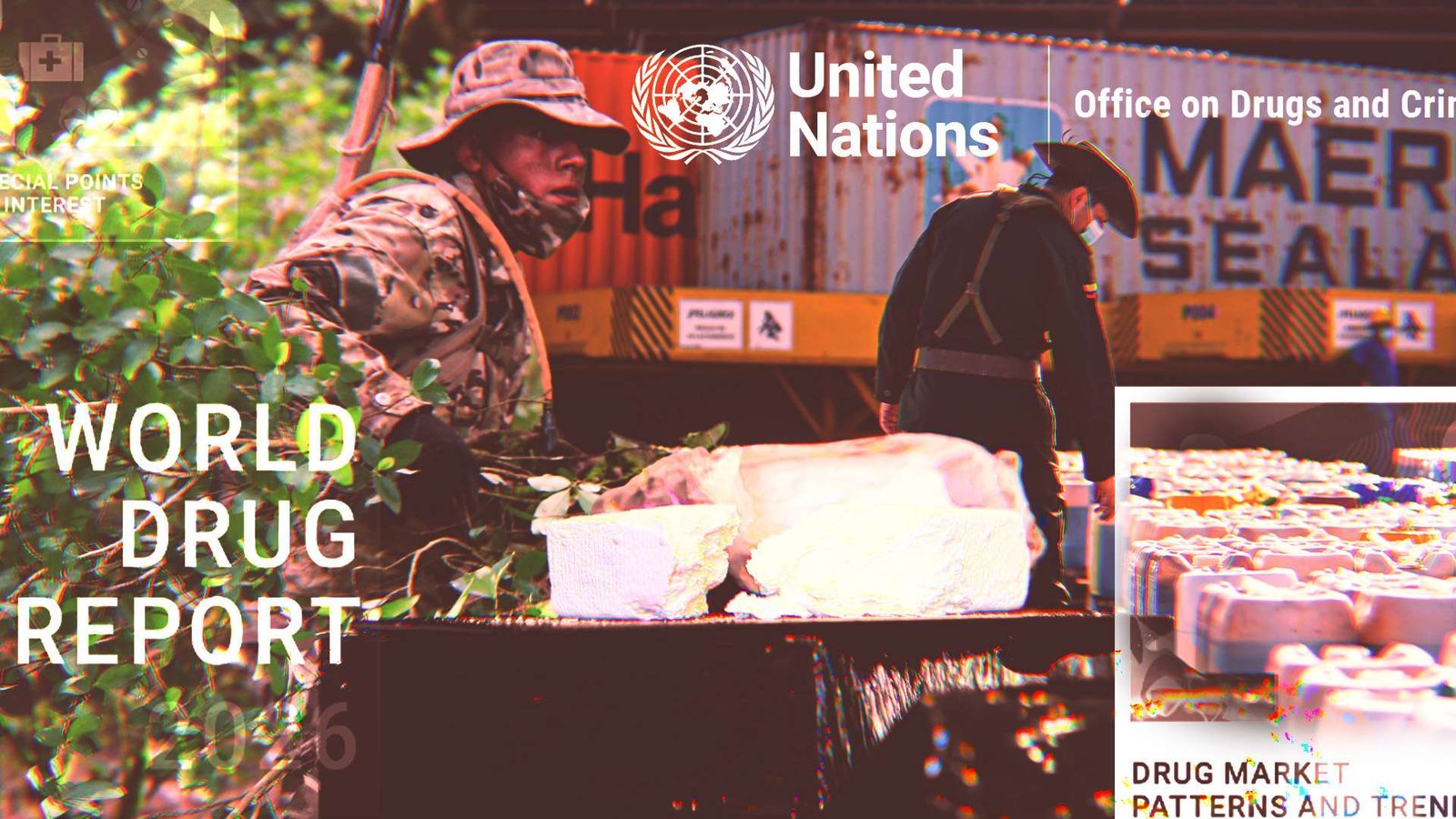
Late last month, the United Nations published its annual World Drug Report, chronicling the latest developments in the global war on drugs. Not only are the drugs winning that war, but there are greater quantities and more varieties of recreational chemicals available than ever before.
In June, Colombia elected a hard-line new president who vowed to wage “all-out war, without truce or negotiation” on the narcos and guerrillas, while Bolivia’s embattled government has declared a state of emergency against “narco-terrorism.” It will be an uphill battle: According to the U.N. report, an estimated 4,100 tons of cocaine were produced in South America in 2024—more than at any point in history. Even after decades of government-run initiatives and even military campaigns involving ripping up coca fields and spraying them with herbicide, farmers in the Andes have adopted innovative cultivation techniques making their humble patches more productive than ever before.
There is so much cocaine in circulation now that wholesale prices are dropping, indicating a surplus. In other words, as the U.N. put it, supply may soon overtake demand, if it hasn’t already. Europe is now at least as important a market as North America, and while there are fewer big coke busts than there were several years ago—when the Belgian port city of Antwerp confiscated so many white bricks that there was no space left in its incinerators—that’s because smugglers have switched to smaller shipments to minimize risk.
There are early signs, however, of a looming heroin shortage. After the Taliban banned poppy cultivation in Afghanistan in 2022, the total area of land used to grow opium poppies—which can be refined into morphine and heroin—shrank by 95 percent. While dealers have managed to stretch out existing stockpiles of opiates, those may begin to run dry later this year, the U.N. warned. Some jurisdictions are already reporting price increases, indicating scarcity. At first glance, this may appear to be a rare victory in the war on drugs in the landlocked, mountainous country that once produced 93 percent of the world’s illicit opiates. But some poppy farming has simply been displaced to nearby Pakistan and India, and traffickers are searching for substitutes.
Among these are nitazenes—synthetic opioids largely manufactured in China that can be even more potent than fentanyl and have claimed hundreds of lives in the United Kingdom alone. While nitazene deaths are still dwarfed by America’s fentanyl crisis, this may be an early warning of a deadly new trend. Nitazenes have appeared in the United States as well. Unlike the “classic” drugs such as heroin, cocaine, and shrooms, synthetics don’t need vast acres of land for farming and can be quietly cooked in a basement lab, bypassing border controls or local mafias, which lowers the barriers to entry in a business where clandestine connections are everything.
Nitazenes are among the many new, largely synthetic narcotics—referred to as new psychoactive substances—highlighted in the report. There are now 755 known new psychoactive substances in circulation, and 118 of them were first identified in 2024. Today, there are more designer drugs than formally designated illicit drugs (although their total number of consumers is still small). These drugs evade detection and restrictions by being chemically different from more established substances, but they create similar sensations. In some cases, those effects can be far, far worse.
Kush, for example, is a smokable blend that first appeared in West Africa in the late 2010s and was rumored to contain bone fragments and other human remains. It is actually a cocktail of synthetic cannabinoids (artificial chemicals that mimic the effects of cannabis) and nitazenes. The combination has caused a whirlwind of addiction, sedation, severe bodily damage, and mental illness, prompting Liberia and Sierra Leone to declare a public health emergency. West Africa now accounts for 70 percent of synthetic cannabinoid busts, mostly involving kush.
Meanwhile, meth is going global, appearing in dealers’ repertoires from the Pacific Islands to Africa to the Middle East. Captagon—originally the brand name for a moderate stimulant known as fenethylline, but now consisting of amphetamines—is a popular stimulant in the Middle East, made famous by Syrian combatants. The pills were manufactured in Syria and Lebanon under the watch of the Islamist militia Hezbollah, powerful tribal clans, and the despotic government of former Syrian President Bashar Assad. In late 2024, the fall of the Assad regime disrupted production as the new authorities began dismantling Captagon labs. They have since relocated to the Israel-backed Druze enclave of Sweida, away from the central government in Damascus. While this smaller-scale production persists, the U.N. found that the void left by Captagon has increasingly been filled by meth. Iraq in particular—and its Iran-backed drug-dealing militias—has become a major manufacturing and transportation hub.
“We need to recognize that criminalization and prohibition doesn’t actually do what it promises to do,” says Kojo Koram, a law professor at Loughborough University and author of The Next Fix: The Winners and Losers in the Future of Drugs. Rather than leading “to less drug use” and fewer drug deaths, “what we’ve seen is actually the increase of drug use, the increase of drug deaths, and in fact the increase of the potency of drugs.”
Prohibition has encouraged “the mutation of drugs into more dangerous and more addictive forms” and pushed “suppliers to try [to] maximize the amount of money they can make for the risks they undertake through smuggling,” Koram explains. “The same process with alcohol prohibition led to the transition from largely a beer-drinking society into a liquor-drinking society in the USA.”
“That’s why we’ve seen what’s known as the iron law of prohibition emerge, concentrating the coca leaf plant into these modern manifestations such as crack cocaine,” he continues. “This misunderstanding, I think, results in authorities being surprised when they engage in these expensive and expansive counternarcotics programs.”
There is a little good news in the report, however. Marijuana is now legal for some forms of nonmedical use in Canada, Uruguay, the Czech Republic, Germany, Luxembourg, Mexico, Malta, and South Africa, as well as in parts of Australia, Switzerland, and the United States. The Swiss model, in which a small number of dispensaries cater to registered customers in specific cities, has proven so successful that the trial has been extended to 2028, with the ultimate goal of rolling out the model nationwide.
“It was in 1986 that the very first Overdose Prevention Center was established in Bern, Switzerland, no less,” says Koram. “Hardly a radical, kooky, left-wing city, but a city that recognizes that so often the impact of these substances aren’t just in the substances themselves….And so that’s why Overdose Prevention Centers, heroin prescription treatment services, and all these other forms of harm reduction initiatives make a much more significant difference than trying to criminalize and prohibit [drugs] out of existence.”
Read the full article here
Fact Checker
Verify the accuracy of this article using AI-powered analysis and real-time sources.