Close Menu
FSNN | Free Speech News NetworkFSNN | Free Speech News Network
  • Home
  • News
    • Politics
    • Legal & Courts
    • Tech & Big Tech
    • Campus & Education
    • Media & Culture
    • Global Free Speech
  • Opinions
    • Debates
  • Video/Live
  • Community
  • Freedom Index
  • About
    • Mission
    • Contact
    • Support
Trending

Why bitcoin investors should trade the cycle, not dollar-cost average

9 minutes ago

Ledn Launches Tether Gold-Backed Loans With XAUt Collateral

11 minutes ago

Everyday Savers Bet Big on Bitcoin Giant Strategy’s STRC—Now It’s Falling

16 minutes ago
Facebook X (Twitter) Instagram
Facebook X (Twitter) Discord Telegram
FSNN | Free Speech News NetworkFSNN | Free Speech News Network
Market Data Newsletter
Thursday, June 18
  • Home
  • News
    • Politics
    • Legal & Courts
    • Tech & Big Tech
    • Campus & Education
    • Media & Culture
    • Global Free Speech
  • Opinions
    • Debates
  • Video/Live
  • Community
  • Freedom Index
  • About
    • Mission
    • Contact
    • Support
FSNN | Free Speech News NetworkFSNN | Free Speech News Network
Home»News»Global Free Speech»Drones strike radio station in rebel-held DRC, with threat to kill next time
Global Free Speech

Drones strike radio station in rebel-held DRC, with threat to kill next time

News RoomBy News Room3 weeks agoNo Comments6 Mins Read1,976 Views
Share Facebook Twitter Pinterest Copy Link LinkedIn Tumblr Email VKontakte Telegram
Drones strike radio station in rebel-held DRC, with threat to kill next time
Share
Facebook Twitter Pinterest Email Copy Link

Listen to the article

0:00
0:00

Key Takeaways

Playback Speed

Select a Voice

The eastern Democratic Republic of the Congo has joined a growing number of conflicts where drones are being used to target journalists, as two strikes hit a community radio station, followed by calls and messages threatening further attacks over its reporting on militia abuses.

The bombing of Radio Tuungane in South Kivu province’s rebel-controlled Minembwe commune came as the United Nations warned in March that civilians were facing additional risks from drones and clashes between the government and rebels escalated. Elsewhere in South Kivu, two journalists told CPJ they were currently unable to work due to threats and harassment.

Solar panels destroyed by a drone strike on Radio Tuungane’s roof. (Photo: Credit withheld)

On March 3 and 26, Radio Tuungane, which broadcasts from the mountainous Fizi Territory, was attacked by a military drone, three journalists from the station told CPJ, on condition of anonymity, citing fear of reprisals. Its staff escaped but the strikes damaged the building and equipment, including solar panels and batteries, they said.

The journalists said government-allied Wazalendo militia and government soldiers, who are seeking to capture Minembwe, had called the station in February and accused its staff of broadcasting news implicating their forces in atrocities against civilians.

One of the journalists said they had received death threats in February and April from the Wazalendo.

“The authors of these [text] messages and phone calls say they will kill me, including through drone attacks, as has already happened twice against our radio station in the space of a month,” the journalist told CPJ.

Over 60 journalists and media workers have been killed by drones since 2023. Journalists are considered civilians under international law and their deliberate targeting by any party to a conflict can constitute a war crime.

Both the DRC government and the rebels have carried out high-profile drone strikes this year.
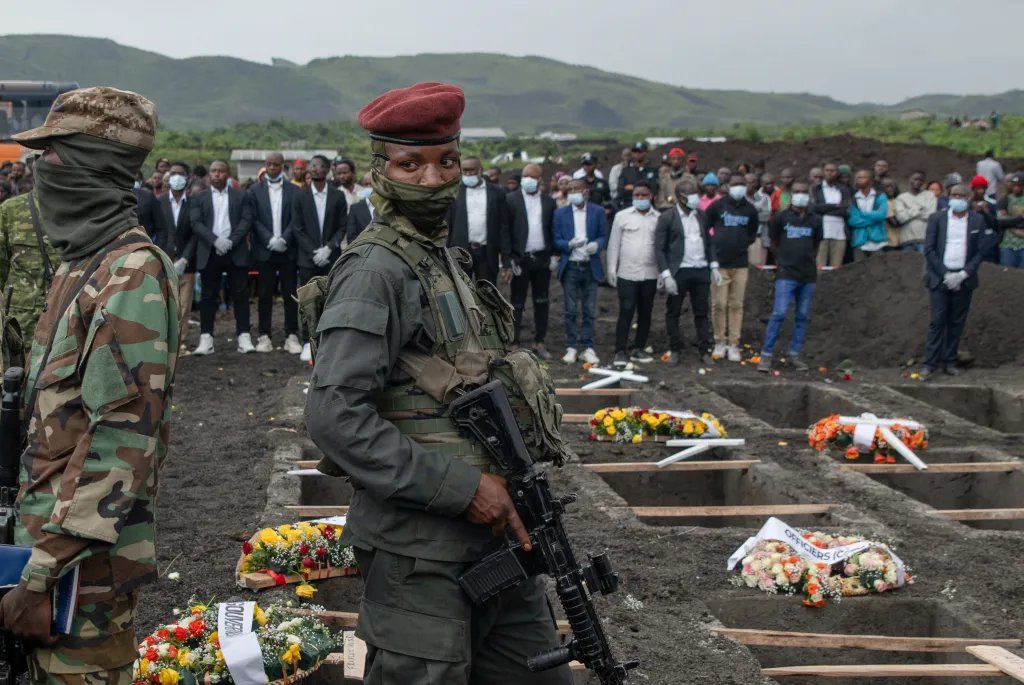
Security force members stand watch as people attend the burial ceremony for victims who died in a drone strike in Masisi Territory in January.
Security forces stand watch as people attend the burial of victims of a drone strike in Masisi Territory in January. (Photo: Reuters/Arlette Bashizi)

CPJ’s call to interim government spokesperson, Lt. Col. Mak Hazukay Mongba, went unanswered. CPJ was unable to find a contact for the Wazalendo.

‘My life will be immediately in danger’

The Minembwe area is controlled by Twirwaneho, an armed group from the minority Banyamulenge community. Twirwaneho is in coalition with the M23 and the Congo River Alliance (AFC) rebel groups.

The rebels’ advance across eastern DRC in late 2024 and early 2025 forced many journalists to flee, while those who remain face a myriad of threats from both sides. Elsewhere, intelligence agents and police have also cracked down on reporting critical of local governance.

“I fear that if Minembwe falls under the control of government forces, my life will be immediately in danger because of my reporting that exposes their actions,” said the journalist, who reports for YouTube-based, Kinyarwanda-language Mukirambi TV1, as well as Radio Tuungane, which produces news in Kiswahili, French, and English on FM radio and YouTube.

The journalist said they had reported for both outlets on abuses by the militia.

Accused of collaborating with rebels

Similarly, Olivier Ramazani Alvin, who is based in South Kivu’s port city of Uvira, told CPJ that he had received multiple death threats since February from Wazalendo accusing him of collaborating with the rebels. Ramazani said that he was the only reporter in Uvira who provided footage and photos to international journalists, based some 300 kilometers north in Goma, when Uvira was occupied by the M23/AFC between December 2025 and January 2026.

Ramazani, publishing director of News Home Magazine, said he stopped working in February because of the threats, although his colleagues continue to publish on the YouTube-based site. But that did not stop the threats, he said, adding that he had received a call and a message a few days earlier on May 8.

Journalist hides after summons for ‘intelligence purposes’
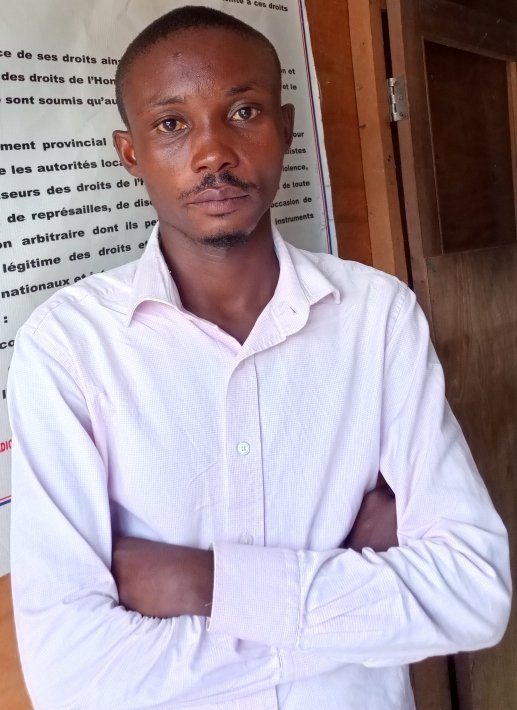
Cléophas Kyembwe Babu Bumba
Cléophas Kyembwe Babu Bumba (Photo: Courtesy of Cléophas Kyembwe Babu Bumba)

Also in Uvira, journalist Cléophas Kyembwe Babu Bumba went into hiding after receiving a summons on April 27 from the National Intelligence Agency (ANR) to appear at its local headquarters the following day for “intelligence purposes.”

The next day, two ANR agents and three police officers searched for Kyembwe at his home and at privately owned Radio Lukula FM, where he holds the post of director, saying that he had shamed local authorities with his social media posts, CPJ was told by Kyembwe and another journalist, who spoke on condition of anonymity, citing fear of reprisals.

The posts by La Cloche Magazine, where Kyembwe is a reporter and cartoonist, included a cartoon about locals’ refusal to pay a sanitation tax and another about a no confidence motion against the governor of South Kivu province, Jean Jacques Purusi, for incompetence and embezzlement of public funds.

Interim Uvira mayor Kifara Kapenda Kyky told CPJ that he was unaware of Kyembwe’s situation. Contacted via messaging app, one local ANR manager declined to comment, while another did not respond.

Police brutality in Kasai-Oriental province

Press freedom is also under pressure elsewhere in the DRC.
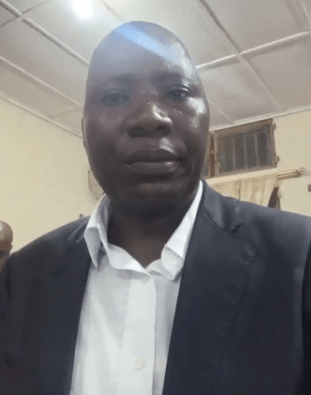
Placide Cilewu Mukonga Bantu
Placide Cilewu Mukonga Bantu (Photo: Placide Cilewu Mukonga Bantu)

In Mbuji-Mayi, capital of central Kasai-Oriental province, about seven police officers punched and briefly detained Placide Cilewu Mukonga Bantu, a reporter with Radio Television of the Evangelical Church of Witnesses of Christ (RTEETC), on May 15, injuring his left eye and causing his left leg to swell, Cilewu told CPJ.

He said the police attacked him for interviewing, without authorization, female street sweepers demonstrating on a major avenue in the city, demanding local authorities increase their pay and improve working conditions.

Cilewu said the officers pulled him by his clothes and belt, forced him into their jeep, and detained him at a local police station for about four hours, before returning him to the protest site and releasing him unconditionally.

On May 16, the Union Nationale de la Presse du Congo in Kasai province, a journalists’ union, issued a statement, reviewed by CPJ, calling for provincial authorities to hold the perpetrators accountable and ensure Cilewu receives medical treatment.

CPJ’s call to Kasai-Oriental’s provincial police commissioner, André Mbombo Manda, went unanswered.

Read the full article here

Fact Checker

Verify the accuracy of this article using AI-powered analysis and real-time sources.

Get Your Fact Check Report

Enter your email to receive detailed fact-checking analysis

5 free reports remaining

Continue with Full Access

You've used your 5 free reports. Sign up for unlimited access!

Already have an account? Sign in here

Share. Facebook Twitter Pinterest LinkedIn Tumblr Email Telegram Copy Link
News Room
  • Website
  • Facebook
  • X (Twitter)
  • Instagram
  • LinkedIn

The FSNN News Room is the voice of our in-house journalists, editors, and researchers. We deliver timely, unbiased reporting at the crossroads of finance, cryptocurrency, and global politics, providing clear, fact-driven analysis free from agendas.

Related Articles

Global Free Speech

World Refugee Day 2026: Supporting journalists in exile amid transnational repression

2 hours ago
Global Free Speech

On Tuesday 16 June, Baroness Tina Stowell introduced her anti-SLAPP Bill in the House of Lords. Photo: Parliament TV The UK Anti-SLAPP Coalition, which is co-chaired by Index on Censorship, had a significant campaign success this week when coordinated Bills were introduced in both the House of Lords and the House of Commons. On Tuesday 16 June, Baroness Tina Stowell introduced her anti-SLAPP Bill in the House of Lords. The next day, Sir John Whittingdale MP introduced a parallel bill in the Commons. Remind me: what is a SLAPP? SLAPP stands for strategic lawsuit against public participation. The term describes legal threats and actions that are used to intimidate and harass journalists, whistleblowers, campaigners, academics, and survivors of abuse (among others) by burdening them with time-consuming and costly litigation. Anyone who speaks out on an issue of public interest is at risk. Even if a defendant has every chance of succeeding at trial, the lengthy process of preparing a legal defence is so prohibitively expensive that they are forced to quietly submit to the claimant’s demands. This means they are silenced. SLAPPs threaten our right to freedom of expression and our democracy by preventing ordinary people from being able to hold power to account. They also remove information from the public domain, which means that SLAPPs have an impact on all of us. We have published case studies of a small number of the SLAPPs that have crossed our desks in the UK Anti-SLAPP Coalition. From cosmetic surgery patients to environmentalists, abuse survivors and campaigners, you can read them here. So, what would the new bills actually do? The proposal is simple: Anyone who believes that they are facing a SLAPP would be able to ask a judge to examine the case at an early stage. If the court concludes that the claim is being used to suppress public-interest speech, it could be dismissed before huge legal costs begin to accumulate. This “early dismissal” mechanism would shift the balance away from wealthy claimants who can use litigation as a pressure tactic, and towards defendants who currently face years of stress, uncertainty and expense. What these bills definitely won’t do is to protect public-interest speech across the UK. This is a devolved issue, and legislation passed in Westminster will only cover England and Wales. Separate anti-SLAPP bills will need to be passed in Scotland and Northern Ireland to ensure that everyone in the UK is protected from SLAPPs. Why now? Successive governments have acknowledged the problem of SLAPPs, but have failed to bring forward comprehensive legislation. Anti-SLAPP measures were, yet again, left out of this year’s King’s Speech despite repeated and widespread calls for their inclusion. Even after the speech, Deputy Prime Minister David Lammy confirmed that the government would bring forward legislation “as soon as time allows”. The introduction of parallel Private Members’ Bills is therefore as much a political signal as a legislative exercise: Parliament is being asked to show that the issue has not gone away. Will these Bills become law? The honest answer is that we don’t know. The second reading for Whittingdale’s bill is scheduled for late November, and no date has yet been set for Stowell’s bill. However, the impact is immediate as it keeps anti-SLAPP reform firmly on Parliament’s agenda, providing a ready-made legislative blueprint to show that legislation to stamp out SLAPPs can be done effectively and easily within the existing legal framework. In other words, the real question is not whether Stowell’s or Whittingdale’s bills become law exactly as drafted. It is whether the government will finally listen to mounting pressure to back these bills, and put their weight behind ensuring comprehensive anti-SLAPP legislation that will protect anyone who speaks out in the public interest. But I heard that anti-SLAPP legislation has already been enacted. Why then is the UK Anti-SLAPP Coalition pushing for more legislation? Because the UK’s existing anti-SLAPP protections are very limited. The Economic Crime and Corporate Transparency Act (ECCTA) introduced anti-SLAPP provisions in 2023, but they apply only to cases linked to economic crime. Many abusive cases fall outside that definition. It also depends on a subjective test, forcing the court to undertake a time-intensive process by which the intentions of the SLAPP filer have been identified. That’s why we need a broader law that can protect anyone facing a SLAPP, regardless of the subject matter. What can I do to support the UK Anti-SLAPP Coalition as they continue to call on the government to enact comprehensive anti-SLAPP legislation? You can support the work of the Coalition by writing to your MP, by posting your support for action on SLAPPs using the hashtag #StopSLAPPs, and by signing up to the newsletter of the Anti-SLAPP Coalition here. READ MORE

2 hours ago
Global Free Speech

Mozambique’s Estacio Valoi faces ‘clear intimidation’ over environmental reporting

24 hours ago
Global Free Speech

News leader Maritza Félix on covering immigration in Arizona

1 day ago
Global Free Speech

These 6 foreign journalists have been denied entry by Israel 

1 day ago
Global Free Speech

In Mali, 2 more journalists arrested under cybercrime law for criticizing authorities

2 days ago
Add A Comment

Comments are closed.

Editors Picks

Ledn Launches Tether Gold-Backed Loans With XAUt Collateral

11 minutes ago

Everyday Savers Bet Big on Bitcoin Giant Strategy’s STRC—Now It’s Falling

16 minutes ago

A Slow Thursday At The Court

50 minutes ago

Foundation loses another key leader as Hsiao-Wei Wang resigns

1 hour ago
Latest Posts

What happens when ChatGPT becomes the front door to crypto

1 hour ago

Jerome Powell Supports Fed’s New Stablecoin Policies—But Chair Kevin Warsh Abstains

1 hour ago

The Most Interesting Supreme Court Opinion Line-Up You Will See This Year

2 hours ago

Subscribe to News

Get the latest news and updates directly to your inbox.

At FSNN – Free Speech News Network, we deliver unfiltered reporting and in-depth analysis on the stories that matter most. From breaking headlines to global perspectives, our mission is to keep you informed, empowered, and connected.

FSNN.net is owned and operated by GlobalBoost Media
, an independent media organization dedicated to advancing transparency, free expression, and factual journalism across the digital landscape.

Facebook X (Twitter) Discord Telegram
Latest News

Why bitcoin investors should trade the cycle, not dollar-cost average

9 minutes ago

Ledn Launches Tether Gold-Backed Loans With XAUt Collateral

11 minutes ago

Everyday Savers Bet Big on Bitcoin Giant Strategy’s STRC—Now It’s Falling

16 minutes ago

Subscribe to Updates

Get the latest news and updates directly to your inbox.

© 2026 GlobalBoost Media. All Rights Reserved.
  • Privacy Policy
  • Terms of Service
  • Our Authors
  • Contact

Type above and press Enter to search. Press Esc to cancel.

🍪

Cookies

We and our selected partners wish to use cookies to collect information about you for functional purposes and statistical marketing. You may not give us your consent for certain purposes by selecting an option and you can withdraw your consent at any time via the cookie icon.

Cookie Preferences

Manage Cookies

Cookies are small text that can be used by websites to make the user experience more efficient. The law states that we may store cookies on your device if they are strictly necessary for the operation of this site. For all other types of cookies, we need your permission. This site uses various types of cookies. Some cookies are placed by third party services that appear on our pages.

Your permission applies to the following domains:

  • https://fsnn.net
Necessary
Necessary cookies help make a website usable by enabling basic functions like page navigation and access to secure areas of the website. The website cannot function properly without these cookies.
Statistic
Statistic cookies help website owners to understand how visitors interact with websites by collecting and reporting information anonymously.
Preferences
Preference cookies enable a website to remember information that changes the way the website behaves or looks, like your preferred language or the region that you are in.
Marketing
Marketing cookies are used to track visitors across websites. The intention is to display ads that are relevant and engaging for the individual user and thereby more valuable for publishers and third party advertisers.