Close Menu
FSNN | Free Speech News NetworkFSNN | Free Speech News Network
  • Home
  • News
    • Politics
    • Legal & Courts
    • Tech & Big Tech
    • Campus & Education
    • Media & Culture
    • Global Free Speech
  • Opinions
    • Debates
  • Video/Live
  • Community
  • Freedom Index
  • About
    • Mission
    • Contact
    • Support
Trending

Kansas Proxy Advisory Transparency Act Likely Violates First Amendment

7 minutes ago

Bitcoin’s first-half solace is it fell less than Strategy (MSTR): Crypto Daily

20 minutes ago

AscendEX Exchange Reportedly Faces Liquidity Issues: ZachXBT

20 minutes ago
Facebook X (Twitter) Instagram
Facebook X (Twitter) Discord Telegram
FSNN | Free Speech News NetworkFSNN | Free Speech News Network
Market Data Newsletter
Friday, June 26
  • Home
  • News
    • Politics
    • Legal & Courts
    • Tech & Big Tech
    • Campus & Education
    • Media & Culture
    • Global Free Speech
  • Opinions
    • Debates
  • Video/Live
  • Community
  • Freedom Index
  • About
    • Mission
    • Contact
    • Support
FSNN | Free Speech News NetworkFSNN | Free Speech News Network
Home»News»Media & Culture»Don’t Let the Country’s Wet Blankets Ruin Independence Day
Media & Culture

Don’t Let the Country’s Wet Blankets Ruin Independence Day

News RoomBy News Room1 hour agoNo Comments7 Mins Read415 Views
Share Facebook Twitter Pinterest Copy Link LinkedIn Tumblr Email VKontakte Telegram
Don’t Let the Country’s Wet Blankets Ruin Independence Day
Share
Facebook Twitter Pinterest Email Copy Link

Listen to the article

0:00
0:00

Key Takeaways

Playback Speed

Select a Voice

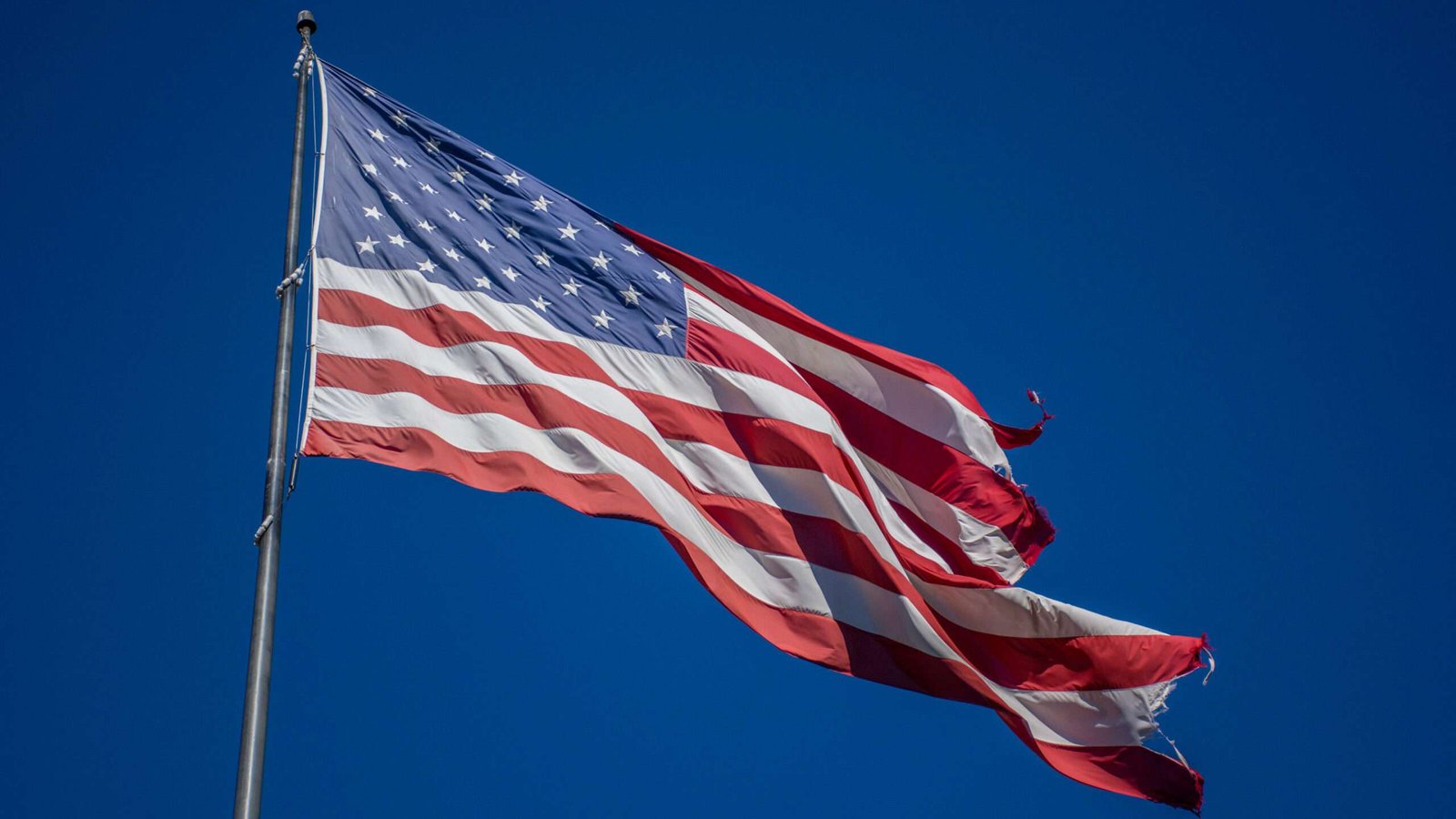
Leading up to our Independence Day party, my wife asked whether she should buy us T-shirts celebrating America’s 250th anniversary or stick with what we already have. We went with our existing garments. When the red, white, and blue string lights are up and the Gadsden flag is flying out front, my son will don his free speech shirt, my wife will wear one with USA printed across it, and my shirt will show an image of George Washington crossing the Delaware and text reading: “Americans. Willing to cross a frozen river to kill you. In your sleep. On Christmas. Not kidding, we’ve done it.”

It will be festive.

You are reading The Rattler from J.D. Tuccille and Reason. Get more of J.D.’s commentary on government overreach and threats to everyday liberty.

But not everybody shares our enthusiasm for celebrating the nation’s birthday and the liberty at the core of its founding philosophy. Frankly, some folks are pretty glum about the whole thing. Angry at each other, disappointed with the government, and pessimistic about the future, too many of our friends and neighbors seem to have given up on the whole experiment—although there are signs of hope.

“Most people have told us they are dissatisfied with the way things are going in the United States and that they think the country’s best days are behind us,” Pew Research recently noted of its polling over the past year. “And when asked to look ahead to 2050, upward of half of U.S. adults say they think the economy will be weaker, the U.S. will be less important in the world, the country will be more politically divided, and the American system of government will work worse than it does today.”

Specifically, 29 percent of adults said they are satisfied with how things are going in the country, while 69 percent are dissatisfied. More Americans have voiced dissatisfaction than satisfaction for nearly 25 years.

On a similar note, Gallup finds that less than half of us believe the American Dream (which a plurality associate with “freedoms or individual rights,” followed by “financial security or homeownership”) is still attainable: “Forty-six percent agree strongly (21%) or somewhat (25%) that everyone in the country has the opportunity to achieve the American Dream, down five percentage points from 2024. Meanwhile, 42% say they feel optimistic about the future of the Dream.”

All that gloom has an effect on people’s pride in country. According to an NBC News/Hart Research Associates/Public Opinion Strategies poll published this month, 56 percent of respondents say they’re “extremely” or “very” proud to be Americans. That sounds pretty good—it’s a majority, after all—but it’s down from 58 percent a year ago, 70 percent in 2019, 82 percent in 2009, and 87 percent in 2001.

Digging deeper, it’s clear domestic disillusion and conflict play big roles in eroding national pride.

In 1990, 36 percent of respondents reported “a great deal” or “quite a bit” of confidence in the federal government, down to 28 percent in 2000, and hovering around 16–18 percent since 2010; 52 percent have “very little” confidence or none at all—a majority for the first time. Confidence in the high-tech industry is down from 54 percent in 2000 to 26 percent now. The news media held the confidence of 37 percent of Americans in 1991, down to 18 percent in 2011, and 11 percent now.

Tellingly, 44 percent of respondents say “most Americans have fundamentally different core values” rather than shared values coupled with disagreement over policies. Eighty percent believe more divides than unites Democrats and Republicans, with a similar division cited between those who are wealthy and those who are not. Fifty-five percent hold the same view of relations between people in cities and those in rural areas. Fifty-two percent see a similar gap between the young and the old.

We might all benefit from more autonomy over our lives and less meddling from others we see as alien.

And yes, as with all things these days, this has a partisan component.

“While 62% of 2024 Trump voters say they are extremely proud to be Americans, 12% who picked Democrat Kamala Harris in 2024 said the same,” reports NBC News of the survey. “The set of Americans most likely to express great pride is older, whiter, more male, more rural and less educated.”

Democrats have especially soured on the country for years. According to Gallup polling, in 2001, over 80 percent of Democrats, Republicans, and independents said they were proud to be American. But that number started plunging for Democrats after 2013. Eighty-five percent of Democrats were proud of their nationality that year, down to 42 percent in 2020. The numbers blipped up above 50 percent while Democrat Joe Biden was in the White House, only to drop to 36 percent in the most recent survey with Republican Donald Trump holding the presidency.

Independents have seen a similar slide, though not fluctuating with White House occupancy and not as dramatic. In the most recent polling, 53 percent of independents said they were proud to be Americans.

Republicans remained over 80 percent throughout and now stand at 92 percent proud to be Americans.

The good news is that even if people see more division than unity when they consider their countrymen, we do generally share some values.

As mentioned above, Gallup finds the most popular definition of “American Dream” to be “freedoms or individual rights.” While fewer than half believe that dream is widely available, “nearly seven in 10 (69%) agree they will personally achieve the American Dream.”

For respondents to the NBC News poll, “freedom” ranked second, after “family,” among values that respondents called most important in their own lives. Half of those surveyed (up from 46 percent in 1976) thought “our form of government, based on the Constitution, has stood the test of time and remains sound for the challenges ahead.”

And Pew reported that, while Americans foresee a diminished country in 2050, the ranks of pessimists have been shrinking: “There has been a 13 percentage point rise in the share of Americans who say the U.S. will be more important in the world by 2050. There also has been a 12-point increase in the share saying the country will be less politically divided and an 11-point rise in the share who expect the economy to grow stronger.”

Sixty-eight percent say they’re “hopeful” and 54 percent call themselves “happy” about the future.

Perhaps the people of a nation founded on liberty and individualism don’t necessarily consider their personal fates to be entirely in the hands of a government they hold in low regard. The United States might fade, but they anticipate good prospects for themselves.

Honestly, that’s good enough reason to celebrate America’s 250th anniversary. This is a country founded on the idea that each person matters and has the right to guide his or her own life. We’re not just extensions of the state and we can thrive even when politicians bumble.

So, don the clothing of your choice, patriotic or not, and celebrate Independence Day with some friends and neighbors. We may not all share the same values or even like each other very much. But we still live in the only country founded, however imperfectly, on the idea of liberty.

Read the full article here

Fact Checker

Verify the accuracy of this article using AI-powered analysis and real-time sources.

Get Your Fact Check Report

Enter your email to receive detailed fact-checking analysis

5 free reports remaining

Continue with Full Access

You've used your 5 free reports. Sign up for unlimited access!

Already have an account? Sign in here

#FreePress #InformationWar #OpenDebate #PoliticalDebate #PublicOpinion
Share. Facebook Twitter Pinterest LinkedIn Tumblr Email Telegram Copy Link
News Room
  • Website
  • Facebook
  • X (Twitter)
  • Instagram
  • LinkedIn

The FSNN News Room is the voice of our in-house journalists, editors, and researchers. We deliver timely, unbiased reporting at the crossroads of finance, cryptocurrency, and global politics, providing clear, fact-driven analysis free from agendas.

Related Articles

Media & Culture

Kansas Proxy Advisory Transparency Act Likely Violates First Amendment

7 minutes ago
Cryptocurrency & Free Speech Finance

BitGo Joins Crypto’s AI Layoff Wave, Slashing Staff by 15%

1 hour ago
Media & Culture

Review: A Fresh-Eyed Tour Through Revolutionary America

2 hours ago
Media & Culture

Revisiting My Authorship Predictions And Making More Predictions

3 hours ago
Media & Culture

Brickbat: A Shocking Abuse of Power

4 hours ago
Media & Culture

Trump Administration Sweeps All of the (Other) Immigration Cases at SCOTUS

5 hours ago
Add A Comment
Leave A Reply Cancel Reply

Editors Picks

Bitcoin’s first-half solace is it fell less than Strategy (MSTR): Crypto Daily

20 minutes ago

AscendEX Exchange Reportedly Faces Liquidity Issues: ZachXBT

20 minutes ago

Don’t Let the Country’s Wet Blankets Ruin Independence Day

1 hour ago

CPJ, partners call on EU to review approach toward Tunisia amid critical human rights decline

1 hour ago
Latest Posts

Photo by: Stephen Barnes/Medical/Alamy UK news this week is dominated by a damning report led by senior midwife Donna Ockenden that reveals how more than 500 mothers and babies were harmed or died at maternity units in Nottingham. This isn’t the first scandal Ockenden has investigated. A few years back terrible failings were revealed in Shropshire hospitals run by the Shrewsbury and Telford NHS Trust where 201 babies and nine mothers died.  We spoke to Ockenden for the magazine and she repeated this: “women aren’t listened to”. Another common thread was cover-up. Secrecy is not a one-off, it’s a pattern, wrote Martin Bright when he reported on the Shropshire scandal for Index. As Bright said, “this is not a historical story; it is an ongoing crisis”. Maternity scandals happen not only in Britain but all over the world. Last year’s protests in Morocco were ignited after eight women died in a maternity ward in Agadir because of severe medical neglect. In Egypt last week Omnia Sweidan, a former resident physician in obstetrics and gynaecology at Alexandria’s El-Shatby University Hospital, wrote a Facebook post detailing a series of abusive incidents faced by women at Alexandria’s Al-Shatby Hospital. It was read and shared by tens of thousands. Within 24 hours of posting, instead of the government declaring an investigation, security forces arrested Sweidan. While she was apparently later released, she’s been accused of spreading false news and misusing social media. She could end up in jail. Meanwhile, Afghanistan has one of the highest maternal mortality rates in the world – the figures of deaths and injuries are rising, but to what no one really knows. The Taliban won’t publish the data, probably to cover-up the true numbers. I’ve navigated maternity services myself in the UK. I’ve generally had good experiences and I’m very grateful to the NHS. But my experiences have not been uncomplicated – my daughter very nearly died. What saved her, I’ve been told, were a few factors – my race (white), my class (middle), where I live (London) and the fact that I relentlessly badgered those at my local hospital for weeks on end saying things didn’t feel right. Let me be clear here though: one shouldn’t have to be a dogged white Londoner to get good medical care. And a recent health committee report revealed terrible inequalities faced by people who are members of ethnic minorities, stating that “[B]abies that are Black or Black British Asian or Asian British have a more than 50% higher risk of perinatal mortality”. At Index we typically work on stories where dissidents take on the powerful: leaders, oligarchs and tech bros. The victims of maternity care scandals might not appear the same. But there is much that unites them. At the end of the day if the response you get from a doctor or nurse to a basic medical request is a shrug or a sneer, your free speech is being violated. If the systems view calls for accountability as dissent that must be silenced, then they are censoring. We grew up being told we’re lucky, that childbirth was one of the leading causes of death before the advent of modern medicine. For many of us that’s true. Just not all of us. That’s a travesty demanding urgent attention – in Nottingham and beyond. READ MORE

1 hour ago

Crypto market clings to support as bitcoin hits 21-month low: Crypto Markets Today

1 hour ago

Why Wall Street values some crypto firms for AI power, not just crypto

1 hour ago

Subscribe to News

Get the latest news and updates directly to your inbox.

At FSNN – Free Speech News Network, we deliver unfiltered reporting and in-depth analysis on the stories that matter most. From breaking headlines to global perspectives, our mission is to keep you informed, empowered, and connected.

FSNN.net is owned and operated by GlobalBoost Media
, an independent media organization dedicated to advancing transparency, free expression, and factual journalism across the digital landscape.

Facebook X (Twitter) Discord Telegram
Latest News

Kansas Proxy Advisory Transparency Act Likely Violates First Amendment

7 minutes ago

Bitcoin’s first-half solace is it fell less than Strategy (MSTR): Crypto Daily

20 minutes ago

AscendEX Exchange Reportedly Faces Liquidity Issues: ZachXBT

20 minutes ago

Subscribe to Updates

Get the latest news and updates directly to your inbox.

© 2026 GlobalBoost Media. All Rights Reserved.
  • Privacy Policy
  • Terms of Service
  • Our Authors
  • Contact

Type above and press Enter to search. Press Esc to cancel.

🍪

Cookies

We and our selected partners wish to use cookies to collect information about you for functional purposes and statistical marketing. You may not give us your consent for certain purposes by selecting an option and you can withdraw your consent at any time via the cookie icon.

Cookie Preferences

Manage Cookies

Cookies are small text that can be used by websites to make the user experience more efficient. The law states that we may store cookies on your device if they are strictly necessary for the operation of this site. For all other types of cookies, we need your permission. This site uses various types of cookies. Some cookies are placed by third party services that appear on our pages.

Your permission applies to the following domains:

  • https://fsnn.net
Necessary
Necessary cookies help make a website usable by enabling basic functions like page navigation and access to secure areas of the website. The website cannot function properly without these cookies.
Statistic
Statistic cookies help website owners to understand how visitors interact with websites by collecting and reporting information anonymously.
Preferences
Preference cookies enable a website to remember information that changes the way the website behaves or looks, like your preferred language or the region that you are in.
Marketing
Marketing cookies are used to track visitors across websites. The intention is to display ads that are relevant and engaging for the individual user and thereby more valuable for publishers and third party advertisers.