Close Menu
FSNN | Free Speech News NetworkFSNN | Free Speech News Network
  • Home
  • News
    • Politics
    • Legal & Courts
    • Tech & Big Tech
    • Campus & Education
    • Media & Culture
    • Global Free Speech
  • Opinions
    • Debates
  • Video/Live
  • Community
  • Freedom Index
  • About
    • Mission
    • Contact
    • Support
Trending

In China and Hong Kong, remembrance is a crime

1 minute ago

Texas and Florida Step Back from ALPRs

4 minutes ago

Why the Right Is Embracing State Power

8 minutes ago
Facebook X (Twitter) Instagram
Facebook X (Twitter) Discord Telegram
FSNN | Free Speech News NetworkFSNN | Free Speech News Network
Market Data Newsletter
Wednesday, September 2
  • Home
  • News
    • Politics
    • Legal & Courts
    • Tech & Big Tech
    • Campus & Education
    • Media & Culture
    • Global Free Speech
  • Opinions
    • Debates
  • Video/Live
  • Community
  • Freedom Index
  • About
    • Mission
    • Contact
    • Support
FSNN | Free Speech News NetworkFSNN | Free Speech News Network
Home»News»Media & Culture»Don’t Get a Nazi Tattoo or Praise Hitler: Advice for New Politicians
Media & Culture

Don’t Get a Nazi Tattoo or Praise Hitler: Advice for New Politicians

News RoomBy News Room10 months agoNo Comments5 Mins Read2 Views
Share Facebook Twitter Pinterest Copy Link LinkedIn Tumblr Email VKontakte Telegram
Don’t Get a Nazi Tattoo or Praise Hitler: Advice for New Politicians
Share
Facebook Twitter Pinterest Email Copy Link

Listen to the article

0:00
0:00

Key Takeaways

Playback Speed

Select a Voice

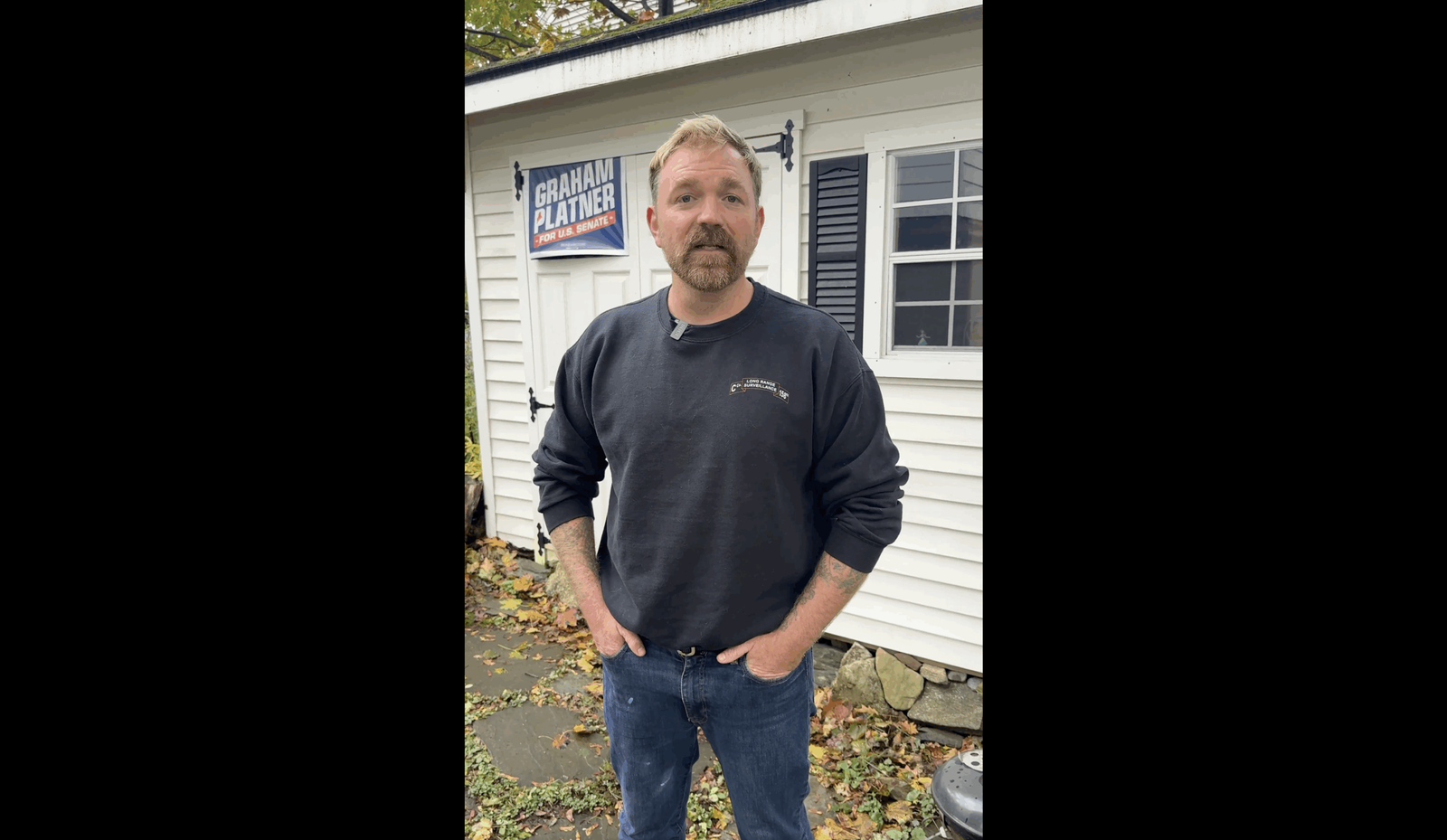
Graham Platner is a 41-year-old oyster farmer and Marine veteran who is running to be the Democratic Party’s Maine Senate nominee. A political outsider, he would face incumbent Republican Susan Collins in the general election if he managed to prevail against establishment Democrat Janet Mills, the current governor, aged 77.

You are reading Free Media from Robby Soave and Reason. Get more of Robby’s on-the-media, disinformation, and free speech coverage.

Until this week, Platner had a lot going for him. He is a left populist endorsed by Sen. Bernie Sanders (I–Vt.) with some natural talent for effective political communication, i.e., he sounds like a normal person. At a time of extreme dissatisfaction with Democratic leadership and the nominees they have managed to recruit, a charismatic outsider with a working-class background could be just what the party ordered. Plus, he’s decades younger than his primary opponent, Mills, who would be the oldest freshman senator in U.S. history.

But there’s a problem: Platner has a Nazi tattoo—or at least one that closely resembles a Nazi tattoo.

I’ll admit I approached this story with a great deal of initial skepticism. That’s because I still remember the time that Talia Lavin, then a fact-checker (oops) for The New Yorker, wrongly accused a wheelchair-bound ICE agent—also a Marine veteran—of having a Nazi tattoo. Also, the mainstream media loves to dubiously accuse people of expressing cryptic Nazi gestures. Remember the kids flashing the okay sign? Elon Musk’s alleged Nazi salute?

Did Elon Musk do a Nazi salute? pic.twitter.com/PPGkLvsclU

— Robby Soave (@robbysoave) January 21, 2025

Platner’s hideously bad tattoo is a skull and crossbones, which is something I associate with pirates but is apparently also a Nazi thing, depending on its exact size and shape. When deployed by Nazis, it’s called the Totenkopf. You will note that in this version the skull is bigger relative to the crossbones and appears over them.

That is, in fact, the version that Platner had tattooed across his chest while on leave in Croatia in 2007. His story is this: He got really drunk with his buddies, stumbled into a tattoo parlor, and picked something random that looked cool. He had no idea it was a Nazi thing, he told Pod Save America.

Up until this point, I was pretty much on board with his explanation. But here’s the problem: According to Jewish Insider, he told at least one acquaintance about the tattoo and referred to it as “my totenkopf.” This makes it much less likely that he never understood the connection.

Anyway, Platner has addressed the controversy by covering up the tattoo with a new, very ugly one.

Years ago I got a skull and crossbones tattoo with my buddies in the Marine Corps.

I was appalled to learn it closely resembled a Nazi symbol. I altered it yesterday, into something that isn’t deeply offensive to my core beliefs.

I am very sorry to all of you who had to… pic.twitter.com/RQSiRsrTiC

— Graham Platner for Senate (@grahamformaine) October 22, 2025

Leftist commentators are really, really mad that the mainstream media has turned this kerfuffle into a thing, giving establishment Democrats an excuse to coalesce behind Mills. “The reason anyone pretends to care about Platner’s tattoo and Reddit posts is because they think he’s coming for the rich,” wrote Matt Stoller on X, in histrionic fashion. “That’s it. That’s all it’s about. They hate populists because we actually believe in equality and that terrifies them.”

I don’t know about that. It’s true that cancel culture can be pretty perverse, and we don’t want to live in a world where the only people who can successfully run for office are weird sociopaths who have practiced never doing or saying anything controversial since age seven. If Platner had drunkenly gotten a bad tattoo, realized his mistake, and covered it up years ago, I would probably want to excuse it, too. But he’s had it for 18 years, and apparently seemed aware of the Nazi connection. That does seem sort of bad.

And it would be especially hypocritical for the Democratic coalition—politicians, activists, the media—to excuse this while simultaneously pursuing efforts to expose Young Republicans who praised Hitler (sometimes, arguably in jest) in group chats, which I covered in last week’s newsletter.


I am joined by Amber Duke, and later this week, Andrew Heaton, to discuss the big stories: No Kings protests, the New York City mayoral race, and more. Subscribe to the Free Media channel on YouTube.


I have just finished another Agatha Christie book, The Secret of Chimneys. It was a good one! (I correctly guessed one of the approximately three twists.) I would certainly recommend it to first-time Christie readers. Next up for me: I’ve decided to read The Terror by Dan Simmons. I first became interested in this one after catching an episode of the AMC series it inspired. It’s a heavily fictionalized version of the true disappearances of Terror and Erebus, two British ships that vanished while searching for the Northwest Passage in the 1840s. I’m a big fan of Arctic (and Antarctic) horror, so I’m really looking forward to this one.

And speaking of Arctic horror, I’m pleased to report that my own novel—an original work of science fiction/fantasy set in an icy, northern kingdom—is actually coming along nicely. I’ve already written about 35,000 words, and have completed one of three major plot arcs that comprise the story. That’s decent progress, given that I started it a month ago. The key is to force myself to write something every single day: a sentence, a page, a chapter, anything.


Read the full article here

Fact Checker

Verify the accuracy of this article using AI-powered analysis and real-time sources.

Get Your Fact Check Report

Enter your email to receive detailed fact-checking analysis

5 free reports remaining

Continue with Full Access

You've used your 5 free reports. Sign up for unlimited access!

Already have an account? Sign in here

Share. Facebook Twitter Pinterest LinkedIn Tumblr Email Telegram Copy Link
News Room
  • Website
  • Facebook
  • X (Twitter)
  • Instagram
  • LinkedIn

The FSNN News Room is the voice of our in-house journalists, editors, and researchers. We deliver timely, unbiased reporting at the crossroads of finance, cryptocurrency, and global politics, providing clear, fact-driven analysis free from agendas.

Related Articles

Media & Culture

Why the Right Is Embracing State Power

8 minutes ago
Cryptocurrency & Free Speech Finance

OpenAI’s Astra Becomes Its First AI Model With ‘Critical’ Hacking Abilities

43 minutes ago
Media & Culture

Invasion of the Robot Teachers

1 hour ago
Cryptocurrency & Free Speech Finance

Tether Sued Over Alleged Unlawful Freeze of $42.4 Million in USDT

2 hours ago
Media & Culture

Wisconsin Cops Used Flock Over 100 Times To Track a Navy Veteran After He Lawfully Recorded a Traffic Stop

2 hours ago
Cryptocurrency & Free Speech Finance

Norway Moves to Regulate ‘Pervert Glasses,’ Weighs Facial Recognition Ban

3 hours ago
Add A Comment

Comments are closed.

Editors Picks

Texas and Florida Step Back from ALPRs

4 minutes ago

Why the Right Is Embracing State Power

8 minutes ago

Joshua Wong has spent more than 2,000 consecutive days behind bars More than a decade ago, Hong Kong watched a bespectacled teenager emerge from a student movement and become one of the most recognisable voices of his generation. Joshua Wong was barely old enough to vote when much of the world learned his name. He devoted his adolescence and then his twenties to arguing that Hong Kong people should have a say in their own future. Today, he is 29. He has spent more than 2,000 consecutive days behind bars. And after pleading guilty to another national security charge, he once again doesn’t know when – or whether –he will be free. I met Joshua in 2013, when he was 16 and I was 14. He had recently helped lead a student movement opposing the Hong Kong government’s attempt to introduce Chinese nationalist education into our schools. He was sharp, stubborn, and unapologetic. Most importantly to those of us who were younger, he seemed entirely unconvinced by the idea that being young meant we should remain quiet. Joshua Wong speaks to US congressmen in 2019 Joshua believed we had every right to speak about the future because it was our future too. He went on to become one of the student leaders of the 2014 Umbrella Movement and later co-founded Demosistō, a political party advocating self-determination for Hong Kong. Arrests, court appearances, and prison sentences gradually became part of his life. Then, in November 2020, Joshua entered prison and didn’t come home. The Hong Kong outside his cell has changed almost beyond recognition since then. Newspapers have been forced to close down. Civil society organisations and political groups have disbanded. Democracy activists have been imprisoned or driven into exile, like me. Books disappeared from shelves. People have deleted old social media posts, withdrawn from political life, and learned to choose their words more carefully. Hong Kong’s freedoms haven’t disappeared only through arrest and prosecutions. They’ve disappeared through the fear those prosecutions create. And slowly, Joshua himself has been made to disappear from everyday life. In January 2021, while already detained, he was arrested under the National Security Law for participating in an unofficial primary election held the previous year. He was eventually sentenced to four years and eight months in that case. He had been expected to complete his existing prison term in January 2027. But the authorities weren’t finished with him. In June 2025, while Joshua was still incarcerated, police arrested him again. This time, prosecutors accused him of conspiring to “collude with foreign forces” through international advocacy. He has now pleaded guilty to the charge. His sentencing remains ahead of him, and in cases deemed sufficiently grave, the offence can carry life imprisonment. It would be easy to regard this as simply another prosecution of a prominent Hong Kong democracy activist. That would miss the larger point. Joshua’s case matters not only because the authorities have deprived one man of his freedom. It matters because of what his prosecution tells everyone who once exercised the freedoms Hong Kong was supposed to protect. The prosecution has reached back into Joshua’s public life: his speeches, media interviews, campaigns, social media posts, and meetings with foreign politicians – all before the NSL existed – and presented them as the background to the charge. These weren’t secret acts. They were part of Hong Kong’s public political life. Joshua spoke openly. He met politicians openly. He gave interviews openly. He advocated internationally in full view of the government and the world. A society doesn’t have to formally outlaw every opinion to make people afraid to express one. All it has to do is demonstrate what might happen to those who speak too loudly. This is what makes Joshua’s prosecution bigger than Joshua. The authorities don’t need to imprison every young Hong Konger who attended a protest, who campaigned for democracy, spoke to a journalist or posted on social media. They only need to make an example of someone everybody remembers doing so. They know this well. Joshua was proof to my generation that a teenager’s voice could matter. His imprisonment risks being turned into proof of the opposite: that speaking can follow you for years; that yesterday’s advocacy can become tomorrow’s evidence; and that even after one sentence ends, another can be waiting in the docks. This is how censorship moves beyond newspaper offices and political organisations and takes up residence in people’s minds. People learn to silence themselves, beating the authorities to the punch. For those of us who knew Joshua when we were kids, that transformation is particularly painful. We grew up believing that using our voices was an act of citizenship, and Joshua taught us that. Joshua’s case now poses another question for us: will we learn the lesson his jailers want to teach us – or will we remember the one Joshua taught us first. Frances Hui is the policy and advocacy manager at the Committee for Freedom in Hong Kong Foundation. READ MORE

23 minutes ago

New Jersey becomes first state to ask Supreme Court to weigh in on prediction markets

35 minutes ago
Latest Posts

Ondo Says US Rules Can Support Stock Perpetual Futures

40 minutes ago

OpenAI’s Astra Becomes Its First AI Model With ‘Critical’ Hacking Abilities

43 minutes ago

Invasion of the Robot Teachers

1 hour ago

Subscribe to News

Get the latest news and updates directly to your inbox.

At FSNN – Free Speech News Network, we deliver unfiltered reporting and in-depth analysis on the stories that matter most. From breaking headlines to global perspectives, our mission is to keep you informed, empowered, and connected.

FSNN.net is owned and operated by GlobalBoost Media
, an independent media organization dedicated to advancing transparency, free expression, and factual journalism across the digital landscape.

Facebook X (Twitter) Discord Telegram
Latest News

In China and Hong Kong, remembrance is a crime

1 minute ago

Texas and Florida Step Back from ALPRs

4 minutes ago

Why the Right Is Embracing State Power

8 minutes ago

Subscribe to Updates

Get the latest news and updates directly to your inbox.

© 2026 GlobalBoost Media. All Rights Reserved.
  • Privacy Policy
  • Terms of Service
  • Our Authors
  • Contact

Type above and press Enter to search. Press Esc to cancel.

🍪

Cookies

We and our selected partners wish to use cookies to collect information about you for functional purposes and statistical marketing. You may not give us your consent for certain purposes by selecting an option and you can withdraw your consent at any time via the cookie icon.

Cookie Preferences

Manage Cookies

Cookies are small text that can be used by websites to make the user experience more efficient. The law states that we may store cookies on your device if they are strictly necessary for the operation of this site. For all other types of cookies, we need your permission. This site uses various types of cookies. Some cookies are placed by third party services that appear on our pages.

Your permission applies to the following domains:

  • https://fsnn.net
Necessary
Necessary cookies help make a website usable by enabling basic functions like page navigation and access to secure areas of the website. The website cannot function properly without these cookies.
Statistic
Statistic cookies help website owners to understand how visitors interact with websites by collecting and reporting information anonymously.
Preferences
Preference cookies enable a website to remember information that changes the way the website behaves or looks, like your preferred language or the region that you are in.
Marketing
Marketing cookies are used to track visitors across websites. The intention is to display ads that are relevant and engaging for the individual user and thereby more valuable for publishers and third party advertisers.