Close Menu
FSNN | Free Speech News NetworkFSNN | Free Speech News Network
  • Home
  • News
    • Politics
    • Legal & Courts
    • Tech & Big Tech
    • Campus & Education
    • Media & Culture
    • Global Free Speech
  • Opinions
    • Debates
  • Video/Live
  • Community
  • Freedom Index
  • About
    • Mission
    • Contact
    • Support
Trending

Bitcoin (BTC) price retreat deepens after repeated rejection at $80,000: Crypto Markets Today

21 minutes ago

OKX Adds BlackRock Tokenized Treasury Fund to Standard Chartered Collateral Program

26 minutes ago

Bitcoin’s Next Move Hinges on $82K CME Gap as Earnings, FOMC Loom

28 minutes ago
Facebook X (Twitter) Instagram
Facebook X (Twitter) Discord Telegram
FSNN | Free Speech News NetworkFSNN | Free Speech News Network
Market Data Newsletter
Tuesday, April 28
  • Home
  • News
    • Politics
    • Legal & Courts
    • Tech & Big Tech
    • Campus & Education
    • Media & Culture
    • Global Free Speech
  • Opinions
    • Debates
  • Video/Live
  • Community
  • Freedom Index
  • About
    • Mission
    • Contact
    • Support
FSNN | Free Speech News NetworkFSNN | Free Speech News Network
Home»News»Media & Culture»DHS Collected DNA from 2,000 U.S. Citizens Without Due Process. It’s Now in a Law Enforcement Database.
Media & Culture

DHS Collected DNA from 2,000 U.S. Citizens Without Due Process. It’s Now in a Law Enforcement Database.

News RoomBy News Room7 months agoNo Comments4 Mins Read961 Views
Share Facebook Twitter Pinterest Copy Link LinkedIn Tumblr Email VKontakte Telegram
DHS Collected DNA from 2,000 U.S. Citizens Without Due Process. It’s Now in a Law Enforcement Database.
Share
Facebook Twitter Pinterest Email Copy Link

Listen to the article

0:00
0:00

Key Takeaways

Playback Speed

Select a Voice

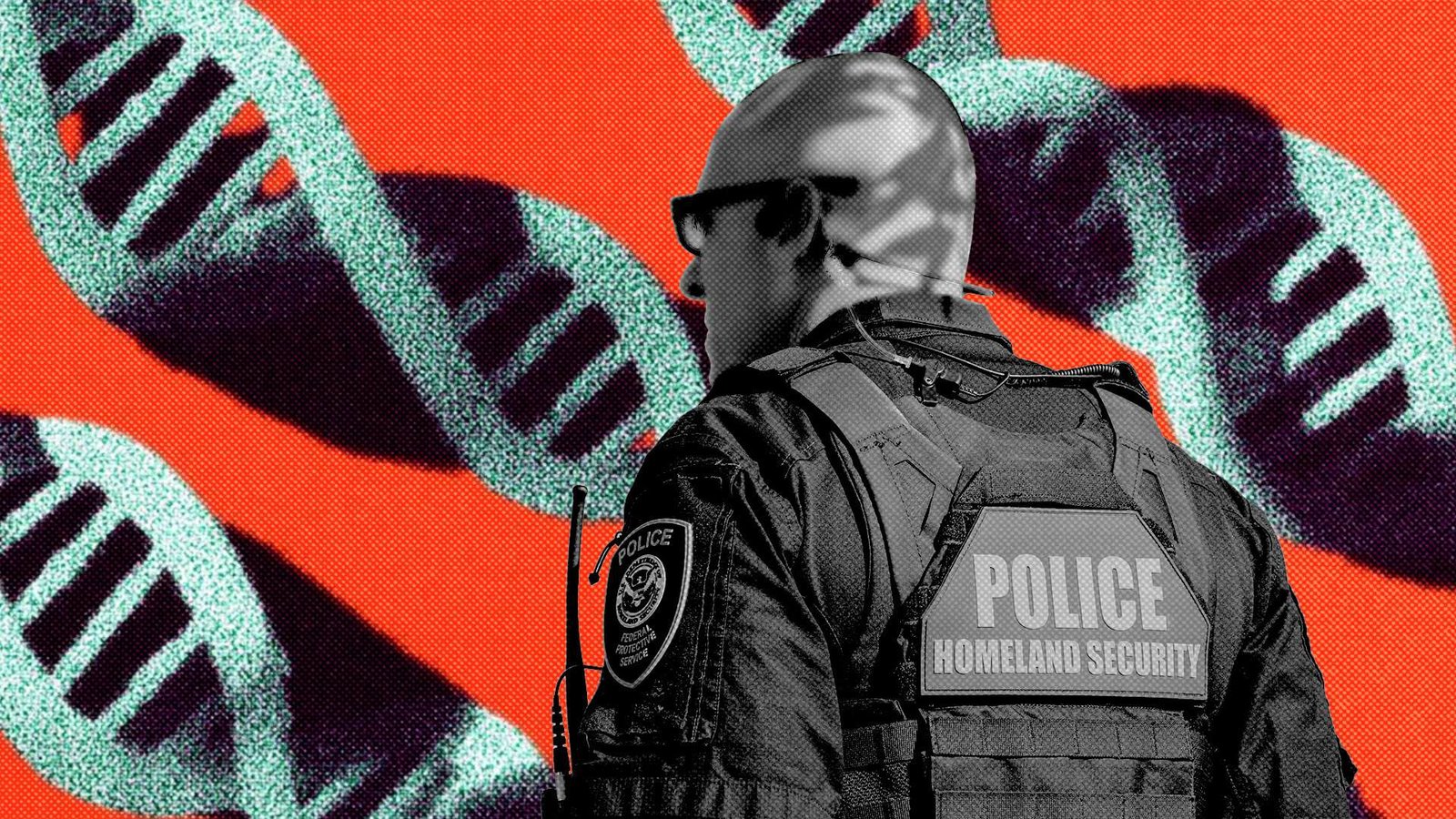
For years, the federal government has been amassing DNA profiles of noncitizens. But recently released Customs and Border Protection (CBP) data reveal that officials knowingly collected the DNA of approximately 2,000 American citizens and added it to a national genetic surveillance database used by law enforcement. 

This genetic collection was made possible by a March 2020 rule change to the 2005 DNA Fingerprint Act, which removed the Department of Homeland Security’s (DHS) discretion to exempt detained noncitizens from DNA collection. This drastically expanded the number of DNA samples the DHS collects and uploads to the federal database known as the Combined DNA Index System (CODIS).

Between 2020 and 2024, the CBP alone—which is only one of the many agencies under DHS—added between 1.3 and 2.8 million people to CODIS, compared to just 30,000 detainees added between 2005 and 2020, according to Georgetown Law’s Center on Privacy and Technology. Of this total, CBP provided CODIS with the DNA of between 1,947 and 2,131 U.S. citizens. 

The collection of DNA under DHS’s civil authority raises due process concerns. Because immigration detention is considered a civil matter, immigration authorities do not receive the same level of oversight as criminal cases, such as requiring judicial review of an immigration agent’s “probable cause” before detaining someone and collecting their DNA.

Unhindered by the protections afforded to criminal defendants, the DHS has quickly increased the number of DNA profiles in CODIS by taking samples from noncriminals. Between December 2024 and April 2025, 97 percent of the nearly 300,000 DNA profiles collected by the DHS were collected from individuals who were detained under civil, not criminal, authority. Georgetown Law reports that in many cases, civil detainees were coerced into giving a DNA sample or were unaware that a DNA sample had even been taken.

The lack of oversight also carries a serious concern “that DHS will erroneously take DNA from permanent residents and citizens…without the suspicion of wrongdoing,” according to Georgetown Law, which could “be used by police to prosecute that person criminally, even in states that have laws explicitly requiring a criminal conviction or a warrant before a person can have their DNA taken.” 

Georgetown’s fears have clearly come true. Recently released CBP data confirms that the DNA of U.S. citizens was submitted to CODIS. The legal justification provided for collecting DNA samples from 525 of these citizens—at least 40 of whom were minors—was the fact that the individual was simply a detainee, despite CBP having a directive that “CBP agents/officers may never document” U.S. citizens or legal permanent residents as “detainees” for DNA profile placement. Approximately 865 American citizens had their DNA collected without receiving formal federal charges, meaning that no one outside the executive branch reviewed CBP’s authority to arrest, detain, or take the DNA of these individuals, according to Georgetown Law.

Once collected by the DHS, the DNA samples are sent to the FBI for analysis and uploaded to the CODIS, where law enforcement nationwide can search for the individual’s permanent DNA record. The sample is then stored indefinitely at the FBI’s Federal DNA Database Unit, creating privacy concerns about how the DNA samples may be used in the future. 

The number of American citizens and legal permanent residents whose DNA has been collected and uploaded into CODIS by DHS has likely already grown since President Donald Trump took office. Under the Trump administration, the DHS has used its broad, vague, and unchecked power to accumulate a record number of immigration detentions, including individuals who have been wrongfully detained. 

“Those spreadsheets tell a chilling story,” Stevie Glaberson, director of research and advocacy at Georgetown Law’s Center on Privacy and Technology, told WIRED. “They show DNA taken from people as young as 4 and as old as 93—and as our analysis found, they also show CBP flagrantly violating the law by taking DNA from citizens without justification.” 

The Fourth Amendment protects people from unreasonable search and seizure, including the compelled taking of a DNA sample, unless probable cause—checked under judicial review—exists. Predictably, by expanding the authority of the DHS to collect the DNA of civilly detained immigrants, the Fourth Amendment rights of American citizens have been violated. These violations will likely continue as the Trump administration ramps up surveillance technology and immigration enforcement manpower to meet the president’s mass deportation goals.

Read the full article here

Fact Checker

Verify the accuracy of this article using AI-powered analysis and real-time sources.

Get Your Fact Check Report

Enter your email to receive detailed fact-checking analysis

5 free reports remaining

Continue with Full Access

You've used your 5 free reports. Sign up for unlimited access!

Already have an account? Sign in here

Share. Facebook Twitter Pinterest LinkedIn Tumblr Email Telegram Copy Link
News Room
  • Website
  • Facebook
  • X (Twitter)
  • Instagram
  • LinkedIn

The FSNN News Room is the voice of our in-house journalists, editors, and researchers. We deliver timely, unbiased reporting at the crossroads of finance, cryptocurrency, and global politics, providing clear, fact-driven analysis free from agendas.

Related Articles

Cryptocurrency & Free Speech Finance

Bitcoin’s Next Move Hinges on $82K CME Gap as Earnings, FOMC Loom

28 minutes ago
Media & Culture

SCOTUS Weighs ‘Geofence Warrants’ and the Future of Digital Privacy

57 minutes ago
Cryptocurrency & Free Speech Finance

Morning Minute: Fidelity Is Cautiously Bullish on Crypto

1 hour ago
Media & Culture

Why the Federal Government Can’t Charge Anyone With ‘Domestic Terrorism’

2 hours ago
Media & Culture

Brickbat: Miami Vice

4 hours ago
Cryptocurrency & Free Speech Finance

France Charges 88, Including Minors, in Crypto ‘Wrench Attack’ Crackdown

5 hours ago
Add A Comment

Comments are closed.

Editors Picks

OKX Adds BlackRock Tokenized Treasury Fund to Standard Chartered Collateral Program

26 minutes ago

Bitcoin’s Next Move Hinges on $82K CME Gap as Earnings, FOMC Loom

28 minutes ago

SCOTUS Weighs ‘Geofence Warrants’ and the Future of Digital Privacy

57 minutes ago

Bulls want the bitcoin (BTC) price above $80,000. Macro says not so fast: Crypto Daily

1 hour ago
Latest Posts

Changelly and Tonkeeper enable cross-chain deposits to TON across 13 networks

1 hour ago

Morning Minute: Fidelity Is Cautiously Bullish on Crypto

1 hour ago

Why the Federal Government Can’t Charge Anyone With ‘Domestic Terrorism’

2 hours ago

Subscribe to News

Get the latest news and updates directly to your inbox.

At FSNN – Free Speech News Network, we deliver unfiltered reporting and in-depth analysis on the stories that matter most. From breaking headlines to global perspectives, our mission is to keep you informed, empowered, and connected.

FSNN.net is owned and operated by GlobalBoost Media
, an independent media organization dedicated to advancing transparency, free expression, and factual journalism across the digital landscape.

Facebook X (Twitter) Discord Telegram
Latest News

Bitcoin (BTC) price retreat deepens after repeated rejection at $80,000: Crypto Markets Today

21 minutes ago

OKX Adds BlackRock Tokenized Treasury Fund to Standard Chartered Collateral Program

26 minutes ago

Bitcoin’s Next Move Hinges on $82K CME Gap as Earnings, FOMC Loom

28 minutes ago

Subscribe to Updates

Get the latest news and updates directly to your inbox.

© 2026 GlobalBoost Media. All Rights Reserved.
  • Privacy Policy
  • Terms of Service
  • Our Authors
  • Contact

Type above and press Enter to search. Press Esc to cancel.

🍪

Cookies

We and our selected partners wish to use cookies to collect information about you for functional purposes and statistical marketing. You may not give us your consent for certain purposes by selecting an option and you can withdraw your consent at any time via the cookie icon.

Cookie Preferences

Manage Cookies

Cookies are small text that can be used by websites to make the user experience more efficient. The law states that we may store cookies on your device if they are strictly necessary for the operation of this site. For all other types of cookies, we need your permission. This site uses various types of cookies. Some cookies are placed by third party services that appear on our pages.

Your permission applies to the following domains:

  • https://fsnn.net
Necessary
Necessary cookies help make a website usable by enabling basic functions like page navigation and access to secure areas of the website. The website cannot function properly without these cookies.
Statistic
Statistic cookies help website owners to understand how visitors interact with websites by collecting and reporting information anonymously.
Preferences
Preference cookies enable a website to remember information that changes the way the website behaves or looks, like your preferred language or the region that you are in.
Marketing
Marketing cookies are used to track visitors across websites. The intention is to display ads that are relevant and engaging for the individual user and thereby more valuable for publishers and third party advertisers.