Close Menu
FSNN | Free Speech News NetworkFSNN | Free Speech News Network
  • Home
  • News
    • Politics
    • Legal & Courts
    • Tech & Big Tech
    • Campus & Education
    • Media & Culture
    • Global Free Speech
  • Opinions
    • Debates
  • Video/Live
  • Community
  • Freedom Index
  • About
    • Mission
    • Contact
    • Support
Trending

Housing Villains

10 minutes ago

7 exiled Belarusian media sites hit by DDoS attacks

18 minutes ago

Circle (CRCL) selloff may be ‘overreaction’ but Open USD faces adoption test

25 minutes ago
Facebook X (Twitter) Instagram
Facebook X (Twitter) Discord Telegram
FSNN | Free Speech News NetworkFSNN | Free Speech News Network
Market Data Newsletter
Tuesday, June 30
  • Home
  • News
    • Politics
    • Legal & Courts
    • Tech & Big Tech
    • Campus & Education
    • Media & Culture
    • Global Free Speech
  • Opinions
    • Debates
  • Video/Live
  • Community
  • Freedom Index
  • About
    • Mission
    • Contact
    • Support
FSNN | Free Speech News NetworkFSNN | Free Speech News Network
Home»News»Media & Culture»Democrats’ First ‘Project 2029’ Proposal: More Government Control Over Social Media
Media & Culture

Democrats’ First ‘Project 2029’ Proposal: More Government Control Over Social Media

News RoomBy News Room1 hour agoNo Comments4 Mins Read1,755 Views
Share Facebook Twitter Pinterest Copy Link LinkedIn Tumblr Email VKontakte Telegram
Democrats’ First ‘Project 2029’ Proposal: More Government Control Over Social Media
Share
Facebook Twitter Pinterest Email Copy Link

Listen to the article

0:00
0:00

Key Takeaways

Playback Speed

Select a Voice

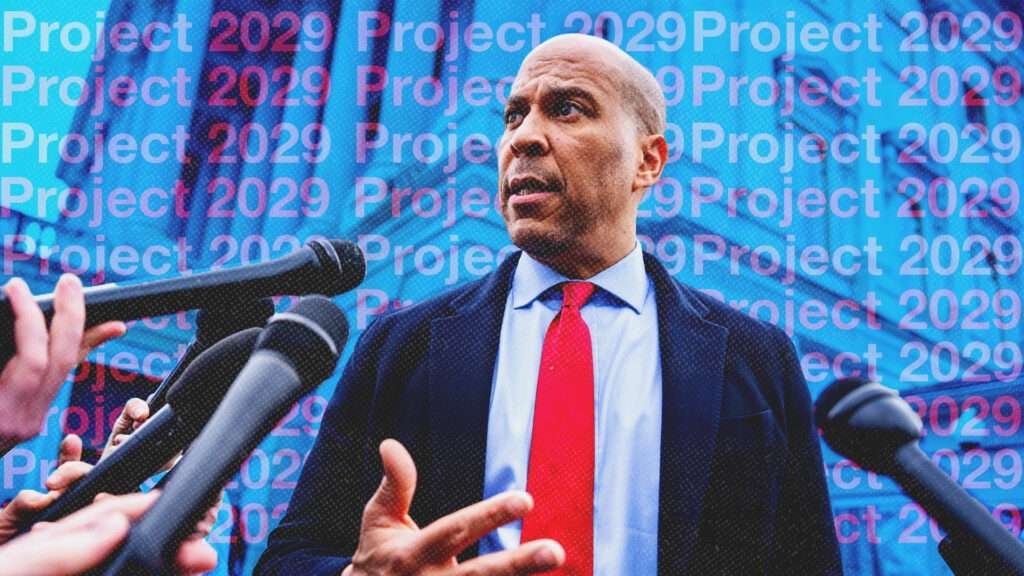
Democrats are gearing up for the 2028 election and preparing a list of policy priorities—dubbed “Project 2029″—should they retake the White House. The first Project 2029 proposal is not about affordability, healthcare, or foreign policy. No, the Democrats’ first proposal concerns children’s online safety: the issue fueling lawmakers’ bipartisan push to impose greater government control over the internet.

Semafor‘s Nicholas Wu first reported on the “Kids Over Clicks” proposal on Monday. The proposal, Wu wrote, advocates for “narrowing protections under Section 230 of the Communications Decency Act that shield platforms from some liability,” banning social media accounts for kids under 16, “designing safer internet platforms,” and more.

Supporters of the proposal include the author and social scientist Jonathan Haidt, American Federation of Teachers President Randi Weingarten, Sen. Cory Booker (D–N.J.), and New Jersey Democratic Gov. Mikie Sherrill, according to the outlet. Sherrill’s involvement comes as no surprise, as she has made online safety a main focus of her gubernatorial agenda. The first-term governor has proposed creating both an Office of Youth Online Mental Health Safety and a Social Media Research Center in New Jersey. The Kids Over Clicks proposal was written by Rishi Bharwani, the U.S. director of Reset Tech, a group dedicated to “countering digital threats to society.” Bharwani previously co-chaired Sherrill’s children’s online safety policy team and led Booker’s tech policy team.

The proposal claims that America is witnessing a “tobacco moment,” this time for social media and AI companies, and the government must intervene as it did with the tobacco industry to prevent harm. But this is a fraught comparison, as Reason has pointed out, because tobacco is a physical product with measurable side effects, and social media is a vehicle for speech. The distinction matters because any policy regulating speech should be evaluated based on First Amendment grounds, not on its potential to reduce harm.

The Kids Over Clicks proposal’s call to impose age restrictions on social media sites presents a particularly chilling threat to free speech. As the Electronic Frontier Foundation has warned, age verification laws “violate all internet users’ rights to access information, impinge on people’s right to anonymity, and exacerbate their data and security risks.” In the U.K., the Online Safety Act has exposed the problems with age verification, as users must fork over their data when they want to view age-restricted content, effectively censoring wide swaths of the internet for children and adults. The censorship implications have not deterred the U.K. government from imposing more regulations, as the country prepares to implement a social media ban for teens, which will likely take effect next year. It appears that Project 2029’s authors are eager to import similar policies from abroad, citing Australia‘s social media ban—which many teens have been able to skirt—as a successful case study in online safety.

It may seem odd that Project 2029 is making its debut by advocating for censorship policies, but Semafor reported that the project authors “wanted to start with kids safety because it’s among the least politically polarizing topics.” 

This sentiment is, unfortunately, correct. Children’s online safety has become a bipartisan issue that lawmakers have used to crack down on personal freedom. Red states, including Texas and Florida, have enacted online safety laws in the name of protecting children. And on Monday night, the U.S. House of Representatives passed the Kids Internet and Digital Safety (KIDS) Act, a bundle of online safety bills that includes a version of the Kids Online Safety Act (KOSA). The House’s version of KOSA does not include a duty of care provision, making it slightly less restrictive than the Senate’s KOSA bill. Still, digital rights groups such as Reclaim the Net warn the KIDS Act raises significant concerns “about government overreach, privacy erosion, and the expansion of online surveillance.” If passed, the KIDS Act would also allow states to enact their own laws regulating social media and AI companies, according to the bill’s co-author, Rep. Frank Pallone (D–N.J.).

Democrats may be fractured internally, but the party is certainly uniting over a winning position in Washington: advocating for more government control over the internet. As Monday night’s vote demonstrated, they will find Republican allies who want to regulate the internet, too. If this pro-censorship coalition works diligently enough, it may achieve the goals of the Project 2029 proposal well before the next election.

Read the full article here

Fact Checker

Verify the accuracy of this article using AI-powered analysis and real-time sources.

Get Your Fact Check Report

Enter your email to receive detailed fact-checking analysis

5 free reports remaining

Continue with Full Access

You've used your 5 free reports. Sign up for unlimited access!

Already have an account? Sign in here

#IndependentMedia #OpenDebate #PoliticalCoverage #PoliticalDebate #PoliticalNews
Share. Facebook Twitter Pinterest LinkedIn Tumblr Email Telegram Copy Link
News Room
  • Website
  • Facebook
  • X (Twitter)
  • Instagram
  • LinkedIn

The FSNN News Room is the voice of our in-house journalists, editors, and researchers. We deliver timely, unbiased reporting at the crossroads of finance, cryptocurrency, and global politics, providing clear, fact-driven analysis free from agendas.

Related Articles

Media & Culture

Housing Villains

10 minutes ago
Cryptocurrency & Free Speech Finance

TD Cowen Slashes Strategy Price Target, Citing Ongoing Bitcoin Weakness

32 minutes ago
Media & Culture

John Roberts Believes In The Unitary Executive, Except For When It Might Crash His Investment Portfolio

1 hour ago
Cryptocurrency & Free Speech Finance

Circle Stock Dives as Coinbase, BlackRock and Visa Back Open USD Stablecoin

2 hours ago
Media & Culture

Brendan Carr And The Trump FCC Hid Their Communications With Dodgy DOGE Bros

2 hours ago
Media & Culture

Supreme Court Affirms Original Meaning of Birthright Citizenship, Strikes Down Trump’s Executive Order

2 hours ago
Add A Comment
Leave A Reply Cancel Reply

Editors Picks

7 exiled Belarusian media sites hit by DDoS attacks

18 minutes ago

Circle (CRCL) selloff may be ‘overreaction’ but Open USD faces adoption test

25 minutes ago

Nasdaq Takes TotalView Market Data Onchain with Pyth

28 minutes ago

TD Cowen Slashes Strategy Price Target, Citing Ongoing Bitcoin Weakness

32 minutes ago
Latest Posts

John Roberts Believes In The Unitary Executive, Except For When It Might Crash His Investment Portfolio

1 hour ago

Democrats’ First ‘Project 2029’ Proposal: More Government Control Over Social Media

1 hour ago

SEC giving novel ETFs a rethink as it opens comment period on overhauling U.S. rules

1 hour ago

Subscribe to News

Get the latest news and updates directly to your inbox.

At FSNN – Free Speech News Network, we deliver unfiltered reporting and in-depth analysis on the stories that matter most. From breaking headlines to global perspectives, our mission is to keep you informed, empowered, and connected.

FSNN.net is owned and operated by GlobalBoost Media
, an independent media organization dedicated to advancing transparency, free expression, and factual journalism across the digital landscape.

Facebook X (Twitter) Discord Telegram
Latest News

Housing Villains

10 minutes ago

7 exiled Belarusian media sites hit by DDoS attacks

18 minutes ago

Circle (CRCL) selloff may be ‘overreaction’ but Open USD faces adoption test

25 minutes ago

Subscribe to Updates

Get the latest news and updates directly to your inbox.

© 2026 GlobalBoost Media. All Rights Reserved.
  • Privacy Policy
  • Terms of Service
  • Our Authors
  • Contact

Type above and press Enter to search. Press Esc to cancel.

🍪

Cookies

We and our selected partners wish to use cookies to collect information about you for functional purposes and statistical marketing. You may not give us your consent for certain purposes by selecting an option and you can withdraw your consent at any time via the cookie icon.

Cookie Preferences

Manage Cookies

Cookies are small text that can be used by websites to make the user experience more efficient. The law states that we may store cookies on your device if they are strictly necessary for the operation of this site. For all other types of cookies, we need your permission. This site uses various types of cookies. Some cookies are placed by third party services that appear on our pages.

Your permission applies to the following domains:

  • https://fsnn.net
Necessary
Necessary cookies help make a website usable by enabling basic functions like page navigation and access to secure areas of the website. The website cannot function properly without these cookies.
Statistic
Statistic cookies help website owners to understand how visitors interact with websites by collecting and reporting information anonymously.
Preferences
Preference cookies enable a website to remember information that changes the way the website behaves or looks, like your preferred language or the region that you are in.
Marketing
Marketing cookies are used to track visitors across websites. The intention is to display ads that are relevant and engaging for the individual user and thereby more valuable for publishers and third party advertisers.