Close Menu
FSNN | Free Speech News NetworkFSNN | Free Speech News Network
  • Home
  • News
    • Politics
    • Legal & Courts
    • Tech & Big Tech
    • Campus & Education
    • Media & Culture
    • Global Free Speech
  • Opinions
    • Debates
  • Video/Live
  • Community
  • Freedom Index
  • About
    • Mission
    • Contact
    • Support
Trending

Aave Asks Arbitrum to Unfreeze Stolen Kelp DAO Funds

48 minutes ago

What Really Causes Recessions?

4 hours ago

Bill Otis (Ringside at the Reckoning) on the SPLC Indictment

4 hours ago
Facebook X (Twitter) Instagram
Facebook X (Twitter) Discord Telegram
FSNN | Free Speech News NetworkFSNN | Free Speech News Network
Market Data Newsletter
Monday, April 27
  • Home
  • News
    • Politics
    • Legal & Courts
    • Tech & Big Tech
    • Campus & Education
    • Media & Culture
    • Global Free Speech
  • Opinions
    • Debates
  • Video/Live
  • Community
  • Freedom Index
  • About
    • Mission
    • Contact
    • Support
FSNN | Free Speech News NetworkFSNN | Free Speech News Network
Home»News»Media & Culture»Democrats’ Bill Would Let Federal Workers Skip Paying Rent During Government Shutdowns
Media & Culture

Democrats’ Bill Would Let Federal Workers Skip Paying Rent During Government Shutdowns

News RoomBy News Room6 months agoNo Comments4 Mins Read599 Views
Share Facebook Twitter Pinterest Copy Link LinkedIn Tumblr Email VKontakte Telegram
Democrats’ Bill Would Let Federal Workers Skip Paying Rent During Government Shutdowns
Share
Facebook Twitter Pinterest Email Copy Link

Listen to the article

0:00
0:00

Key Takeaways

Playback Speed

Select a Voice

Since the federal government isn’t currently paying its bills during the shutdown, Senate Democrats think federal workers shouldn’t have to either.

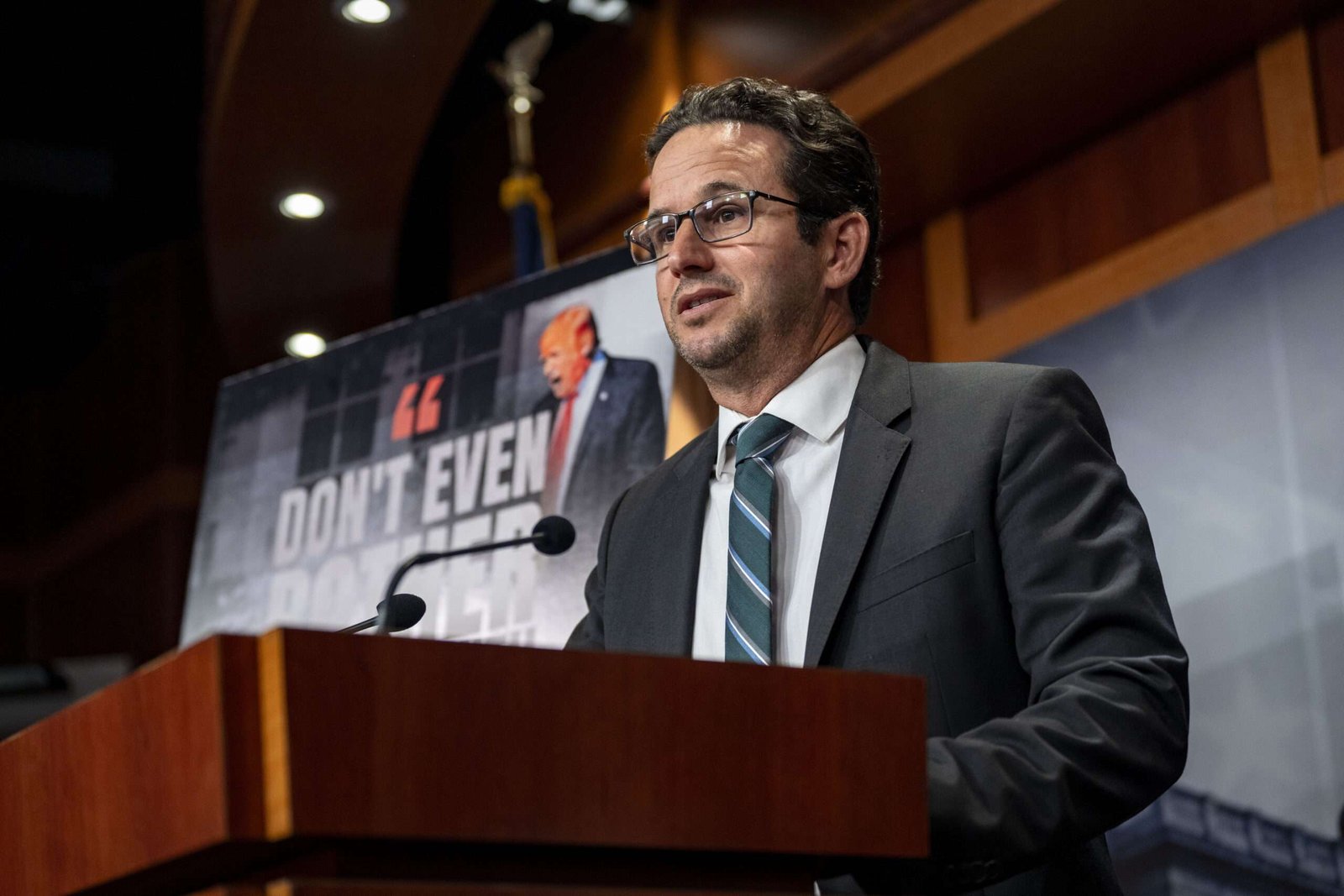
Sen. Brian Schatz (D–Hawaii) and 17 of his Democratic Senate colleagues have introduced a bill that would relieve federal workers and contractors from their obligations to pay rent, mortgages, insurance premiums, and student loan payments during shutdowns.

The bill would also stay eviction and foreclosure proceedings for 30 days after a shutdown ends. Anyone who tries to carry out an eviction or foreclosure of a federal worker or contractor during that time would be guilty of a misdemeanor and subject to fines or even jail time.

“Right now, hundreds of thousands of federal workers, federal contractor employees, and their families don’t know whether they’ll be able to pay rent and make ends meet. Our bill will protect these workers and make sure they aren’t harmed during this shutdown,” said Schatz.

To be sure, this bill is mostly signaling.

Politically, Republicans are not going to advance legislation that would reduce pressure on Democrats to vote to reopen the government.

Practically, the protections it would offer federal workers are unnecessary, at least in the housing context.

It would be odd, and indeed irrational, for a landlord to evict an otherwise good tenant if they miss a full rent payment during a government shutdown that will, in all likelihood, end in a few weeks. That’s particularly true given that government workers are guaranteed back pay once a shutdown ends.

Pursuing an eviction in that context would require a landlord to kick out a tenant who’s going to start paying their bills again soon, and instead incur the costs of the eviction itself, turning over the unit, and finding a new tenant.

Clearly, the reasonable thing to do would be for landlords and their current tenants to work out a deal in such circumstances. We have plenty of evidence that that’s what happens even during even more severe economic shocks.

The COVID-19 pandemic and subsequent shutdowns put a lot of people out of work. Contrary to the predictions of activists, this did not produce a mass wave of evictions—either before or after eviction moratoriums were put in place, and even when promised federal rental assistance was hard to access.

By and large, tenants paid their bills with what funds they had, and landlords worked out deals about how to cover any shortfall.

As the pandemic receded, evictions did tick up over time. But that increase was largely the result of persistently delinquent tenants accumulating months, if not years, of rent debt and an improving economy making it more likely that a replacement tenant would be employed and pay on time.

The one way in which the shutdown might be different is that federal workers are a small segment of the overall market. Landlords might be more willing to evict a government worker when everyone else is still getting paid.

Nevertheless, the costs of doing so compared to the anticipated length of the shutdown still would seem not to make that a worthwhile thing to do.

And while the Democrats’ bill is mostly signaling, it certainly doesn’t signal anything good.

It shows that the eviction moratorium mentality learned during the pandemic is still alive and well. Any short-term disruption in the economy now justifies violating federalism and suspending the normal landlord-tenant relationship.

That’s unfair to rental property owners. It’s also not good for tenants broadly.

As it turns out, there are consequences to turning property rights off and on again.

A recent study published in the Journal of Urban Economics compared the strength of tenant protections to rents. They found that stronger tenant protections reduced evictions but also reduced vacancies and were correlated with higher rents and higher rates of homelessness.

The reason is pretty straightforward. Longer eviction processes add time and expense to removing delinquent tenants. Landlords compensate by pricing that increased risk into their asking rents and being choosier about who they decide to rent to.

Eviction moratoriums also create risks for taxpayers. Federal courts have ruled that eviction moratoriums are a taking for which the government owes affected property owners compensation.

Pending in the Federal Claims Court is the case of Darby Development Company, Inc. v. United States, in which landlords affected by the federal COVID-19 eviction moratorium are seeking $20 billion in compensation.

Should the Democrats’ shutdown eviction moratorium pass, taxpayers could end up having to pick up the tab for any lost rental income that results from that bill. That’ll be one extra line item to add to any spending bill that would reopen the government.

Read the full article here

Fact Checker

Verify the accuracy of this article using AI-powered analysis and real-time sources.

Get Your Fact Check Report

Enter your email to receive detailed fact-checking analysis

5 free reports remaining

Continue with Full Access

You've used your 5 free reports. Sign up for unlimited access!

Already have an account? Sign in here

Share. Facebook Twitter Pinterest LinkedIn Tumblr Email Telegram Copy Link
News Room
  • Website
  • Facebook
  • X (Twitter)
  • Instagram
  • LinkedIn

The FSNN News Room is the voice of our in-house journalists, editors, and researchers. We deliver timely, unbiased reporting at the crossroads of finance, cryptocurrency, and global politics, providing clear, fact-driven analysis free from agendas.

Related Articles

Debates

What Really Causes Recessions?

4 hours ago
Media & Culture

Bill Otis (Ringside at the Reckoning) on the SPLC Indictment

4 hours ago
Cryptocurrency & Free Speech Finance

Coachella Uses Google DeepMind AI to Test the Future of Live Entertainment

10 hours ago
Media & Culture

What Do You Do With AI-Generated Legal Scholarship?: An April 2026 Question

10 hours ago
Media & Culture

Justice Clarence Thomas on the Declaration of Independence

12 hours ago
Media & Culture

Swarms of Termite Moviemakers Have Made Cinema More Personal

15 hours ago
Add A Comment

Comments are closed.

Editors Picks

What Really Causes Recessions?

4 hours ago

Bill Otis (Ringside at the Reckoning) on the SPLC Indictment

4 hours ago

'Historical average' could push Bitcoin bottom at $57K level: Analyst

7 hours ago

Strategy's Michael Saylor again hints at impending BTC purchase

8 hours ago
Latest Posts

Only 3% of traders drive Polymarket’s accuracy, not the crowd, study finds

10 hours ago

Litecoin gives post-attack update, but other devs doubt zero-day theory

10 hours ago

Coachella Uses Google DeepMind AI to Test the Future of Live Entertainment

10 hours ago

Subscribe to News

Get the latest news and updates directly to your inbox.

At FSNN – Free Speech News Network, we deliver unfiltered reporting and in-depth analysis on the stories that matter most. From breaking headlines to global perspectives, our mission is to keep you informed, empowered, and connected.

FSNN.net is owned and operated by GlobalBoost Media
, an independent media organization dedicated to advancing transparency, free expression, and factual journalism across the digital landscape.

Facebook X (Twitter) Discord Telegram
Latest News

Aave Asks Arbitrum to Unfreeze Stolen Kelp DAO Funds

48 minutes ago

What Really Causes Recessions?

4 hours ago

Bill Otis (Ringside at the Reckoning) on the SPLC Indictment

4 hours ago

Subscribe to Updates

Get the latest news and updates directly to your inbox.

© 2026 GlobalBoost Media. All Rights Reserved.
  • Privacy Policy
  • Terms of Service
  • Our Authors
  • Contact

Type above and press Enter to search. Press Esc to cancel.

🍪

Cookies

We and our selected partners wish to use cookies to collect information about you for functional purposes and statistical marketing. You may not give us your consent for certain purposes by selecting an option and you can withdraw your consent at any time via the cookie icon.

Cookie Preferences

Manage Cookies

Cookies are small text that can be used by websites to make the user experience more efficient. The law states that we may store cookies on your device if they are strictly necessary for the operation of this site. For all other types of cookies, we need your permission. This site uses various types of cookies. Some cookies are placed by third party services that appear on our pages.

Your permission applies to the following domains:

  • https://fsnn.net
Necessary
Necessary cookies help make a website usable by enabling basic functions like page navigation and access to secure areas of the website. The website cannot function properly without these cookies.
Statistic
Statistic cookies help website owners to understand how visitors interact with websites by collecting and reporting information anonymously.
Preferences
Preference cookies enable a website to remember information that changes the way the website behaves or looks, like your preferred language or the region that you are in.
Marketing
Marketing cookies are used to track visitors across websites. The intention is to display ads that are relevant and engaging for the individual user and thereby more valuable for publishers and third party advertisers.