

 Freedom Index
Listen to the article
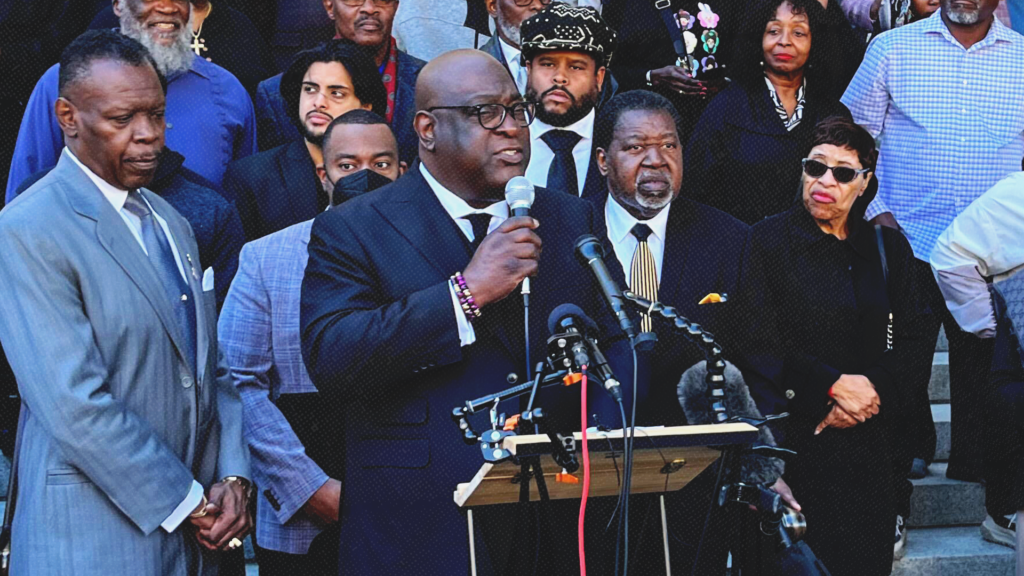
The District of Columbia is considering a bill to legalize commercial autonomous vehicles (A.V.s) in the city that would subject companies to hefty fees to fund programs for displaced ride-share drivers. Labor unions, religious leaders, and drivers gathered outside of the D.C. Council building on Tuesday to protest the bill and Waymo. Reason was on the ground to see it live.
Community members voiced a wide range of concerns about the prospect of self-driving cars coming to Washington, D.C. Worries included everything from road safety and job loss to surveillance and air quality issues from Waymo’s tires. Throughout the protest, trucks circled with digital billboards sporting pro-robotaxi messages, including “reducing human error saves human lives.”
The protest had one simple, repeated message for the council: “Robotaxis don’t vote; we vote.” It had a nice ring to it, but the threat underlying it was clear: If we lose our jobs, so do you.
Among the drivers who spoke was Helen Raynor, a single mother of four who described her struggle to make ends meet despite driving for ride-share companies on top of working a job. “You don’t benefit the people; you haven’t told us how you’re gonna benefit the people of D.C.,” she said, brimming with emotion. Raynor’s frustration captures the broader public’s sentiment that AI’s benefits are passing them by.
Autumn Weintraub, who leads 32BJ’s App Drivers Union, was a key spokesperson for the protest. In her statement, she said the council is “rushing to open the floodgates for a bill that could cause people here in the D.C. area to lose jobs at a time when the district already faces an unemployment and affordability crisis.”
“You can’t just say you’re for technology without a plan for the rest of the human beings that exist,” Weintraub told Reason. “How do people pay rent? How are people going to eat?”
“I’m not hearing a plan, and there is no rush to do this.” Her concerns about displaced workers may be well intentioned, but saying the council is “opening the floodgates” is a bit of an exaggeration.
The D.C. bill would bar companies from launching ride-hailing until at least January 2028. It requires companies to spend at least 180 days in the city’s testing program and log at least 250,000 testing miles within the district before they can obtain an initial permit. After receiving a permit, their fleets will remain capped at 200 vehicles until D.C. approves a more comprehensive plan.
In case these requirements aren’t sufficiently burdensome, the bill also includes a 15-cent tax on each mile driven by commercial A.V.s, along with a $1 million application fee and a $5 million permit fee. After covering administrative costs, the funds would be split between public transit and education, vocational training, and workforce development programs for ride-share drivers facing displacement from autonomous vehicles. D.C. would be the first locality to impose a per-mile tax on A.V.s, effectively subsidizing programs for ride-share drivers at the expense of A.V. companies and ultimately consumers.
A.V.s have immense potential to reduce prices. Uber’s current human-driven model runs at roughly a dollar per mile, according to BNP Paribas Equity Research, which also estimates that robotaxi costs could reach between 16 cents and 42 cents per mile over time. A 15-cent-per-mile tax would squander much of those gains, resulting in higher fares for consumers.
Cheaper rides aside, A.V.s’ biggest benefit is their potential to transform road safety. According to Waymo’s latest safety analysis, across more than 270 million driverless miles, A.V.s were involved in 82 percent fewer injury-causing crashes and 95 percent fewer crashes resulting in serious injury or death compared to human drivers in the same cities.
In D.C. alone, traffic fatalities have claimed 720 lives since 2006, and they seriously injure hundreds more every year. For every ride-share driver who could lose their job, there is someone whose life was uprooted or taken by a car crash that autonomous driving could have prevented.
Robotaxis may not vote, but residents who want lower prices and safer roads do.
Additional reporting by Ryan Curtis.
Read the full article here
Fact Checker
Verify the accuracy of this article using AI-powered analysis and real-time sources.