Close Menu
FSNN | Free Speech News NetworkFSNN | Free Speech News Network
  • Home
  • News
    • Politics
    • Legal & Courts
    • Tech & Big Tech
    • Campus & Education
    • Media & Culture
    • Global Free Speech
  • Opinions
    • Debates
  • Video/Live
  • Community
  • Freedom Index
  • About
    • Mission
    • Contact
    • Support
Trending

Early altseason signs emerge as altcoins begin to show bullish signs

2 minutes ago

Bitcoin ETFs Shed $630M in Largest Daily Exit Since January

4 minutes ago

How Much Deference Does SCOTUS Owe to Congress?

26 minutes ago
Facebook X (Twitter) Instagram
Facebook X (Twitter) Discord Telegram
FSNN | Free Speech News NetworkFSNN | Free Speech News Network
Market Data Newsletter
Thursday, May 14
  • Home
  • News
    • Politics
    • Legal & Courts
    • Tech & Big Tech
    • Campus & Education
    • Media & Culture
    • Global Free Speech
  • Opinions
    • Debates
  • Video/Live
  • Community
  • Freedom Index
  • About
    • Mission
    • Contact
    • Support
FSNN | Free Speech News NetworkFSNN | Free Speech News Network
Home»News»Global Free Speech»Cuban journalist handed 6-year prison sentence for protesting
Global Free Speech

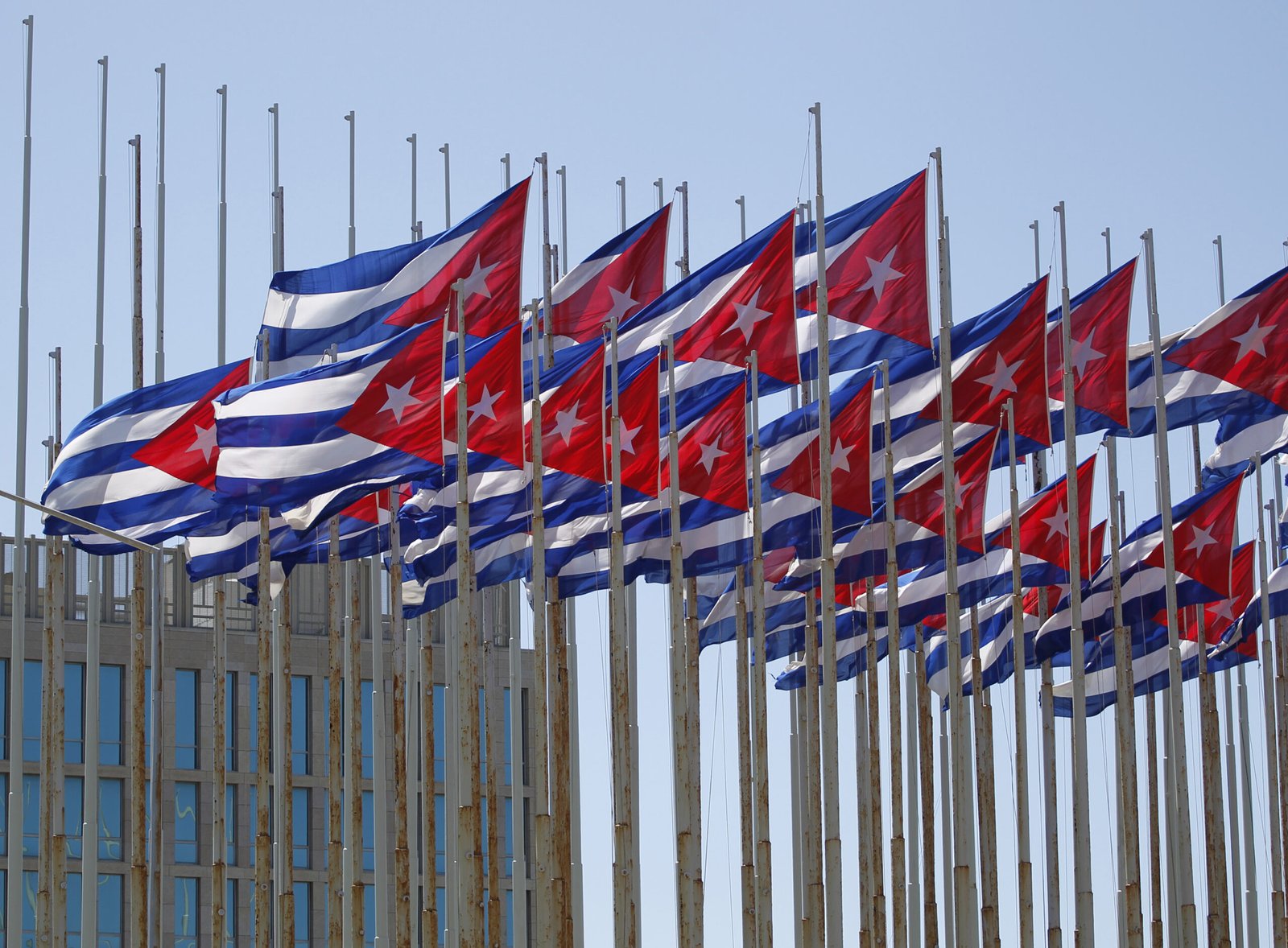
Cuban journalist handed 6-year prison sentence for protesting

News RoomBy News Room4 months agoNo Comments2 Mins Read513 Views
Share Facebook Twitter Pinterest Copy Link LinkedIn Tumblr Email VKontakte Telegram
Cuban journalist handed 6-year prison sentence for protesting
Share
Facebook Twitter Pinterest Email Copy Link

Listen to the article

0:00
0:00

Key Takeaways

Playback Speed

Select a Voice

Miami, January 27, 2026—The Committee to Protect Journalists condemns the sentencing of Cuban journalist José Gabriel Barrenechea to six years in prison on January 15 after he was found guilty of protesting and calls on Cuban authorities to free him, and allow the free flow of information in the country.

The Provincial Court of Villa Clara, a Cuban province, upheld the sentence requested by the prosecution for Barrenechea who is a contributing writer for the independent media outlet, 14ymedio.

The court found him guilty of public disorder, protesting during a blackout and ​​associating “with people of bad morals and social conduct” after he joined a peaceful street protest against power outages in the wake of Hurricane Rafael on November 7, 2024, in the town of Encrucijada, Villa Clara, according to a copy of the sentence obtained by CPJ.

Although local media sources told CPJ that Barrenechea was present at the protest as a participant rather than a journalist, CPJ is concerned that the severity of his sentence is intended to silence his media activities. Barrenechea was previously targeted by local authorities in connection with his writing, and has been subjected to numerous police summonses and brief detentions.

Barrenechea, 54, who was arrested on November 8, 2024, was sentenced with several other protestors who received between three- and eight-year sentences. The court stated “the intention to destabilize public order and create insecurity among the population” in justifying the lengthy prison sentences.

“Cuban authorities have created an opaque justice system that punishes dissent, rather than delivering fair verdicts,” said CPJ U.S., Canada, and Caribbean Program Coordinator Katherine Jacobsen. “In the case of journalist José Gabriel Barrenechea, we are concerned that he was given an especially draconian sentence — six years for banging pots in protest over a lack of electricity—in relation to his work as a journalist.”

Human rights groups reported that Barrenechea’s health has deteriorated due to a hunger strike and he was denied permission to visit his mother before she died in May.

Read the full article here

Fact Checker

Verify the accuracy of this article using AI-powered analysis and real-time sources.

Get Your Fact Check Report

Enter your email to receive detailed fact-checking analysis

5 free reports remaining

Continue with Full Access

You've used your 5 free reports. Sign up for unlimited access!

Already have an account? Sign in here

Share. Facebook Twitter Pinterest LinkedIn Tumblr Email Telegram Copy Link
News Room
  • Website
  • Facebook
  • X (Twitter)
  • Instagram
  • LinkedIn

The FSNN News Room is the voice of our in-house journalists, editors, and researchers. We deliver timely, unbiased reporting at the crossroads of finance, cryptocurrency, and global politics, providing clear, fact-driven analysis free from agendas.

Related Articles

Global Free Speech

Niger suspends 9 French media outlets for alleged public order threat

2 hours ago
Global Free Speech

LEFT: Still from the film Dhurandhar which came out in India in 2025, directed by Aditya Dhar. Photo: COLLECTION CHRISTOPHEL © B62 Studios – Benetone Films – Jio Studios/Alamy This article first appeared in the Spring 2026 issue of Index on Censorship, The monster unleashed: How Hungary’s illliberal vision is seducing the Western world published on 2 April 2026.  Salim Mirza, played by one of India’s greatest actors, Balraj Sahni, stands on the wide platform of Agra railway station, as he waves goodbye to his sister and her children who are leaving for Karachi. India has been partitioned overnight but Mirza’s love for Agra, his home city, holds him back. He’s not like most of his fellow Muslims who are leaving en masse in search of a life they presume will be free from discrimination. As the story unfolds, Mirza’s small shoe manufacturing business endures spiralling losses, heightening his dilemma, but eventually Mirza decides to stay, braving the harsh realities of post-independence India. Garm Hawa (Scorching Winds), made in 1974, is one of the greatest Hindi films on Partition and the geo-politics of India and Pakistan. It was made on a shoestring budget and the director Mysore Shrinivas Sathyu borrowed three quarters of the money from his friends. In Garm Hawa, Karachi was positioned as a “land of hope” and Pakistan was not merely a land of barbaric violence. Though in reality Partition had caused enormous bloodshed on both sides of the border, resulting in the largest singular human displacement in the subcontinent’s history. Even at the time, the film struggled to be released, held back by the Censor Board which cited communal sensitivity. But Garm Hawa finally saw the light of day at the Cannes Film Festival the following year and received international recognition. The arguments for Garm Hawa’s subtle, heart-wrenching but humanist approach towards those troubled times after Partition are many. But what is most striking is the absence of hyper-nationalist discourse and “Islamophobia” from the public realm at the time. Interestingly, the term Islamophobia was only adopted later as sociological jargon. The portrayal of Muslims Hindi cinema has come a long way from the 1970s when a film could depict Muslims as real, honest people living ordinary lives and being forced to leave India for Pakistan. Now, cinema is showing Pakistan as a country of terrorists, crime, blood and gruesomeness with Karachi at the heart. The apogee of this trend is Dhurandhar which came out in 2025. The film is both a historic discourse and reflects the rise of hyper-nationalist cinema. It was a huge success at the box office, taking an extraordinary $160 million (13 billion rupees). The cinematic change hasn’t happened overnight, it is intertwined with India’s social transformation and compounded by ideology. A cursory search of films themed on India Pakistan relations throws up mostly espionage thrillers or military dramas. Some of the films were released as early as 1997, like Border set during the India-Pakistan war of 1971. In 2003, there was LOC: Kargil about the 1999 border war between India and Pakistan and the 2007 movie, 1971, was also about the Indo-Pak war. They are more nuanced in comparison with what is happening today and all came out a long time before the current batch of hyper-nationalistic cinema even got the wind in their sails; tellingly, a sequel to 1997’s Border was released on 23 January 2026. On the whole, the late 1990s films laid the groundwork for more definitive later works which showed Hindu heroism and Muslims as the enemy, like for instance The Kashmir Files, Uri The Surgical Strike, The Kerala Story, Raazi, Fighter or Gaddar 2. All are premised on the idea of “patriotism” and “bravery” as predominant emotions and they enjoy a Bollywood eco-system willing to back such projects. Patriotism is box-office gold In a typical chicken and egg scenario, a long list of producers are happy to fund money spinners. The latest “patriotic” films like Dhurandhar and Chhaava were among the highest-grossing films of the year. And as there is such massive demand for stories of Muslim “othering”, more films are getting made. Interestingly, the universe of propaganda films made in 2025 is varied, a period film, Chhaava is focused on Mughals and Marathas. Films like Sky Force and Tanvi The Great are political thrillers. Diplomat, another release, concentrates on Islamic terrorism while Sarzameen is an army thriller based in Kashmir. Dhurandhar, the most successful one of all, is significant because it shifts the film-making grammar of its predecessors and emerges as a gripping entertainer with upscaled cinematic techniques. Wickedly crafted, it is primarily a spy thriller, but it is also a gangster movie and a story of regional political conflict reflecting Pakistan’s internal politics. The genres are mixed together to churn out a brutally violent film, hitherto unseen in Hindi cinema. The screenplay deploys a smart structure with short segments leading from one to the other. This is mounted with a chartbusting techno Qawaali, (a form of Sufi devotional singing) originally used in the iconic 1960s superhit Barsaat. There are high velocity action shots either in extra close-up or from drone cameras. The film is set in the gory, trash-littered streets of a working-class neighbourhood of Karachi. And the characterisation is original. The lead character Hamza Ali Mazari (later unmasked as Indian army officer Jaskirat Singh Rangi), goes undercover as a member of Baloch mobster Rehman Dakait’s gang. Dakait is played by well-known and much-loved Bollywood actor Akshaye Khanna, Mazari by one of the highest paid younger generation actors Ranveer Singh. Dhurandhar appears to be a slick, edgy, hard-hitting movie not your typical hyper-nationalist puff. It speaks its language of bigotry differently, laced with codes of love-hate for the Muslim aesthetic, like its use of popular qawwali and ghazals (forms of music mostly associated with Islamic cultures), spliced with the portrayal of sado-masochistic Muslim men – and women – trying to break free from their “prison”. Younger audiences have lapped up Dhurandhar because they have already been weaned on the unsettling universe of Hollywood’s Kill Bill and Sin City. And the massive distribution network behind the film with 3,000 screenings worldwide, 390 in North America alone, has created a juggernaut guaranteeing the movie’s success. Such intertwinings are intricate and clever, a stark contrast to a handful of cinemas with small budgets but powered by a gritty resolve to tell a story rising from the very same geo-politics but which still manage to remain humane. Ikkis (meaning 21) was released in 2025 without much fanfare, while Dhurandhar was a crushing box office hit. Ikkis is a tenderly told true story of a young army man who died in the Indo-Pak war in 1971 and the events that follow next, when his octogenarian father travels to Lahore for a college reunion thirty years after his son’s death. No jingoism, no slogan-mongering, it casts a newcomer Agastya Nanda, together with the legendary actor Dharmendra who died a few days before the film’s release to pose some vital humanitarian questions connected to war. Ikkis was reportedly made with a budget of between $4.7 million and $7.1 million and was released on 1 January. The film was distributed by powerhouse brands – quite startling as one of them is also the distributor for Dhurandhar – yet it hasn’t been able to catch a break so far and has been a box office flop. The film got some love from a handful of audiences willing to argue for peace. So, it is much more conducive for propaganda films like Dhurandhar to be made (its sequel Dhurandhar 2 is ready for a March release). A polarised view of the world, where Pakistan and Muslims are baddies and Hindus and Indians are goodies, is driving enormous profits for Bollywood, so no wonder the movie moguls are not stopping. READ MORE

22 hours ago
Global Free Speech

DRC journalist detained since January, another in hiding after mining impact report

1 day ago
Global Free Speech

Venezuelan journalist details complicated fight for amnesty post-Maduro

2 days ago
Global Free Speech

CPJ condemns Trump’s order for DOJ to subpoena journalists

2 days ago
Global Free Speech

Maldives jails 2 journalists over documentary about President Muizzu

2 days ago
Add A Comment

Comments are closed.

Editors Picks

Bitcoin ETFs Shed $630M in Largest Daily Exit Since January

4 minutes ago

How Much Deference Does SCOTUS Owe to Congress?

26 minutes ago

Charles Schwab begins rollout of spot BTC, ETH trading for U.S. retail customers

58 minutes ago

BitGo Posts $3.8B Revenue, $60.7M Loss amid Bitcoin Decline and IPO Costs in Q1

1 hour ago
Latest Posts

Are Democrats Now the Party of Free Markets? Don’t Bet on It.

1 hour ago

Niger suspends 9 French media outlets for alleged public order threat

2 hours ago

Moody’s puts AAA rating stamp on Fidelity and BlackRock’s tokenized money market funds

2 hours ago

Subscribe to News

Get the latest news and updates directly to your inbox.

At FSNN – Free Speech News Network, we deliver unfiltered reporting and in-depth analysis on the stories that matter most. From breaking headlines to global perspectives, our mission is to keep you informed, empowered, and connected.

FSNN.net is owned and operated by GlobalBoost Media
, an independent media organization dedicated to advancing transparency, free expression, and factual journalism across the digital landscape.

Facebook X (Twitter) Discord Telegram
Latest News

Early altseason signs emerge as altcoins begin to show bullish signs

2 minutes ago

Bitcoin ETFs Shed $630M in Largest Daily Exit Since January

4 minutes ago

How Much Deference Does SCOTUS Owe to Congress?

26 minutes ago

Subscribe to Updates

Get the latest news and updates directly to your inbox.

© 2026 GlobalBoost Media. All Rights Reserved.
  • Privacy Policy
  • Terms of Service
  • Our Authors
  • Contact

Type above and press Enter to search. Press Esc to cancel.

🍪

Cookies

We and our selected partners wish to use cookies to collect information about you for functional purposes and statistical marketing. You may not give us your consent for certain purposes by selecting an option and you can withdraw your consent at any time via the cookie icon.

Cookie Preferences

Manage Cookies

Cookies are small text that can be used by websites to make the user experience more efficient. The law states that we may store cookies on your device if they are strictly necessary for the operation of this site. For all other types of cookies, we need your permission. This site uses various types of cookies. Some cookies are placed by third party services that appear on our pages.

Your permission applies to the following domains:

  • https://fsnn.net
Necessary
Necessary cookies help make a website usable by enabling basic functions like page navigation and access to secure areas of the website. The website cannot function properly without these cookies.
Statistic
Statistic cookies help website owners to understand how visitors interact with websites by collecting and reporting information anonymously.
Preferences
Preference cookies enable a website to remember information that changes the way the website behaves or looks, like your preferred language or the region that you are in.
Marketing
Marketing cookies are used to track visitors across websites. The intention is to display ads that are relevant and engaging for the individual user and thereby more valuable for publishers and third party advertisers.