Close Menu
FSNN | Free Speech News NetworkFSNN | Free Speech News Network
  • Home
  • News
    • Politics
    • Legal & Courts
    • Tech & Big Tech
    • Campus & Education
    • Media & Culture
    • Global Free Speech
  • Opinions
    • Debates
  • Video/Live
  • Community
  • Freedom Index
  • About
    • Mission
    • Contact
    • Support
Trending

Breaking down our 2027 College Free Speech Rankings

12 minutes ago

New in SCOTUSBlog: “Break The Supreme Court Law Clerk Cartel”

19 minutes ago

CPJ condemns Israeli threats against ‘NAZA’ filmmakers

39 minutes ago
Facebook X (Twitter) Instagram
Facebook X (Twitter) Discord Telegram
FSNN | Free Speech News NetworkFSNN | Free Speech News Network
Market Data Newsletter
Tuesday, September 15
  • Home
  • News
    • Politics
    • Legal & Courts
    • Tech & Big Tech
    • Campus & Education
    • Media & Culture
    • Global Free Speech
  • Opinions
    • Debates
  • Video/Live
  • Community
  • Freedom Index
  • About
    • Mission
    • Contact
    • Support
FSNN | Free Speech News NetworkFSNN | Free Speech News Network
Home»News»Global Free Speech»CPJ condemns Israeli threats against ‘NAZA’ filmmakers
Global Free Speech

CPJ condemns Israeli threats against ‘NAZA’ filmmakers

News RoomBy News Room39 minutes agoNo Comments3 Mins Read1 Views
Share Facebook Twitter Pinterest Copy Link LinkedIn Tumblr Email VKontakte Telegram
CPJ condemns Israeli threats against ‘NAZA’ filmmakers
Share
Facebook Twitter Pinterest Email Copy Link

Listen to the article

0:00
0:00

Key Takeaways

Playback Speed

Select a Voice

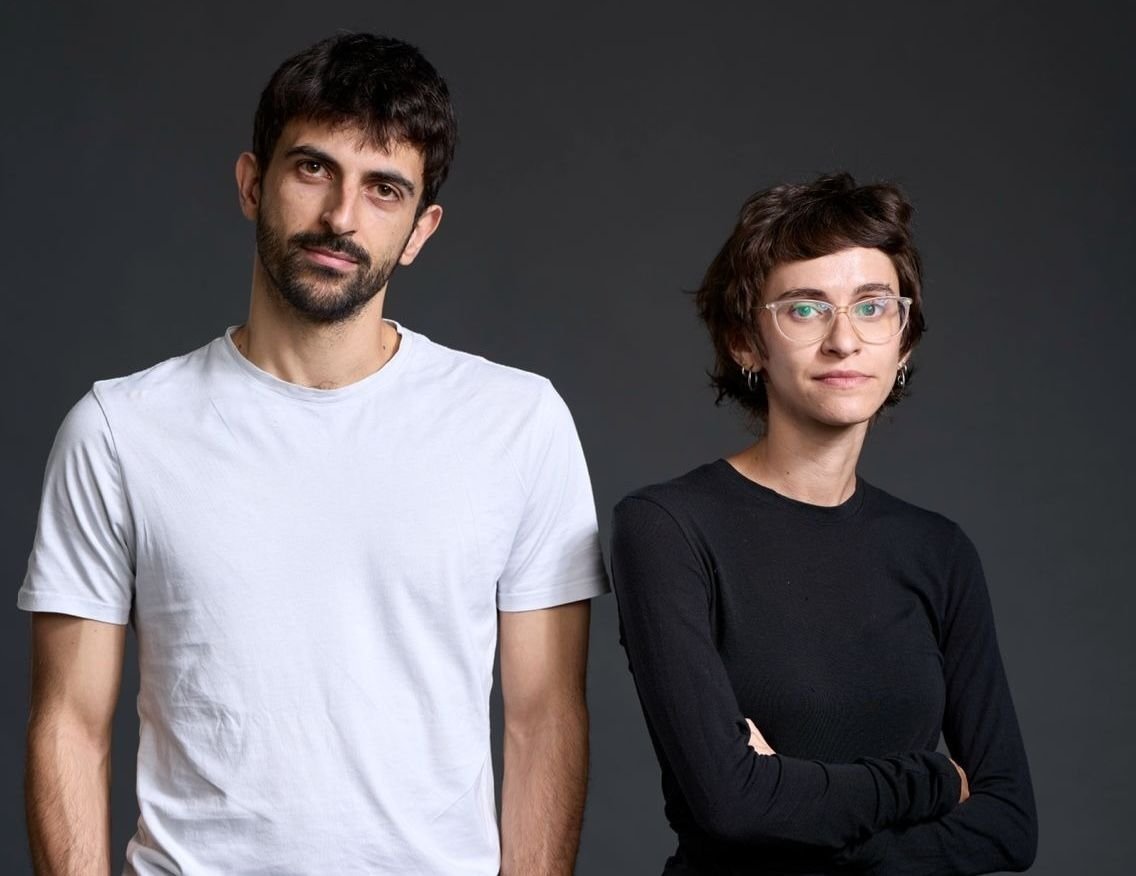
The Committee to Protect Journalists calls on Israeli authorities to immediately end threats of legal action against Israeli journalist and filmmaker Yuval Abraham and filmmaker Rachel Szor over their documentary “NAZA,” which accuses the Israeli military of using AI-powered targeting systems in the mass killing of civilians in Gaza.

Israeli Culture Minister Miki Zohar has threatened to seek the revocation of Abraham’s and Szor’s Israeli citizenship under the country’s Citizenship Law, saying it “allows for the revocation of citizenship due to a ‘breach of allegiance to the State of Israel.’” Israeli Defense Forces (IDF) Chief of Staff Eyal Zamir on Monday said military lawyers were examining “possible legal measures concerning the film and those involved in it,” accusing them of  “blood libels, deliberate distortions of reality and grave, false accusations against IDF soldiers and commanders.”

Israeli Prime Minister Benjamin Netanyahu also publicly denounced the filmmakers and their documentary, which won the Special Jury Prize at the Venice International Film Festival. Member of Knesset and former defence minister Avigdor Lieberman called Abraham and Szor “haters of Israel,” while the former prime minister Naftali Bennett described the film, titled with an IDF acronym for “collateral damage,” as “a horrific blood libel against our sons and daughters.”

“Israeli authorities must ensure the safety of Yuval Abraham and Rachel Szor and immediately reject any attempt to use citizenship rights as a weapon against journalists,” said CPJ Regional Director Sara Qudah. “Threats from senior government officials can have a chilling effect on journalists and encourage members of the public to engage in intimidation and silencing against them. These threats cannot be dismissed as political rhetoric. They are a warning to journalists and sources about the potential consequences of reporting critically on powerful institutions—and a dangerous signal to other journalists considering whether to investigate or expose alleged wrongdoing.”

Since October 2023, CPJ has documented widespread attacks and restrictions against journalists covering the Israel-Gaza war. Israeli and international journalists working in Israel and the occupied West Bank have faced threats and physical assaults, while Palestinian journalists and media workers in Gaza have been killed, arrested, and detained, and faced restrictions on their ability to report.

In February 2024, Abraham received death threats after he and Palestinian co-director Basel Adra won awards at the Berlin International Film Festival for “No Other Land.” Abraham canceled his flight home after a right-wing Israeli mob threatened his family at their home, forcing them to flee overnight.

In response to an email requesting comment, the Israeli military referred CPJ to the “political echelon.” The prime minister’s office and culture ministry did not respond by the time of publication.

Read the full article here

Fact Checker

Verify the accuracy of this article using AI-powered analysis and real-time sources.

Get Your Fact Check Report

Enter your email to receive detailed fact-checking analysis

5 free reports remaining

Continue with Full Access

You've used your 5 free reports. Sign up for unlimited access!

Already have an account? Sign in here

Share. Facebook Twitter Pinterest LinkedIn Tumblr Email Telegram Copy Link
News Room
  • Website
  • Facebook
  • X (Twitter)
  • Instagram
  • LinkedIn

The FSNN News Room is the voice of our in-house journalists, editors, and researchers. We deliver timely, unbiased reporting at the crossroads of finance, cryptocurrency, and global politics, providing clear, fact-driven analysis free from agendas.

Related Articles

Global Free Speech

Turkey arrests journalist Selahattin Günday over 2011 report

2 hours ago
Global Free Speech

Offices of Peruvian news site, La Noticia Clave, sprayed with bullets

18 hours ago
Global Free Speech

Bangladeshi journalists face 10-year jail terms for ‘unverified’ reporting under draft cybercrime law

1 day ago
Global Free Speech

Veteran Haitian journalist Wesly Renaud Jean abducted, ransom requested

3 days ago
Global Free Speech

Georgi Markov was a victim of transnational repression (AP via Alamy) More than four decades after Bulgarian dissident and writer Georgi Markov was assassinated in London, governments and their proxies continue to reach across borders to silence dissenting voices. Markov’s assassination on 11 September 1978, when he was attacked with a poisoned ricin pellet fired from an umbrella on Waterloo Bridge, remains one of the most notorious examples of a state extending its repression beyond its own territory. His death is a stark reminder that exile does not necessarily mean safety. Transnational repression (TNR) describes the ways in which governments and their proxies seek to intimidate, surveil, harass, threaten and harm people beyond their borders. Those targeted include human rights defenders, journalists, academics and members of diaspora communities. In recent years, the threat has taken new and increasingly sophisticated forms. Tactics can range from digital surveillance and intimidation to the misuse of international policing mechanisms, physical violence and targeted killings.  A new project supported by the Swedish Postcode Lottery Foundation, and delivered by Index on Censorship, the Foreign Policy Centre and International Partnership for Human Rights, aims to help strengthen the evidence base on transnational repression, connect organisations and communities working on the issue, and translate research and lived experience into stronger protections and more coordinated policy responses across Europe. The anniversary of Markov’s assassination provides a timely reminder of why this work matters. While the technologies and tactics used to target people abroad have changed dramatically since 1978, the underlying objective remains familiar: to silence those who challenge repression and defend fundamental rights. Andreas Eriksson, Secretary General of the Swedish Postcode Lottery Foundation, said: “No one should have to face threats and harassment for defending human rights. By strengthening support for at-risk human rights defenders and increasing awareness among decision-makers, this project helps promote stronger democracy and freedom of expression in Europe. We are proud to make this important work possible.” Jessica Ní Mhainín, Head of Policy and Campaigns at Index on Censorship, said: “Transnational repression thrives when it remains hidden and when those targeted have nowhere to turn. This project aims to help bring the issue into the light and, in so doing, to support those affected and to push for a stronger response to the issue across Europe. Index on Censorship is delighted to be working with the Foreign Policy Centre and International Partnership for Human Rights, with the support of the Swedish Postcode Lottery Foundation, to tackle transnational repression and to support those affected.” Izzy Cutts, Policy and Parliamentary Affairs Manager at the Foreign Policy Centre, said: “Protecting human rights defenders and their work from repressive actors is crucial to safeguarding our democracy and values. We welcome the recent progress on acknowledging transnational repression by European Institutions but more needs to be done to support and protect those at risk. We look forward to working with Index on Censorship and the International Partnership for Human Rights on this project and are grateful for the support of the Swedish Postcode Lottery Foundation.” READ MORE

4 days ago
Global Free Speech

A total of 31 journalists were killed in the attack (© Saddam Ahmed/IRPI Media) It has been just over a year since 31 journalists were killed by a single bomb in the Yemen capital of Sanaa. The Italian media consortium Investigative Reporting Project Italy (IRPI) has interviewed survivors and pieced together what happened Entry is permitted only to journalists, media personnel, witnesses, survivors, victims’ families, and officials authorised to access the site, located in the heart of Sanaa’s administrative district. Beyond the gate lies a mountain of wild rubble. At the centre of the site stand the scant remains of the printing presses used by the weekly newspaper 26 September, alongside a banner displaying images of the victims of 10 September 2025 massacre. Survivors find it painful to look at the wreckage. Ibrahim al-Masoudi, an illustrator and calligrapher, narrowly escaped death one year ago. He has since lost his hearing, though he retains his sight allowing him to weep for the 31 colleagues killed that afternoon by an American bomb. This weapon – a precision guided bomb with a thermal battery warhead manufactured in Missouri, the tracking of which was confirmed by our investigation for the IRPI – was dropped by the Israeli military on Sanaa, the capital of the pro-Iranian Yemeni Houthi government. Survivors find it hard to look at the devastation in Sanaa (© Saddam Ahmed/IRPI Media) Recent clashes between the Aden-based government – backed by the Saudi military – and the troops of Ansarullah (the name of the Yemeni Houthi party) have reignited the conflict between the region’s Sunni and Shia blocs on the Arabian Peninsula. Pro-Iranian militias in northern Yemen have also repeatedly struck Israel with missiles and drones and blocked Red Sea shipping following the outbreak of the war between Israel and Hamas. Yet, the memory of this massacre of journalists endures, standing as one of the gravest violations of press freedom in the last 20 years. This was, in fact, the single attack that has claimed the lives of the highest number of journalists since 2009 – occurring during the worst year on record for global press safety, with a death toll of 129 media workers according to the CPJ, primarily in Gaza.  On that day – a Thursday, the final workday of the week in Yemen – the bomb was dropped in the middle of the afternoon, just as people were returning from work and the weekly newspaper was being printed for its Friday release. The printing presses were running at full capacity. The son of Esam al-Hashidi, a journalist supporting a large family, had joined his father at work after leaving school. “The son,” reports Noria al-Harazi, a journalist who survived the attack and an editor for 26 September, “had told his mother that after school he preferred to accompany his father to work to watch and learn, so that he could support the family in the future should his father grow old or die.” Rescuers reported finding the father’s remains embracing what was left of the eleven-year-old boy. Esam’s son is one of the “collateral victims” of the massacre on 10 September 2025. On that day alone, the Yemen Data Project recorded a high number of casualties aside from the journalists: 22 men, 11 women, and 5 children killed. One reason for this is that the newspaper compound which was targeted was located in the city centre, surrounded by a bus station, heavily crowded during rush hours. Rescuers reported finding the father’s remains embracing what was left of the eleven-year-old boy  The compound housed the editorial offices of two state-owned Yemeni newspapers – 26 September  and al-Yemen which existed long before the pro-Iranian Houthi militia seized control of state institutions in 2014. Along with the two newsrooms, their staff, and all the machinery and printing presses, Yemen’s central historical archive was also incinerated; the archive had been established alongside the 26 September newspaper, which was set up following the revolution of 26 September 1962 (hence its name), the event in which republicans overthrew the imamate that had ruled the country for centuries.  “Stored here were 36 million photographic negatives and a vast number of documents from the Ottoman era, images of tourist sites, press interviews with government officials. Everything went up in smoke, burned, vanished: nothing remains,” says Nabil Shobail, head of the archive and deputy director of the photography department. Nabil bows in front of a series of black-and-white photographs scattered at the bottom of a pit – reached via a rough path leading into the hollow left by the bomb that destroyed the building housing the archive. “Look, this is Marshal Abdullah al-Sallal; he was one of Yemen’s presidents following the republican revolution of September 26th, in 1962. Twelve years of war weren’t enough. Now our history has been erased, too: who will give it back to us?” The massacre of these Yemeni journalists has garnered little international attention. There are several reasons: the difficulty the international press faced in accessing areas controlled by pro-Iranian militias; Houthi authorities’ concerns about protecting the site and the bomb evidence from potential further attacks; the dehumanisation of professionals who are allied with Iran – or who are Lebanese, Palestinian, Iraqi, Syrian, or Yemeni. Collectively, these factors have stifled efforts to determine accountability and kept details of the massacre from coming to light, within a global context where respect for international law has taken a back seat to the military objectives of the parties involved. “Everything went up in smoke, burned, vanished: nothing remains.” Killing journalists, unless they are directly involved in violence, is against international law, even if they are presenting the views of an armed group. But Israeli Defence Minister Israel Katz justified the attack, claiming the compound housed the “Houthi propaganda apparatus” belonging to the public relations department of their party, Ansarullah. Today from Ukraine to Sudan, from Gaza to Lebanon and Yemen, being a doctor, paramedic, or journalist offers no protection against friendly or enemy fire; instead, it makes one a target. Reiterating that journalism is never a crime has not shielded these colleagues from death. READ MORE

4 days ago
Add A Comment
Leave A Reply Cancel Reply

Editors Picks

New in SCOTUSBlog: “Break The Supreme Court Law Clerk Cartel”

19 minutes ago

CPJ condemns Israeli threats against ‘NAZA’ filmmakers

39 minutes ago

ECB calls on online merchants to join digital euro pilot ahead of 2029 target

47 minutes ago

Bitcoin Sinks as the Senate’s Clarity Act Showdown Looms

49 minutes ago
Latest Posts

Hoax

1 hour ago

Turkey arrests journalist Selahattin Günday over 2011 report

2 hours ago

A hacker turned 25 cents of bitcoin into 46 billion fake BTC tokens on a DeFi bridge

2 hours ago

Subscribe to News

Get the latest news and updates directly to your inbox.

At FSNN – Free Speech News Network, we deliver unfiltered reporting and in-depth analysis on the stories that matter most. From breaking headlines to global perspectives, our mission is to keep you informed, empowered, and connected.

FSNN.net is owned and operated by GlobalBoost Media
, an independent media organization dedicated to advancing transparency, free expression, and factual journalism across the digital landscape.

Facebook X (Twitter) Discord Telegram
Latest News

Breaking down our 2027 College Free Speech Rankings

12 minutes ago

New in SCOTUSBlog: “Break The Supreme Court Law Clerk Cartel”

19 minutes ago

CPJ condemns Israeli threats against ‘NAZA’ filmmakers

39 minutes ago

Subscribe to Updates

Get the latest news and updates directly to your inbox.

© 2026 GlobalBoost Media. All Rights Reserved.
  • Privacy Policy
  • Terms of Service
  • Our Authors
  • Contact

Type above and press Enter to search. Press Esc to cancel.

🍪

Cookies

We and our selected partners wish to use cookies to collect information about you for functional purposes and statistical marketing. You may not give us your consent for certain purposes by selecting an option and you can withdraw your consent at any time via the cookie icon.

Cookie Preferences

Manage Cookies

Cookies are small text that can be used by websites to make the user experience more efficient. The law states that we may store cookies on your device if they are strictly necessary for the operation of this site. For all other types of cookies, we need your permission. This site uses various types of cookies. Some cookies are placed by third party services that appear on our pages.

Your permission applies to the following domains:

  • https://fsnn.net
Necessary
Necessary cookies help make a website usable by enabling basic functions like page navigation and access to secure areas of the website. The website cannot function properly without these cookies.
Statistic
Statistic cookies help website owners to understand how visitors interact with websites by collecting and reporting information anonymously.
Preferences
Preference cookies enable a website to remember information that changes the way the website behaves or looks, like your preferred language or the region that you are in.
Marketing
Marketing cookies are used to track visitors across websites. The intention is to display ads that are relevant and engaging for the individual user and thereby more valuable for publishers and third party advertisers.