Close Menu
FSNN | Free Speech News NetworkFSNN | Free Speech News Network
  • Home
  • News
    • Politics
    • Legal & Courts
    • Tech & Big Tech
    • Campus & Education
    • Media & Culture
    • Global Free Speech
  • Opinions
    • Debates
  • Video/Live
  • Community
  • Freedom Index
  • About
    • Mission
    • Contact
    • Support
Trending

SEC Proposes New Standards for US Transfer Agents

1 minute ago

Cathie Wood’s Ark Invest Buys $37 Million in Bitcoin and Payments Firm Block

3 minutes ago

Free Speech Unmuted: The Process Is The Punishment: ABC v. FCC with Stuart Benjamin

30 minutes ago
Facebook X (Twitter) Instagram
Facebook X (Twitter) Discord Telegram
FSNN | Free Speech News NetworkFSNN | Free Speech News Network
Market Data Newsletter
Tuesday, September 1
  • Home
  • News
    • Politics
    • Legal & Courts
    • Tech & Big Tech
    • Campus & Education
    • Media & Culture
    • Global Free Speech
  • Opinions
    • Debates
  • Video/Live
  • Community
  • Freedom Index
  • About
    • Mission
    • Contact
    • Support
FSNN | Free Speech News NetworkFSNN | Free Speech News Network
Home»News»Media & Culture»COVID Shots Are Not Causing a ‘Turbo Cancer’ Epidemic
Media & Culture

COVID Shots Are Not Causing a ‘Turbo Cancer’ Epidemic

News RoomBy News Room10 months agoNo Comments8 Mins Read2 Views
Share Facebook Twitter Pinterest Copy Link LinkedIn Tumblr Email VKontakte Telegram
COVID Shots Are Not Causing a ‘Turbo Cancer’ Epidemic
Share
Facebook Twitter Pinterest Email Copy Link

Listen to the article

0:00
0:00

Key Takeaways

Playback Speed

Select a Voice

A claque of online anti-vaccine influencers and dissentient researchers are claiming that COVID-19 vaccines are causing an epidemic of aggressive, fast-spreading cancers. The theory, dubbed “turbo cancer,” has gained traction despite a lack of credible evidence.

One of the more prominent promoters of this claim is British nurse educator and prolific YouTuber John Campbell. In a recent YouTube talk, Campbell claims, “There has been for some time now, from talking with various experts, about the increased risk of cancers, probably all types of cancer, or many types of cancers, after COVID vaccines.” In the video, Campbell cites a recent Italian study as evidence for his assertions.

Another study, titled “COVID-19 mRNA-Induced ‘Turbo Cancers’,” published in the recently launched Journal of Independent Medicine, is coauthored by physician Paul Marik and his pseudonymous collaborator Justus Hope, who assert that “the incidence of cancers has increased exponentially worldwide since the universal COVID-19 vaccination program began at the end of 2020.”

British oncologist Angus Dalgleish has also been a particularly prominent turbo-cancer proponent. He claims that the vaccines “were horrible gene therapies that could actually integrate into your genome.” Consequently, he adds, “we’re seeing this horrendous rise in turbo cancers.”

Similarly, in a speech to the Reform U.K. Conference in September, U.K. cardiologist and adviser to Health and Human Services Secretary Robert F. Kennedy Jr., Aseem Malhotra, speculated that the cancer diagnoses in the British royal family are related to COVID-19 vaccines.

All of this is false. The “evidence” cited by turbo-cancer promoters is bogus. Besides the Italian study referenced by Campbell, turbo-cancer proponents point to questionable epidemiological studies in South Korea and Japan as evidence. (The Japanese study was published in the journal Cureus, which was delisted in October from the Web of Science index because of the low quality of many of its articles.)

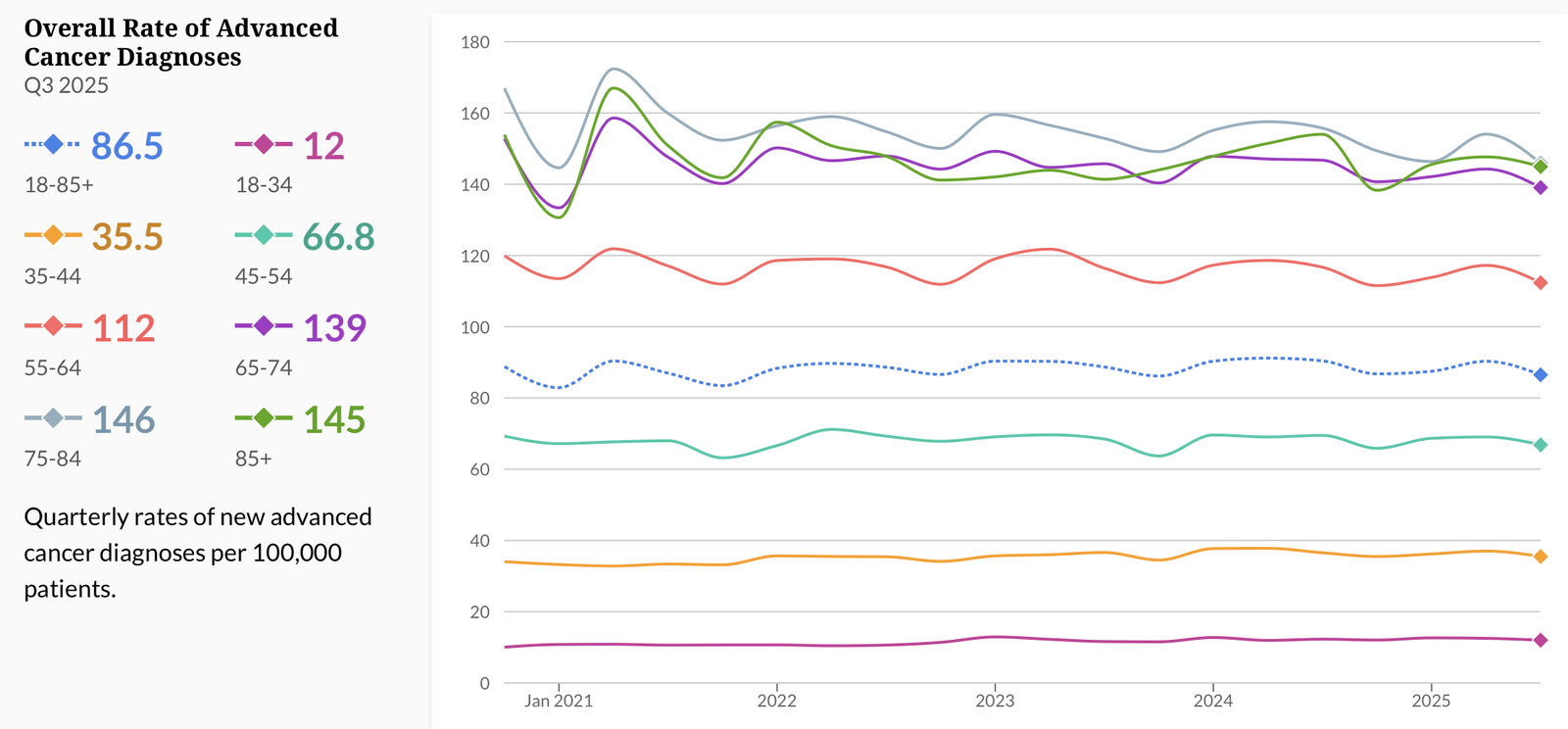
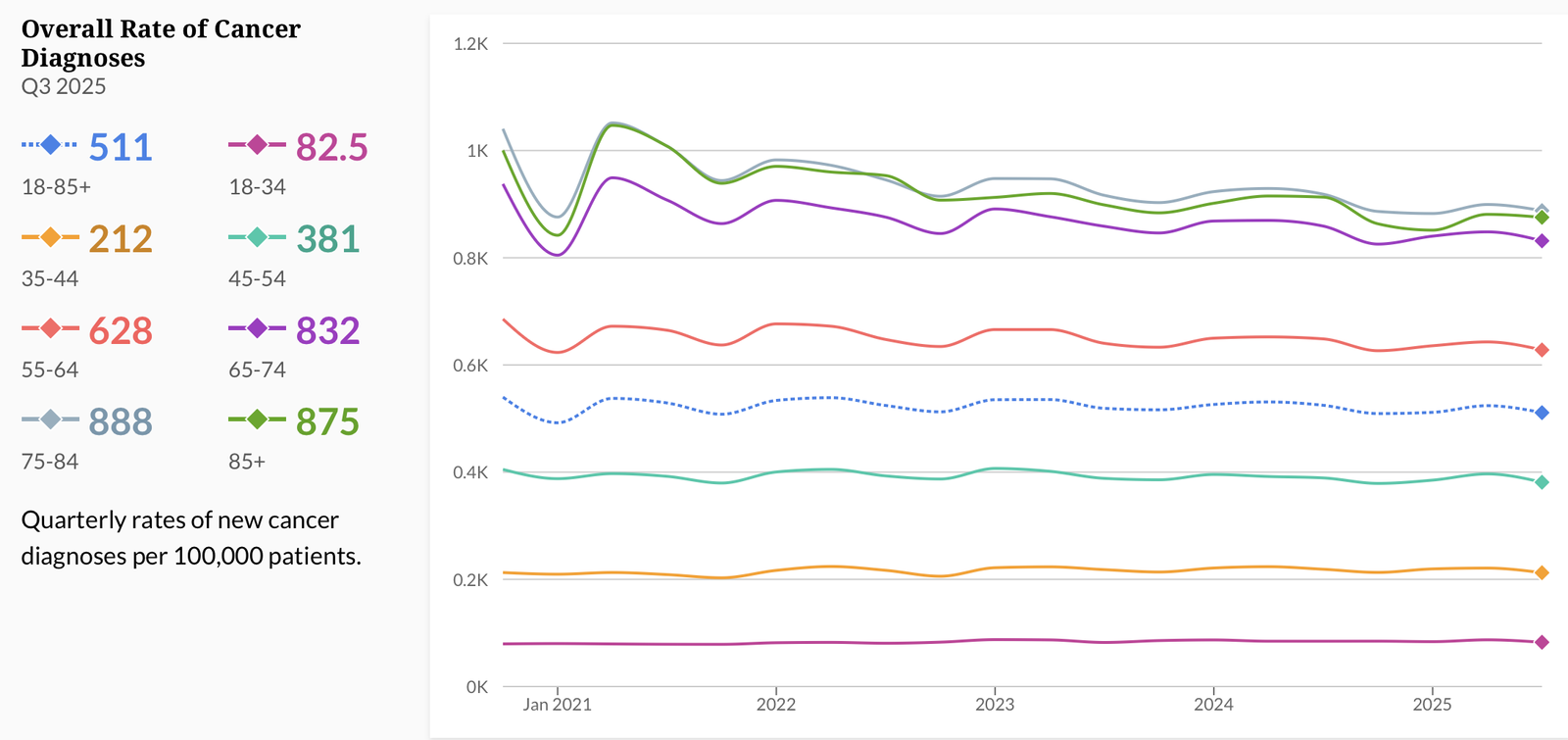
Before analyzing those studies, let’s just consider what’s happening in the United States. Since 2021, around 82 percent of Americans have received at least one COVID-19 shot (mostly mRNA vaccines). Is there any evidence for an “exponential” turbo-cancer epidemic in the United States? Not at all. In fact, since the vaccine rollout, the electronic health records analysis firm Epic Research reports new cancer diagnoses in the U.S. are flat or slightly declining for most age groups.
Epic Research
Epic Research

What about the recent spate of claims that there has been an alarming increase in cancer rates among Americans under age 50? A November article in the journal JAMA Internal Medicine finds that the increase is “more apparent than real.” The article notes that the fact that mortality rates remain basically flat suggests that “much of the increase appears to reflect increased diagnostic scrutiny and overdiagnosis.” Basically, physicians are getting better at detecting cancers, many of which would never have produced illness.

In addition, a September 2024 study in Cancers by Pennsylvania State University researchers tracked cancer incidence rates among Americans aged 15 to 39 between 2015 and 2021. They identified no increase in cancer incidence among younger Americans. “Age-adjusted overall cancer incidence and mortality rates were stable during this study period,” they report.

So what about the Italian study? That preliminary study, which followed the health outcomes of nearly 300,000 residents for 30 months in one Italian province, did report that people who had received at least one dose of COVID-19 vaccines had “a slightly higher likelihood of hospitalization for cancer” compared with the unvaccinated. The researchers themselves, however, noted that they could not take into account various epidemiological confounders, especially the “healthy vaccinee bias.” Since people who get vaccinated are generally more likely than the unvaccinated to seek healthcare, they could also be more likely to receive a cancer diagnosis. In addition, the vaccines were prioritized for people over age 70 who are inherently at higher risk of developing cancer.

Oddly, the reported cancer hospitalizations increased only between three and six months after receiving at least one injection. However, 12 months after the start of the vaccination campaign, the association between cancer and vaccination reversed. Vaccinated individuals had a lower risk of cancer-related hospitalization compared to the unvaccinated. If COVID-19 vaccines triggered cancer, then more doses should boost the risks. The study, however, showed that after three or more vaccine doses, cancer risk dropped by about 10 percent compared to those who were unvaccinated. Ultimately, the researchers reported that vaccinated subjects “showed almost half the risk of all-cause death after a median follow-up of 25 months” compared to unvaccinated people.

If Italy were experiencing a “turbo-cancer” epidemic, one would expect that cancer mortality rates would likely be increasing. In fact, a 2024 study predicted that age-adjusted cancer rates for men and women are 9 percent and 4.4 percent, respectively, below their 2019 levels. Of course, 2019 is a year before the COVID-19 pandemic began and two years before the vaccines were rolled out.

Turbo-cancer charlatans also point to a recent sloppy South Korean observational study in Biomarker Research. The study purported to find that the incidence of cancers including prostate, breast, lung, and colorectal “significantly increased at 1 year post-vaccination” compared with unvaccinated people. The South Korean study suffers from many of the same analytical flaws as the Italian one does. Its main problem, however, is that the cohort selected by the researchers is not representative.

Italian statistician Marco Roccetti notes that the cancer incidence rates for both the vaccinated and unvaccinated cohorts in the study are well below the official national cancer incidence rate. Considering that more than 90 percent of South Koreans over age 12 have been vaccinated against COVID-19, that could hardly be evidence for an increase in cancer rates purportedly resulting from those vaccines. Using a demographically balanced cohort, Roccetti concludes, “would predictably show no statistically significant difference in cancer incidence between vaccinated and non-vaccinated groups, thereby confirming the safety profile of the COVID-19 vaccine with respect to cancer risk.”

In a letter to the editor of Biomarker Research, a group of Canadian statisticians has weighed in as well, arguing that the findings “are biologically implausible and could be explained by surveillance bias, reverse causation, residual confounding, and multiple testing.” The findings are biologically implausible because the amount of time that it takes for solid tumors to develop is measured in years and decades, not just the one-year duration of the study. In light of these methodological issues, the Canadian researchers urge the journal to issue an expression of concern about the study.

Turbo-cancer zealots also cite a bogus 2024 Japanese study that purportedly found that cancer deaths increased nearly 10 percent in Japan subsequent to mass COVID-19 vaccination campaigns in 2021 and 2022. The journal that published the article has retracted it, noting that “it has been determined that the correlation between mortality rates and vaccination status cannot be proven with the data presented in this article. As this invalidates the conclusions of the article, the decision has been made to retract.”

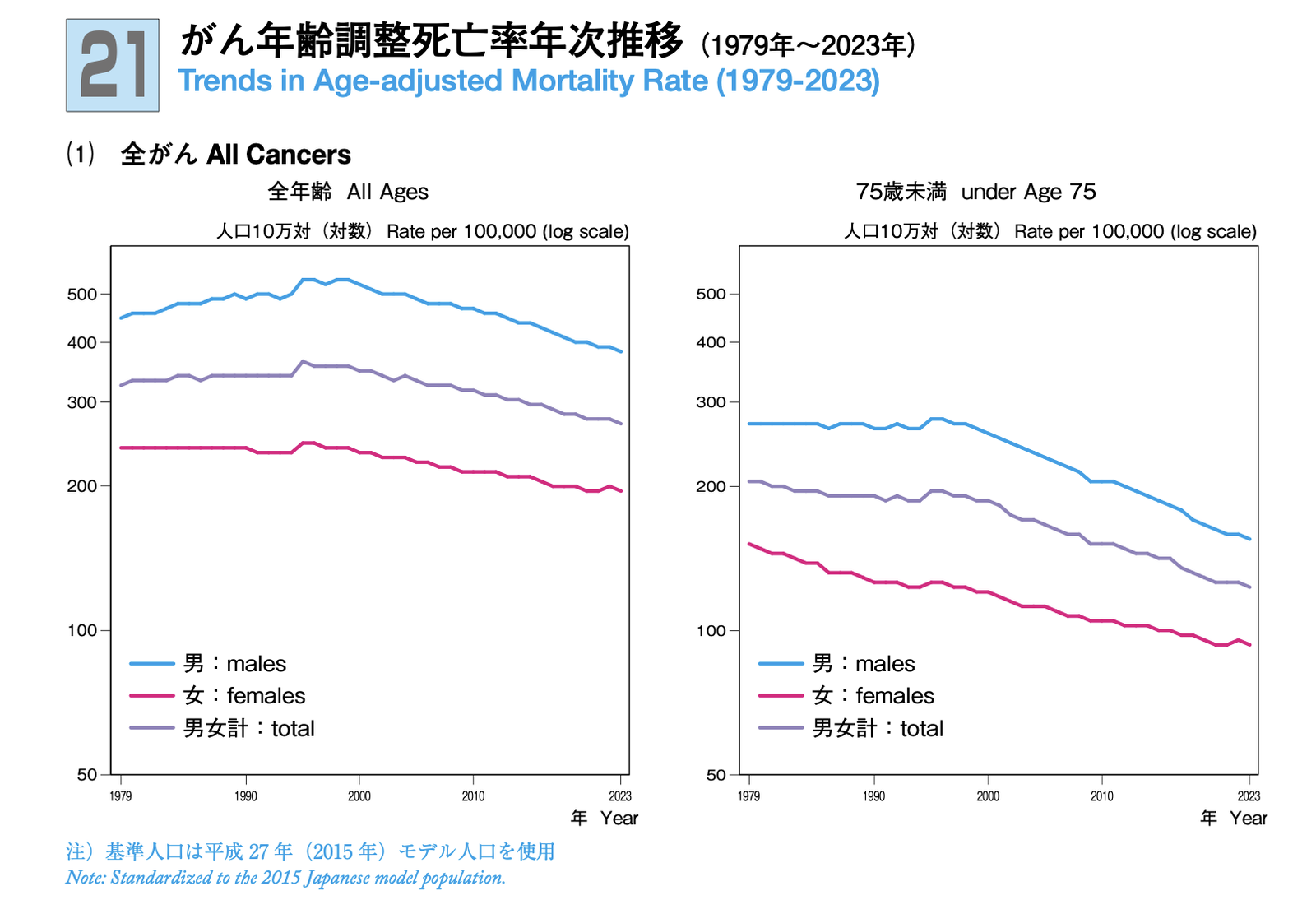
The retraction is apt considering that post-vaccination campaign Japanese age-adjusted cancer mortality rates have continued to decline, according to the 2025 cancer statistics report from the Japanese Foundation for the Promotion of Cancer Research.
Japanese Cancer Statistics 2025

So claims that there is a turbo-cancer epidemic caused by mRNA vaccines turn out to be just another unscrupulous anti-vax conspiratorial delusion.

Contrary to turbo-cancer claims, mRNA vaccines instead appear to “turbo-charge” cancer immunotherapy treatments, according to an October report in Nature by researchers at M.D. Anderson Cancer Center in Houston, Texas. The mRNA COVID-19 vaccines work like an alarm, putting the body’s immune system on high alert to recognize and attack cancer cells.

“This study demonstrates that commercially available mRNA COVID vaccines can train patients’ immune systems to eliminate cancer,” said researcher Adam Grippin in a press release detailing the study. “When combined with immune checkpoint inhibitors, these vaccines produce powerful antitumor immune responses that are associated with massive improvements in survival for patients with cancer.”

How massive? “Cancer patients who received mRNA COVID vaccines within 100 days of starting immunotherapy were twice as likely to be alive three years after treatment as those who never received a vaccine,” notes the press release.

Consequently, the researchers are launching a multi-center, randomized Phase III trial to see if these findings can be confirmed. If so, COVID-19 mRNA vaccines may become part of the standard of care for patients receiving cancer immunotherapy treatments.

Yet instead of hailing the promise of mRNA vaccines, the founder of America’s leading anti-vax advocacy group, RFJ Jr., canceled 22 mRNA federal vaccine development contracts totaling around $500 million—a move that could stall lifesaving vaccine and cancer research.

Read the full article here

Fact Checker

Verify the accuracy of this article using AI-powered analysis and real-time sources.

Get Your Fact Check Report

Enter your email to receive detailed fact-checking analysis

5 free reports remaining

Continue with Full Access

You've used your 5 free reports. Sign up for unlimited access!

Already have an account? Sign in here

Share. Facebook Twitter Pinterest LinkedIn Tumblr Email Telegram Copy Link
News Room
  • Website
  • Facebook
  • X (Twitter)
  • Instagram
  • LinkedIn

The FSNN News Room is the voice of our in-house journalists, editors, and researchers. We deliver timely, unbiased reporting at the crossroads of finance, cryptocurrency, and global politics, providing clear, fact-driven analysis free from agendas.

Related Articles

Cryptocurrency & Free Speech Finance

Cathie Wood’s Ark Invest Buys $37 Million in Bitcoin and Payments Firm Block

3 minutes ago
Media & Culture

Free Speech Unmuted: The Process Is The Punishment: ABC v. FCC with Stuart Benjamin

30 minutes ago
Cryptocurrency & Free Speech Finance

X Data Breach? Users Are Getting Flooded With Password Reset Emails Nobody Requested

1 hour ago
Media & Culture

2,400 Baseball Games for the Price of 1

2 hours ago
Media & Culture

The Biggest Revelation In Recent NYT Expose Is Justice Scalia Wasn’t Planning on Dying

3 hours ago
Cryptocurrency & Free Speech Finance

Gal Gadot Defends AI Use in Bitcoin Film: ‘Work With It or Be Out of the Game’

3 hours ago
Add A Comment

Comments are closed.

Editors Picks

Cathie Wood’s Ark Invest Buys $37 Million in Bitcoin and Payments Firm Block

3 minutes ago

Free Speech Unmuted: The Process Is The Punishment: ABC v. FCC with Stuart Benjamin

30 minutes ago

Guidance on public photography should be shared with everyone in the UK not just asylum seekers. Photo: Getty Images for Unsplash+ Asylum seekers in the UK are being misled by the Home Office over laws about photographing people in public places and are being threatened that their asylum claims might be refused and could be kicked out of the country. On 19 August, the Home Office issued a poster entitled “Do not photograph or film people in public” as part of a series of guidance over consequences of behaviour for those seeking asylum. The poster is part of a nine-page booklet that aims to help asylum seekers understand what is expected of them when living in the UK and covers issues such as sexual consent and domestic abuse. The release of the booklet is controversial because the guidance it contains applies to everyone in the UK and not just asylum seekers. Its publication now could be seen as a politically motivated sop to those who want to crack down on all immigration, even though Britain is legally bound to admit genuine refugees. In the introduction, the Home Office says, “We understand that coming to a new country can be difficult, and that laws and customs here may be different from your home country.” The poster says, “In the UK, you should not take pictures or videos of someone without their permission. This includes taking pictures or videos in public spaces, like streets of parks, or in private spaces, like at home.” However, the poster is misleading. There is a common misconception that photographing people in public places without their consent is illegal. It is not. There are some situations where there are restrictions, for example where photography is restricted by law, such as outside military facilities where photography is prohibited because of national security concerns. Photography is also not permitted where an individual has a reasonable expectation of privacy, such as in the changing room of a clothes shop. Many commercial, privately owned spaces also have rules regarding photography. Sheffield’s Meadowhall shopping centre, for example, says filming and photography is not permitted unless authorised. Where there are no restrictions, consent is not required by law but many legitimate street photographers follow codes of conduct where they might seek consent. The Royal Society of Photographers, for example, recommends that “particular care should be taken when photographing children and vulnerable people, with consideration given to consent, safeguarding, privacy and the potential impact of making or sharing an image”. It adds, “Photographers should also consider how images of identifiable people are subsequently used, especially where their use could imply endorsement or raise concerns about commercial exploitation.” Repeated photography of a person without their consent could be illegal if it crosses into harassing behaviour that is likely to cause alarm or intimidation. This is banned by the Protection from Harassment Act 1997. Photographers must also not share pictures of a sexual nature, for example upskirting, without the subject’s permission. This is banned under the Criminal Justice and Courts Act 2015. When asked about the poster, a Home Office spokesperson said: “We expect everyone who comes to the UK to abide by our laws. If they do not, they will face consequences, including the refusal of their asylum claim and removal from the UK.” They added, “These resources were produced for asylum seekers so there can be no possible misunderstanding of what we expect. The poster is designed to communicate two separate messages: Firstly, that individuals should not take photographs of others without their consent. Secondly, that sharing photographs or videos of a sexual nature without someone’s permission is a serious criminal offence.” There are subtle indications that the Home Office knew that what it was publishing was incorrect. Looking at the poster closely, it appears that the word “should” has been added later, suggesting that it previously said “must” – the font used is subtly different (see below). The information contained in a new Home Office poster is incorrect The Home Office did not respond to our request for comment when we asked about this. The spokeperson said of the poster, “It does not suggest that you can go to prison for taking someone’s photo in public.” There are nuances of English grammar at play here. One person who commented on the BPPA’s statement on Instagram said, “It doesn’t say there’s a legal requirement not to? It says you shouldn’t which to be quite frank is good, if simplified, advice for asylum speakers for whom English is not a first language.” However the heading of the poster is unequivocal. It says, “Do not”. Anyone, even those using English as a second language, would be unlikely to misconstrue that. The original wording still appears to be on the Home Office website. In the booklet’s introduction it says: “In the UK, we respect people’s privacy. This means you must not take photographs or videos of someone without their consent.” (emphasis mine). Photographers and photojournalists and their unions have been quick to call on the Home Office to clarify the poster. The British Press Photographers’ Association (BPPA) has commented on the document. It said, “Recently issued Home Office guidance that states permission is needed to photograph people in public is incorrect and harmful. There is no legal requirement to seek permission when photographing in public. The BPPA hopes an immediate correction will be issued.” Séamus Dooley, NUJ assistant general secretary, said: “This communication not only runs the risk of misleading asylum seekers, it could also have serious consequences for our members – particularly photographers and videographers who regularly carry out their work in public places. It also spreads public confusion that could serve to inhibit public interest journalism. Press photographers and other lens-based journalists perform a legitimate and important function in reporting and recording events in public spaces. “The union is very concerned that the spread of inaccurate information around the right to photograph and film people in public without permission could expose our members to increased hostility and harassment as well as wrongful accusations of criminality and unjustifiable stops by the police. This would undermine journalists’ right to report and the public’s right to know. READ MORE

46 minutes ago

Robinhood's new crypto network is printing cash, and it's sending Arbitrum's token soaring

56 minutes ago
Latest Posts

21 Financial Giants Form Venture for G7 Stablecoins

1 hour ago

X Data Breach? Users Are Getting Flooded With Password Reset Emails Nobody Requested

1 hour ago

2,400 Baseball Games for the Price of 1

2 hours ago

Subscribe to News

Get the latest news and updates directly to your inbox.

At FSNN – Free Speech News Network, we deliver unfiltered reporting and in-depth analysis on the stories that matter most. From breaking headlines to global perspectives, our mission is to keep you informed, empowered, and connected.

FSNN.net is owned and operated by GlobalBoost Media
, an independent media organization dedicated to advancing transparency, free expression, and factual journalism across the digital landscape.

Facebook X (Twitter) Discord Telegram
Latest News

SEC Proposes New Standards for US Transfer Agents

1 minute ago

Cathie Wood’s Ark Invest Buys $37 Million in Bitcoin and Payments Firm Block

3 minutes ago

Free Speech Unmuted: The Process Is The Punishment: ABC v. FCC with Stuart Benjamin

30 minutes ago

Subscribe to Updates

Get the latest news and updates directly to your inbox.

© 2026 GlobalBoost Media. All Rights Reserved.
  • Privacy Policy
  • Terms of Service
  • Our Authors
  • Contact

Type above and press Enter to search. Press Esc to cancel.

🍪

Cookies

We and our selected partners wish to use cookies to collect information about you for functional purposes and statistical marketing. You may not give us your consent for certain purposes by selecting an option and you can withdraw your consent at any time via the cookie icon.

Cookie Preferences

Manage Cookies

Cookies are small text that can be used by websites to make the user experience more efficient. The law states that we may store cookies on your device if they are strictly necessary for the operation of this site. For all other types of cookies, we need your permission. This site uses various types of cookies. Some cookies are placed by third party services that appear on our pages.

Your permission applies to the following domains:

  • https://fsnn.net
Necessary
Necessary cookies help make a website usable by enabling basic functions like page navigation and access to secure areas of the website. The website cannot function properly without these cookies.
Statistic
Statistic cookies help website owners to understand how visitors interact with websites by collecting and reporting information anonymously.
Preferences
Preference cookies enable a website to remember information that changes the way the website behaves or looks, like your preferred language or the region that you are in.
Marketing
Marketing cookies are used to track visitors across websites. The intention is to display ads that are relevant and engaging for the individual user and thereby more valuable for publishers and third party advertisers.