Close Menu
FSNN | Free Speech News NetworkFSNN | Free Speech News Network
  • Home
  • News
    • Politics
    • Legal & Courts
    • Tech & Big Tech
    • Campus & Education
    • Media & Culture
    • Global Free Speech
  • Opinions
    • Debates
  • Video/Live
  • Community
  • Freedom Index
  • About
    • Mission
    • Contact
    • Support
Trending

Three Investitures in Two Days

9 minutes ago

Stablecoin card spend is growing 100% year over year, Rain exec says

24 minutes ago

Bitcoin Rally Stalls At $80K But Bulls Anticipate A Pro-Crypto Fed Chair

25 minutes ago
Facebook X (Twitter) Instagram
Facebook X (Twitter) Discord Telegram
FSNN | Free Speech News NetworkFSNN | Free Speech News Network
Market Data Newsletter
Saturday, May 9
  • Home
  • News
    • Politics
    • Legal & Courts
    • Tech & Big Tech
    • Campus & Education
    • Media & Culture
    • Global Free Speech
  • Opinions
    • Debates
  • Video/Live
  • Community
  • Freedom Index
  • About
    • Mission
    • Contact
    • Support
FSNN | Free Speech News NetworkFSNN | Free Speech News Network
Home»AI & Censorship»Congress Narrowed the GUARD Act, But Serious Problems Remain
AI & Censorship

Congress Narrowed the GUARD Act, But Serious Problems Remain

News RoomBy News Room1 hour agoNo Comments4 Mins Read1,802 Views
Share Facebook Twitter Pinterest Copy Link LinkedIn Tumblr Email VKontakte Telegram
Congress Narrowed the GUARD Act, But Serious Problems Remain
Share
Facebook Twitter Pinterest Email Copy Link

Listen to the article

0:00
0:00

Key Takeaways

Playback Speed

Select a Voice

Following criticism, lawmakers have narrowed the GUARD Act, a bill aimed at restricting minors’ access to certain AI systems. The earlier version could have applied broadly to nearly every AI-powered chatbot or search tool. The amended bill focuses more narrowly on so-called “AI companions”—conversational systems designed to simulate emotional or interpersonal interactions with users. 

That change does address some of the broadest concerns raised about the original proposal, though some questions about the bill’s reach remain. Bottom line: the revised bill still creates serious problems for privacy, online speech, and parental choice.

TAKE ACTION

Tell Congress: oppose the guard act

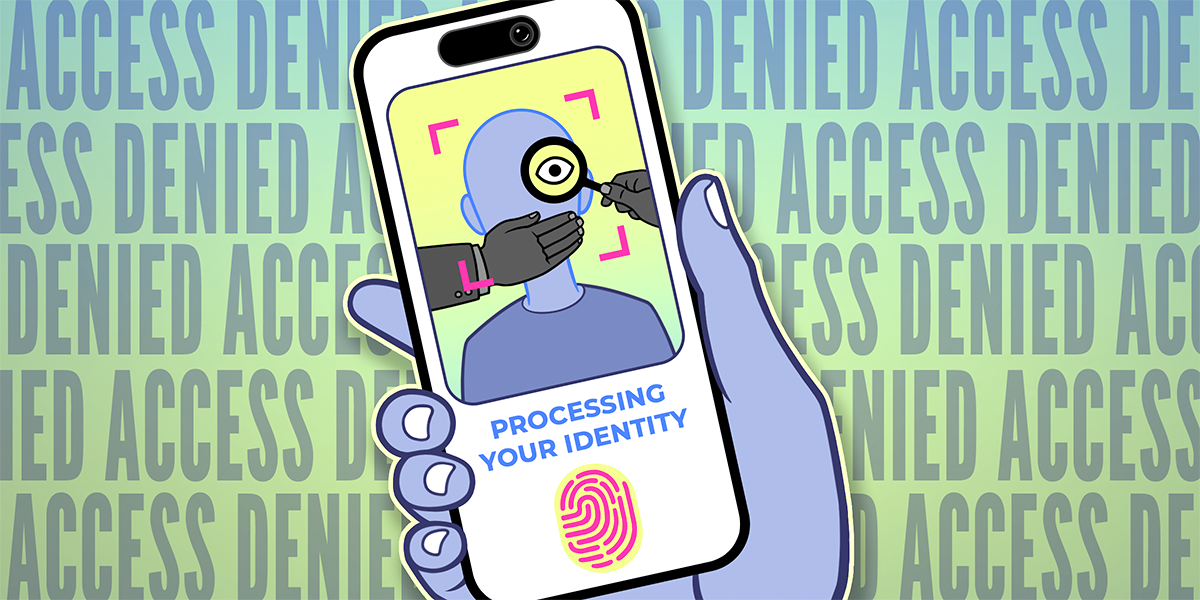
The new GUARD Act still requires companies offering AI companions to implement burdensome age-verification systems tied to users’ real-world identities. Even parents who specifically want their teenagers to use these systems would still face significant hurdles. A family might decide that a conversational AI tool helps an isolated teenager practice social interaction, or engage in harmless creative roleplay. A parent deployed in the military might set up a persistent AI storyteller for a younger child. Under the revised bill, those users could still face mandatory age checks tied to sensitive personal or financial information before they or their children can use these services.

The revised bill also leaves important definitions unclear while sharply increasing penalties for developers and companies that get those judgments wrong. Congress narrowed the GUARD Act. But it is still trying to solve a complicated social problem with vague legal standards, heavy liability, and privacy-invasive verification systems.

Intrusive Age-Verification Remains In The Bill

The revised GUARD Act still requires companies offering AI companions to verify that users are adults through a “reasonable age verification” system. The bill allows a broader set of verification methods than the earlier version, but they are still tied to a user’s real-world identity—such as financial records, or age-verified accounts for a mobile operating system or app store. 

That approach still raises serious privacy and access concerns. Millions of Americans do not have current government ID, accounts at major banks, or stable access to the kinds of digital identity systems the bill contemplates. Even for those who do, requiring identity-linked verification to access online speech tools creates real risks for privacy, anonymity, and data security. Many people are rightly creeped out by age-verification systems, and may simply forgo using these services rather than compromise their privacy and security.

The revised definition of “AI companion” is also narrower than before, but it’s unclear at the margins. The bill now focuses on systems that “engage in interactions involving emotional disclosures” from the user, or present a “persistent identity, persona or character.” 

EFF appreciates that the authors recognized that the prior definition could reach a variety of AI systems that are not chatbots, including internet search engines. But the narrowed definition could be read to also apply to a variety of chat tools that are not AI companions. For example, many modern online conversational systems increasingly recognize and respond to users’ emotions. Customer service systems, including completely human-powered ones that existed long before AI chatbots, have long been designed to recognize frustration and respond empathetically. As conversational AI becomes more emotionally responsive, a customer service chatbot’s efforts to empathize may sweep it within the bill’s definition. 

Bigger Penalties, Bigger Incentives To Restrict Access

The revised bill also sharply increases penalties. Instead of $100,000 per violation, companies—including small developers—can face fines of up to $250,000 per violation, enforced by both federal and state officials.

That kind of liability creates incentives to over-restrict access, especially for minors. Smaller developers, in particular, may decide it is safer to block younger users entirely, disable conversational features, or avoid developing certain tools at all, rather than risk severe penalties under vague standards.

The concerns driving this bill are real. Some AI systems have engaged in troubling interactions with vulnerable users, including minors. But the right answer to that is targeted enforcement against bad actors, and privacy laws that protect us all. The revised GUARD Act instead responds with a privacy-invasive system that burdens the right to speak, read, and interact online.

Congress did improve this bill, but EFF’s core speech, privacy, and security issues remain.

TAKE ACTION

Tell Congress: oppose the guard act

Read the full article here

Fact Checker

Verify the accuracy of this article using AI-powered analysis and real-time sources.

Get Your Fact Check Report

Enter your email to receive detailed fact-checking analysis

5 free reports remaining

Continue with Full Access

You've used your 5 free reports. Sign up for unlimited access!

Already have an account? Sign in here

#AlgorithmicBias #BigTechCensorship #Censorship #DigitalRights #FreeExpression #FreeSpeech
Share. Facebook Twitter Pinterest LinkedIn Tumblr Email Telegram Copy Link
News Room
  • Website
  • Facebook
  • X (Twitter)
  • Instagram
  • LinkedIn

The FSNN News Room is the voice of our in-house journalists, editors, and researchers. We deliver timely, unbiased reporting at the crossroads of finance, cryptocurrency, and global politics, providing clear, fact-driven analysis free from agendas.

Related Articles

Media & Culture

I Reached Out To The White House Counterterrorism Czar For Comment. He Lashed Out On X.

3 hours ago
Media & Culture

Once Again, Trump Looks To Get Out Of Paying E. Jean Carroll By Having The DOJ Substitute In For Himself

5 hours ago
AI & Censorship

Free Signal Guide

7 hours ago
Media & Culture

FBI Raids Office Of Dem Politician Instrumental In Redrawing Virginia Voter Maps… With Fox News In Tow

7 hours ago
Media & Culture

Court To DOGE Bros: Asking ChatGPT ‘Yo, Is This DEI?’ Is Not Proper Legal Process & Also A First Amendment Violation

8 hours ago
Media & Culture

Appeals Court Kills FCC Effort To Acknowledge Racism In Broadband Deployment

12 hours ago
Add A Comment
Leave A Reply Cancel Reply

Editors Picks

Stablecoin card spend is growing 100% year over year, Rain exec says

24 minutes ago

Bitcoin Rally Stalls At $80K But Bulls Anticipate A Pro-Crypto Fed Chair

25 minutes ago

Trump Admin Launches Pentagon UFO Website With Declassified Files

35 minutes ago

Congress Narrowed the GUARD Act, But Serious Problems Remain

1 hour ago
Latest Posts

Secret ICE Memo Tells Local Police Not To Disclose Immigration Enforcement Info Without ICE’s Permission

1 hour ago

Senate Banking Committee plans to hold Clarity Act hearing on Thursday

1 hour ago

Crypto Exchanges Pushed US Lawmakers to Bar Provision on Risky Tokens: Report

1 hour ago

Subscribe to News

Get the latest news and updates directly to your inbox.

At FSNN – Free Speech News Network, we deliver unfiltered reporting and in-depth analysis on the stories that matter most. From breaking headlines to global perspectives, our mission is to keep you informed, empowered, and connected.

FSNN.net is owned and operated by GlobalBoost Media
, an independent media organization dedicated to advancing transparency, free expression, and factual journalism across the digital landscape.

Facebook X (Twitter) Discord Telegram
Latest News

Three Investitures in Two Days

9 minutes ago

Stablecoin card spend is growing 100% year over year, Rain exec says

24 minutes ago

Bitcoin Rally Stalls At $80K But Bulls Anticipate A Pro-Crypto Fed Chair

25 minutes ago

Subscribe to Updates

Get the latest news and updates directly to your inbox.

© 2026 GlobalBoost Media. All Rights Reserved.
  • Privacy Policy
  • Terms of Service
  • Our Authors
  • Contact

Type above and press Enter to search. Press Esc to cancel.

🍪

Cookies

We and our selected partners wish to use cookies to collect information about you for functional purposes and statistical marketing. You may not give us your consent for certain purposes by selecting an option and you can withdraw your consent at any time via the cookie icon.

Cookie Preferences

Manage Cookies

Cookies are small text that can be used by websites to make the user experience more efficient. The law states that we may store cookies on your device if they are strictly necessary for the operation of this site. For all other types of cookies, we need your permission. This site uses various types of cookies. Some cookies are placed by third party services that appear on our pages.

Your permission applies to the following domains:

  • https://fsnn.net
Necessary
Necessary cookies help make a website usable by enabling basic functions like page navigation and access to secure areas of the website. The website cannot function properly without these cookies.
Statistic
Statistic cookies help website owners to understand how visitors interact with websites by collecting and reporting information anonymously.
Preferences
Preference cookies enable a website to remember information that changes the way the website behaves or looks, like your preferred language or the region that you are in.
Marketing
Marketing cookies are used to track visitors across websites. The intention is to display ads that are relevant and engaging for the individual user and thereby more valuable for publishers and third party advertisers.