

 Freedom Index
Listen to the article
The United States has gotten used to specific ways of ending wars. Sometimes the U.S. military decisively forces the enemy state to surrender, imposes a new political order, and gets it to stick, as in Germany and Japan in the 1940s or Panama in the 1990s. Other times, rebels wear down U.S. resources and willpower before decisively kicking out U.S. forces, as in Vietnam in 1975 or Afghanistan in 2021.
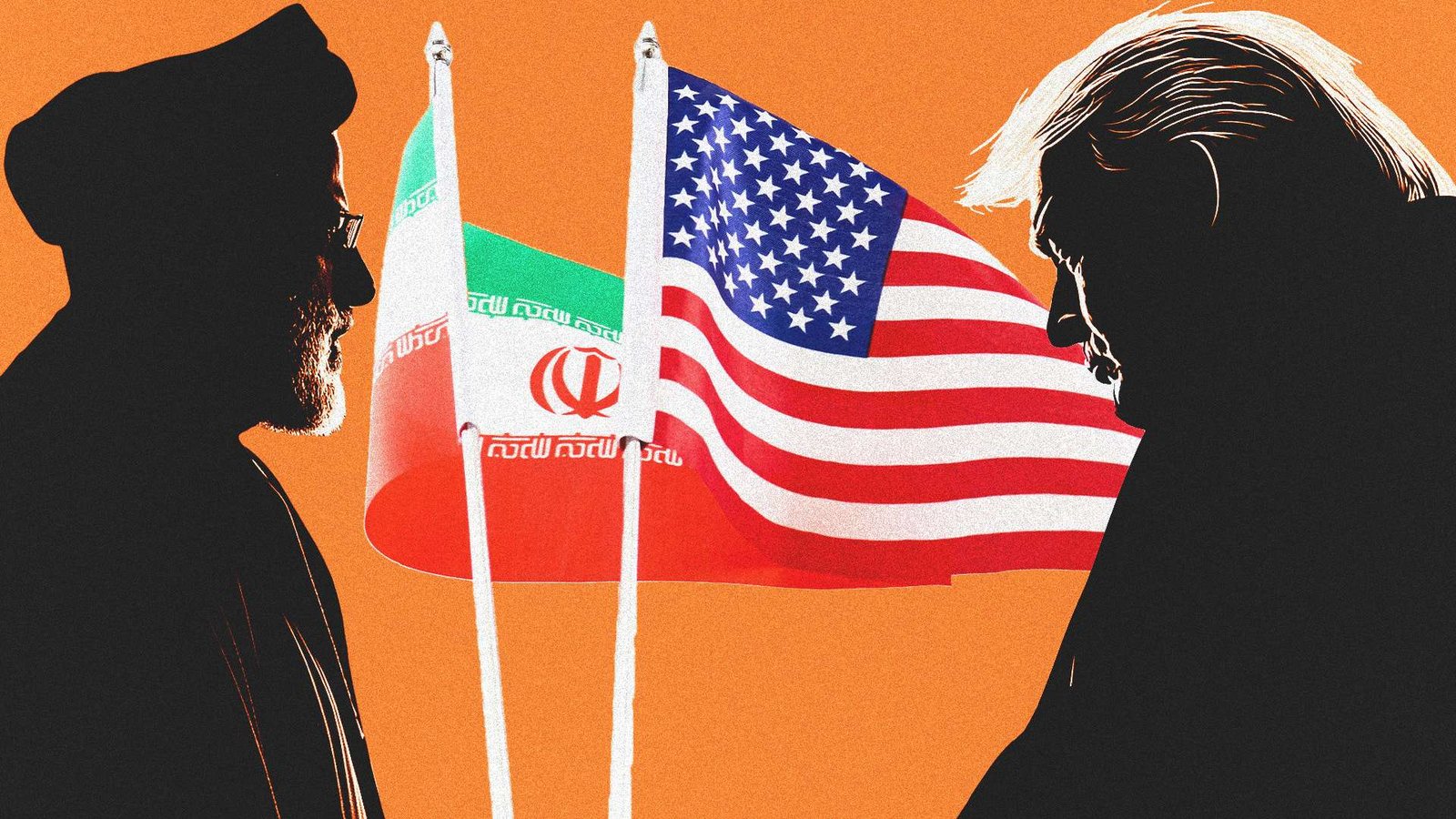
But the Iran war is ending with something quite unfamiliar to Washington: compromise. The United States and Iran were unable to defeat each other in the first round, and, staring at an unacceptably costly escalation, they came to the table. While a final deal hasn’t been agreed to, the ceasefire memorandum commits both sides to giving things up, with the U.S. promising to lift all economic sanctions if Iran negotiates away its nuclear program.
Big parts of Washington are not taking it well, with Republicans and Democrats alike calling the peace a “blunder” or even a “surrender.” It’s one thing to object to specific terms of the truce. The U.S. may be promising too much and demanding too little at the outset. But some criticisms would apply to any kind of two-sided deal with a former enemy. For hawks, failure to secure the enemy’s surrender is itself a form of U.S. “surrender.” Simply put, hawks have forgotten how to make peace.
Conservative journalist and presidential confidante Mark Levin claims that the memorandum makes the mistake of “trying to incentivize the behavior of 7th century barbaric Islamists with promises of money” and that “the West is being conquered” by agreeing to stop the war short of Iranian surrender. Others have argued that a deal shouldn’t have any benefits for Iran, regardless of what Iran is offering in return. Sen. Josh Hawley (R–Mo.) said that a deal shouldn’t “give Iran any money,” because “they’re not great actors.”
To borrow a Russian turn of phrase, this mentality is недоговороспособность, or “agreement incapability.” An agreement-incapable actor approaches diplomacy as nothing but a weapon “to delay, deceive, and destabilise its opponents.” (Levin, for example, suggested using the current negotiations to buy time for restarting the war after the U.S. midterm elections.) The agreement-incapable mind cannot imagine talks leading to “a mutually beneficial settlement.”
In fact, this mindset is baked into U.S. law. Mark Dubowitz, CEO of the neoconservative Foundation for Defense of Democracies, has repeatedly bragged about his role in creating a “sanctions wall” to prevent a deal. He pushed the first Trump administration to impose layers of economic sanctions on Iran under different pretexts, from the nuclear issue to human rights, so that a future administration could not resume trade with Iran without resolving all of those issues.
To be clear, sanctions relief costs American taxpayers nothing, and some of it will benefit American business interests. For example, the U.S. government will immediately license Iran to spend $6 billion in its own oil revenues on American agricultural products, according to the Financial Times.
But hawks are alarmed at giving away U.S. leverage. Former Rep. Tom Malinowski (D–N.J.) complained that Iran would get relief from sanctions “on human rights abusers and sponsors of terror, with zero Iranian concessions on those issues.” Dubowitz’s sanctions wall worked. In order to offer Iran normal economic relations, President Donald Trump will have to pick a domestic political fight over inflammatory issues like human rights and terrorism.
There are serious criticisms to be made about the memorandum. It is vague about the nuclear concessions Iran has to make to unlock full sanctions relief. Vice President J.D. Vance has implied that there are unwritten “gentleman’s agreements,” which is not exactly reassuring. While the memorandum forces Iran to stop extorting shipping in the Strait of Hormuz in the immediate term, it leaves the “future administration” of the strait up for negotiations.
Any conversation over the costs and benefits of the deal also has to take into account the costs and benefits of the alternatives. In fact, it was trying those alternatives that gave Iran leverage in the first place. Trump started down the road hawks wanted by bombing Iran, calling for regime change, and promising “no deal with Iran except UNCONDITIONAL SURRENDER.” The war didn’t collapse the Iranian government, but it did give Iran the opportunity to harass shipping in the Strait of Hormuz, holding the world’s oil economy hostage.
Trump searched in vain for a cost-free escalation, only to discover that none existed. A ground raid to take away Iran’s sources of leverage, its enriched uranium and its oil export terminal, would expose U.S. troops to serious casualties. Escalating the air war by bombing critical Iranian infrastructure would provoke Iran to do the same to its oil-rich neighbors. Trying to sneak ships through the strait during the ceasefire was provoking near-nightly naval combat.
Even maintaining the status quo was rapidly depleting oil inventories around the world, which would have forced either rapid price hikes or outright shortages by the beginning of July, as oil executives were warning. Trump ultimately concluded that the deal was the least bad option. That conclusion, of course, is up for debate. But much of the hawkish rhetoric is meant to shut out debate with emotional cries about surrendering to evil and losing honor.
The withdrawal from Afghanistan—which, unlike the stalemate with Iran, involved an unambiguous U.S. surrender—is a cautionary tale. After the U.S. military overthrew the Taliban government in 2001, the Bush administration declared that it was “not inclined to negotiate surrenders” and turned down the chance to integrate Taliban supporters into the new government.
Nearly two decades of civil war later, the Taliban underground had gained so much strength that both Trump and Joe Biden decided that Afghanistan was a lost cause. Trump cut a deal for an orderly withdrawal, which Biden upheld, only for it to become violent chaos anyway when the Taliban stormed Kabul while U.S. troops were still there in August 2021.
The Bush administration similarly turned down a deal with Iran itself, which offered up a “grand bargain” including everything from its nuclear program to its support for Hamas and Hezbollah in 2002. In return, Iranian leaders wanted an end to U.S. sanctions and a guarantee of noninterference in U.S. politics. A quarter-century and two wars later, the Trump administration is getting less than Iran was offering in 2002 for the same price. Unlike in Afghanistan, the administration is at least getting something from Iran.
Again, the rhetoric about surrender and humiliation is not about weighing the relative merits of that deal or whether a better one is possible. It is about ensuring that there will be no deal at all. And, ironically, that strategy has already led to an actual U.S. surrender at least once.
Read the full article here
Fact Checker
Verify the accuracy of this article using AI-powered analysis and real-time sources.