Close Menu
FSNN | Free Speech News NetworkFSNN | Free Speech News Network
  • Home
  • News
    • Politics
    • Legal & Courts
    • Tech & Big Tech
    • Campus & Education
    • Media & Culture
    • Global Free Speech
  • Opinions
    • Debates
  • Video/Live
  • Community
  • Freedom Index
  • About
    • Mission
    • Contact
    • Support
Trending

Trump Spends The Weekend Fighting For The $1.776 Billion Slush Fund His Chosen Attorney General Swears Is Dead

6 minutes ago

Amicus Brief in Suncor Energy v. County Commissioners of Boulder County

7 minutes ago

Mozambique court nullifies decree allowing government to shut down internet

14 minutes ago
Facebook X (Twitter) Instagram
Facebook X (Twitter) Discord Telegram
FSNN | Free Speech News NetworkFSNN | Free Speech News Network
Market Data Newsletter
Monday, August 3
  • Home
  • News
    • Politics
    • Legal & Courts
    • Tech & Big Tech
    • Campus & Education
    • Media & Culture
    • Global Free Speech
  • Opinions
    • Debates
  • Video/Live
  • Community
  • Freedom Index
  • About
    • Mission
    • Contact
    • Support
FSNN | Free Speech News NetworkFSNN | Free Speech News Network
Home»News»Campus & Education»Censorship never stops with just two words
Campus & Education

Censorship never stops with just two words

News RoomBy News Room1 hour agoNo Comments5 Mins Read662 Views
Share Facebook Twitter Pinterest Copy Link LinkedIn Tumblr Email VKontakte Telegram
Censorship never stops with just two words
Share
Facebook Twitter Pinterest Email Copy Link

Listen to the article

0:00
0:00

Key Takeaways

Playback Speed

Select a Voice

This article originally appeared in The Los Angeles Times on Aug. 1, 2026. According to Times editorial policy, the newspaper substituted “a racial epithet” for “nigger” and “a slur against women” for “cunt.”


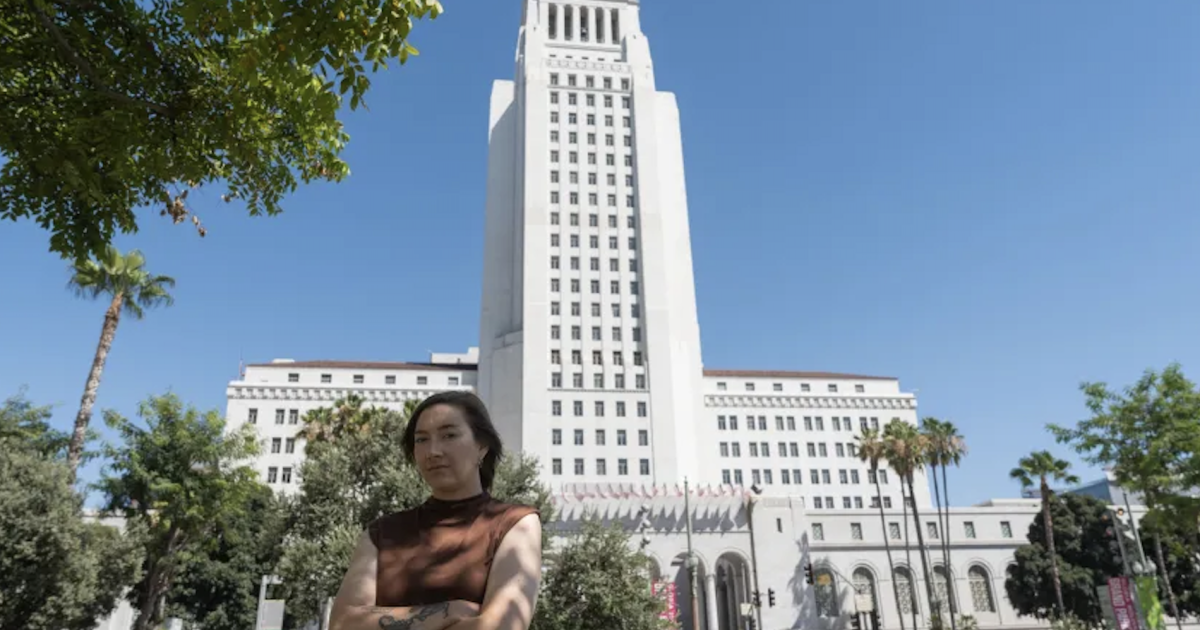
Members of the Los Angeles City Council would like a word or two — to ban.

Last July, the council adopted a motion to prohibit two terms — a racial epithet and a slur against women — during the legally required public comment periods of their meetings. As the rules document states, anyone who says “any variation of either of these words” during public comment will be warned. If they say a banned word again at that meeting or any subsequent one, they’ll be removed. Ejected speakers automatically are prohibited from attending future meetings for up to six business days.

This policy, championed by Council President Marqueece Harris-Dawson, is meant to push back against words he argues are “designed to attack someone’s personhood and their protected status.”

Now, you may loathe the words in question and never use them yourself. You may share the council’s desire to make public comment more civil and appropriate. You may believe Harris-Dawson and the other council members’ hearts are in the right place.

But make no mistake: The council is effectively claiming the authority to ban any words it decides are inappropriate or offensive in the future. That’s a very dangerous power to grant any government official. Even if you agree today, you might not always be so fortunate.

If we allow the government to decide what we can and cannot say, then our First Amendment right to speak our minds becomes a mere privilege granted at the discretion of the powers that be.

Imagine a different council justifying bans on words like “trans woman” or “cisgender” because they’re “designed to attack someone’s personhood.” Imagine council members banning the phrases “from the river to the sea” and “globalize the intifada” because they believe these slogans are so offensive, they’re inherently disruptive. That’s the power the council is seizing.

And before you raise the slippery slope fallacy, listen to the council president’s own words. Asked whether this was just the beginning of a more concerted effort to police “offensive” language during public meetings, Harris-Dawson replied, “Absolutely. This is as much a step as we can take at this moment, we believe. But we think it will open us up to take additional steps in the future.”

We should take him at his word.

It’s certainly true that things can get ugly during public comment. During a March 2025 council meeting, for example, a regular attendee spent his time at the podium leveling a series of expletive-laden complaints, hurling insults and slurs at council members, Jews, the pope, and black people.

Council meetings are frequented by many characters of this type, and it can be an understandably difficult and frustrating experience for those on the receiving end of these tirades. But the First Amendment reflects a judgment that, in a free society, it’s safer to require officials to tolerate even vile language than to empower officials to decide what criticism is off-limits. The council can prohibit actual disruption of its proceedings, like speaking when not recognized, but it can’t conflate harsh words with disruptive conduct.

Unfortunately, this is precisely the kind of conflation the council’s ban allows it to make, and the ban isn’t even limited to the use of slurs as insults. The rules make clear that speakers are prohibited from using the specified epithets during public comment “even though the speakers would use the words to express a non-offensive, non-vulgar viewpoint.” Put another way, the words are banned regardless of context, including when criticizing the ban itself — which is what resident Stacey Segarra-Bohlinger was doing during a council meeting last Halloween.

Speaking during public comment, Segarra-Bohlinger protested the ban on the slur against women, saying the council was “afraid of the word.” In accordance with all other council rules, she remained on topic, did not exceed her allotted time and did not otherwise interfere with the council’s ability to conduct business. In other words, she didn’t disrupt the meeting.

Councilmember Heather Hutt felt otherwise. She objected on the basis that the word offended her and insisted that the council president intervene. Segarra-Bohlinger was then warned and threatened with removal. When she protested again in a similar fashion the following December, she was removed and banned from future meetings in response.

FIRE demands LA City Council end policy banning certain words during public comment

The Constitution forbids the government from banning words. But the Los Angeles City Council doesn’t seem to understand.


Read More

This unconstitutional overreach is why the First Amendment Coalition and my organization, the Foundation for Individual Rights and Expression, sent a demand letter to the council: Repeal these rules now or face a lawsuit.

We’re doing this because defending our ability to speak, even when we offend others, is critical to preserving our fundamental freedoms. If we allow the government to decide what we can and cannot say, then our First Amendment right to speak our minds becomes a mere privilege granted at the discretion of the powers that be.

It’s never fun to feel like you’re being verbally abused or insulted. But the point of public comment is to allow the public to comment, and that commentary sometimes will be offensive and upsetting to some of us. That is the price of public discourse in a democracy, especially if you are an elected official.

It’s also how we ensure that our own right to speak freely isn’t infringed upon simply because some find it unacceptable.

Read the full article here

Fact Checker

Verify the accuracy of this article using AI-powered analysis and real-time sources.

Get Your Fact Check Report

Enter your email to receive detailed fact-checking analysis

5 free reports remaining

Continue with Full Access

You've used your 5 free reports. Sign up for unlimited access!

Already have an account? Sign in here

#Censorship #CivilLiberties #FreeExpression #FreeSpeechOnCampus #MediaFreedom #StudentActivism #UniversityLife stops words
Share. Facebook Twitter Pinterest LinkedIn Tumblr Email Telegram Copy Link
News Room
  • Website
  • Facebook
  • X (Twitter)
  • Instagram
  • LinkedIn

The FSNN News Room is the voice of our in-house journalists, editors, and researchers. We deliver timely, unbiased reporting at the crossroads of finance, cryptocurrency, and global politics, providing clear, fact-driven analysis free from agendas.

Related Articles

Legal & Courts

Reporters Committee statement on subpoena issued to New York Times freelancer

2 days ago
Campus & Education

FIRE statement on suppression of accuracy in artificial intelligence systems

3 days ago
Campus & Education

The applause that disrupted nothing — yet still led to an arrest

3 days ago
AI & Censorship

The SCREEN Act Threatens Privacy Far Beyond Adult Websites

3 days ago
Legal & Courts

Pentagon seeks extraordinary new power to evade transparency

3 days ago
AI & Censorship

EFF Guide to Recording Law Enforcement

3 days ago
Add A Comment
Leave A Reply Cancel Reply

Editors Picks

Amicus Brief in Suncor Energy v. County Commissioners of Boulder County

7 minutes ago

Mozambique court nullifies decree allowing government to shut down internet

14 minutes ago

U.S.-Japan yen intervention revives bitcoin carry trade fears despite weak link

32 minutes ago

BlackRock launches tokenized money market funds for stablecoin reserves

33 minutes ago
Latest Posts

Trump Family’s American Bitcoin Tops 8,000 BTC After Record Mining Quarter

35 minutes ago

Censorship never stops with just two words

1 hour ago

Trump Backs Down From Yet Another Empty Threat to Iran

1 hour ago

Subscribe to News

Get the latest news and updates directly to your inbox.

At FSNN – Free Speech News Network, we deliver unfiltered reporting and in-depth analysis on the stories that matter most. From breaking headlines to global perspectives, our mission is to keep you informed, empowered, and connected.

FSNN.net is owned and operated by GlobalBoost Media
, an independent media organization dedicated to advancing transparency, free expression, and factual journalism across the digital landscape.

Facebook X (Twitter) Discord Telegram
Latest News

Trump Spends The Weekend Fighting For The $1.776 Billion Slush Fund His Chosen Attorney General Swears Is Dead

6 minutes ago

Amicus Brief in Suncor Energy v. County Commissioners of Boulder County

7 minutes ago

Mozambique court nullifies decree allowing government to shut down internet

14 minutes ago

Subscribe to Updates

Get the latest news and updates directly to your inbox.

© 2026 GlobalBoost Media. All Rights Reserved.
  • Privacy Policy
  • Terms of Service
  • Our Authors
  • Contact

Type above and press Enter to search. Press Esc to cancel.

🍪

Cookies

We and our selected partners wish to use cookies to collect information about you for functional purposes and statistical marketing. You may not give us your consent for certain purposes by selecting an option and you can withdraw your consent at any time via the cookie icon.

Cookie Preferences

Manage Cookies

Cookies are small text that can be used by websites to make the user experience more efficient. The law states that we may store cookies on your device if they are strictly necessary for the operation of this site. For all other types of cookies, we need your permission. This site uses various types of cookies. Some cookies are placed by third party services that appear on our pages.

Your permission applies to the following domains:

  • https://fsnn.net
Necessary
Necessary cookies help make a website usable by enabling basic functions like page navigation and access to secure areas of the website. The website cannot function properly without these cookies.
Statistic
Statistic cookies help website owners to understand how visitors interact with websites by collecting and reporting information anonymously.
Preferences
Preference cookies enable a website to remember information that changes the way the website behaves or looks, like your preferred language or the region that you are in.
Marketing
Marketing cookies are used to track visitors across websites. The intention is to display ads that are relevant and engaging for the individual user and thereby more valuable for publishers and third party advertisers.