Close Menu
FSNN | Free Speech News NetworkFSNN | Free Speech News Network
  • Home
  • News
    • Politics
    • Legal & Courts
    • Tech & Big Tech
    • Campus & Education
    • Media & Culture
    • Global Free Speech
  • Opinions
    • Debates
  • Video/Live
  • Community
  • Freedom Index
  • About
    • Mission
    • Contact
    • Support
Trending

Ripple-linked token up 8% in first major breakout since June selloff

13 minutes ago

Bitcoin May Rebound to Six-Figures Before October, BTC Price Technicals Suggest

21 minutes ago

Solana Treasury Firm Forward Industries Keeps Trying to Acquire Rivals—But Nobody’s Biting

27 minutes ago
Facebook X (Twitter) Instagram
Facebook X (Twitter) Discord Telegram
FSNN | Free Speech News NetworkFSNN | Free Speech News Network
Market Data Newsletter
Monday, June 15
  • Home
  • News
    • Politics
    • Legal & Courts
    • Tech & Big Tech
    • Campus & Education
    • Media & Culture
    • Global Free Speech
  • Opinions
    • Debates
  • Video/Live
  • Community
  • Freedom Index
  • About
    • Mission
    • Contact
    • Support
FSNN | Free Speech News NetworkFSNN | Free Speech News Network
Home»Cryptocurrency & Free Speech Finance»Canadian PM Urges AI Diversification After US Anthropic Block, Decentralized AI Tokens Rally
Cryptocurrency & Free Speech Finance

Canadian PM Urges AI Diversification After US Anthropic Block, Decentralized AI Tokens Rally

News RoomBy News Room1 hour agoNo Comments4 Mins Read1,234 Views
Share Facebook Twitter Pinterest Copy Link LinkedIn Tumblr Email VKontakte Telegram
Canadian PM Urges AI Diversification After US Anthropic Block, Decentralized AI Tokens Rally
Share
Facebook Twitter Pinterest Email Copy Link

Listen to the article

0:00
0:00

Key Takeaways

Playback Speed

Select a Voice

In brief

  • Canada’s Prime Minister Mark Carney warned that a U.S. order on Anthropic shows the risk of leaning on only a few AI makers.
  • Washington forced Anthropic to pull two frontier models offline for every user worldwide.
  • Decentralized AI removes the “kill switch,” but still relies on a few chipmakers, observers told Decrypt.

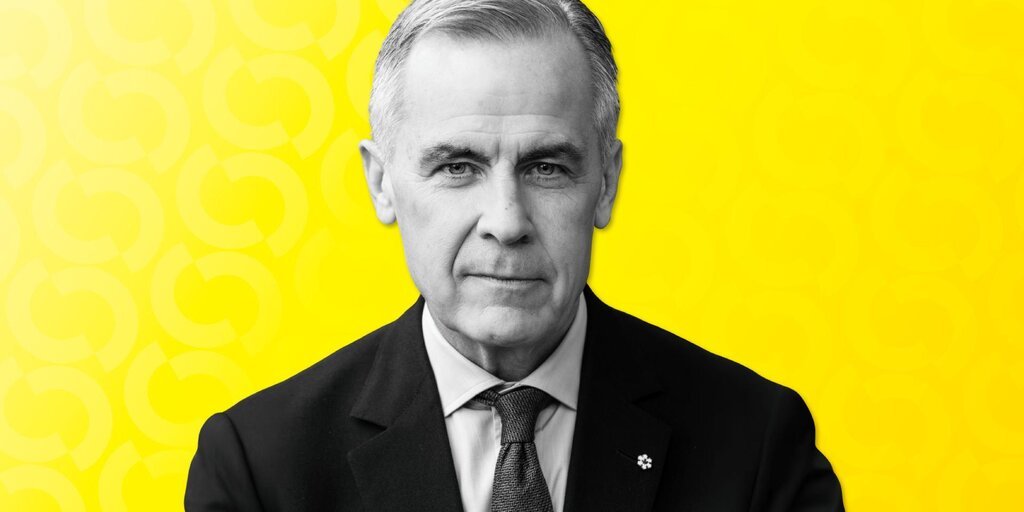
Canadian Prime Minister Mark Carney warned Sunday that U.S. restrictions on Anthropic’s most advanced AI models expose the risk of leaning on a handful of American providers, after a government order pulled two frontier systems offline for users worldwide.

“The situation we’re in collectively right now with Mythos and Fable is something that can happen with overreliance on certain models,” Carney said, speaking in Ireland ahead of the G7 summit in France, the Associated Press reported.

Carney said nobody has “done anything wrong in the situation,” but warned the mistake would be to “just accept this, don’t take the lesson, don’t build out and diversify.”

“It is never a good idea to have one option,” the prime minister added.

Carney’s remarks follow a directive on Friday ordering Anthropic to cut access to its Fable 5 and Mythos 5 models for any foreign national inside or outside the United States on national security grounds.

Anthropic promptly complied, disabling both systems for all customers. It disputed the basis, however, arguing the cited jailbreak is already replicable on public models like OpenAI’s GPT-5.5.

Commerce Secretary Howard Lutnick reportedly sent the letter to Anthropic CEO Dario Amodei, per Axios. It was reportedly driven in part by suspicion that a China-linked group had accessed Mythos, Semafor reported.

The disputes come as Anthropic nears a $1 trillion valuation following annualized revenue of over $47 billion.

Decrypt has reached out to Anthropic for comment and will update this article should they respond.

Risks and costs

The prime minister’s concerns cast centralized AI as a single point of failure, where one company’s compliance with a government order can cut off users everywhere at once.

Centralized AI keeps a model and its controls inside one company. Decentralized AI spreads those functions across independent operators coordinated by a blockchain.

Projects tied to decentralized AI rallied following the ban on Anthropic’s models, with the sector’s market cap at $24.3 billion, up 6% on the day and 12% over the week, per data from CoinGecko.

Smaller compute and data networks led the way, with ChainOpera AI, io.net, Grass, and NOVA among those climbing more than 30% over the past week, while NEAR Protocol and Bittensor, two of the sector’s largest tokens by market cap, rose 15.9% and 27.9% on the week respectively.

The U.S. government’s move on Anthropic points to “a risk that is largely unique to centralized AI,” Dan Dadybayo, strategy lead at Horizontal Systems, told Decrypt. Backing Carney’s warning, Dadybayo said reliance on a few U.S. providers “creates genuine systemic risk, similar to what we saw in finance in 2008.”

Distributing models across independent nodes removes the single “kill switch,” but the risk persists if the compute behind them stays concentrated among a few suppliers, Dadybayo explained.

Such a trend is being driven by “rising compute and data costs,” Peter Anthony, founder and CEO of Perceptron Network, told Decrypt. Anthropic’s situation “didn’t create that problem, it just made it impossible to look away from,” he added.

While Anthony agreed with Carney’s point that the order marked a “strategic vulnerability,” he questioned whether decentralization solves it or “just pushes the chokepoint back one layer to GPU suppliers.”

If decentralized AI still runs on chips owned by a few cloud giants, “you’ve rebranded the risk, not removed it,” he added.

Daily Debrief Newsletter

Start every day with the top news stories right now, plus original features, a podcast, videos and more.


Read the full article here

Fact Checker

Verify the accuracy of this article using AI-powered analysis and real-time sources.

Get Your Fact Check Report

Enter your email to receive detailed fact-checking analysis

5 free reports remaining

Continue with Full Access

You've used your 5 free reports. Sign up for unlimited access!

Already have an account? Sign in here

Share. Facebook Twitter Pinterest LinkedIn Tumblr Email Telegram Copy Link
News Room
  • Website
  • Facebook
  • X (Twitter)
  • Instagram
  • LinkedIn

The FSNN News Room is the voice of our in-house journalists, editors, and researchers. We deliver timely, unbiased reporting at the crossroads of finance, cryptocurrency, and global politics, providing clear, fact-driven analysis free from agendas.

Related Articles

Cryptocurrency & Free Speech Finance

Ripple-linked token up 8% in first major breakout since June selloff

13 minutes ago
Cryptocurrency & Free Speech Finance

Bitcoin May Rebound to Six-Figures Before October, BTC Price Technicals Suggest

21 minutes ago
Cryptocurrency & Free Speech Finance

Solana Treasury Firm Forward Industries Keeps Trying to Acquire Rivals—But Nobody’s Biting

27 minutes ago
Media & Culture

Flock Is The New Tool Of Choice For Cops Who Love Stalking Their Exes

54 minutes ago
Media & Culture

Our American Legal Tradition Is Not the Warren Court’s Tradition

55 minutes ago
Cryptocurrency & Free Speech Finance

Kraken launches U.S. perpetual futures as crypto derivatives move onshore

1 hour ago
Add A Comment
Leave A Reply Cancel Reply

Editors Picks

Bitcoin May Rebound to Six-Figures Before October, BTC Price Technicals Suggest

21 minutes ago

Solana Treasury Firm Forward Industries Keeps Trying to Acquire Rivals—But Nobody’s Biting

27 minutes ago

Flock Is The New Tool Of Choice For Cops Who Love Stalking Their Exes

54 minutes ago

Our American Legal Tradition Is Not the Warren Court’s Tradition

55 minutes ago
Latest Posts

Photo: Fauzan Saari/Unsplash George Orwell didn’t mince his words when it came to international sporting events. In 1945, following Dynamo Moscow’s draw with Chelsea FC – a result that delighted Joseph Stalin – Orwell described such fixtures as “mimic warfare” and “orgies of hate”. Football fans will no doubt take issue with Orwell, arguing that the beautiful game is just as unifying as it is divisive and I’ll admit to a soft spot for a major tournament. But as with all things Orwell, the man has a point. Today the 2026 World Cup begins, hosted between the USA, Canada and Mexico. Players and referees have already been denied entry to the USA in a sign that the Trump administration’s immigration policy impacts everyone. This isn’t really a free speech issue, but it speaks to a broader chill around immigration, that has also targeted people on the basis of their speech. Organisations that campaign for media freedom are worried. The Press Freedom Tracker has expressed concerns about the role of ICE agents during the tournament and how journalists may be detained for less than favourable reporting. The Committee to Protect Journalists (CPJ) have issued guidance for foreign reporters in the country too. Seeing this, a friend of mine, a former Moscow correspondent, noted that the advice was strikingly reminiscent of guidance issued during the 2018 World Cup in Vladimir Putin’s Russia. Your average sports correspondent may not have a problem. Football is fairly safe to report on if you stick to what’s happening on the pitch. It does though become more dangerous once you probe beneath. Speak to journalists behind Football Leaks, a cross-border investigation that revealed “how agents, intermediaries and club officials are perverting sporting ethics and tax regulations to maximise their access to the riches generated from football, at the expense of the quality of the game, the development of talent and the wishes of the fans”. Getting the stories out as part of this investigation was riddled with risk. It makes sense. We know the rich and powerful abuse legal systems and professional football is a game of the rich and powerful. Of more immediate concern are the stories beyond the fixtures, the ones that curious journalists may understandably want to pursue once on the ground in the three countries. While media freedom in Canada remains high, it’s far more fragile in the USA and even more so in Mexico. I’ve heard reports of walls being erected and banners deployed to conceal poverty and urban decay in Mexico. As the nation tries to put its best foot forward, in every sense, will they want reporters snapping away at this? But it’s not all bad. Teachers in Mexico are protesting near the World Cup stadium in an attempt to use this sensitive moment to push through a pay rise. They may very well succeed and the president, Claudia Sheinbaum, has apparently ruled out a heavy-handed response, presumably in part concerned about the current global spotlight. This is far from the grotesque sportswashing exercise of Qatar 2022, a tournament “built on the corpses of migrant workers and the stolen wealth of the Qatari people”, and as a Qatari human rights activist wrote for us at the time. READ MORE

1 hour ago

Kraken launches U.S. perpetual futures as crypto derivatives move onshore

1 hour ago

Bitcoin Sweeps Liquidity ‘Pockets’ Amid Doubts Over $67,000 Holding

1 hour ago

Subscribe to News

Get the latest news and updates directly to your inbox.

At FSNN – Free Speech News Network, we deliver unfiltered reporting and in-depth analysis on the stories that matter most. From breaking headlines to global perspectives, our mission is to keep you informed, empowered, and connected.

FSNN.net is owned and operated by GlobalBoost Media
, an independent media organization dedicated to advancing transparency, free expression, and factual journalism across the digital landscape.

Facebook X (Twitter) Discord Telegram
Latest News

Ripple-linked token up 8% in first major breakout since June selloff

13 minutes ago

Bitcoin May Rebound to Six-Figures Before October, BTC Price Technicals Suggest

21 minutes ago

Solana Treasury Firm Forward Industries Keeps Trying to Acquire Rivals—But Nobody’s Biting

27 minutes ago

Subscribe to Updates

Get the latest news and updates directly to your inbox.

© 2026 GlobalBoost Media. All Rights Reserved.
  • Privacy Policy
  • Terms of Service
  • Our Authors
  • Contact

Type above and press Enter to search. Press Esc to cancel.

🍪

Cookies

We and our selected partners wish to use cookies to collect information about you for functional purposes and statistical marketing. You may not give us your consent for certain purposes by selecting an option and you can withdraw your consent at any time via the cookie icon.

Cookie Preferences

Manage Cookies

Cookies are small text that can be used by websites to make the user experience more efficient. The law states that we may store cookies on your device if they are strictly necessary for the operation of this site. For all other types of cookies, we need your permission. This site uses various types of cookies. Some cookies are placed by third party services that appear on our pages.

Your permission applies to the following domains:

  • https://fsnn.net
Necessary
Necessary cookies help make a website usable by enabling basic functions like page navigation and access to secure areas of the website. The website cannot function properly without these cookies.
Statistic
Statistic cookies help website owners to understand how visitors interact with websites by collecting and reporting information anonymously.
Preferences
Preference cookies enable a website to remember information that changes the way the website behaves or looks, like your preferred language or the region that you are in.
Marketing
Marketing cookies are used to track visitors across websites. The intention is to display ads that are relevant and engaging for the individual user and thereby more valuable for publishers and third party advertisers.