Close Menu
FSNN | Free Speech News NetworkFSNN | Free Speech News Network
  • Home
  • News
    • Politics
    • Legal & Courts
    • Tech & Big Tech
    • Campus & Education
    • Media & Culture
    • Global Free Speech
  • Opinions
    • Debates
  • Video/Live
  • Community
  • Freedom Index
  • About
    • Mission
    • Contact
    • Support
Trending

Britain Wants To Ban Teens From Social Media. The Evidence Suggests It Won’t Work.

11 minutes ago

Tom Lee’s Bitmine (BMNR) buys 76,881 ETH as preferred equity sale fuels expansion

33 minutes ago

SEC Crypto Task Force Adviser to Join CFTC in Move toward Blockchain Forensics

40 minutes ago
Facebook X (Twitter) Instagram
Facebook X (Twitter) Discord Telegram
FSNN | Free Speech News NetworkFSNN | Free Speech News Network
Market Data Newsletter
Monday, June 15
  • Home
  • News
    • Politics
    • Legal & Courts
    • Tech & Big Tech
    • Campus & Education
    • Media & Culture
    • Global Free Speech
  • Opinions
    • Debates
  • Video/Live
  • Community
  • Freedom Index
  • About
    • Mission
    • Contact
    • Support
FSNN | Free Speech News NetworkFSNN | Free Speech News Network
Home»News»Media & Culture»Britain Wants To Ban Teens From Social Media. The Evidence Suggests It Won’t Work.
Media & Culture

Britain Wants To Ban Teens From Social Media. The Evidence Suggests It Won’t Work.

News RoomBy News Room11 minutes agoNo Comments5 Mins Read283 Views
Share Facebook Twitter Pinterest Copy Link LinkedIn Tumblr Email VKontakte Telegram
Britain Wants To Ban Teens From Social Media. The Evidence Suggests It Won’t Work.
Share
Facebook Twitter Pinterest Email Copy Link

Listen to the article

0:00
0:00

Key Takeaways

Playback Speed

Select a Voice

The United Kingdom announced on Monday that it will become the second country to ban social media for children 15 and younger. Speaking at a press conference, Prime Minister Keir Starmer said, “Government is always about choices, and it’s clear to me that a full ban is the right choice.”

“Every parent can see it with their own eyes. Social media is making children unhappy. It’s making it easier for bullies to harass and abuse them,” Starmer added. “And it could even be harming their mental health, exposing them to content that is dangerous because that’s what grabs their attention. It’s designed to be addictive.”

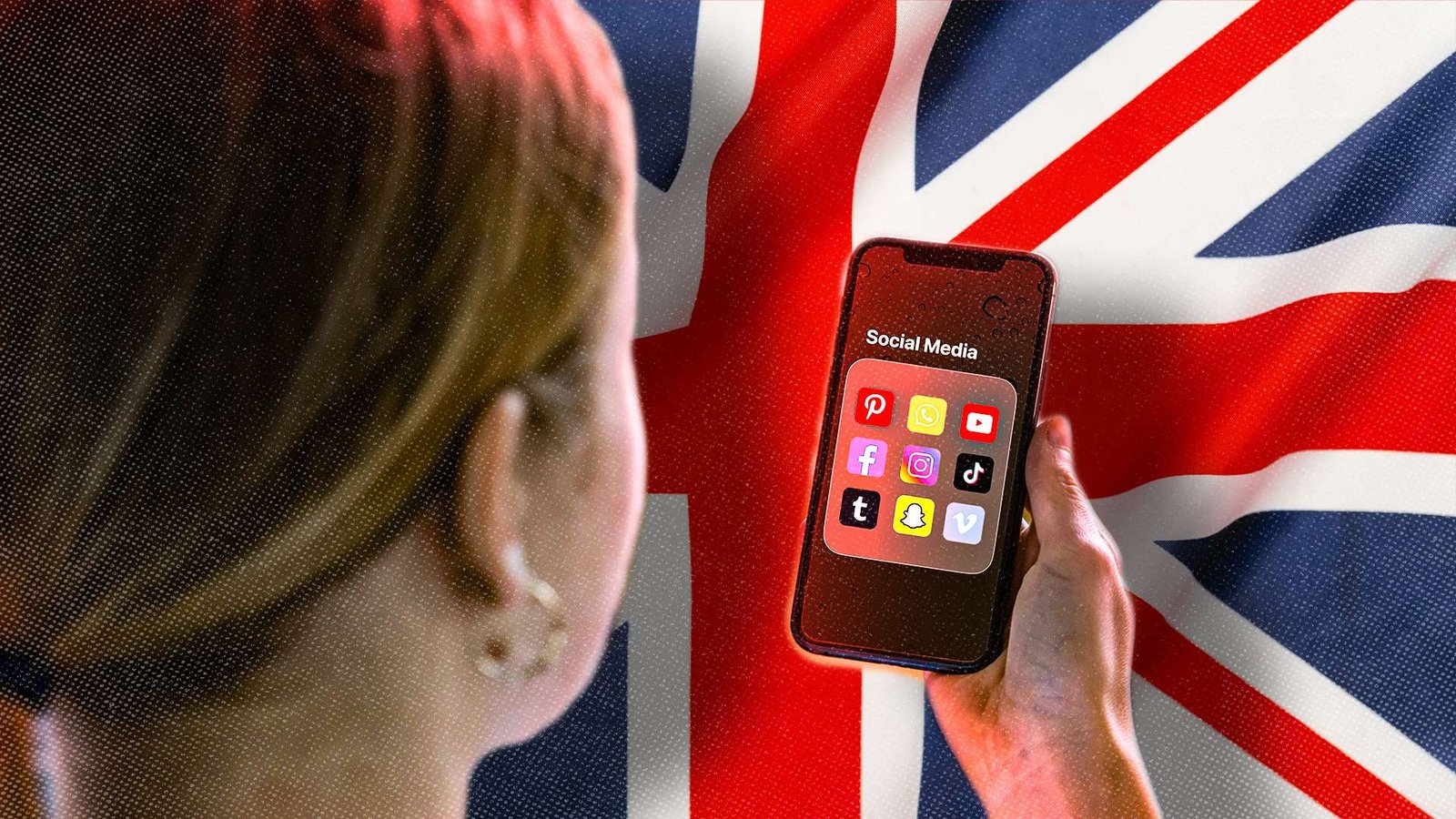
The ban, which is due to take effect next year, will cover a select number of “user-to-user” apps, including TikTok, X, YouTube, Instagram, Facebook, Reddit, and Snapchat. The full list of which platforms the ban will apply to has not yet been released.

The government is also considering overnight curfews and breaks in infinite scrolling for those under 19, with further details expected in July, according to the BBC. This could mean that 16- and 17-year-olds, who can already legally have sex, work, and pay taxes, and whom the government wants to let vote, would not be allowed to access social media at night.

The question of how this would be enforced remains up in the air. Australia, the only other country in the world to introduce a ban on those under 16 accessing social media, has struggled to do so. Around 70 percent of children who already had accounts on Instagram, Snapchat, TikTok, or Facebook still had them after the ban came into effect, according to a survey published by Australia’s eSafety Commissioner.

Regardless of how the ban will be enforced, one thing is certain: It will come at the expense of the privacy of all British internet users. The government cannot ban children from social media without asking everyone else to prove they are not children. Ofcom,  Britain’s communications regulator, says in its own guidance under the Online Safety Act that age checks can include facial age estimation, open banking, digital identity services, credit card checks, email-based age estimation, mobile network checks, and photo-ID matching.

Civil liberties groups have warned of privacy risks. Responding to the government’s announcement, Jack Coulson, head of advocacy at Big Brother Watch, said that everyone will “face a ‘papers, please’ demand to get online,” and that the proposals would force the public to trust sensitive identity documents to companies with “serious track records of leaks and hacks.”

Even so, the government’s plan appears to have been designed by people with very little understanding of how teenagers actually use the internet. As one survey of Europeans aged 13 to 18 found, 74 percent of teenagers on average said they watched videos on YouTube to learn something new for school, and 71 percent on average watched videos on YouTube to learn something new for fun or outside of school.

“My son is obsessed with classical music,” author and journalist Stephen Pollard said on X. “He is a gifted cellist who wants to be a professional musician. He spends hours watching performances on YouTube – learning so much about the profession he hopes to pursue. To carry on watching these performances and lectures that can be found nowhere else, he will have to break the law. It’s utterly mad.”

Social media is also used to stay in touch with friends and family. According to an Ofcom report, almost three-quarters of 13- to 17-year-olds who use social media say they help them feel closer to friends. A majority of both girls (71 percent) and boys (60 percent) see being online as good for helping to build and maintain friendships.

Leading up to the ban, the government conducted a three-month public consultation that it said was needed to gather evidence. Now it’s looking more like retroactive justification. Of the parents who responded to the consultation, 90 percent support a minimum age for children to access social media. But a consultation is not a poll, and respondents are not a representative sample of British parents. Those motivated enough to respond to a government consultation on children’s social media use are likely to have stronger views on the issue, and are probably more supportive of restrictions than the average parent.

Parents are, of course, entitled to make different choices for their own children. If a parent wants to take YouTube or other apps away from their child, that is their decision. However, the children supposedly being protected by the ban do not seem especially convinced.

In a BBC interview with a room full of 11- to 14-year-olds, a presenter asked whoever supported the ban to raise their hands, which no child did. One student, Isabella, said she “didn’t think it would actually happen,” adding that she had expected the prime minister to “give it more time or more consideration.” Her main concern was losing a way to contact friends, parents, and family. When the presenter asked what she would do with all of her newfound free time, Isabella succinctly replied: “stare at a wall.”

Read the full article here

Fact Checker

Verify the accuracy of this article using AI-powered analysis and real-time sources.

Get Your Fact Check Report

Enter your email to receive detailed fact-checking analysis

5 free reports remaining

Continue with Full Access

You've used your 5 free reports. Sign up for unlimited access!

Already have an account? Sign in here

#CivicEngagement #InformationWar #PoliticalCoverage #PoliticalMedia #PublicOpinion
Share. Facebook Twitter Pinterest LinkedIn Tumblr Email Telegram Copy Link
News Room
  • Website
  • Facebook
  • X (Twitter)
  • Instagram
  • LinkedIn

The FSNN News Room is the voice of our in-house journalists, editors, and researchers. We deliver timely, unbiased reporting at the crossroads of finance, cryptocurrency, and global politics, providing clear, fact-driven analysis free from agendas.

Related Articles

Cryptocurrency & Free Speech Finance

Pudgy Penguins NFT Game ‘Pudgy Party’ Shuts Down Less Than a Year After Launch

47 minutes ago
Media & Culture

Trump DOJ Friday News Dumps Its Approval Of The Job-Killing Paramount, Warner Bros Merger

1 hour ago
Cryptocurrency & Free Speech Finance

Rio de Janeiro Built an AI Model That Beat DeepSeek—But Was Based on Someone Else’s Work

2 hours ago
Media & Culture

Daily Deal: The Lifetime Learner Bundle

2 hours ago
Media & Culture

SCOTUS To Newman: Drop Dead

2 hours ago
Cryptocurrency & Free Speech Finance

Wall Street Could Boost Uniswap’s Token Price Nearly 40x by 2030: Standard Chartered

3 hours ago
Add A Comment
Leave A Reply Cancel Reply

Editors Picks

Tom Lee’s Bitmine (BMNR) buys 76,881 ETH as preferred equity sale fuels expansion

33 minutes ago

SEC Crypto Task Force Adviser to Join CFTC in Move toward Blockchain Forensics

40 minutes ago

Pudgy Penguins NFT Game ‘Pudgy Party’ Shuts Down Less Than a Year After Launch

47 minutes ago

Trump DOJ Friday News Dumps Its Approval Of The Job-Killing Paramount, Warner Bros Merger

1 hour ago
Latest Posts

Bittensor (TAO) surges 31.9%, leading index higher

2 hours ago

BitMine Nears 5% of ETH Supply With $10B Holdings Despite Bear Market

2 hours ago

Rio de Janeiro Built an AI Model That Beat DeepSeek—But Was Based on Someone Else’s Work

2 hours ago

Subscribe to News

Get the latest news and updates directly to your inbox.

At FSNN – Free Speech News Network, we deliver unfiltered reporting and in-depth analysis on the stories that matter most. From breaking headlines to global perspectives, our mission is to keep you informed, empowered, and connected.

FSNN.net is owned and operated by GlobalBoost Media
, an independent media organization dedicated to advancing transparency, free expression, and factual journalism across the digital landscape.

Facebook X (Twitter) Discord Telegram
Latest News

Britain Wants To Ban Teens From Social Media. The Evidence Suggests It Won’t Work.

11 minutes ago

Tom Lee’s Bitmine (BMNR) buys 76,881 ETH as preferred equity sale fuels expansion

33 minutes ago

SEC Crypto Task Force Adviser to Join CFTC in Move toward Blockchain Forensics

40 minutes ago

Subscribe to Updates

Get the latest news and updates directly to your inbox.

© 2026 GlobalBoost Media. All Rights Reserved.
  • Privacy Policy
  • Terms of Service
  • Our Authors
  • Contact

Type above and press Enter to search. Press Esc to cancel.

🍪

Cookies

We and our selected partners wish to use cookies to collect information about you for functional purposes and statistical marketing. You may not give us your consent for certain purposes by selecting an option and you can withdraw your consent at any time via the cookie icon.

Cookie Preferences

Manage Cookies

Cookies are small text that can be used by websites to make the user experience more efficient. The law states that we may store cookies on your device if they are strictly necessary for the operation of this site. For all other types of cookies, we need your permission. This site uses various types of cookies. Some cookies are placed by third party services that appear on our pages.

Your permission applies to the following domains:

  • https://fsnn.net
Necessary
Necessary cookies help make a website usable by enabling basic functions like page navigation and access to secure areas of the website. The website cannot function properly without these cookies.
Statistic
Statistic cookies help website owners to understand how visitors interact with websites by collecting and reporting information anonymously.
Preferences
Preference cookies enable a website to remember information that changes the way the website behaves or looks, like your preferred language or the region that you are in.
Marketing
Marketing cookies are used to track visitors across websites. The intention is to display ads that are relevant and engaging for the individual user and thereby more valuable for publishers and third party advertisers.