Close Menu
FSNN | Free Speech News NetworkFSNN | Free Speech News Network
  • Home
  • News
    • Politics
    • Legal & Courts
    • Tech & Big Tech
    • Campus & Education
    • Media & Culture
    • Global Free Speech
  • Opinions
    • Debates
  • Video/Live
  • Community
  • Freedom Index
  • About
    • Mission
    • Contact
    • Support
Trending

Securitize remains in the red even as record quarter fuels public listing plans

16 minutes ago

Tether Buys SoftBank Stake in Twenty One Capital, Expands Bitcoin Strategy

18 minutes ago

Qwen 3.7 Max Preview: What Alibaba’s New AI Gets Right and Where It Falls Short

19 minutes ago
Facebook X (Twitter) Instagram
Facebook X (Twitter) Discord Telegram
FSNN | Free Speech News NetworkFSNN | Free Speech News Network
Market Data Newsletter
Wednesday, May 20
  • Home
  • News
    • Politics
    • Legal & Courts
    • Tech & Big Tech
    • Campus & Education
    • Media & Culture
    • Global Free Speech
  • Opinions
    • Debates
  • Video/Live
  • Community
  • Freedom Index
  • About
    • Mission
    • Contact
    • Support
FSNN | Free Speech News NetworkFSNN | Free Speech News Network
Home»News»Media & Culture»Britain Pressures Supermarkets To Cap Food Prices
Media & Culture

Britain Pressures Supermarkets To Cap Food Prices

News RoomBy News Room1 hour agoNo Comments4 Mins Read1,318 Views
Share Facebook Twitter Pinterest Copy Link LinkedIn Tumblr Email VKontakte Telegram
Britain Pressures Supermarkets To Cap Food Prices
Share
Facebook Twitter Pinterest Email Copy Link

Listen to the article

0:00
0:00

Key Takeaways

Playback Speed

Select a Voice

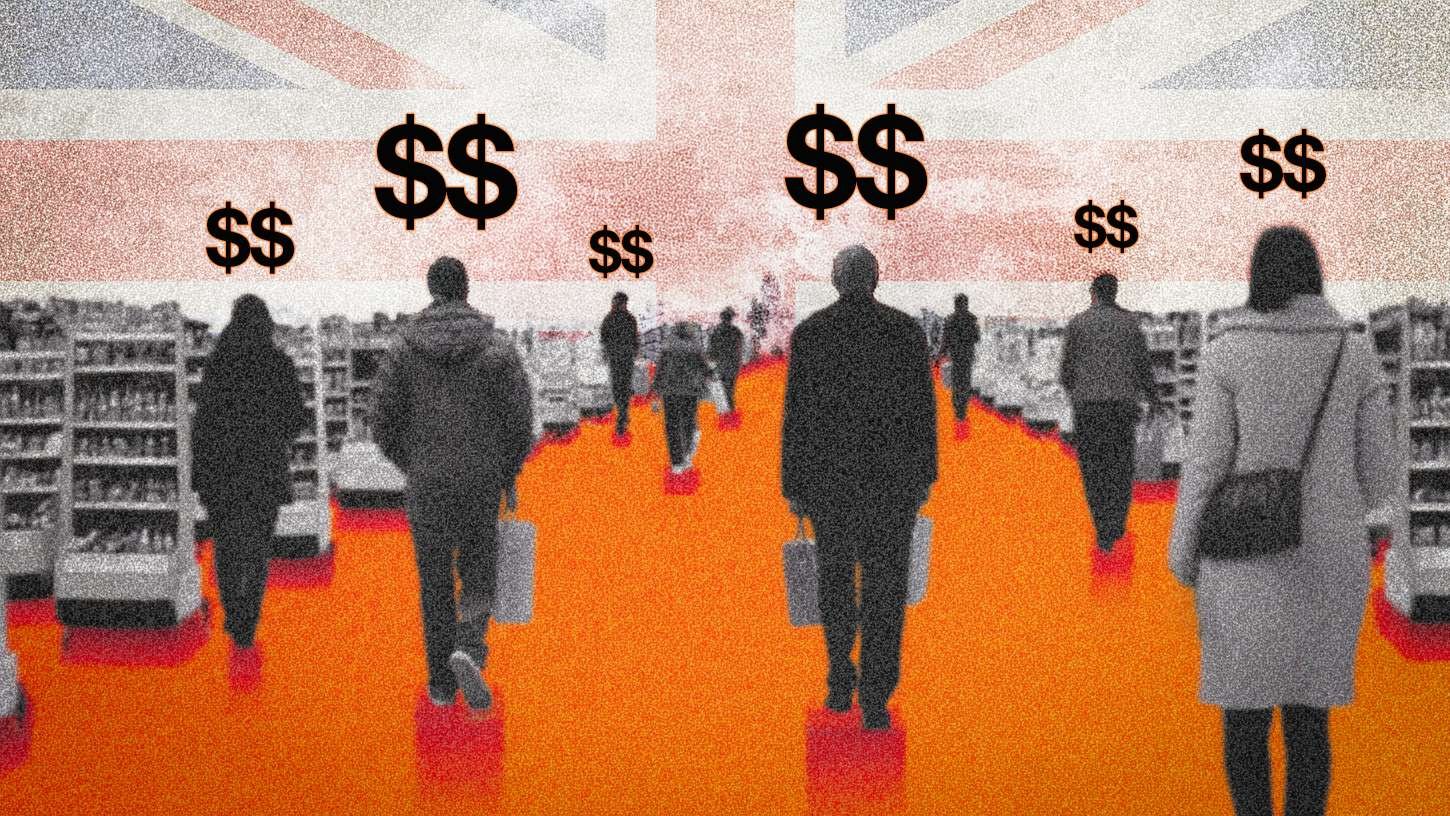
The British government is preparing to ask supermarkets to freeze prices on certain products in exchange for easing regulations, which politicians hope will keep prices down for consumers. The price cap would apply to essential foods such as eggs, bread, and milk, reports the Financial Times.

Chancellor of the Exchequer Rachel Reeves, who oversees the Treasury and the government’s economic policy, is expected to announce the policy on Thursday as part of a package of measures to help ease the cost of living. Food and nonalcoholic beverage prices rose 3.7 percent annually in March—the most recent month for which government data are available—a jump from 3.3 percent in February. The rising cost of living is of particular concern to the British public, with 62 percent of voters saying it was the top issue that decided their vote at the last local elections, according to Ipsos.

While the price cap would technically be voluntary, Reeves is bringing forward measures to directly pressure businesses to control prices. In a Wednesday press release, touting Reeves’ use of “new anti-profiteering powers” to fight back on “rising bills,” the chancellor committed to cracking down on “anyone exploiting a crisis to make a quick buck.” This includes giving new powers to the Competition and Markets Authority, the U.K.’s main competition and consumer protection regulator, allowing them to “name and shame” firms that have allegedly “changed their margins.” It will also get new investigatory powers to identify firms that are “taking advantage of crises to unfairly raise costs.”

Supermarkets aren’t happy about the proposed policies.

“The UK has the most affordable grocery prices in Western Europe thanks to the fierce competition between supermarkets. The challenge facing retailers is a combination of higher energy and commodity costs resulting from the Middle East conflict, and the soaring cost of the government’s domestic policies,” Helen Dickinson, chief executive of the trade association for the British Retail Consortium, tells Reason.

“Rather than introduce 1970s-style price controls and trying to force retailers to sell goods at a loss, the Government must focus on how it will reduce the public policy costs which are pushing up food prices in the first place,” Dickinson adds.

Interestingly, Brits think supermarkets have far larger profit margins than they actually do. According to a poll of over 3,000 British voters, most estimate supermarket profits to be around 50 percent, when in reality, these margins are far lower, usually around 2 percent to 4 percent.

“The British government’s war on supermarket prices is what happens when inflation after years of relative price stability destroy economic seriousness,” Ryan Bourne, author of The War on Prices, tells Reason. Bourne argues that groceries in the U.K. feel especially expensive because “bigger ticket items like housing and energy costs” affect the prices of all goods. He says that this policy will “hide scarcity, distort competition and further entrench the idea that governments can just mandate inflation through such price fixing.”

Julian Jessop, economics fellow at the free market think tank the Institute of Economic Affairs, described the move as a policy “based on vibes rather than evidence.”

“Crucially, the supermarket sector is already highly competitive, and retailers work on tiny margins. Price caps are only likely to reduce both the supply and quality of the items that are capped, while raising the prices of others,” he added in a post on X. “The government should focus on freeing up the supply side of the economy and easing the constraints that are contributing to higher prices, rather than distorting markets further.”

Price controls do not change economic reality; they merely relocate the problem. If larger retailers are leaned on to suppress prices on politically sensitive goods, the real costs do not disappear. Instead, they are shifted onto other products, firms, and consumers. When this happens, British politicians probably won’t denounce the very price rises their own interventions have helped produce. Instead, they will likely go after the next alleged “gouger” with equally draconian measures.

Read the full article here

Fact Checker

Verify the accuracy of this article using AI-powered analysis and real-time sources.

Get Your Fact Check Report

Enter your email to receive detailed fact-checking analysis

5 free reports remaining

Continue with Full Access

You've used your 5 free reports. Sign up for unlimited access!

Already have an account? Sign in here

#Democracy #MediaAndPolitics #NarrativeControl #OpenDebate #PressFreedom
Share. Facebook Twitter Pinterest LinkedIn Tumblr Email Telegram Copy Link
News Room
  • Website
  • Facebook
  • X (Twitter)
  • Instagram
  • LinkedIn

The FSNN News Room is the voice of our in-house journalists, editors, and researchers. We deliver timely, unbiased reporting at the crossroads of finance, cryptocurrency, and global politics, providing clear, fact-driven analysis free from agendas.

Related Articles

Cryptocurrency & Free Speech Finance

Qwen 3.7 Max Preview: What Alibaba’s New AI Gets Right and Where It Falls Short

19 minutes ago
Media & Culture

Tennessee Book Ban Update: State Jumps The Shark By Banning ‘Roots’

59 minutes ago
Cryptocurrency & Free Speech Finance

Google’s Stock Fell on Its Best I/O in Years. Here’s Why BofA Is Still Buying

1 hour ago
Media & Culture

The U.S. Government’s Shifting Excuses for Bombing a School in Iran

2 hours ago
Cryptocurrency & Free Speech Finance

GitHub Confirms 3,800 Internal Repos Stolen Through Poisoned VS Code Extension

2 hours ago
Media & Culture

Federal Judge Lays Into DOJ For Lying And Cheating In Support Of Trump’s Anti-Trans Agenda

3 hours ago
Add A Comment
Leave A Reply Cancel Reply

Editors Picks

Tether Buys SoftBank Stake in Twenty One Capital, Expands Bitcoin Strategy

18 minutes ago

Qwen 3.7 Max Preview: What Alibaba’s New AI Gets Right and Where It Falls Short

19 minutes ago

Tennessee Book Ban Update: State Jumps The Shark By Banning ‘Roots’

59 minutes ago

Britain Pressures Supermarkets To Cap Food Prices

1 hour ago
Latest Posts

Latest Congressional swing at crypto tax reform would direct IRS to review de minimis exemptions

1 hour ago

Fairshake PAC’s $20M Investment Pays off in Three US State Primaries

1 hour ago

Google’s Stock Fell on Its Best I/O in Years. Here’s Why BofA Is Still Buying

1 hour ago

Subscribe to News

Get the latest news and updates directly to your inbox.

At FSNN – Free Speech News Network, we deliver unfiltered reporting and in-depth analysis on the stories that matter most. From breaking headlines to global perspectives, our mission is to keep you informed, empowered, and connected.

FSNN.net is owned and operated by GlobalBoost Media
, an independent media organization dedicated to advancing transparency, free expression, and factual journalism across the digital landscape.

Facebook X (Twitter) Discord Telegram
Latest News

Securitize remains in the red even as record quarter fuels public listing plans

16 minutes ago

Tether Buys SoftBank Stake in Twenty One Capital, Expands Bitcoin Strategy

18 minutes ago

Qwen 3.7 Max Preview: What Alibaba’s New AI Gets Right and Where It Falls Short

19 minutes ago

Subscribe to Updates

Get the latest news and updates directly to your inbox.

© 2026 GlobalBoost Media. All Rights Reserved.
  • Privacy Policy
  • Terms of Service
  • Our Authors
  • Contact

Type above and press Enter to search. Press Esc to cancel.

🍪

Cookies

We and our selected partners wish to use cookies to collect information about you for functional purposes and statistical marketing. You may not give us your consent for certain purposes by selecting an option and you can withdraw your consent at any time via the cookie icon.

Cookie Preferences

Manage Cookies

Cookies are small text that can be used by websites to make the user experience more efficient. The law states that we may store cookies on your device if they are strictly necessary for the operation of this site. For all other types of cookies, we need your permission. This site uses various types of cookies. Some cookies are placed by third party services that appear on our pages.

Your permission applies to the following domains:

  • https://fsnn.net
Necessary
Necessary cookies help make a website usable by enabling basic functions like page navigation and access to secure areas of the website. The website cannot function properly without these cookies.
Statistic
Statistic cookies help website owners to understand how visitors interact with websites by collecting and reporting information anonymously.
Preferences
Preference cookies enable a website to remember information that changes the way the website behaves or looks, like your preferred language or the region that you are in.
Marketing
Marketing cookies are used to track visitors across websites. The intention is to display ads that are relevant and engaging for the individual user and thereby more valuable for publishers and third party advertisers.