Close Menu
FSNN | Free Speech News NetworkFSNN | Free Speech News Network
  • Home
  • News
    • Politics
    • Legal & Courts
    • Tech & Big Tech
    • Campus & Education
    • Media & Culture
    • Global Free Speech
  • Opinions
    • Debates
  • Video/Live
  • Community
  • Freedom Index
  • About
    • Mission
    • Contact
    • Support
Trending

Crypto firm to cover $60 million losses after SK Hynix flash crash on Hyperliquid

17 minutes ago

Trump teleprompter operator accused over Kalshi bets leaves government: AP

19 minutes ago

Brickbat: We’ll Know It When We Read It

60 minutes ago
Facebook X (Twitter) Instagram
Facebook X (Twitter) Discord Telegram
FSNN | Free Speech News NetworkFSNN | Free Speech News Network
Market Data Newsletter
Wednesday, July 29
  • Home
  • News
    • Politics
    • Legal & Courts
    • Tech & Big Tech
    • Campus & Education
    • Media & Culture
    • Global Free Speech
  • Opinions
    • Debates
  • Video/Live
  • Community
  • Freedom Index
  • About
    • Mission
    • Contact
    • Support
FSNN | Free Speech News NetworkFSNN | Free Speech News Network
Home»Cryptocurrency & Free Speech Finance»Brickken survey shows 53.8% of RWA issuers prioritize capital formation over liquidity
Cryptocurrency & Free Speech Finance

Brickken survey shows 53.8% of RWA issuers prioritize capital formation over liquidity

News RoomBy News Room5 months agoNo Comments4 Mins Read1,954 Views
Share Facebook Twitter Pinterest Copy Link LinkedIn Tumblr Email VKontakte Telegram
Brickken survey shows 53.8% of RWA issuers prioritize capital formation over liquidity
Share
Facebook Twitter Pinterest Email Copy Link

Listen to the article

0:00
0:00

Key Takeaways

Playback Speed

Select a Voice

A new fourth quarter 2025 survey from tokenization platform Brickken suggests that the majority of real-world asset (RWA) issuers are using tokenization to raise capital rather than to unlock secondary market liquidity, according to a report shared with CoinDesk.

Among respondents, 53.8% said capital formation and fundraising efficiency is their main reason for tokenizing, while 15.4% said the need for liquidity was their main incentive. Another 38.4% said liquidity was not needed, while 46.2% said they expect secondary market liquidity within six to 12 months.

“What we’re seeing is a shift away from tokenization as a buzzword and toward tokenization as a financial infrastructure layer,” Jordi Esturi, CMO at Brickken, told CoinDesk. “Issuers are using it to solve real problems: capital access, investor reach, and operational complexity.”

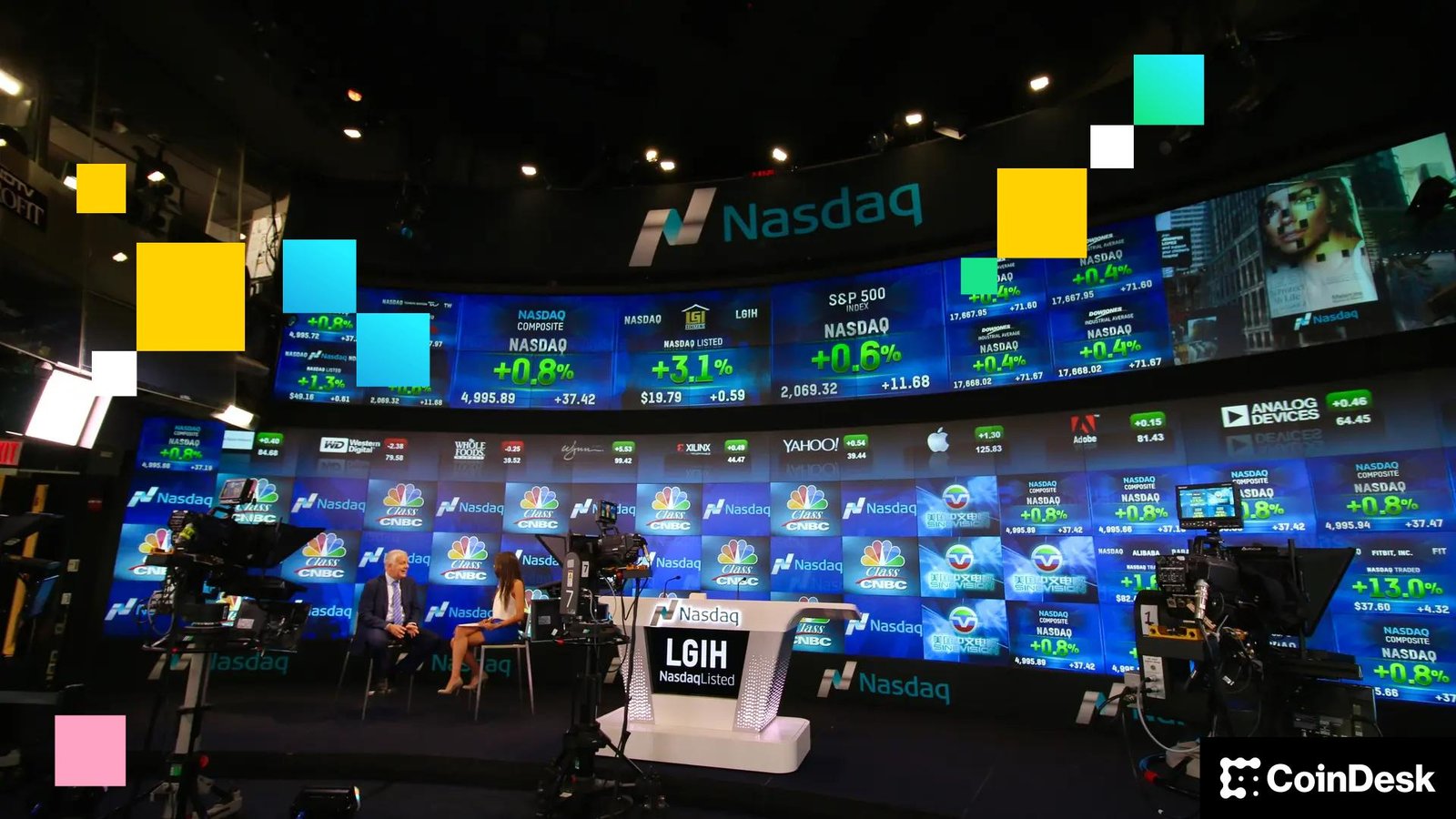
Brickken’s report comes as major U.S. stock exchanges announce plans to expand trading models for tokenized assets, including 24/7 markets. CME Group said they will offer around-the-clock trading for its crypto derivatives by May 29, while the New York Stock Exchange (NYSE) and Nasdaq shared their plans to offer 24/7 tokenized stock trading.

Esturi said the exchanges’ plans have more to do with business model evolution than with an issuer demand disconnect. “It’s less about getting ahead of demand and more about exchanges evolving their business model,” he said. “Exchanges increase revenue by increasing trading volume, and extending trading hours is a natural lever.”

At the same time, many issuers are still in what he described as the phase of validation, during which they prove regulatory structures, test investor appetite and digitize issuance processes. “Liquidity is not yet their primary focus because they are building foundations,” he emphasized, adding that they view tokenization as “the upstream engine that feeds trading venues.”

The Brickken CMO also said that without compliant, structured, high-quality assets entering the market, secondary trading platforms have nothing meaningful to trade. “The true value creation happens at the issuance layer,” Esturi noted.

Optional liquidity versus mandatory

While 38.4% of surveyed issuers said liquidity was not required, Esturi pointed out the difference between “optional liquidity and mandatory liquidity,” noting that many private market issuers operate on long-term horizons. “Liquidity is inevitable, but it must scale in parallel with issuance volume and institutional adoption, not ahead of it.”

Ondo, which began with tokenized U.S. Treasuries and now has more than $2 billion in assets, is focused on stocks and ETFs specifically because of their “strong price discovery, deep liquidity and clear valuation,” Chief Strategy Officer Ian de Bode said in a recent interview with CoinDesk.

“You tokenize something either to make it easier to access or to use it as collateral,” de Bode said. “Stocks fit both, and they price like assets people actually understand, unlike a building in Manhattan. If TradFi moves to 24/7, that’s a godsend,” de Bode added. “It’s our biggest bottleneck.”

The survey shows that tokenization is already operational for many participants: 69.2% of respondents reported completing the tokenization process and being live, 23.1% are in progress, and 7.7% are still in the planning phase.

Regulations are still an issue

Regulation is a major concern among those surveyed: 53.8% of respondents said regulation slowed their operations, while 30.8% reported partial or contextual regulatory friction. In total, 84.6% experienced some level of regulatory drag. By comparison, 13% cited technology or development challenges as the hardest part of tokenization.

“Compliance isn’t something issuers are dealing with after launch; it’s something they’re taking into account and configuring from day one,” said Alvaro Garrido, founding partner at Legal Node. “We see an increasing demand for legal structures tailored to the specific project needs and underlying technology.”

The report also suggests tokenization is expanding beyond real estate. Real estate accounted for 10.7% of assets tokenized or planned for tokenization, compared with 28.6% for equity/shares and 17.9% for IP and entertainment-related assets. Respondents spanned sectors including technology platforms (31.6%), entertainment (15.8%), private credit (15.8%), renewable energy (5.3%), banking (5.3%), carbon assets (5.2%), aerospace (5.3%) and hospitality (5.2%).

“The real bridge between TradFi and DeFi is not ideological,” said Patrick Hennes, head of digital asset servicing at DZ PRIVATBANK. “It is issuance infrastructure that translates regulatory requirements, investor protection and asset servicing standards into programmable systems.”


Read the full article here

Fact Checker

Verify the accuracy of this article using AI-powered analysis and real-time sources.

Get Your Fact Check Report

Enter your email to receive detailed fact-checking analysis

5 free reports remaining

Continue with Full Access

You've used your 5 free reports. Sign up for unlimited access!

Already have an account? Sign in here

Share. Facebook Twitter Pinterest LinkedIn Tumblr Email Telegram Copy Link
News Room
  • Website
  • Facebook
  • X (Twitter)
  • Instagram
  • LinkedIn

The FSNN News Room is the voice of our in-house journalists, editors, and researchers. We deliver timely, unbiased reporting at the crossroads of finance, cryptocurrency, and global politics, providing clear, fact-driven analysis free from agendas.

Related Articles

Cryptocurrency & Free Speech Finance

Crypto firm to cover $60 million losses after SK Hynix flash crash on Hyperliquid

17 minutes ago
Cryptocurrency & Free Speech Finance

Trump teleprompter operator accused over Kalshi bets leaves government: AP

19 minutes ago
Cryptocurrency & Free Speech Finance

SpaceX is a battleground Solana must win

1 hour ago
Cryptocurrency & Free Speech Finance

Bitcoin ETFs extend outflow streak as BTC fails to hold $65K

1 hour ago
Cryptocurrency & Free Speech Finance

Bitcoin clears $64,000 in Asia hours ahead of Fed decision

2 hours ago
Cryptocurrency & Free Speech Finance

Telegram founder Pavel Durov internationally wanted, Russia’s FSB says

2 hours ago
Add A Comment

Comments are closed.

Editors Picks

Trump teleprompter operator accused over Kalshi bets leaves government: AP

19 minutes ago

Brickbat: We’ll Know It When We Read It

60 minutes ago

Health Data Is Personal. Fitness Trackers Should Keep It That Way.

1 hour ago

SpaceX is a battleground Solana must win

1 hour ago
Latest Posts

Bitcoin ETFs extend outflow streak as BTC fails to hold $65K

1 hour ago

RIP Lou Koller, a Hardcore Punk Hero and Free Speech Champion

2 hours ago

An image showing a person wearing a t-shirt that the Reform party leader has reported to the police for incitement. Photo: X Reform UK have complained to police about Green Party leader Zack Polanski for sharing an image on Instagram [which Polanski has since removed] which they claim was an incitement to violence against their leader Nigel Farage. The image is of the slogan “We’re only making plans for Nigel” with the image of a guillotine. The line itself is a reference to the title of a 1979 song by the British band XTC which reached number 12 in the singles chart. While the t-shirt design has no image of Farage nor any branding pertaining to Reform UK, it also bears no reference to the visuals of the song’s sleeve, nor the band’s logo. As with many commercially sold t-shirts, a cultural reference has been repurposed to make its satirical point. T-shirt slogans are less a call for action, more a proclamation of allegiance. “This machine kills fascists” has the actual word “kill” in it, but is a reference to Woody Guthrie’s motto painted on his guitar (sold by the same company as the “plans” t-shirt, albeit it has since been removed from the website). Wearing the t-shirt is proclaiming an allegiance to the idea of art being used to win the battle for hearts and minds. The appearance of the guillotine in this case is hardly an incitement to imminent action, because a guillotine is an unwieldy weapon for any would-be lone wolf assassin. Were it a noose, gun or knife, that might be a different case. Since the guillotine is not a significant part of British history, we can deduce that here the guillotine serves to express a wish for a revolutionary state in the future (and the wearer’s allegiance to such political change). A future idealised political state of being is far removed from incitement to imminent action. When demonstrators hold up placards saying “Death to …” or “Kill all … “ that is far closer to incitement. People have gathered en masse in a licensed space for political protest, confident that the camera lenses of mass broadcast outlets will be trained on them. In such a formally constituted space, there can be no doubt about the expressly directed political nature of such signs. A lone individual walking an ordinary high street with “We’re only making plans for Nigel” on his chest may attract citizen lenses, but is not in any formally designated protest space, nor can he be directing his message to any specific audience, as there is no guarantee who will come into his orbit that day. As an author, I look at the phrase “We’re only making plans for Nigel” and it doesn’t make sense beyond a very specific context. I would never write it, unless there was a group of people from which “we” were only selecting Nigel for some plan, or that “we” wouldn’t even be making plans at all, were it not for Nigel. I would just write “We’re making plans for Nigel” which still retains either meaning, but where the word “only” has become redundant. This is important because it reattaches the phrase back to the XTC song in its specificity. My guess is that XTC simply inserted the word “only” to make the lyrics scan with the musical rhythm. Which makes it a word usage unique to them. Yes, it has been co-opted by the makers of this t-shirt, but to proclaim a specific allegiance, not an incitement to violence. READ MORE

2 hours ago

Subscribe to News

Get the latest news and updates directly to your inbox.

At FSNN – Free Speech News Network, we deliver unfiltered reporting and in-depth analysis on the stories that matter most. From breaking headlines to global perspectives, our mission is to keep you informed, empowered, and connected.

FSNN.net is owned and operated by GlobalBoost Media
, an independent media organization dedicated to advancing transparency, free expression, and factual journalism across the digital landscape.

Facebook X (Twitter) Discord Telegram
Latest News

Crypto firm to cover $60 million losses after SK Hynix flash crash on Hyperliquid

17 minutes ago

Trump teleprompter operator accused over Kalshi bets leaves government: AP

19 minutes ago

Brickbat: We’ll Know It When We Read It

60 minutes ago

Subscribe to Updates

Get the latest news and updates directly to your inbox.

© 2026 GlobalBoost Media. All Rights Reserved.
  • Privacy Policy
  • Terms of Service
  • Our Authors
  • Contact

Type above and press Enter to search. Press Esc to cancel.

🍪

Cookies

We and our selected partners wish to use cookies to collect information about you for functional purposes and statistical marketing. You may not give us your consent for certain purposes by selecting an option and you can withdraw your consent at any time via the cookie icon.

Cookie Preferences

Manage Cookies

Cookies are small text that can be used by websites to make the user experience more efficient. The law states that we may store cookies on your device if they are strictly necessary for the operation of this site. For all other types of cookies, we need your permission. This site uses various types of cookies. Some cookies are placed by third party services that appear on our pages.

Your permission applies to the following domains:

  • https://fsnn.net
Necessary
Necessary cookies help make a website usable by enabling basic functions like page navigation and access to secure areas of the website. The website cannot function properly without these cookies.
Statistic
Statistic cookies help website owners to understand how visitors interact with websites by collecting and reporting information anonymously.
Preferences
Preference cookies enable a website to remember information that changes the way the website behaves or looks, like your preferred language or the region that you are in.
Marketing
Marketing cookies are used to track visitors across websites. The intention is to display ads that are relevant and engaging for the individual user and thereby more valuable for publishers and third party advertisers.