

 Freedom Index
Listen to the article
In brief
- BlackRock CEO Larry Fink says a U.S. moratorium on data center construction would trigger a recession, saying “so much of our economy is based on the build-out of this capex.”
- He dismissed the mounting backlash—over electricity, water and grid strain—as “misinformation,” insisting “data centers are not the problem.”
- The warning matters for crypto given Bitcoin’s macro sensitivity.
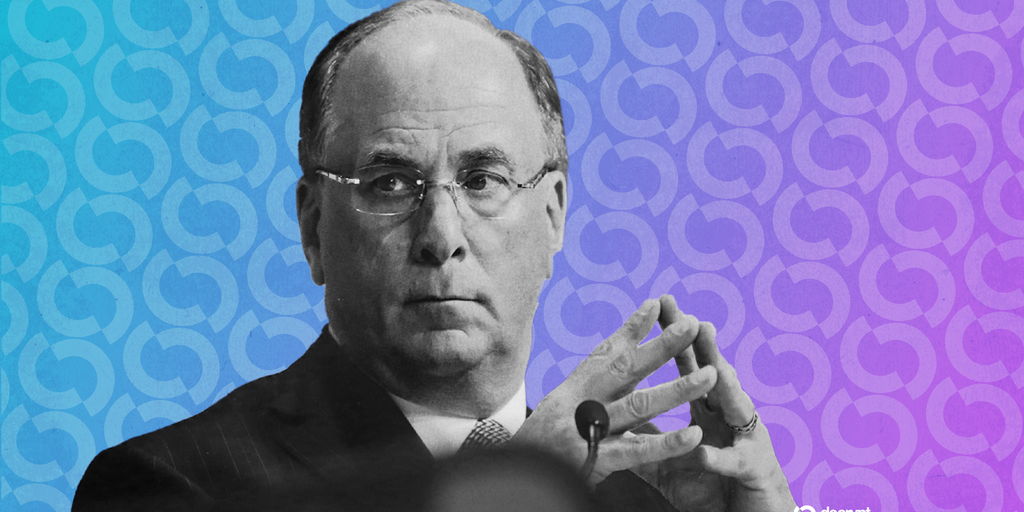
BlackRock CEO Larry Fink has a blunt warning about what could derail the U.S. economy: slamming the brakes on the data centers powering the AI boom.
Speaking to CNBC on Wednesday after BlackRock posted better-than-expected third-quarter earnings, Fink said the surge in AI infrastructure spending has become so central to economic growth that choking it off would be dangerous.
“If we have a moratorium of some sort in this country, we will be in a recession,” he said, adding that “so much of our economy is based on the build-out of this capex.”
The comments come as data centers have become a flashpoint ahead of the Nov. 3 midterm elections, with local opposition mounting over their electricity demands, water use and strain on power grids.
According to Brookings, at least 100 localities had approved moratoriums by July, and New York has paused certain permits for up to a year. Fink pushed back on the backlash, calling much of it “misinformation” and insisting that “data centers are not the problem,” pointing instead to the construction jobs and energy-infrastructure demand the buildout is generating.
The scale of the spending underscores his argument. Wall Street analysts estimate AI capital expenditures could top $1 trillion in 2027 and exceed $5 trillion cumulatively through 2030, making the sector a meaningful driver of the roughly 3% annualized GDP growth Fink wants to sustain. He has argued more private capital is needed to keep it going, and said BlackRock has spoken with chipmakers including AMD and Broadcom about the effort.

BitcoinBTC · USD
$82,358+1.04%
Oct 8Oct 10Oct 12Oct 14Oct 15
$84.2k$82.9k$81.5k$80.2k
24h HighHigh$82,508
24h LowLow$79,806
VolVol$1.8B
Market projectionsOdds by Myriad
 →
→But Fink is swimming against a sharply rising tide of public opposition. An Annenberg Public Policy Center survey this summer found 61% of Americans oppose new data centers in their area, up from 49% in the spring, with majorities of Democrats, Republicans and independents all against them.
The concerns center on soaring electricity demand, water use and strain on local grids. That backlash has already produced real restrictions: New York has a moratorium on hyperscale data centers, Texas has paused approvals, and cities from Austin to Jersey City have imposed limits, with Data Center Watch counting roughly $130 billion in projects blocked or delayed in the first quarter of 2026 alone.
It has also become a live electoral issue. The fight is central to Ohio’s Senate race, where Democrat Sherrod Brown has campaigned against the buildout, and a super PAC backed by AI billionaires including Marc Andreessen and OpenAI President Greg Brockman has poured millions into ads defending data centers across battleground states. President Donald Trump has weighed in too, warning that communities resisting the facilities risk ending up “backwards and poor.”
Against that backdrop, Fink pushed back directly, suggesting the AI buildout in the United States is propping up the U.S. economy and any shift would result in a significant downturn.
The warning carries weight for crypto, given how closely Bitcoin now tracks broader risk sentiment and macro conditions.
Fink, who runs the world’s largest asset manager and oversees its dominant spot Bitcoin ETF, has become one of Wall Street’s most prominent crypto converts. He has called Bitcoin an asset for a “frightened world” and framed it as a legitimate alternative investment, while BlackRock has flagged AI agents as a potential next wave of crypto demand.
Daily Debrief Newsletter
Start every day with the top news stories right now, plus original features, a podcast, videos and more.
Join 72,000+ readers
Read the full article here
Fact Checker
Verify the accuracy of this article using AI-powered analysis and real-time sources.