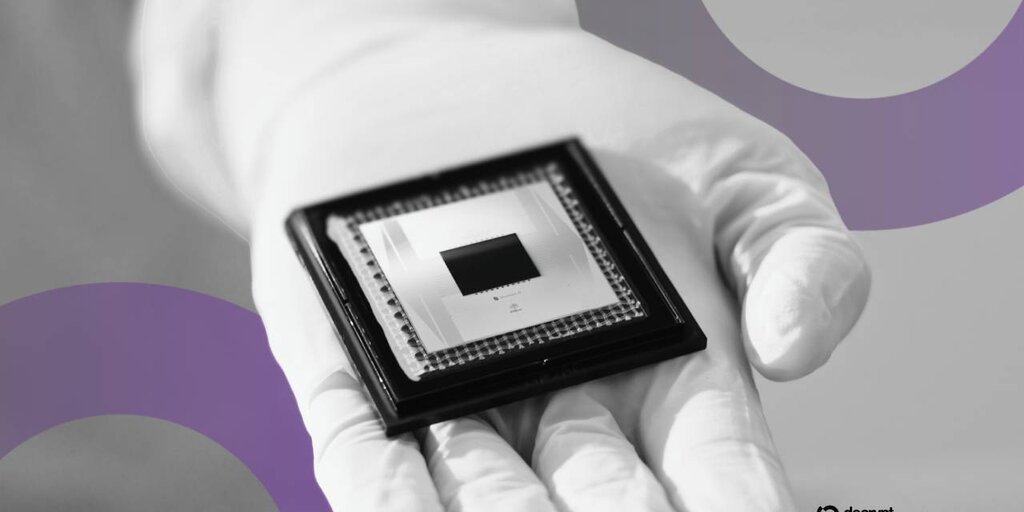
StarkWare says the first quantum-safe Bitcoin transaction has been mined on Bitcoin mainnet.
The method uses hash-based security without changing Bitcoin’s consensus rules.
StarkWare still favors a soft fork as a long-term defense against quantum computers.
Starkware, the blockchain infrastructure company behind Ethereum layer-2 network Starknet, says the first quantum-safe Bitcoin transaction has been mined on the Bitcoin mainnet, testing a way to protect funds from future quantum attacks without changing the network’s consensus rules.
In a blog post on Wednesday, Starkware said the transaction used Quantum-Safe Bitcoin, or QSB, a method developed by Starkware researcher Avihu Levy. Levy published the research in April, and Starkware engineer Tomer Giladi later helped turn the proposal into a working mainnet transaction.
Myriad: How high will Bitcoin go? Click to make your prediction.
“A quantum-safe transaction was mined on the Bitcoin mainnet today that holds up against an adversary running a working quantum computer,” Starkware wrote. “Bitcoin holders now have a way to move coins into storage a quantum computer cannot open.”
Bitcoin uses elliptic-curve cryptography to secure transactions, which a sufficiently powerful quantum computer running Shor’s algorithm could theoretically break to derive private keys and steal funds. Protecting the network could eventually require either a hard fork, which introduces rules incompatible with older software and can split the network, or a soft fork, which can introduce new rules while remaining compatible with older nodes.
Starkware said a soft fork remains the preferred long-term solution, while QSB provides a way to protect individual holdings without waiting for a network upgrade.
“I still want Bitcoin to choose to do a soft fork and I expect we will get one,” Starkware CEO Eli Ben-Sasson said. “What today’s successful transaction offers Bitcoin is a reassurance that holdings can be protected before that happens.”
The issue has drawn growing attention as researchers assess which Bitcoin holdings could be most exposed to future quantum attacks.
In June, Coinbase’s quantum advisory council estimated that roughly 7 million Bitcoin could be vulnerable because of exposed public keys and address reuse.
Quantum-Safe Bitcoin, Starkware said, adds a second, quantum-resistant lock based on hash functions rather than elliptic curves. It uses “signature grinding,” which performs computational work off-chain to find a transaction hash that Bitcoin will accept as a validly formatted signature.
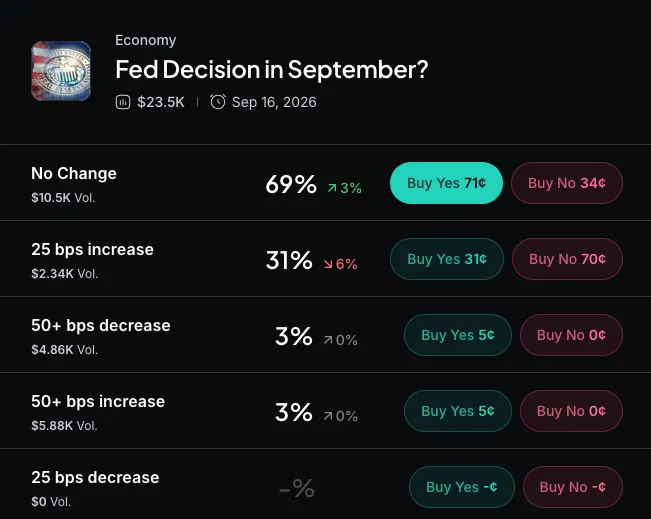
Myriad: What will the Fed do in September? Click to make your prediction.
Starkware acknowledged that QSB does not make Bitcoin quantum-safe, but protects specific transactions using hash-based security. It cannot protect addresses with already-exposed public keys and currently requires transactions to be sent directly to miners.
“This amazing feat should not be viewed as a message saying ‘Bitcoin is prepared for the quantum threat.’ Far from it,” Ben-Sasson wrote on X.
“I hope whatever attention this brilliant work gets will also help folks hear loud and clear our message: Huston, we’ve got a problem, and the way to fix it should be to get serious about serious soft forks for [Bitcoin],” he said. “That’s how catastrophe can be avoided, and we still have time.”
Daily Debrief Newsletter
Start every day with the top news stories right now, plus original features, a podcast, videos and more.
The FSNN News Room is the voice of our in-house journalists, editors, and researchers. We deliver timely, unbiased reporting at the crossroads of finance, cryptocurrency, and global politics, providing clear, fact-driven analysis free from agendas.
We and our selected partners wish to use cookies to collect information about you for functional purposes and statistical marketing. You may not give us your consent for certain purposes by selecting an option and you can withdraw your consent at any time via the cookie icon.
Cookies are small text that can be used by websites to make the user experience more efficient. The law states that we may store cookies on your device if they are strictly necessary for the operation of this site. For all other types of cookies, we need your permission. This site uses various types of cookies. Some cookies are placed by third party services that appear on our pages.
Your permission applies to the following domains:
https://fsnn.net
Necessary
Necessary cookies help make a website usable by enabling basic functions like page navigation and access to secure areas of the website. The website cannot function properly without these cookies.
Statistic
Statistic cookies help website owners to understand how visitors interact with websites by collecting and reporting information anonymously.
Preferences
Preference cookies enable a website to remember information that changes the way the website behaves or looks, like your preferred language or the region that you are in.
Marketing
Marketing cookies are used to track visitors across websites. The intention is to display ads that are relevant and engaging for the individual user and thereby more valuable for publishers and third party advertisers.


 Freedom Index