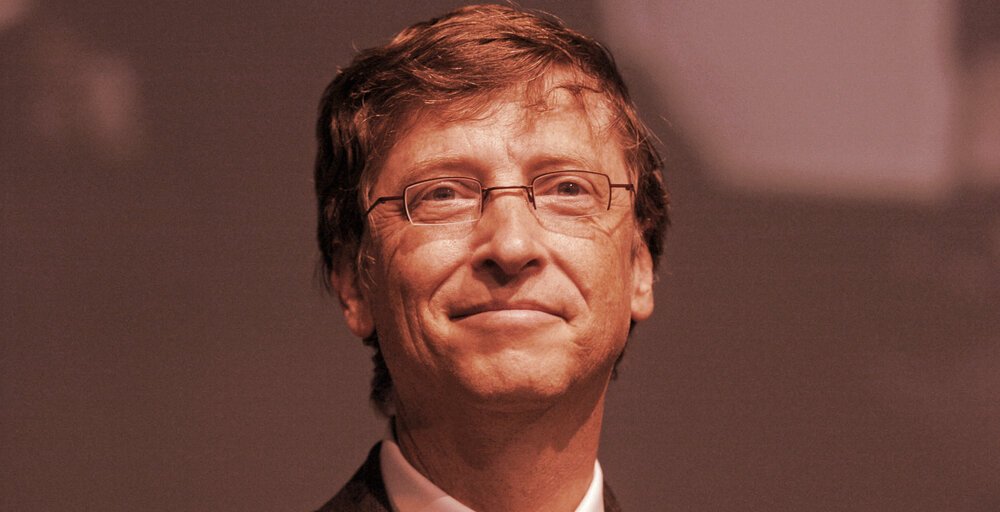
Bill Gates published a nearly 6,000-word essay on Gates Notes calling the AI transition “one of the most turbulent times in human history”
He’s proposing a tax on AI tokens and robots to offset the payroll-tax advantage automation already has over hiring.
Gates puts a ceiling of roughly 40% of jobs under the most aggressive version of that carve-out.
Buy a worker, pay payroll tax. Buy a robot, write it off. Bill Gates thinks the math employers are faced with is a problem.
In an essay titled “The turbulent AI era is here. The choices we make now are critical,” the Microsoft co-founder argues there is an asymmetry in the current job market: employers pay payroll taxes when they hire a person, but a robot generally gets written off right away as a business expense. “The tax system nudges you toward replacing people with machines,” he wrote.
Myriad: How many days will Claude go down? Click to make your prediction.
His fix is a tax on AI tokens—the units language models use to chew through text and other data—plus a tax on robots themselves.
It’s not a new pitch. Gates first floated a robot tax in 2017 and got laughed off by economists who called it a tax on productivity dressed up as a tax on progress.
He’s not backing down this time. Gates believes that a usage tax changes employer incentives directly, unlike a corporate tax that only bites into profits—which can run thin in a hypercompetitive market. Labor already gets taxed through payroll levies. Robots depreciate and owe nothing to Social Security.
The jobs no machine gets to touch
The essay’s second idea is a category of work Gates calls “Human Reserved,” jobs society deliberately keeps for people even when AI could technically do them. His analogy is a nature reserve—land where you could legally build, but don’t, because what’s there is worth more standing.
Childcare and jury service are his cleanest examples. Gates wrote before that his father got round-the-clock care before dying of Alzheimer’s in 2020, and that “something in the care they gave my dad was irreplaceably human.” Education and healthcare sit in a fuzzier middle tier, where he expects the humans to stay in the room while leaning on AI to cover more ground.
Gates capped the idea at roughly 40% of jobs under its most aggressive form, and said he couldn’t push the number any higher without the argument falling apart. He also split the protection into two flavors: permanent, for roles like caregiving, and temporary, aimed at workers—his example was a 55-year-old who’s spent his whole career in construction—who can’t realistically retrain into something unrelated on short notice.
Why he thinks this transition breaks the pattern
Gates spends a chunk of the essay arguing that the usual comparison to past tech shifts doesn’t hold. The move from farm work to office work took generations and created new categories of labor that needed human judgment. He argues AI skips that step—it can substitute directly for human cognition in law, customer service, medicine, software, and manufacturing, and it can do it inside one decade instead of several.
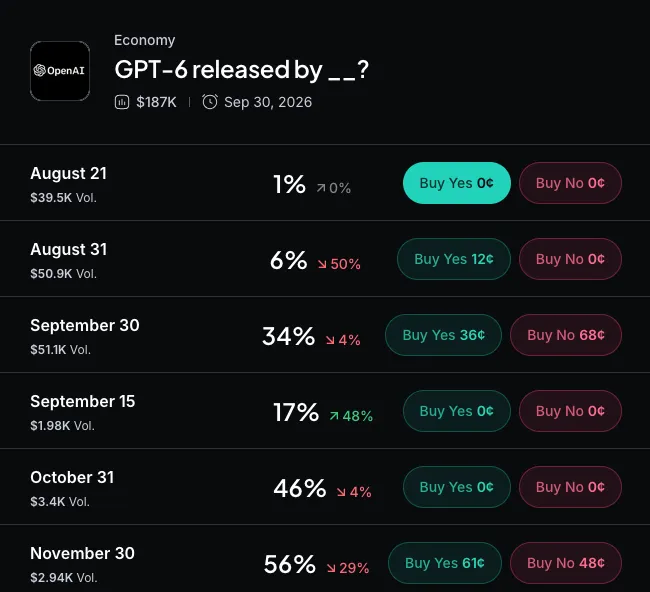
Myriad: When will OpenAI release GPT-6? Click to make your prediction.
Anthropic CEO Dario Amodei has made a version of the same argument, putting a number on it: up to half of entry-level white-collar jobs will be gone within five years.
The data hasn’t caught up to the warning yet. A Yale Budget Lab and Brookings study published in October found no sign of mass displacement in federal employment data through July. California’s newly launched AI-unemployment tracker tells a similar story so far—no statewide layoff wave—though it did flag rising unemployment claims among college-educated workers in AI-exposed occupations.
Gates isn’t waiting on the data. “I’d love to be convinced that I’m wrong about the job market, but I’m not,” he said, adding that he’d stake his reputation on AI turning out “very bad for the job market.”
Gates frames the whole essay as a fork: AI ends up “either the greatest equalizer ever invented, or the worst source of injustice,” and which one we get gets decided in the next few years, not the next few decades. He’s calling for new national coordinating bodies and an international institution to manage the handoff—work he says has to start now, while the robot tax he first pitched nine years ago is still waiting for a government willing to try it.
Daily Debrief Newsletter
Start every day with the top news stories right now, plus original features, a podcast, videos and more.
The FSNN News Room is the voice of our in-house journalists, editors, and researchers. We deliver timely, unbiased reporting at the crossroads of finance, cryptocurrency, and global politics, providing clear, fact-driven analysis free from agendas.
We and our selected partners wish to use cookies to collect information about you for functional purposes and statistical marketing. You may not give us your consent for certain purposes by selecting an option and you can withdraw your consent at any time via the cookie icon.
Cookies are small text that can be used by websites to make the user experience more efficient. The law states that we may store cookies on your device if they are strictly necessary for the operation of this site. For all other types of cookies, we need your permission. This site uses various types of cookies. Some cookies are placed by third party services that appear on our pages.
Your permission applies to the following domains:
https://fsnn.net
Necessary
Necessary cookies help make a website usable by enabling basic functions like page navigation and access to secure areas of the website. The website cannot function properly without these cookies.
Statistic
Statistic cookies help website owners to understand how visitors interact with websites by collecting and reporting information anonymously.
Preferences
Preference cookies enable a website to remember information that changes the way the website behaves or looks, like your preferred language or the region that you are in.
Marketing
Marketing cookies are used to track visitors across websites. The intention is to display ads that are relevant and engaging for the individual user and thereby more valuable for publishers and third party advertisers.


 Freedom Index