Close Menu
FSNN | Free Speech News NetworkFSNN | Free Speech News Network
  • Home
  • News
    • Politics
    • Legal & Courts
    • Tech & Big Tech
    • Campus & Education
    • Media & Culture
    • Global Free Speech
  • Opinions
    • Debates
  • Video/Live
  • Community
  • Freedom Index
  • About
    • Mission
    • Contact
    • Support
Trending

Why SBI paid $289 million for an unprofitable crypto exchange: Architect Partners

23 minutes ago

EBA Unveils Stablecoin Fines Matrix

25 minutes ago

Michael Saylor teases more bitcoin buying even as Strategy stock continues to fall

1 hour ago
Facebook X (Twitter) Instagram
Facebook X (Twitter) Discord Telegram
FSNN | Free Speech News NetworkFSNN | Free Speech News Network
Market Data Newsletter
Sunday, June 28
  • Home
  • News
    • Politics
    • Legal & Courts
    • Tech & Big Tech
    • Campus & Education
    • Media & Culture
    • Global Free Speech
  • Opinions
    • Debates
  • Video/Live
  • Community
  • Freedom Index
  • About
    • Mission
    • Contact
    • Support
FSNN | Free Speech News NetworkFSNN | Free Speech News Network
Home»News»Global Free Speech»Beyond Decree 54: Tunisia’s latest measures to silence the press
Global Free Speech

Beyond Decree 54: Tunisia’s latest measures to silence the press

News RoomBy News Room2 months agoNo Comments7 Mins Read214 Views
Share Facebook Twitter Pinterest Copy Link LinkedIn Tumblr Email VKontakte Telegram
Beyond Decree 54: Tunisia’s latest measures to silence the press
Share
Facebook Twitter Pinterest Email Copy Link

Listen to the article

0:00
0:00

Key Takeaways

Playback Speed

Select a Voice

New York, May 12, 2026 — For years, Tunisia was viewed as one of the few post-Arab Spring success stories for press freedom in the region. In the decade following the 2011 revolution, journalists gained greater space to investigate corruption, criticize authorities, and report more openly than anywhere else in North Africa. Those gains, while incomplete, marked a significant break from decades of authoritarian control over the media. 

By 2026, however, this trajectory has reversed. While President Kais Saied continues to rely on Decree-Law 54, which he forcefully imposed in 2021, to criminalize critical speech and prosecute journalists, authorities are now deploying a wider set of tactics to weaken independent media. 

The Committee to Protect Journalists has documented how Tunisian authorities have used financial crime charges, administrative restrictions, banking freezes, and dissolution proceedings to pressure journalists, media outlets and civil society organisations alike.

Together, these developments point to a broader strategy: not only punishing journalists individually, but dismantling the infrastructure that allows independent journalism to survive.

Decree 54 and the threat of prison

Tunisian lawyer and writer Sonia Dahmani speaks at home in Tunis on November 27, 2025 after her release from prison. (Photo: AFP/Fethi Belaid)

Recent sentences against prominent journalists and commentators highlight how Tunisia continues to rely on Decree Law 54 to criminalize speech. Political commentator and lawyer Sonia Dahmani was sentenced on April 13 to 18 months in prison, while Ghassen Ben Khelifa, editor-in-chief of the local independent newspaper Inhiyez, received a two-year sentence in March 2026.

Although neither is currently behind bars, both remain under constant threat of detention.This legal limbo, where sentences remain enforceable at any moment, has become a powerful tool of intimidation in itself. 

“Tunisian authorities have turned Sonia’s freedom into a threat. By keeping the sentence hanging over her, they’re forcing us into silence, because if we speak up, she [Dahmani] could be taken to prison the next day,” Ramla Dahmani, Sonia’s sister, told CPJ over the phone.

Dahmani has faced at least five separate legal cases, all linked to her media commentary. While some have resulted in prison sentences, at least two cases remain ongoing, meaning she risks facing additional sentences and further prison time in the future.

Ben Khelifa’s prosecution shows how authorities revive older cases to deliver punishment over time. He was first arrested in September 2022 and detained for five days before being released pending investigation. The two-year sentence issued in March 2026 stems from that same case, which has remained open for more than three years and is linked to a social media page authorities allege was connected to him.

In a separate case, journalist Zied el-Heni, editor-in-chief of news site Tunisian Press, was arrested for criticizing the prosecution of freed journalist Khalifa Guesmi on his Facebook page, and sentenced on May 7 to one year in prison.

“My father is being prosecuted simply for doing his job as a journalist—denouncing failures in the judicial system and calling for accountability,” Ela el-Heni, Zied’s daughter, told CPJ.  “The harassment against him was clearly meant to silence his voice and make an example of him to instill self-censorship among journalists.” 

Financial charges to prolong detention
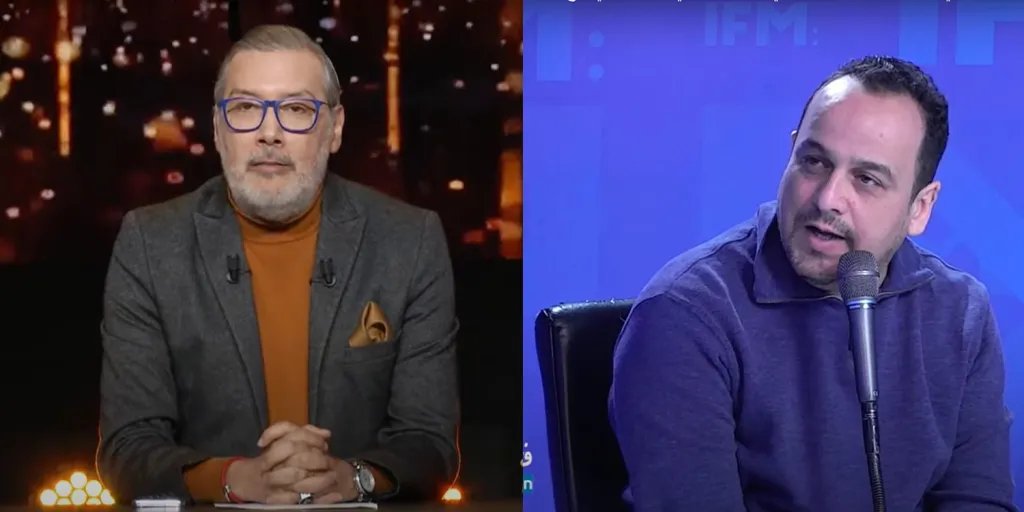
An image of journalists Borhen Bsaies (left) and Mourad Zghidi (right).
A Tunis court convicted radio journalists Borhen Bsaies (left) and Mourad Zghidi of defamation and spreading false news. (Screenshots: Carthage Plus/YouTube; IFM/YouTube)

Beyond Decree 54 prosecutions, authorities are increasingly turning to financial crime charges to extend detention periods and deepen judicial harassment. 

The cases of radio journalists Mourad Zghidi and Borhen Bsaies exemplify this shift. Both men were arrested alongside Dahmani in May 2024, and initially prosecuted under Decree 54, receiving reduced sentences on appeal. However, rather than being released, they were subjected to new investigations involving allegations of money laundering and illicit enrichment. 

In January 2026, a Tunis court sentenced them to three and a half years in prison, accompanied by hefty fines and asset seizures.

Yesmine Zghidi, Mourad’s daughter, described the charges as retaliatory measures intended to justify continued detention and reframe the journalists as criminals.

“Our lives stopped when our father was arrested,” she told CPJ over the phone.“The hardest part is knowing he did nothing wrong, yet he’s in a cell for no reason.” 

Targeting independent outlets and civil society

Civil society organizations in Tunisia have faced a growing wave of administrative restrictions, funding obstacles, and public smear campaigns, and independent news outlets are not exempt. Toward the end of April 2026, Tunisian authorities suspended the Tunisian League for Human Rights (LTDH), a member of the National Dialogue Quartet, which was awarded the Nobel Peace Prize in 2015, for one month, targeting one of the region’s oldest and most prominent rights organizations. 

One of the clearest examples is the move to dissolve Al Khatt, a key player in Tunisia’s independent media landscape for over a decade and the association behind the investigative outlet Inkyfada. A hearing on the government’s dissolution request is scheduled for June. 

Since late 2023, Al Khatt has faced escalating pressure, beginning with repeated banking restrictions that blocked its funds for months at a time, followed by extensive administrative audits, documentation requests, and a one-month suspension of its activities in 2025. 

According to Inkyfada co-founder Malek Khadhraoui, the organization complied with every request while authorities continued escalating pressure.

“The most damaging obstacle has been the banking restrictions,” Khadhraoui told CPJ over the phone. “Transfers related to our projects or services are blocked for months without explanation and no one tells us why or for how long.”
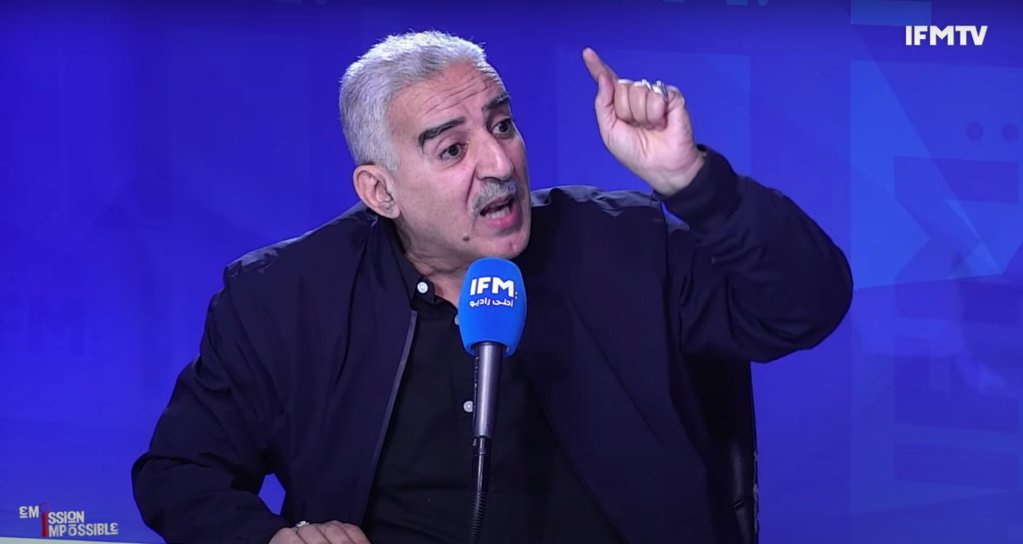
Tunisian journalist Zied el-Heni was recently arrested for allegedly insulting the president. (Screenshot: YouTube/IFM)
Tunisian journalist Zied el-Heni was recently sentenced to one year in jail. (Screenshot: YouTube/IFM)

When CPJ interviewed Khadhraoui in 2022, he warned that President Saied was threatening to restrict foreign funding for civil society organisations. Four years later, those threats have evolved into a systematic campaign of financial pressure targeting independent media and NGOs.

“Al Khatt’s battle is not just its own—it is a battle for all civil society,” he said.

Other outlets have faced similar measures. Independent news outlet Tumedia saw a routine international transfer from a donor suddenly become blocked off by the bank, according to a Tumedia journalist who spoke with CPJ on the condition of anonymity for fear of reprisal. 

Authorities requested extensive financial documents, including details about the donor’s own funding sources and despite submitting the needed documents, the funds remain frozen with no clear explanation, the journalist said. 

The outlet’s editor-in-chief, Khaoula Boukrim, has also been targeted by what appears to be a coordinated smear campaign online.

Independent news outlet Nawaat was likewise suspended for one month in October 2025 following a series of investigations, financial and tax controls, and harassment incidents.

Together, these cases suggest a broader strategy. By targeting both journalists and the outlets they work for, authorities are shrinking the space for independent reporting from multiple angles.

What Tunisia’s information ecosystem needs today

“Together, these latest developments show how far Tunisia has drifted from its post-2011 reputation as a regional refuge for freedoms, as authorities now move beyond targeting journalists to dismantling the conditions that allow press freedom to exist,” said CPJ Chief Programs Officer Carlos Martínez de la Serna.

The growing range of measures deployed against the press in Tunisia underscores the need for sustained international pressure on Tunisian authorities.

In 2025, CPJ brought Ramla Dahmani to the European Parliament to advocate for her sister. The body subsequently adopted a resolution expressing concern about Sonia’s imprisonment, as well as the situation in Tunisia.  Sonia Dahmani was released the same day the resolution passed, demonstrating the influence Brussels can have on press freedom in Tunisia.  

CPJ continues to press the leadership of the European Commission and the European External Action Service to build on that momentum and press for the release of Mourad Zghidi and Borhen Bsaies. 

CPJ continues to call on Tunisian authorities to immediately end the misuse of Decree 54 to prosecute journalists for their work and public commentary and instead implement the press code Decree 115 when prosecuting journalists.. Authorities should protect independent media organizations and stop efforts to dissolve their parent associations or restrict funding.

CPJ’s email to Tunisian authorities requesting comment did not receive any reply.

Read the full article here

Fact Checker

Verify the accuracy of this article using AI-powered analysis and real-time sources.

Get Your Fact Check Report

Enter your email to receive detailed fact-checking analysis

5 free reports remaining

Continue with Full Access

You've used your 5 free reports. Sign up for unlimited access!

Already have an account? Sign in here

Share. Facebook Twitter Pinterest LinkedIn Tumblr Email Telegram Copy Link
News Room
  • Website
  • Facebook
  • X (Twitter)
  • Instagram
  • LinkedIn

The FSNN News Room is the voice of our in-house journalists, editors, and researchers. We deliver timely, unbiased reporting at the crossroads of finance, cryptocurrency, and global politics, providing clear, fact-driven analysis free from agendas.

Related Articles

Global Free Speech

Belarus jails journalist Kyril Pazniak for 3.5 years 

2 days ago
Global Free Speech

CPJ, partners express urgent concern to NATO over press accreditation denial for Turkey summit in July

2 days ago
Global Free Speech

The high price journalists paid for LGBTQ+ reporting, and how to protect yourself now

2 days ago
Global Free Speech

Al-Arabiya correspondent killed by car bomb in Yemen

2 days ago
Global Free Speech

CPJ, partners call on EU to review approach toward Tunisia amid critical human rights decline

2 days ago
Global Free Speech

Photo by: Stephen Barnes/Medical/Alamy UK news this week is dominated by a damning report led by senior midwife Donna Ockenden that reveals how more than 500 mothers and babies were harmed or died at maternity units in Nottingham. This isn’t the first scandal Ockenden has investigated. A few years back terrible failings were revealed in Shropshire hospitals run by the Shrewsbury and Telford NHS Trust where 201 babies and nine mothers died.  We spoke to Ockenden for the magazine and she repeated this: “women aren’t listened to”. Another common thread was cover-up. Secrecy is not a one-off, it’s a pattern, wrote Martin Bright when he reported on the Shropshire scandal for Index. As Bright said, “this is not a historical story; it is an ongoing crisis”. Maternity scandals happen not only in Britain but all over the world. Last year’s protests in Morocco were ignited after eight women died in a maternity ward in Agadir because of severe medical neglect. In Egypt last week Omnia Sweidan, a former resident physician in obstetrics and gynaecology at Alexandria’s El-Shatby University Hospital, wrote a Facebook post detailing a series of abusive incidents faced by women at Alexandria’s Al-Shatby Hospital. It was read and shared by tens of thousands. Within 24 hours of posting, instead of the government declaring an investigation, security forces arrested Sweidan. While she was apparently later released, she’s been accused of spreading false news and misusing social media. She could end up in jail. Meanwhile, Afghanistan has one of the highest maternal mortality rates in the world – the figures of deaths and injuries are rising, but to what no one really knows. The Taliban won’t publish the data, probably to cover-up the true numbers. I’ve navigated maternity services myself in the UK. I’ve generally had good experiences and I’m very grateful to the NHS. But my experiences have not been uncomplicated – my daughter very nearly died. What saved her, I’ve been told, were a few factors – my race (white), my class (middle), where I live (London) and the fact that I relentlessly badgered those at my local hospital for weeks on end saying things didn’t feel right. Let me be clear here though: one shouldn’t have to be a dogged white Londoner to get good medical care. And a recent health committee report revealed terrible inequalities faced by people who are members of ethnic minorities, stating that “[B]abies that are Black or Black British Asian or Asian British have a more than 50% higher risk of perinatal mortality”. At Index we typically work on stories where dissidents take on the powerful: leaders, oligarchs and tech bros. The victims of maternity care scandals might not appear the same. But there is much that unites them. At the end of the day if the response you get from a doctor or nurse to a basic medical request is a shrug or a sneer, your free speech is being violated. If the systems view calls for accountability as dissent that must be silenced, then they are censoring. We grew up being told we’re lucky, that childbirth was one of the leading causes of death before the advent of modern medicine. For many of us that’s true. Just not all of us. That’s a travesty demanding urgent attention – in Nottingham and beyond. READ MORE

2 days ago
Add A Comment

Comments are closed.

Editors Picks

EBA Unveils Stablecoin Fines Matrix

25 minutes ago

Michael Saylor teases more bitcoin buying even as Strategy stock continues to fall

1 hour ago

Will Bitcoin Price Recover in July?

1 hour ago

Samson Mow says bitcoin bottom is in, but analysts remain divided

2 hours ago
Latest Posts

Tokenization is becoming the financing layer for AI and robotics, Framework bets with $400 million fund

4 hours ago

The Future Cyberpunk Imagined Is Here: How Much Did It Get Right?

5 hours ago

Binance Sees $400M in Weekly Net Outflows Before MiCA Deadline

6 hours ago

Subscribe to News

Get the latest news and updates directly to your inbox.

At FSNN – Free Speech News Network, we deliver unfiltered reporting and in-depth analysis on the stories that matter most. From breaking headlines to global perspectives, our mission is to keep you informed, empowered, and connected.

FSNN.net is owned and operated by GlobalBoost Media
, an independent media organization dedicated to advancing transparency, free expression, and factual journalism across the digital landscape.

Facebook X (Twitter) Discord Telegram
Latest News

Why SBI paid $289 million for an unprofitable crypto exchange: Architect Partners

23 minutes ago

EBA Unveils Stablecoin Fines Matrix

25 minutes ago

Michael Saylor teases more bitcoin buying even as Strategy stock continues to fall

1 hour ago

Subscribe to Updates

Get the latest news and updates directly to your inbox.

© 2026 GlobalBoost Media. All Rights Reserved.
  • Privacy Policy
  • Terms of Service
  • Our Authors
  • Contact

Type above and press Enter to search. Press Esc to cancel.

🍪

Cookies

We and our selected partners wish to use cookies to collect information about you for functional purposes and statistical marketing. You may not give us your consent for certain purposes by selecting an option and you can withdraw your consent at any time via the cookie icon.

Cookie Preferences

Manage Cookies

Cookies are small text that can be used by websites to make the user experience more efficient. The law states that we may store cookies on your device if they are strictly necessary for the operation of this site. For all other types of cookies, we need your permission. This site uses various types of cookies. Some cookies are placed by third party services that appear on our pages.

Your permission applies to the following domains:

  • https://fsnn.net
Necessary
Necessary cookies help make a website usable by enabling basic functions like page navigation and access to secure areas of the website. The website cannot function properly without these cookies.
Statistic
Statistic cookies help website owners to understand how visitors interact with websites by collecting and reporting information anonymously.
Preferences
Preference cookies enable a website to remember information that changes the way the website behaves or looks, like your preferred language or the region that you are in.
Marketing
Marketing cookies are used to track visitors across websites. The intention is to display ads that are relevant and engaging for the individual user and thereby more valuable for publishers and third party advertisers.