

 Freedom Index
Listen to the article
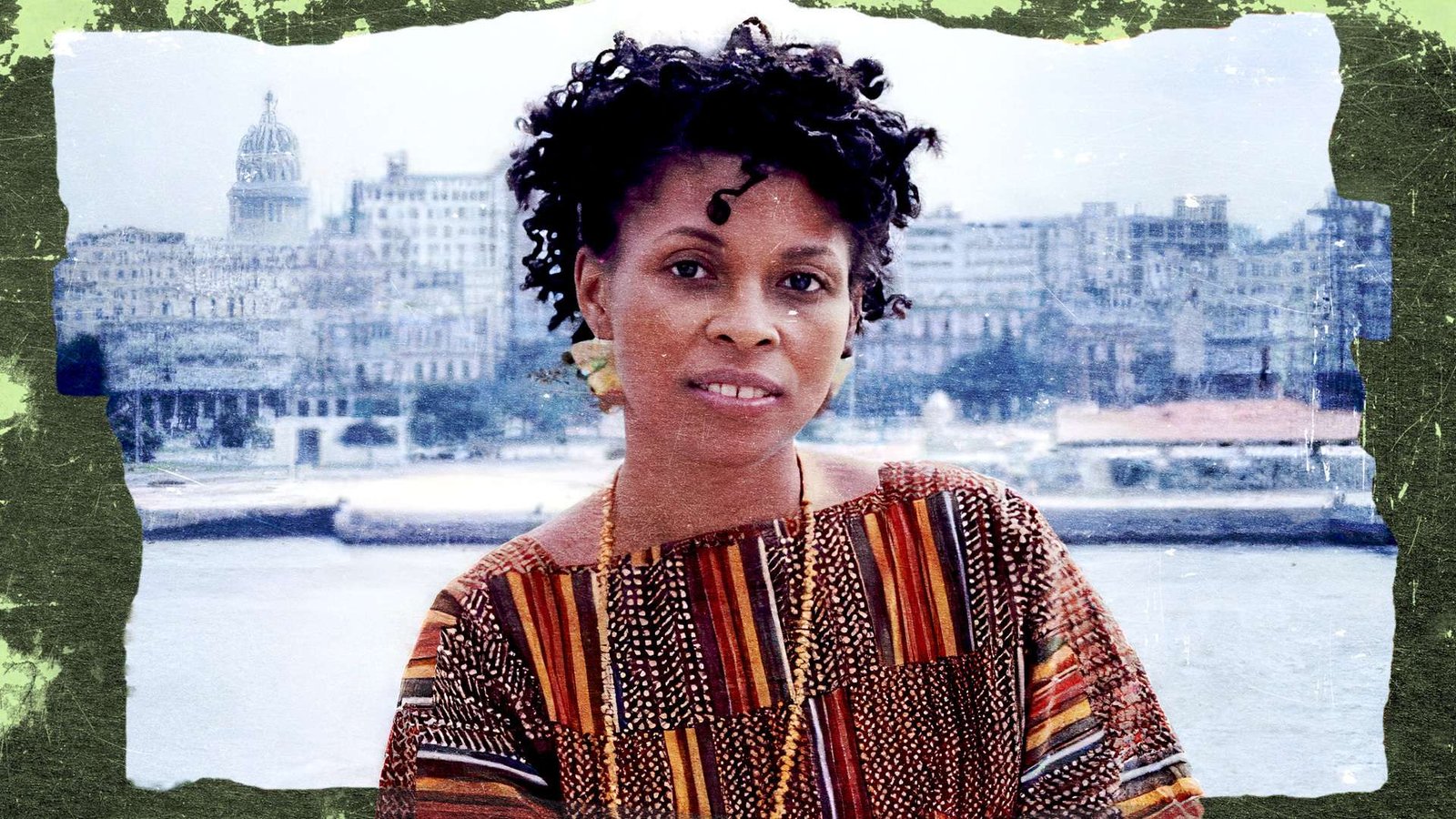
There are quite a few dramatic, almost folkloric, stories about Assata Shakur, the American militant and self-avowed anti-government revolutionary who escaped from prison in 1979, not long after she was convicted of murdering a New Jersey state trooper. But a relatively quiet one stands out to me.
During a walk, a police officer stopped and asked her for her papers. Her offense: She was black. It was the very sort of racist, dystopian targeting Shakur spent her life attempting to combat. Which is why it is richly ironic that this happened in Cuba, the place where she sought refuge from the racism and oppression of the U.S.
How did she reconcile this? “Look there’s racism here, there’s racism in the United States,” she told CNN in Havana in 1998. “The difference is that the people at the top in the United States are the ones perpetuating that racist system, and the leadership here are trying to dismantle it.”
It’s an answer that tells you a lot, not just about Shakur, but about certain political factions that still exist today. Shakur, who died last week at age 78, lived the rest of her life in—and often vocally supported—Cuba, where “the system” has long been known for imprisoning political dissidents, severely curtailing civil liberties, and forging equality in the sense that people are more equally oppressed.
By Shakur’s telling, she was a freedom fighter. In the early 1970s, after a stint with the Black Panthers, she joined the Black Liberation Army, an offshoot of the Panthers whose members were accused of murdering law enforcement officers, bombing buildings, and robbing banks, done in the name of forcefully taking freedom for black people from a government that denied it. She shed the name JoAnne Chesimard and exchanged it for what she would become widely known as: Assata (meaning “she who struggles” in Swahili) and Shakur (meaning “thankful one” in Arabic). Over the course of a few years, she was charged with multiple counts of robbery, kidnapping, attempted murder, and murder, all of which were dismissed or ended in an acquittal or a hung jury.
Until they didn’t. In 1977, she was found guilty of murdering Trooper Werner Foerster in a shootout on the New Jersey Turnpike. Two years into her life sentence, members of the Black Liberation Army sprung her from prison. She resurfaced in 1984 in Cuba, the place she would call home for over 40 years, out of reach of U.S. extradition.
Shakur’s legacy is complicated by the era in which her American activism existed. It coincided, for one, with COINTELPRO, the notorious FBI counterintelligence program that illegally surveilled and stirred the pot among political movements deemed malignant. Those unconstitutional actions—often paired with shoddy case work by prosecutors, flimsy evidence, overcharging, unreliable witnesses, and politically motivated cases—led many judges to dismiss indictments entirely. It all added fuel to why groups like the Black Liberation Army emerged in the first place. “People have constitutional rights, and you can’t shuffle them around,” a New York judge said while dismissing several charges against Shakur.
The activist and fugitive always maintained she didn’t kill Foerster. During her trial, two physicians testified that the bullet wounds she sustained on the turnpike, one of which shattered her collarbone, could only have occurred if she had her hands and arms raised above her head, precluding her ability to fire any weapon. “You have convicted a woman who had her hands in the air,” Shakur said after the guilty verdict was read.
But even if you believe her to have been wrongly convicted, the impulse among some—from the Chicago Teachers Union and the Democratic Socialists of America (DSA) to politicians, pundits, and activists—to treat her as a martyr for freedom is, to put it kindly, misguided.
There are a few reasons for that.
The Black Liberation Army was, for one, not vague about its support for “armed struggle” and urban guerrilla warfare. “People have the right to free themselves from oppression by whatever means they deem possible,” Shakur told NBC in 1998, when she again maintained she was innocent of murder. It’s a strange sort of cognitive dissonance that effectively amounts to “I didn’t do it, but if I did do it, it would have been OK.”
But the greater cognitive dissonance—and Shakur’s real legacy—is grounded in the place she found sanctuary, and whose government she said was doing it right: Cuba. “I eventually became convinced that the Cuban government was completely committed to eliminating all forms of racism,” she wrote in her autobiography, Assata. “There were no racist institutions, structures, or organizations, and i [sic] understood how the Cuban economic system undermined rather than fed racism”—the same argument she would echo throughout her life, including in her late-’90s CNN interview.
It’s a stunning claim to make, especially from an alleged radical for freedom. This is the same government that sent armed militiamen to shut down media for the offense of being opposed to Cuban dictator Fidel Castro, whom Shakur affectionately calls “Fidel” in her autobiography. It is the same government that put Christians, gays, and political dissidents in concentration camps. It is the same government that has, for decades, imprisoned people for having the audacity to criticize the state. And it is the same communist “economic system” that has tried to engineer equality such that it has resulted in hunger and widespread shortages, not just of food but of basic goods.
The argument still resonates among certain left-wing factions. “The American state brutally oppressed Assata and her Black Panther Party Comrades,” the DSA said in a statement following Shakur’s death. “The Cubans welcomed her and other Black Revolutionaries with asylum, and their solidarity and loyalty allowed Assata to live out her days in Havana.” But the asylum grants to Shakur and those like her had little to do with any devotion to freedom. “Back then if it annoyed the United States government,” a Cuban diplomat told CNN’s Patrick Oppmann, “that was a good enough reason to do something.”
In 2021, the island saw the largest anti-government protests in decades. Black Lives Matter (BLM) responded by blaming the U.S. government for “instigat[ing] suffering for the country’s 11 million people – of which 4 million are Black and Brown” with its embargo on trade, which the group said was punishment for Cuba’s “commitment to sovereignty and self-determination” in the face of adversity. “Cuba has historically demonstrated solidarity with oppressed peoples of African descent…like Assata Shakur.”
The U.S. embargo is unjust, but it isn’t the root of the island’s problems. That summer I spoke to two black Cuban residents about the protests. “What’s wrong with them?” one of them asked me about BLM. The notion that Cuban society is devoid of racism, he said, was ridiculous. So was the idea that Cubans are truly free. Our conversation took place over encrypted messaging, and a portion of it consisted of the two men deciding if they felt comfortable talking to me at all. “You have to respond in a way that doesn’t screw you over,” said the other man. “They’re arresting people at their homes.”
In other words, there is a real movement for freedom in Cuba—one that comes at great personal risk. Perhaps Assata Shakur had a change of heart before her death and stood with it. Something tells me she did not.
Read the full article here
Fact Checker
Verify the accuracy of this article using AI-powered analysis and real-time sources.