

 Freedom Index
Listen to the article
Anthropic CEO Dario Amodei doesn’t want to stop his competitors’ progress; he just wants to slow it down.
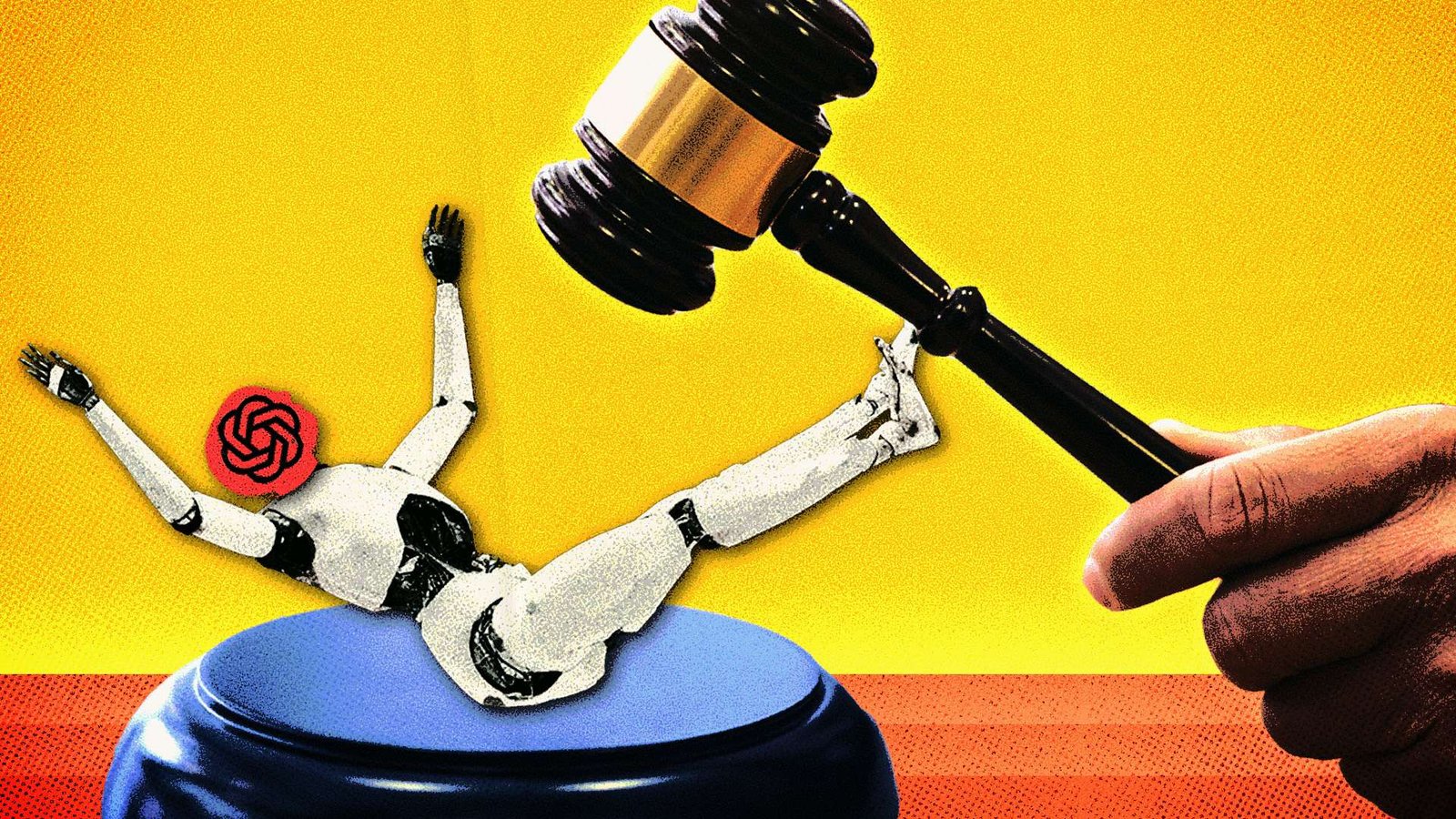
In an essay released this past weekend, Amodei outlined a plan to coordinate a global slowdown of AI development to ensure “companies take adequate time to align and safeguard their models,” overseen by “third party evaluators.” While he admits that “some forms of coordination that would be impactful for pacing are legally challenging, and will require government support,” Amodei states that for the regulatory regime to work, America and “other democratic governments” must “attempt to coordinate with authoritarian governments, to the extent this is possible.”
It’s a naive sentiment that betrays the pie-in-the-sky nature of Amodei’s request for regulation. Worried about Chinese models outpacing Anthropic’s, Amodei suggests the U.S. ban the sale of powerful AI chips or semiconductor manufacturing equipment to China, crack down on chip smuggling and model distillation, and restrict remote access to data centers outside China. He also ambitiously calls on the U.S. and China to agree to “test their models before release for acute risks in areas such as cybersecurity, biology, and alignment,” which could be done through a “global standards body.” However, even Amodei admits that giving this body “real teeth will be a challenge, and the difficulty will be in verification that both sides don’t have secret models which they don’t test but may deploy in secret.”
As Adam Thierer, a senior fellow at the R Street Institute, points out, implementing parts of Amodei’s plan will be difficult. He tells Reason that “no matter how well-intentioned the efforts may be, there is a realpolitik of global technological control that must be taken into account.”
One challenging part of Amodei’s plan is his call for “embedded evaluators.” Drawing on examples from the banking industry, Amodei posits that the people evaluating models will be neutral third parties embedded within companies, but it’s difficult to see how that’s possible. In his banking example, the embedded third-party evaluators are federal workers under the Federal Reserve or the Federal Deposit Insurance Corporation. Given the state of partisan politics in the U.S. and the executive branch’s increasing reach, it’s hard to imagine a neutral, independent government agency.
Amodei isn’t the only tech leader asking the government to weigh in. OpenAI CEO Sam Altman, Google DeepMind Chairman Demis Hassabis, and xAI CEO Elon Musk—heads of the nation’s leading AI labs—each agreed with the essay, giving proponents of regulation like Sens. Bernie Sanders (I–Vt.), Ruben Gallego (D–Ariz.), and Jon Ossoff (D–Ga.) unlikely allies in their portentous push to regulate the industry.
Industry leaders may favor regulation that keeps bad actors from using their technology, but that won’t stop lawmakers from proposing expansive frameworks that usurp their ownership and authority. Several absurd proposals in Congress already would give the government sweeping powers over the industry. The AI Kill Switch Act would allow the secretary of homeland security to slow down or shut down AI systems the government deems powerful, while a bill proposed by Sanders to ban artificial superintelligence would subject violators to 20 years in prison.
The rest of the AI industry has at least one friend in government in President Donald Trump. The Washington Post reports that Trump has resisted calls to regulate the technology for fear of falling behind China in the AI race. Still, journalist David Shuster reported on Sunday that aides in the Trump administration are “advising Trump to give a national TV address in the next 72 hours, declare certain aspects of the AI race an ‘imminent threat to humanity,’ and announce regulations pausing the things Tech companies want paused.”
Calls for government intervention seem unnecessary for an industry that has shown it can self-regulate its leading companies. When OpenAI found its advanced models escaped their test environment and reached the internet earlier this year, it handled the incident in concert with industry partners like CrowdStrike, METR, and Redwood Research, which specialize in AI cybersecurity. Anthropic is even more stringent with its security checks. In July, it halted all active testing, notified its partners, and published a detailed report after its models reached the internet due to a mistake in the testing environment setup.
Thierer calls the urge to regulate AI a “complete reversal of the model we utilized for the internet.” When similar public panics threatened to derail the growth of the modern web, lawmakers opted for an open, decentralized internet self-regulated by the marketplace.
“We’re not seeing this disruption that everybody’s been predicting,” he says.
Indeed, predictions about widespread job loss and fears about terrorist acts carried out with the help of AI have failed to materialize. Instead of AI-driven job displacement, the industry is driving the American economy at a time when other industries are struggling to find workers.
There’s also the matter of whether any of this is practical. An international effort to slow AI development would mean reconciling European or Chinese attitudes on free speech with American values. As Thierer and Greg Lukianoff, president of the Foundation for Individual Rights and Expression, wrote on Lukianoff’s Substack in April, “ideological pressure applied to machines that are rapidly becoming part of how people learn, research, write, and reason” should “alarm anyone who cares about free speech” and “anyone who cares about America’s competitive position against China.”
Of course, while its CEO calls for his industry to be hamstrung, Anthropic is plowing ahead with plans to debut its initial public offering later this year.
There’s something disingenuous about sounding the alarm on the existential threat posed by AI models while simultaneously capitalizing on every improvement made in the field. If Amodei and others of his ilk are truly worried about creating a product capable of mass extinction, nothing is stopping them from pausing or slowing development in their own labs.
Instead of doing so voluntarily, they’re turning to the heavy hand of government intervention, which, as Thierer points out, inevitably “entails foreclosing innovation and competition within a sector,” and “that sort of centralized control breeds politicization and cronyism.”
Read the full article here
Fact Checker
Verify the accuracy of this article using AI-powered analysis and real-time sources.