

 Freedom Index

Listen to the article
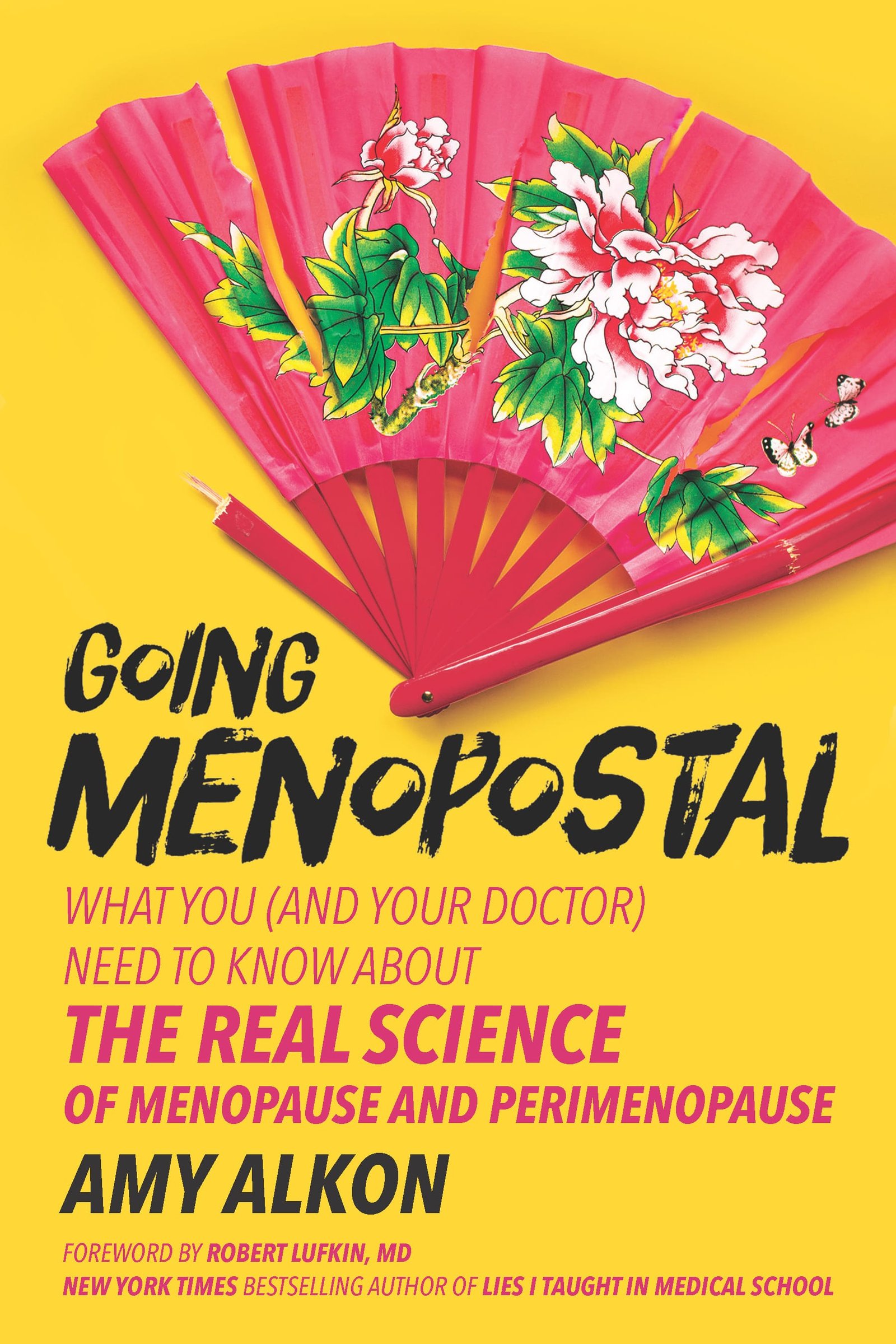
Excerpted from the book GOING MENOPOSTAL: What You (and Your Doctor) Need to Know About the Real Science of Menopause and Perimenopause by Amy Alkon.
There’s a horrible secret ob-gyn departments across the US have been keeping: Most ob-gyns are what I call “baby doctors”—maternity specialists who know next to nothing about menopause and perimenopause and have had zero training in treating either.
This seems insane. Like something I just made up.
I wish it were.
A 2013 survey of American ob-gyn residents found that a mere 21 percent were in programs that included a menopause curriculum—lectures, readings, and case presentations. Only sixteen percent had training in treating menopausal and perimenopausal patients. And 66 to 79 percent of ob-gyn residents “reported needing to learn more regarding key menopause issues or knowing nothing” about them.
Knowing NOTHING.
This means they cannot responsibly diagnose and treat menopausal and perimenopausal women. “Responsibly,” as in, it’s a violation of medical ethics to do anything but refer these women to a doctor who has the knowledge and expertise they lack.
Cardiologist and bioethicist Sarah Hull, MD, explains that it’s “obligatory” for doctors to refuse care “when the treatment requested is outside a doctor’s scope of practice.” For example, it would be outside of her scope of practice if one of her heart disease patients asked her for antibiotics for an ear infection.
Referring her patient back to his primary care physician “may be an inconvenience to my patient,” but “my providing non-cardiac treatment without being up to date on current guidelines and practice standards presents a real potential for harm. My prescribing the wrong antibiotic, for example, might delay him from getting the right treatment and put him at higher risk for infectious complications, which would violate my duty as a physician to do no harm.”
Medical Ignorance and Neglect as the Standard of Care
It’s probably the very rare ob-gyn (if any) who does the ethical thing and discloses something like, “Really, I haven’t a clue about perimenopause. Go find someone else to treat you.”
These doctors are not horrible people. They mean to do right by their patients. However, treating outside their expertise in this way is just what’s done––what’s expected in their department, at their institution, in their field. Borrowing from Hannah Arendt, there’s a banality of negligence here: negligence that’s become a routine part of the job.
It’s grotesque. Millions—yes, millions—of menopausal and perimenopausal women, tormented daily by raging hot flashes, insomnia, and other life-gnawing symptoms, turn to their gynaecologist for medical care and instead get misdiagnosis and mistreatment or no treatment at all.
Healthcare for menopause and perimenopause, the three-to-ten years leading up to menopause, is the medical field’s most patient-betraying specialty. However, in this and every other area of medicine, though some individual doctors deserve our trust, the entire medical system and our medical institutions absolutely do not.
Rethinking Health Disparities
True progress in medicine can only be accomplished when we maintain a consistent standard of scientific excellence and honest inquiry.
Why You Won’t Want To Believe Me and Why You Should
“I don’t want to believe you. Because if I do, it’s terrifying. It means I can’t trust my doctor.”
Katiedid Langrock told me this. She’s one of a few non-scientists I asked to read an early version of this book.
I completely get it.
When my first hot flash hit me, I wanted to go to my gynaecologist and say, “Hi, here’s my problem; what should I do?”—not go, “Oh, great. Now, I’ll embark on an eight-year excavation of the research on menopause and perimenopause to figure out what treatment my gynaecologist should be giving me.”
The truth is, I only understood the need for that because I happened to be free one night in 2007 when a science writer friend called me. He had dinner plans with UCLA professor Sander Greenland and invited me to join them.
Greenland is one of the world’s top epidemiologists and statisticians and the co-author of the seminal textbook in his field. He has spent his career going after errors, distortions, and fraud in medical research and pushing for reforms. While many researchers—understandably!— reserve their time for work that amps up their stature in their field, Sander is incredibly generous to anyone who expresses a sincere interest in assessing scientific studies and developing appropriate scepticism.
I started sending him my science-based syndicated column every week, and he began educating me in how to vet scientific research. Over the years, he’s opened my eyes to how unscientific much of our medical care is; that is, not driven by some sort of proof it actually works.
“Much of our medical care” sounds like a sloppy exaggeration on my part. I wish it were. A 2011 US National Academy of Medicine report suggests that more than half of the care we get may not be based on or supported by “adequate evidence.”
Surgeon and professor of public health Atul Gawande, MD, writing in The New Yorker, concurs. Millions of Americans are given “pointless medical care”—“drugs that aren’t helping them, operations that aren’t going to make them better, and scans and tests that do nothing beneficial for them, and often cause harm.”
“Patients… have little ability to determine the quality of the advice they are getting,” he explains. “We [doctors] can recommend care of little or no value because it enhances our incomes, because it’s our habit, or because we genuinely but incorrectly believe in it, and patients will tend to follow our recommendations.
Medical Fantasy vs. Medical Reality
There are three big myths we believe about our medical care:
Myth #1: Doctors make decisions about drugs and treatments to give us based on scientific evidence.
Myth #2: Doctors are highly trained in and skilled at diagnosis, the reasoning process to determine the underlying cause of a patient’s symptoms.
Myth #3: Doctors do a careful risk-benefit analysis when considering a treatment for a patient.
Admittedly, it isn’t easy for a doctor to stay current with the evidence base. “Medical knowledge grows every day” and “previously accepted facts rapidly become old,” explains medical informatics professor Izet Masic, MD.
Epidemiologist David Sackett, MD, called the “father of evidence-based medicine,” told doctors: “Half of what you’ll learn in medical school will be shown to be either dead wrong or out of date within five years of your graduation; the trouble is that nobody can tell you which half, so the most important thing to learn is how to learn on your own.”
Most important—and largely neglected.
There’s a good chance your doctor hasn’t read many (or any) scientific studies since they got out of medical school. Cardiologist Milton Packer, MD, writes at MedPage Today about polling a group of nearly 200 young doctors at a medical conference he spoke at in 2018:
“I asked how many actually read an issue of any [medical] journal that was delivered to them, electronically or physically.”
Answer: Zero.
“Did they at least read the titles of the lead papers in The New England Journal of Medicine every week?”
Not one did.
“Did they pick one journal in their field of interest and try to keep up?”
Nope.
“Then I asked the most revealing question of all. When is the last time that you read any single paper on any topic from start to finish?”
The response? Silence.
Packer was shaken. “I asked why no one was reading any papers. The answer was: We don’t know how to read them.”
It is not just newbie doctors who are lost dogs in the scientific woods. Experienced clinicians are right there with them. Research from 2002 to 2017 by epidemiologist John Ioannidis suggests “Most healthcare professionals lack the skills necessary to evaluate the reliability and usefulness of medical evidence.” (Italics mine.)
“Doctors are trained to treat patients. They’re not trained to evaluate research claims,” counters statistician Andrew Gelman in a blog post. He concedes that, in medical school, they probably get some lectures on statistics, but “Ultimately, it’s kind of silly for people to think that going to medical school for a few years will give you the skills necessary to be able to evaluate research claims in medicine or anything else.”
The thing is, going to medical school should give you those skills.
Doctors are both Scientifically and Statistically Illiterate
Med schools have a “moral responsibility” to patients to stop churning out entire classes of doctors who are both scientifically and statistically illiterate, asserts behavioural scientist and statistician Gerd Gigerenzer, director of the Harding Center for Risk Literacy in Berlin.
Scientifically illiterate doctors lack the ability to understand, critically evaluate, and interpret scientific research. In other words, they are unable to diagnose and treat us based on the best current evidence—the defining principle of the “evidence-based medicine” we believe we’re getting!
Statistically illiterate doctors lack the basic statistical skills to correctly calculate an individual patient’s risk—the chances that something bad will happen to them from a drug, test, or treatment. (This “basic statistical competency,” as Gigerenzer describes it, is also essential for assessing potential benefits from tests or treatments.)
Research across medical disciplines suggests most doctors are statistically illiterate—including those who have been practising for decades!
If your doctor is one of the statistically illiterate, you’re in trouble. “Minimum statistical literacy” is required for “every medical decision, from whether a child’s tonsils should be removed to whether an adult should take cholesterol-lowering medication,” writes Gigerenzer.
The many doctors who cannot understand health statistics and calculate a patient’s actual level of risk are predisposed to practise “defensive medicine,” Gigerenzer explains. This involves (consciously or subconsciously) recommending excessive drug treatment or surgical intervention because their obligation to protect patients is tainted by their desperation to protect themselves from being sued.
Statistically illiterate doctors are also easily induced to overtreat patients by the sneaky, misleading ways study results are often announced in the press and in pharma leaflets––for example, with big honking percentages that make relatively minor risks seem vastly bigger and scarier than they actually are. Doctors who lack statistical competency are prone to prescribe drugs with serious and even terrible side effects that either have no benefit for their patient or a potential benefit so ridiculously miniscule as to be meaningless.
Pin the Tail on the Diagnosis
There’s another vital skill that isn’t taught in med school: the critical thinking needed to correctly diagnose patients. “At most [med] schools, believe it or not, there is no course on diagnosis or how to avoid diagnostic error,” explained SUNY Stony Brook professor emeritus of medicine, Mark L. Graber, MD, in 2016.
“There are way too many patients being harmed” because doctors lack this formal training, Graber observes. “The best estimate from autopsy studies is that there are 40,000 to 80,000 deaths a year from diagnostic error” (though he suspects vastly more patients are injured).
He explains that many of these errors involve doctors impulsively settling on a diagnosis because the symptoms “in front of them” happen to fit with a particular condition. Classes in diagnostic decision-making would help doctors avoid this common reasoning error, called the “availability bias”: diagnosing based on the facts most “available” to the mind without looking for other symptoms or considering other possible conditions the same symptoms could point to.
Graber, who founded the Society to Improve Diagnosis in Medicine in 2011, is determined to formalise diagnostic training in med schools with a comprehensive curriculum. Med schools are increasingly developing diagnostic training programs. (Super-duper news for patients who get sick five or ten years from now!) However, in a 2015 survey of med school faculty members, “only a minority reported having teaching sessions devoted to clinical reasoning.”
Medical Paint by Numbers: The Often-Outdated Treatment Guidelines Doctors Are Required to Follow
If most doctors don’t keep up with the research and can’t assess risk, and House-like diagnostic wizardry requires skills they haven’t been taught, how are doctors determining what’s wrong with us and how to treat it?
The answer is “practice standards”—a set of diagnostic criteria and treatment standards developed by medical practice organisations (and often, government healthcare institutions) that medical providers require their doctors to follow. For example, the American College of Obstetricians and Gynecologists (ACOG) publishes guidelines for diagnosing and treating menopause and perimenopause, and some version of those guidelines will be adopted by the institution employing your doctor.
You’d think a provider’s practice standards would be updated pronto in the wake of scientific discoveries, so even doctors who aren’t up on the research can provide evidence-based care. In fact, practice standards often remain almost mummified: untouched for years or even decades by scientific advancement—including research exposing long-recommended treatments as ineffective or even harmful.
We see this in how treatment guidelines for women in perimenopause are based on a major error—the long-held, unquestioned assumption that oestrogen levels in perimenopause are low, as they are in menopause.
They aren’t.
In perimenopause, oestrogen levels can actually soar, making many women sick and putting them at increased risk for breast and endometrial cancer. Yet, women in perimenopause are prescribed oestrogen—potentially overdosing them on the hormone causing their suffering—when the actual problem is not that they are low on oestrogen, but that their bodies have stopped producing enough of its vital counterbalancing partner hormone, progesterone.
Doctors will pair the oestrogen prescription with what many—wrongly—believe to be progesterone. However, instead of prescribing safe, FDA-approved progesterone—chemically identical to the progesterone produced by our bodies—they often prescribe an el cheapo synthetic knockoff, medroxyprogesterone acetate. This drug not only fails to do the job progesterone does to dial down perimenopausal sleeplessness and other life-trashing symptoms, but it increases a woman’s risk of breast cancer, heart attacks, and strokes.
In menopause, oestrogen levels bottom out, and with the loss of oestrogen, many women endure daily misery from hot flashes and night sweats, vaginal dryness, and other menopausal symptoms. Prescription oestrogen alleviates these symptoms. In fact, once we hit menopause, it’s the most powerful hot flash relief we’ve got, and it’s near miraculous at rehydrating the parched desert territory formerly known as our naturally lubricated vagina. In addition, research increasingly suggests oestrogen protects and preserves the long-term health of our bones and our cardiovascular system.
However, for over twenty years, women were denied these benefits—and continue to be because oestrogen continues to be baselessly demonised. This is a lingering effect of the methodologically terrible Women’s Health Initiative study (WHI) and the inexcusably distorted way it was announced to the public in 2002—basically amounting to “Hey, Ladies! Oestrogen will destroy your breasts and eat your brain and then take you out in a massive heart attack!”
The WHI researchers’ claim was a gross misrepresentation—a finding of harm made out to apply to all menopausal women when it was drawn from a highly atypical and unrepresentative subset: a substantial number of elderly women (up to age 79). These women had no menopausal symptoms and were so old and in such poor health that the oestrogen the researchers gave them had no possibility of helping them and likely harmed them, like by increasing the plaque buildup in already-narrowed arteries (The Heart Attack Highway).
Elderly, unhealthy women should never have been treated with hormone therapy appropriate for healthy, just-menopausal, symptomatic women, and would never have been—by any doctor with a medical licence generated by the state rather than Photoshop.
These women were falsely described to the public as “healthy” by the WHI researchers—most sickeningly, right in the title of the study: “Risks and benefits of estrogen plus progesterone in healthy postmenopausal women.”
This was criminally misleading. The cardiovascular and other risks to elderly, chronically ill women do not apply to healthy just-menopausal women who are prescribed oestrogen. In fact, taking oestrogen immediately upon going into menopause is the single best protection we have against the biggest killer of women: heart disease. Unbeknownst to most of us, heart attacks, strokes, and ride-along diseases like diabetes now kill one in five women and will soon kill a whopping one in three.
We also are not told there’s a clock on protecting ourselves; for example, a short window of time after we hit menopause when oestrogen is helpful and protective for our cardiovascular system. If we start taking it within that window, we set ourselves up to be helped and protected by it throughout our lives. If, like the older women in the WHI, we miss that window, oestrogen can be unhelpful or destructive.
Sadly, while the initial 2002 WHI results leapt onto front pages across the globe with the simple horror story, “OESTROGEN WILL KILL YOU: HERE’S HOW!”, the later corrective studies were complicated to explain: “Oestrogen might kill you if you take it as an unhealthy elderly lady, but it’ll probably help you if you take it just after hitting menopause when your arteries aren’t sludged up like a drainage ditch after a mudslide.”
The corrective story’s lack of media “legs” has left women and their doctors trapped in scientific 2002 for two-plus decades—and continues to do so. Back in 2002, in the wake of the deceptive WHI announcement, a sucking riptide of mass panic over hormone therapy blew around the globe—and not just among women. Doctors, understandably, were petrified at the prospect of harming their patients with hormone therapy and being hit with huge malpractice suits.
Newly-menopausal healthy women whom the announced risks did not apply to were frightened into believing they couldn’t do anything stupider than start hormone therapy. Women who had previously been helped by hormone therapy abruptly stopped using it—of their own volition or because their doctors flat-out refused to continue prescribing it.
How Far We Haven’t Come
Even now, if you mosey around the posts on the Menopause Reddit, you’ll see that many doctors still refuse to prescribe hormones. Perimenopausal and menopausal women suffering debilitating emotional and physical symptoms are shut out of the daily rescue that hormone therapy could provide—leaving some to practically melt from severe hot flashes. These women are likewise robbed of the crucial cardiovascular protections afforded by hormone therapy and the ensuing benefits for overall health, well-being, and longevity.
Again, not every woman is symptomatic or disturbingly symptomatic (to the point of longing for pharmaceutical rescue). However, due to the vast gap between current science and medical practice standards, asymptomatic women are led to believe there’s no benefit for them from hormone therapy in perimenopause and menopause. While these biologically blessed ladies may be strangers to hot flashes, they still have hearts, bones, brains, and other organs and tissues that are worthy of the benefits and protections provided by progesterone in perimenopause, and, in menopause, oestrogen plus progesterone.
There are many women who bristle at the idea they’d take a drug. Confession: I was one of them! It was irrational, fear-driven nonthink on my part—a handed-down prejudice from my parents that I realised was unfounded and counterproductive to being at my functional best. My blanket anti-drug stance led me to have a prejudice against taking oestrogen in particular. I now see it as a sort of mental infectious disease I’d caught from the mass panic about oestrogen in the wake of the WHI, back when I was too far from menopause and too immersed in behavioural science to pay attention to research in this area.
Eventually, however, it was time to dive into the research on oestrogen. After I got reading, you could say I changed my mind. But really, the science changed it for me.
Empower Trip
Patients cannot wait for doctors and medicine to catch up to the evidence. They need to bring the evidence to their provider—as I did—transforming my HMO from healthcare denier to the provider of the progesterone that gave me my sleep back.
To help menopausal and perimenopausal women do this, I critically evaluate and translate complex science into clear everyday language so they can understand what the evidence actually says—and then, instead of hoping for evidence-based care, they can ask for it.
Of course, simply asking isn’t enough. I also present easy DIY ways women can collect scientifically valid data about their bodies (like by tracking their first-morning temperature to determine whether they’re low on progesterone)—arming them with concrete evidence of a need for treatment that doctors cannot rightfully ignore. Vitally, I lay out the language and approach they need to motivate their doctor to partner with them and treat them appropriately—instead of giving them the “treatment” my favourite bus driver got: told by her doctor to “just wait out” her night sweats, hot flashes, and brutally fragmented sleep.
My ultimate goal: Empowering all women in menopause and perimenopause with the science and strategies they need to get the evidence-based care they expect and deserve.
Excerpted from the book GOING MENOPOSTAL: What You (and Your Doctor) Need to Know About the Real Science of Menopause and Perimenopause by Amy Alkon. Copyright © 2025 by Amy Alkon. Reprinted by permission of BenBella Books. All rights reserved.
Read the full article here
Fact Checker
Verify the accuracy of this article using AI-powered analysis and real-time sources.