Departing SEC Commissioner Hester Peirce argued at SIFMA’s Digital Assets Conference that zero-knowledge proofs and attribute-based credentials could verify facts like age or sanctions status without exposing personal data, replacing invasive KYC collection.
She said the KYC/AML regime builds “ever bigger data haystacks” that make needles harder to find, and warned against “data maximalists” who assume more collection is always better.
The pitch lands amid recent KYC leaks: Revolut exposing passports and Bitcoin histories, Trezor’s vendor breaches—that heighten “wrench attack” fears.
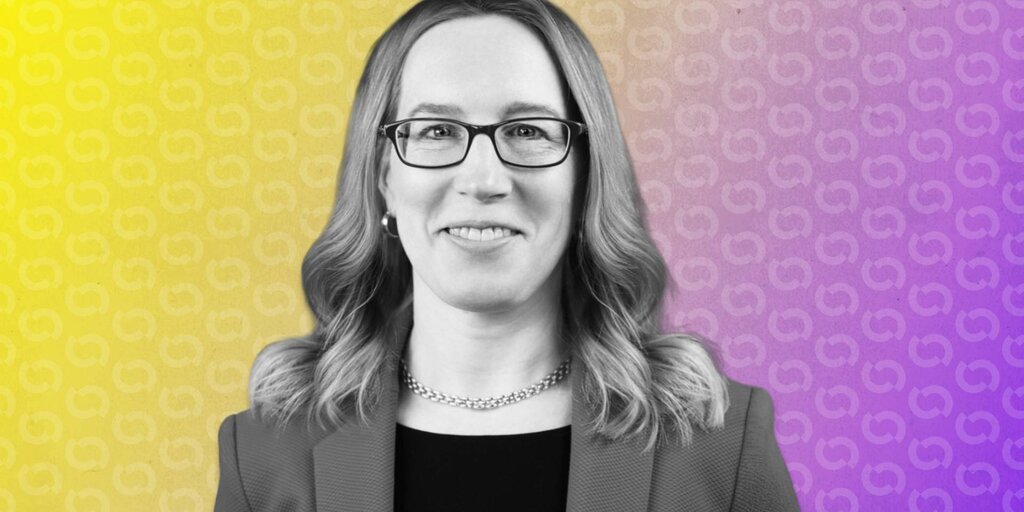
Departing SEC Commissioner Hester Peirce is making a case for using cryptography to overhaul how the financial system polices crime, arguing that regulators’ hunger for personal data has built vast, hackable troves that endanger the very people they aim to protect.
Speaking Wednesday at SIFMA’s Digital Assets Conference in New York, Peirce said the “know your customer” and anti-money laundering regime rests on a flawed premise: that collecting enough information on enough people will help authorities spot criminals hiding among the law-abiding.
Myriad: Will the Fed raise rates again? Click to make your prediction.
“We build ever bigger data haystacks on the theory that we will find a needle or two inside,” she said. “The bigger haystack, however, makes it harder to find the needles.”
She argued that technology now offers a better path. Zero-knowledge proofs, a cryptographic method that verifies a fact without exposing the underlying data, could let someone prove they meet a requirement without handing over sensitive details. It’s the same technology that underpins private cryptocurrency networks and assets, such as Zcash.
A proof can tell a counterparty a person qualifies “without that counterparty knowing your name, income, or address,” Peirce said, calling for a regulatory framework that encourages such attribute-based verification. The alternative, the regulator affectionately known as “crypto mom” argued, is “more data collection, more intermediary surveillance, more ‘know your customer’ requirements that turn our financial rails into a panopticon.”
The remarks land against a grim backdrop of KYC data itself becoming a liability.
BitcoinBTC · USD
$84,646+10%
Sep 18Sep 19Sep 21Sep 23Sep 25
$87.2k$83.7k$80.2k$76.7k
24h HighHigh$84,843
24h LowLow$82,941
VolVol$1.6B
Market projectionsOdds by Myriad
→
Fintech company Revolut recently exposed customers’ passports and full Bitcoin transaction histories after fulfilling a fraudulent government data request, while hardware wallet maker Trezor suffered breaches at a third-party vendor that exposed tens of thousands of customers and later fueled phishing attacks.
Such leaks have heightened fears of “wrench attacks,” in which criminals physically target crypto holders whose wealth and identities are exposed.
Peirce, long the SEC’s most crypto-friendly voice and known for criticizing the agency’s past “regulation by enforcement,” warned against what she called “data maximalists” who assume more collection is always better.
She suggested regulators let firms rely on third-party identity verification rather than each independently copying and storing the same sensitive records “across dozens of institutions.”
It’s a theme Peirce has pressed before, including at an August 2025 blockchain conference. The pitch carries added weight now: she disclosed the speech came during her “penultimate week” as a commissioner.
Daily Debrief Newsletter
Start every day with the top news stories right now, plus original features, a podcast, videos and more.
The FSNN News Room is the voice of our in-house journalists, editors, and researchers. We deliver timely, unbiased reporting at the crossroads of finance, cryptocurrency, and global politics, providing clear, fact-driven analysis free from agendas.
We and our selected partners wish to use cookies to collect information about you for functional purposes and statistical marketing. You may not give us your consent for certain purposes by selecting an option and you can withdraw your consent at any time via the cookie icon.
Cookies are small text that can be used by websites to make the user experience more efficient. The law states that we may store cookies on your device if they are strictly necessary for the operation of this site. For all other types of cookies, we need your permission. This site uses various types of cookies. Some cookies are placed by third party services that appear on our pages.
Your permission applies to the following domains:
https://fsnn.net
Necessary
Necessary cookies help make a website usable by enabling basic functions like page navigation and access to secure areas of the website. The website cannot function properly without these cookies.
Statistic
Statistic cookies help website owners to understand how visitors interact with websites by collecting and reporting information anonymously.
Preferences
Preference cookies enable a website to remember information that changes the way the website behaves or looks, like your preferred language or the region that you are in.
Marketing
Marketing cookies are used to track visitors across websites. The intention is to display ads that are relevant and engaging for the individual user and thereby more valuable for publishers and third party advertisers.


 Freedom Index

 →
→