

 Freedom Index
Listen to the article
Journalists and newsrooms across Minnesota now have additional free legal support as Reporters Committee establishes a permanent, full-time presence in the state.
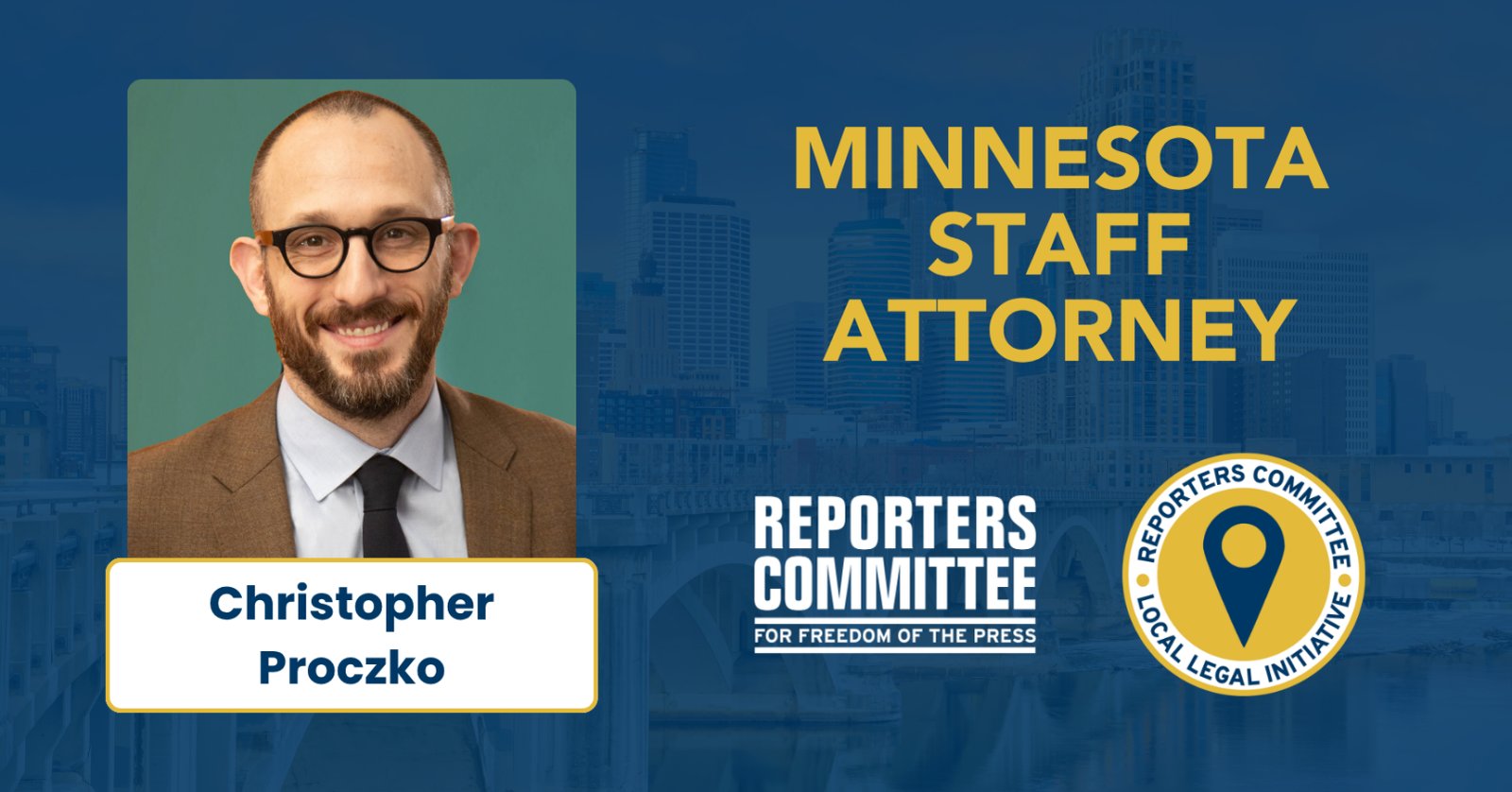
Twin Cities-based attorney Christopher Proczko has joined Reporters Committee to represent journalists and news organizations in public records disputes, pre-publication legal review, and other First Amendment and newsgathering matters — all at no cost to them.
The expansion builds on more than a decade of work by Reporters Committee on behalf of Minnesota journalists, from providing amicus support to independent outlet Unicorn Riot against a multi-year subpoena fight tied to its Dakota Access Pipeline coverage, to pressing state and federal officials over the treatment of reporters during the 2020 protests following the murder of George Floyd, to most recently rallying news industry support for the dismissal of federal charges against independent journalists Georgia Fort and Don Lemon.
It also marks the further growth of the Local Legal Initiative, Reporters Committee’s program to provide dedicated attorneys on the ground to bolster legal support in key states where journalists have experienced legal roadblocks to their reporting and a lack of government transparency. Earlier this year, the program added attorneys in Louisiana and Mississippi, and will soon add support in Michigan. In the past year alone, Reporters Committee attorneys in Local Legal Initiative states have trained over 1,000 journalists on their First Amendment and newsgathering rights, responded to hundreds of calls to Reporters Committee’s free Legal Hotline, and litigated dozens of public records and court access cases.
The expansion into Minnesota is made possible by lead funding from the McKnight Foundation in Minneapolis and the Joyce Foundation in Chicago. With their generous support, and funding from other national and in-state donors, free legal services from Reporters Committee will strengthen high-quality journalism in communities across the state.
“Minnesota has become an important battleground in the nationwide fight for press freedom, with local journalists frequently facing legal threats in their effort to keep communities informed,” said Reporters Committee Vice President of Legal Programs Lisa Zycherman. “By establishing a permanent, on-the-ground legal presence in Minnesota, Reporters Committee is helping to ensure that journalists can focus on doing what they do best: telling stories that matter and holding people in power accountable.”
Minnesota’s local news ecosystem is large and geographically dispersed: A 2024 census from the University of Minnesota’s Minnesota Journalism Center identified 602 local news outlets operating statewide, with a significant share of the state’s local news outlets based outside the Twin Cities metro. Many of the reporters covering Minnesota today, including freelancers, independent journalists, and newsroom staff at these newer outlets, are doing so without the institutional legal backing that larger, more established outlets can draw on.
While based in the Twin Cities, Proczko, who has practiced media law in Minnesota for more than a decade, will be available to advise and represent journalists and newsrooms statewide.
“Dedicated free legal support is a lifeline to reporters in small local newsrooms, freelancers, and independent journalists who don’t always have the resources to fight lengthy public records battles or get their stories vetted for legal risk,” Proczko said. “Having a dedicated attorney on-call is less a convenience than a necessity for a growing share of the state’s newsrooms. I’m glad to be an added resource alongside my colleagues in Minnesota, so no newsroom in the state has to choose between a story and a legal bill it can’t pay.”
A full-time Reporters Committee presence in Minnesota is designed to add capacity in the state, including expanding pre-publication review services for independent and nonprofit newsrooms and freelancers.
“Christopher’s full-time role in Minnesota will allow him to develop strong relationships with reporters and newsrooms all across the state, making it easier for them to directly access the legal services they need to report the news,” said Eric Feder, director of Reporters Committee’s Local Legal Initiative. “We know from our experiences in other Local Legal Initiative states that those relationships will result in strong, bold journalism for the people of Minnesota.”
Read the full article here
Fact Checker
Verify the accuracy of this article using AI-powered analysis and real-time sources.