

 Freedom Index
Listen to the article
Stringent criticism of other parties’ and politicians’ platforms is the bread and butter of politics. No political table can be set without it. Sure, the target of that criticism often thinks it exaggerated, unfair, or flat-out wrong, and will usually respond in kind. But are such critiques in the political realm criminal? That’s the claim that Alternative for Germany, fresh off its electoral victory in the German state Saxony-Anhalt, is making against the chancellor of Germany — and they want him to pay. Maybe literally.
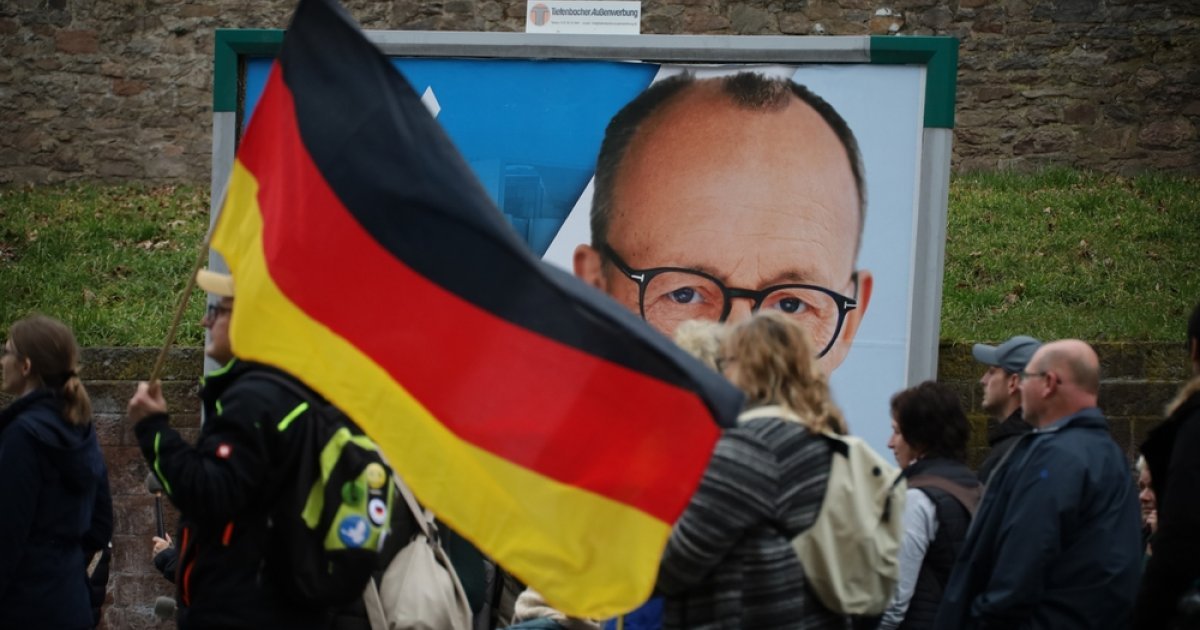
In a speech before the Bundestag last week, Chancellor Friedrich Merz criticized AfD’s policies, especially its position on immigration. “If what is being advocated here, namely ‘remigration,’ were to become reality, it would be nothing other than a synonym for ethnic cleansing based on origin and skin color,” Merz said.
Politicians regularly castigate their opponents’ positions as extremist, racist, sexist, communist, socialist, far left, far right, anti-Christian, anti-immigrant, pro-open border — the list goes on. It’s then up to voters to decide if that criticism is accurate or whether those policies actually appeal to them instead. But AfD wants this matter before a court of law, not the court of public opinion.
Germany punishes American writer over satirical swastika image
An American political satirist living in Germany is being prosecuted in criminal court for the second time for his satirical use of the Nazi swastika.
Read More
Shortly after Merz’s comments, AfD officials announced they had filed a criminal defamation complaint against him, specifically his accusation that the party seeks “ethnic cleansing.” Senior party member Stephan Brandner said Merz’s “insinuation” that AfD “is committed to ethnic cleansing, i.e. ultimately to expulsions and murders, is so clear that the judiciary must take action here.”
Normally, statements made by members in Parliament are protected against legal action. But Article 46 of Germany’s Basic Law includes exceptions to that protection — specifically in cases of “defamatory insult.” And that’s what AfD claims Merz’s “ethnic cleansing” statement constitutes. The comments “crossed the line,” Brandner said, making them “criminally relevant.” The complaint does not appear to be public yet, but criminal code provisions under which they may be pursuing legal action could include insult, defamation, or insult, slander and defamation directed against persons in political life — all of which are punishable with fines and/or prison time.
It is unclear whether the criminal case — and the AfD’s associated effort to use the legal system to police political criticism — will even lead to investigation let alone prosecution. But German prosecutors have certainly been busy in the past pursuing criminal charges against Germans who criticize or insult politicians — which can, indeed, be a criminal offense in the country.
Police have hunted down and investigated social media users who have called politicians names like “Schwachkopf” (weak-head) or “pimmel” (penis), and online insults can legally be treated even more harshly than verbal ones. One commenter was even briefly investigated for calling Chancellor Merz “Pinocchio” on Facebook. One man was prosecuted and fined for calling him “Lying Fritz.” And another was fined for calling him “Lackaffe” (“show off,” essentially.)
People should be free to criticize or insult AfD, Merz, and any other political figure or party in Germany. It’s that simple. And some German politicians have recognized that this crusade against insults has, indeed, gone too far.
But it’s not just German groups advocating that work in government bestows some kind of special protection against insult. As I wrote last week, Australia’s top bureaucrat body the Secretaries Board is asking Parliament to set new policies limiting social media clips of public testimony by bureaucrats because politicians and the general public are “ridiculing” them. Mocking clips can cause “reputational harm and personal abuse” to officials, the board claims, as well as “risk undermining political debate more generally.”
Will Germany amend one of its most censorial laws?
Germany may rethink its law criminalizing insults to politicians. Plus: censorship controversies from Belgium to Japan.
Read More
Even in the United States, with our First Amendment and long tradition of knock-down-drag-out political commentary, our ability to speak critically about the most powerful official in the country is under attack. Just ask The Des Moines Register, its parent company Gannett, and veteran Iowa pollster J. Ann Selzer, who FIRE is representing in the case, who were sued by President Donald Trump, in his personal capacity, simply for publishing a poll that predicted presidential candidate Kamala Harris leading in Iowa. Or ask the many targets of FCC Chair Brendan Carr, who treats his position as head speech police for the Trump administration. There’s a long list of these threats and retaliations.
Criticism, even when it looks more like insult than critique, should be treated as a core component of political debate rather than an aberration of it. It’s disturbing that democratic states, the United States included, are faltering on protecting it. In democracies, voters decide which political parties and candidates deserve power. Those politicians shouldn’t get to decide what can be said about them.
Read the full article here
Fact Checker
Verify the accuracy of this article using AI-powered analysis and real-time sources.