

 Freedom Index
Listen to the article
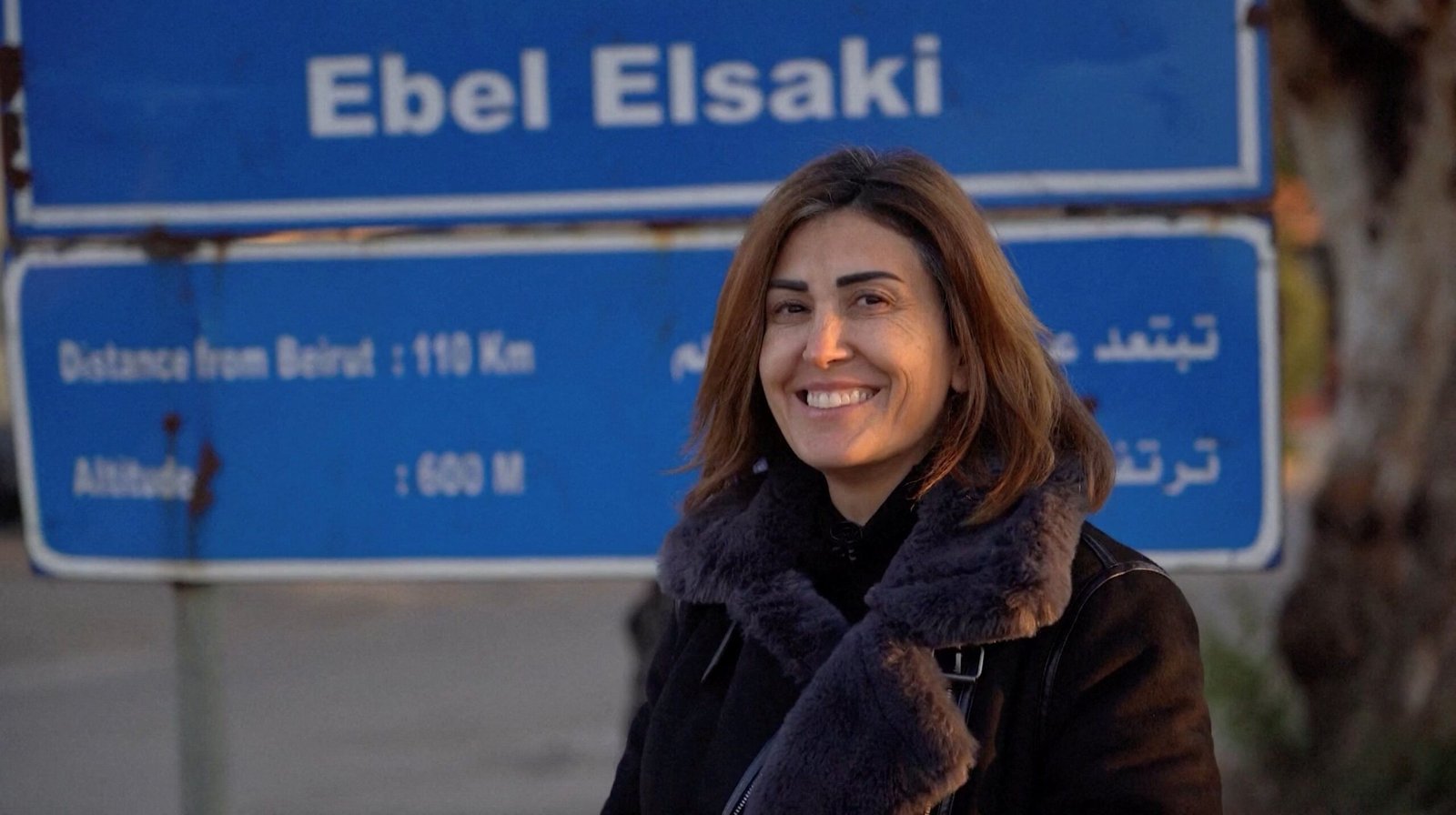
New York, August 6, 2026—The Committee to Protect Journalists is renewing its demands for immediate accountability for the killing of Lebanese journalist Amal Khalil. This follows an Amnesty International investigation concluding that the Israeli strike that killed her should be investigated as a war crime. Khalil was murdered in southern Lebanon on April 22, 2026, — yet total impunity remains. Fifteen other journalists have been killed by Israeli forces in Lebanon since October 2023.
Amnesty found reasonable grounds to believe that the strike that killed Khalil and seriously wounded camerawoman Zeinab Faraj was a direct attack on civilians, and should be investigated as a war crime. Drawing on eyewitness testimony, audiovisual evidence, coordination records, satellite imagery, and weapons analysis, the investigation concludes that following Israel’s initial strike on its intended targets, Khalil and Faraj sought shelter while Israeli surveillance drones hovered overhead for nearly two hours. During that time, Israeli forces allegedly struck the journalists’ parked vehicle before carrying out a third strike that destroyed the building where the two women had taken refuge, killing Khalil and severely injuring Faraj.
According to Amnesty, the prolonged drone surveillance meant Israeli forces knew, or should have known, that the two individuals they said they were targeting had already been killed and that the remaining people at the scene were two unarmed civilian women; journalists are protected civilians under international humanitarian law (IHL). Amnesty further found that being inside an Israeli-designated “Forward Defense” zone did not strip them of civilian protections; as such, failing to distinguish between combatants and civilians is a war crime.
These findings are consistent with CPJ’s documentation of the killing of Lebanese journalists by Israeli armed forces since October 2023, a disturbing pattern of attacks that CPJ and human rights organizations warn is expanding under a system of impunity.
In light of these findings, CPJ has renewed its call for justice. “Amal’s killing can’t be allowed to become yet another unresolved case of a journalist killed by Israeli forces with complete impunity,” said CPJ Regional Director Sara Qudah. “Amnesty International’s findings paint, yet again, a deeply disturbing picture of a systemic failure of legal mechanisms designed precisely to protect civilians — including journalists.”
On October 13, 2023, Reuters video journalist Issam Abdallah was killed and six other journalists were wounded, including Agence France-Presse photojournalist Christina Assi, a recipient of CPJ’s 2026 International Press Freedom Awards, who sustained serious injuries resulting in the amputation of her right leg. Subsequent investigations by multiple independent organizations concluded that the group was hit by Israeli tank fire despite being visibly marked as journalists and posing no threat.
Just over a month later, Al Mayadeen correspondent Farah Omar and cameraman Rabih al-Maamari were killed in an Israeli strike near Tayr Harfa, southern Lebanon. Earlier this year, on March 28, an Israeli strike targeted a media car near Jezzine, also southern Lebanon, murdering journalist Ali Shoaib of Hezbollah-affiliated Al-Manar TV, alongside journalist Fatima Ftouni of pro-Hezbollah Al-Mayadeen TV, and her brother, freelance photojournalist Mohamad Ftouni.
“CPJ documented each of these incidents, and repeatedly called for prompt, independent investigations into whether journalists had been unlawfully targeted,” said Qudah. “To date, there has been no accountability for any of these cases. This repeated failure to conduct transparent investigations into attacks on journalists has reinforced a climate of impunity and hollowed out the protections granted to the press under IHL.”
CPJ warns the international community that failing to punish those who attack the press further fuels violence against journalists. Amal’s case is not an isolated tragedy; it is part of a broader pattern in which journalists reporting from war and conflict zones remain inadequately protected and attacks against them are too rarely subjected to meaningful legal scrutiny. Impunity for those attacks invites more of them.
CPJ renews its calls on the international community, including the United Nations, European Union, and the United States, to back independent accountability mechanisms capable of delivering justice for journalists, and to ensure that those responsible for unlawful killings are brought to justice.
Read the full article here
Fact Checker
Verify the accuracy of this article using AI-powered analysis and real-time sources.