Close Menu
FSNN | Free Speech News NetworkFSNN | Free Speech News Network
  • Home
  • News
    • Politics
    • Legal & Courts
    • Tech & Big Tech
    • Campus & Education
    • Media & Culture
    • Global Free Speech
  • Opinions
    • Debates
  • Video/Live
  • Community
  • Freedom Index
  • About
    • Mission
    • Contact
    • Support
Trending

Ondo Finance explores deal valued at up to $500 million

6 minutes ago

Bitcoin Joins Risk-Asset Relief As PCE Inflation Follows Expectations

6 minutes ago

Elon Musk’s xAI Sues Minnesota to Kill the US’s First AI Nudification Law

9 minutes ago
Facebook X (Twitter) Instagram
Facebook X (Twitter) Discord Telegram
FSNN | Free Speech News NetworkFSNN | Free Speech News Network
Market Data Newsletter
Thursday, July 30
  • Home
  • News
    • Politics
    • Legal & Courts
    • Tech & Big Tech
    • Campus & Education
    • Media & Culture
    • Global Free Speech
  • Opinions
    • Debates
  • Video/Live
  • Community
  • Freedom Index
  • About
    • Mission
    • Contact
    • Support
FSNN | Free Speech News NetworkFSNN | Free Speech News Network
Home»News»Global Free Speech»Australia ranks highly for LGBTQ rights. Photo: Tristien, CC BY-SA 4.0 A large Australian HIV charity which wanted to promote information about new treatments to its Facebook and YouTube followers has found its posts banned by Meta. The charity in question, the National Association of People with HIV Australia (NAPWHA), believe their posts were targeted by what they describe as a “loosely organised campaign of spurious complaints motivated by stigma” towards HIV and the communities affected by it (which include gay and bisexual men, other queer people, trans folks, sex workers and drug users). It’s a growing trend in Australia for organisations which promote sexual health and reproductive rights, and some rights groups fear that the social media teen ban in the country is just making the problem worse as platforms become more cautious about what they promote. When NAPWHA first launched its campaign in 2023 to inform people with same sex and other partners that new treatments meant they couldn’t pass on HIV, they found their ads were suspended on YouTube and Facebook. Sydney-based NAPWHA said that Facebook told them their promotional posts was rejected because they did not comply with their policies on ads about “social issues, elections or politics”. Eighteen months on, NAPWHA suspects that the campaign was subject to censorship via platform moderation and online hostility. They partnered with Swinburne University in Melbourne to investigate and last week published a report containing a legal and policy guide and a communications pack that provides practical tips and strategies for community-led public health organisations facing the same problem. Daniel Reeders, senior project officer at NAPWHA Learning, told Index at the report’s launch there had been an “absolute outpouring of stress and frustration” from small organisations facing a similar predicament. He said: “Platforms like TikTok, Meta and Google have walked away from their duty to moderate fairly and effectively, and we’re left with the wreckage of civil discourse.” The crackdown is part of a broader censorship of crucial sexual and reproductive health and rights information tracked by global NGO ReproUncensored all around the world. Founder and executive director Martha Dimitratou told Index they have documented nearly 600 cases across big tech platforms in Australia and globally, with more than a dozen new cases reported in just the last few days. Dimitratou said that Australia’s world-first teen social media ban, introduced last year and now set to be followed by about 20 other countries, could be to blame. Adam Finch, marketing, branding and communications coordinator for Brisbane-based nonprofit HIV charity, Queensland Positive People, said that he had recently had one set of the same posts approved one day but then censored the next. “I think we’ve just managed to dodge a bullet (but) in many ways it’s a matter of time,” he told Index, adding that they were starting to self-censor. Dimitratou said that Meta and Google must be held accountable and provide full transparency on why awareness campaigns were being restricted. “They must take immediate steps to ensure their moderation systems do not block lawful, evidence-based public health information,” she said. “Finally, governments must reclaim democratic oversight from the growing sovereignty of US big tech companies, enforce the law, and call these practices what they are: illegal.” Reeders said they were calling on Australia’s eSafety Commissioner, the Australian Government’s independent online safety regulator, to “take a moment away from banning things” – referring to the new social media law – to “consider how platforms can be regulated to allow better access for organisations promoting public health”. Meta has been contacted for a comment. READ MORE
Global Free Speech

Australia ranks highly for LGBTQ rights. Photo: Tristien, CC BY-SA 4.0 A large Australian HIV charity which wanted to promote information about new treatments to its Facebook and YouTube followers has found its posts banned by Meta. The charity in question, the National Association of People with HIV Australia (NAPWHA), believe their posts were targeted by what they describe as a “loosely organised campaign of spurious complaints motivated by stigma” towards HIV and the communities affected by it (which include gay and bisexual men, other queer people, trans folks, sex workers and drug users). It’s a growing trend in Australia for organisations which promote sexual health and reproductive rights, and some rights groups fear that the social media teen ban in the country is just making the problem worse as platforms become more cautious about what they promote. When NAPWHA first launched its campaign in 2023 to inform people with same sex and other partners that new treatments meant they couldn’t pass on HIV, they found their ads were suspended on YouTube and Facebook. Sydney-based NAPWHA said that Facebook told them their promotional posts was rejected because they did not comply with their policies on ads about “social issues, elections or politics”. Eighteen months on, NAPWHA suspects that the campaign was subject to censorship via platform moderation and online hostility. They partnered with Swinburne University in Melbourne to investigate and last week published a report containing a legal and policy guide and a communications pack that provides practical tips and strategies for community-led public health organisations facing the same problem. Daniel Reeders, senior project officer at NAPWHA Learning, told Index at the report’s launch there had been an “absolute outpouring of stress and frustration” from small organisations facing a similar predicament. He said: “Platforms like TikTok, Meta and Google have walked away from their duty to moderate fairly and effectively, and we’re left with the wreckage of civil discourse.” The crackdown is part of a broader censorship of crucial sexual and reproductive health and rights information tracked by global NGO ReproUncensored all around the world. Founder and executive director Martha Dimitratou told Index they have documented nearly 600 cases across big tech platforms in Australia and globally, with more than a dozen new cases reported in just the last few days. Dimitratou said that Australia’s world-first teen social media ban, introduced last year and now set to be followed by about 20 other countries, could be to blame. Adam Finch, marketing, branding and communications coordinator for Brisbane-based nonprofit HIV charity, Queensland Positive People, said that he had recently had one set of the same posts approved one day but then censored the next. “I think we’ve just managed to dodge a bullet (but) in many ways it’s a matter of time,” he told Index, adding that they were starting to self-censor. Dimitratou said that Meta and Google must be held accountable and provide full transparency on why awareness campaigns were being restricted. “They must take immediate steps to ensure their moderation systems do not block lawful, evidence-based public health information,” she said. “Finally, governments must reclaim democratic oversight from the growing sovereignty of US big tech companies, enforce the law, and call these practices what they are: illegal.” Reeders said they were calling on Australia’s eSafety Commissioner, the Australian Government’s independent online safety regulator, to “take a moment away from banning things” – referring to the new social media law – to “consider how platforms can be regulated to allow better access for organisations promoting public health”. Meta has been contacted for a comment. READ MORE

News RoomBy News Room2 hours agoNo Comments3 Mins Read794 Views
Share Facebook Twitter Pinterest Copy Link LinkedIn Tumblr Email VKontakte Telegram
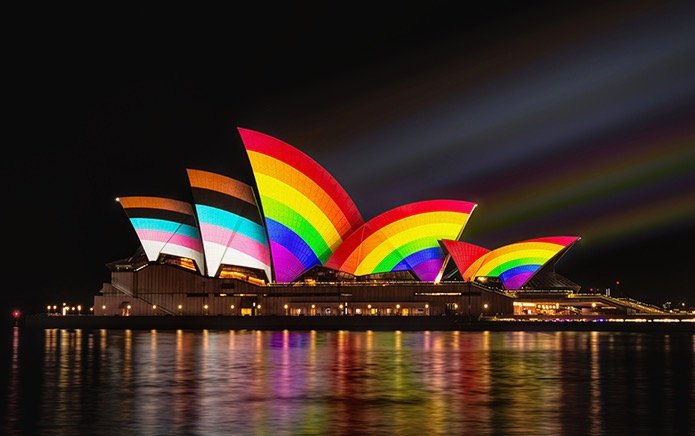
Australia ranks highly for LGBTQ rights. Photo: Tristien, CC BY-SA 4.0 


				A large Australian HIV charity which wanted to promote information about new treatments to its Facebook and YouTube followers has found its posts banned by Meta.
The charity in question, the National Association of People with HIV Australia (NAPWHA), believe their posts were targeted by what they describe as a “loosely organised campaign of spurious complaints motivated by stigma” towards HIV and the communities affected by it (which include gay and bisexual men, other queer people, trans folks, sex workers and drug users).
It’s a growing trend in Australia for organisations which promote sexual health and reproductive rights, and some rights groups fear that the social media teen ban in the country is just making the problem worse as platforms become more cautious about what they promote.
When NAPWHA first launched its campaign in 2023 to inform people with same sex and other partners that new treatments meant they couldn’t pass on HIV, they found their ads were suspended on YouTube and Facebook.
Sydney-based NAPWHA said that Facebook told them their promotional posts was rejected because they did not comply with their policies on ads about “social issues, elections or politics”.
Eighteen months on, NAPWHA suspects that the campaign was subject to censorship via platform moderation and online hostility. They partnered with Swinburne University in Melbourne to investigate and last week published a report containing a legal and policy guide and a communications pack that provides practical tips and strategies for community-led public health organisations facing the same problem.
Daniel Reeders, senior project officer at NAPWHA Learning, told Index at the report’s launch there had been an “absolute outpouring of stress and frustration” from small organisations facing a similar predicament. He said: “Platforms like TikTok, Meta and Google have walked away from their duty to moderate fairly and effectively, and we’re left with the wreckage of civil discourse.”
The crackdown is part of a broader censorship of crucial sexual and reproductive health and rights information tracked by global NGO ReproUncensored all around the world.
Founder and executive director Martha Dimitratou told Index they have documented nearly 600 cases across big tech platforms in Australia and globally, with more than a dozen new cases reported in just the last few days.
Dimitratou said that Australia’s world-first teen social media ban, introduced last year and now set to be followed by about 20 other countries, could be to blame.
Adam Finch, marketing, branding and communications coordinator for Brisbane-based nonprofit HIV charity, Queensland Positive People, said that he had recently had one set of the same posts approved one day but then censored the next.
“I think we’ve just managed to dodge a bullet (but) in many ways it’s a matter of time,” he told Index, adding that they were starting to self-censor.
Dimitratou said that Meta and Google must be held accountable and provide full transparency on why awareness campaigns were being restricted.
“They must take immediate steps to ensure their moderation systems do not block lawful, evidence-based public health information,” she said.
“Finally, governments must reclaim democratic oversight from the growing sovereignty of US big tech companies, enforce the law, and call these practices what they are: illegal.”
Reeders said they were calling on Australia’s eSafety Commissioner, the Australian Government’s independent online safety regulator, to “take a moment away from banning things” – referring to the new social media law – to “consider how platforms can be regulated to allow better access for organisations promoting public health”.
Meta has been contacted for a comment.


				READ MORE
Share
Facebook Twitter Pinterest Email Copy Link

Listen to the article

0:00
0:00

Key Takeaways

Playback Speed

Select a Voice

A large Australian HIV charity which wanted to promote information about new treatments to its Facebook and YouTube followers has found its posts banned by Meta.

The charity in question, the National Association of People with HIV Australia (NAPWHA), believe their posts were targeted by what they describe as a “loosely organised campaign of spurious complaints motivated by stigma” towards HIV and the communities affected by it (which include gay and bisexual men, other queer people, trans folks, sex workers and drug users).

It’s a growing trend in Australia for organisations which promote sexual health and reproductive rights, and some rights groups fear that the social media teen ban in the country is just making the problem worse as platforms become more cautious about what they promote.

When NAPWHA first launched its campaign in 2023 to inform people with same sex and other partners that new treatments meant they couldn’t pass on HIV, they found their ads were suspended on YouTube and Facebook.

Sydney-based NAPWHA said that Facebook told them their promotional posts was rejected because they did not comply with their policies on ads about “social issues, elections or politics”.

Eighteen months on, NAPWHA suspects that the campaign was subject to censorship via platform moderation and online hostility. They partnered with Swinburne University in Melbourne to investigate and last week published a report containing a legal and policy guide and a communications pack that provides practical tips and strategies for community-led public health organisations facing the same problem.

Daniel Reeders, senior project officer at NAPWHA Learning, told Index at the report’s launch there had been an “absolute outpouring of stress and frustration” from small organisations facing a similar predicament. He said: “Platforms like TikTok, Meta and Google have walked away from their duty to moderate fairly and effectively, and we’re left with the wreckage of civil discourse.”

The crackdown is part of a broader censorship of crucial sexual and reproductive health and rights information tracked by global NGO ReproUncensored all around the world.

Founder and executive director Martha Dimitratou told Index they have documented nearly 600 cases across big tech platforms in Australia and globally, with more than a dozen new cases reported in just the last few days.

Dimitratou said that Australia’s world-first teen social media ban, introduced last year and now set to be followed by about 20 other countries, could be to blame.

Adam Finch, marketing, branding and communications coordinator for Brisbane-based nonprofit HIV charity, Queensland Positive People, said that he had recently had one set of the same posts approved one day but then censored the next.

“I think we’ve just managed to dodge a bullet (but) in many ways it’s a matter of time,” he told Index, adding that they were starting to self-censor.

Dimitratou said that Meta and Google must be held accountable and provide full transparency on why awareness campaigns were being restricted.

“They must take immediate steps to ensure their moderation systems do not block lawful, evidence-based public health information,” she said.

“Finally, governments must reclaim democratic oversight from the growing sovereignty of US big tech companies, enforce the law, and call these practices what they are: illegal.”

Reeders said they were calling on Australia’s eSafety Commissioner, the Australian Government’s independent online safety regulator, to “take a moment away from banning things” – referring to the new social media law – to “consider how platforms can be regulated to allow better access for organisations promoting public health”.

Meta has been contacted for a comment.

Read the full article here

Fact Checker

Verify the accuracy of this article using AI-powered analysis and real-time sources.

Get Your Fact Check Report

Enter your email to receive detailed fact-checking analysis

5 free reports remaining

Continue with Full Access

You've used your 5 free reports. Sign up for unlimited access!

Already have an account? Sign in here

Share. Facebook Twitter Pinterest LinkedIn Tumblr Email Telegram Copy Link
News Room
  • Website
  • Facebook
  • X (Twitter)
  • Instagram
  • LinkedIn

The FSNN News Room is the voice of our in-house journalists, editors, and researchers. We deliver timely, unbiased reporting at the crossroads of finance, cryptocurrency, and global politics, providing clear, fact-driven analysis free from agendas.

Related Articles

Global Free Speech

CPJ calls for release of ailing Sudanese journalists held by RSF, protection of Darfur 24 reporters

3 hours ago
Global Free Speech

Israel’s Channel 12 attacked for second time, journalists receive death threat 

1 day ago
Global Free Speech

Photojournalist injured by police while covering protest in Spain’s Mallorca

1 day ago
Global Free Speech

An image showing a person wearing a t-shirt that the Reform party leader has reported to the police for incitement. Photo: X Reform UK have complained to police about Green Party leader Zack Polanski for sharing an image on Instagram [which Polanski has since removed] which they claim was an incitement to violence against their leader Nigel Farage. The image is of the slogan “We’re only making plans for Nigel” with the image of a guillotine. The line itself is a reference to the title of a 1979 song by the British band XTC which reached number 12 in the singles chart. While the t-shirt design has no image of Farage nor any branding pertaining to Reform UK, it also bears no reference to the visuals of the song’s sleeve, nor the band’s logo. As with many commercially sold t-shirts, a cultural reference has been repurposed to make its satirical point. T-shirt slogans are less a call for action, more a proclamation of allegiance. “This machine kills fascists” has the actual word “kill” in it, but is a reference to Woody Guthrie’s motto painted on his guitar (sold by the same company as the “plans” t-shirt, albeit it has since been removed from the website). Wearing the t-shirt is proclaiming an allegiance to the idea of art being used to win the battle for hearts and minds. The appearance of the guillotine in this case is hardly an incitement to imminent action, because a guillotine is an unwieldy weapon for any would-be lone wolf assassin. Were it a noose, gun or knife, that might be a different case. Since the guillotine is not a significant part of British history, we can deduce that here the guillotine serves to express a wish for a revolutionary state in the future (and the wearer’s allegiance to such political change). A future idealised political state of being is far removed from incitement to imminent action. When demonstrators hold up placards saying “Death to …” or “Kill all … “ that is far closer to incitement. People have gathered en masse in a licensed space for political protest, confident that the camera lenses of mass broadcast outlets will be trained on them. In such a formally constituted space, there can be no doubt about the expressly directed political nature of such signs. A lone individual walking an ordinary high street with “We’re only making plans for Nigel” on his chest may attract citizen lenses, but is not in any formally designated protest space, nor can he be directing his message to any specific audience, as there is no guarantee who will come into his orbit that day. As an author, I look at the phrase “We’re only making plans for Nigel” and it doesn’t make sense beyond a very specific context. I would never write it, unless there was a group of people from which “we” were only selecting Nigel for some plan, or that “we” wouldn’t even be making plans at all, were it not for Nigel. I would just write “We’re making plans for Nigel” which still retains either meaning, but where the word “only” has become redundant. This is important because it reattaches the phrase back to the XTC song in its specificity. My guess is that XTC simply inserted the word “only” to make the lyrics scan with the musical rhythm. Which makes it a word usage unique to them. Yes, it has been co-opted by the makers of this t-shirt, but to proclaim a specific allegiance, not an incitement to violence. READ MORE

1 day ago
Global Free Speech

Peruvian journalist sued by judge for defamation, ordered to pay a $14,500 fine

2 days ago
Global Free Speech

Azerbaijan: CPJ condemns shocking sentences handed down in Toplum TV case

2 days ago
Add A Comment
Leave A Reply Cancel Reply

Editors Picks

Bitcoin Joins Risk-Asset Relief As PCE Inflation Follows Expectations

6 minutes ago

Elon Musk’s xAI Sues Minnesota to Kill the US’s First AI Nudification Law

9 minutes ago

New FIRE study finds record low number of restrictive campus speech codes

40 minutes ago

Some More Or Less Tentative Thoughts on Substack

45 minutes ago
Latest Posts

Is the Clarity Act dead?

1 hour ago

AI Fund With Bitcoin Miner Bets Seeks Capital After Rout: FT

1 hour ago

Australia Sues Telegram for $38M Over ‘Pro-Terror’ Videos

1 hour ago

Subscribe to News

Get the latest news and updates directly to your inbox.

At FSNN – Free Speech News Network, we deliver unfiltered reporting and in-depth analysis on the stories that matter most. From breaking headlines to global perspectives, our mission is to keep you informed, empowered, and connected.

FSNN.net is owned and operated by GlobalBoost Media
, an independent media organization dedicated to advancing transparency, free expression, and factual journalism across the digital landscape.

Facebook X (Twitter) Discord Telegram
Latest News

Ondo Finance explores deal valued at up to $500 million

6 minutes ago

Bitcoin Joins Risk-Asset Relief As PCE Inflation Follows Expectations

6 minutes ago

Elon Musk’s xAI Sues Minnesota to Kill the US’s First AI Nudification Law

9 minutes ago

Subscribe to Updates

Get the latest news and updates directly to your inbox.

© 2026 GlobalBoost Media. All Rights Reserved.
  • Privacy Policy
  • Terms of Service
  • Our Authors
  • Contact

Type above and press Enter to search. Press Esc to cancel.

🍪

Cookies

We and our selected partners wish to use cookies to collect information about you for functional purposes and statistical marketing. You may not give us your consent for certain purposes by selecting an option and you can withdraw your consent at any time via the cookie icon.

Cookie Preferences

Manage Cookies

Cookies are small text that can be used by websites to make the user experience more efficient. The law states that we may store cookies on your device if they are strictly necessary for the operation of this site. For all other types of cookies, we need your permission. This site uses various types of cookies. Some cookies are placed by third party services that appear on our pages.

Your permission applies to the following domains:

  • https://fsnn.net
Necessary
Necessary cookies help make a website usable by enabling basic functions like page navigation and access to secure areas of the website. The website cannot function properly without these cookies.
Statistic
Statistic cookies help website owners to understand how visitors interact with websites by collecting and reporting information anonymously.
Preferences
Preference cookies enable a website to remember information that changes the way the website behaves or looks, like your preferred language or the region that you are in.
Marketing
Marketing cookies are used to track visitors across websites. The intention is to display ads that are relevant and engaging for the individual user and thereby more valuable for publishers and third party advertisers.