

 Freedom Index
Listen to the article
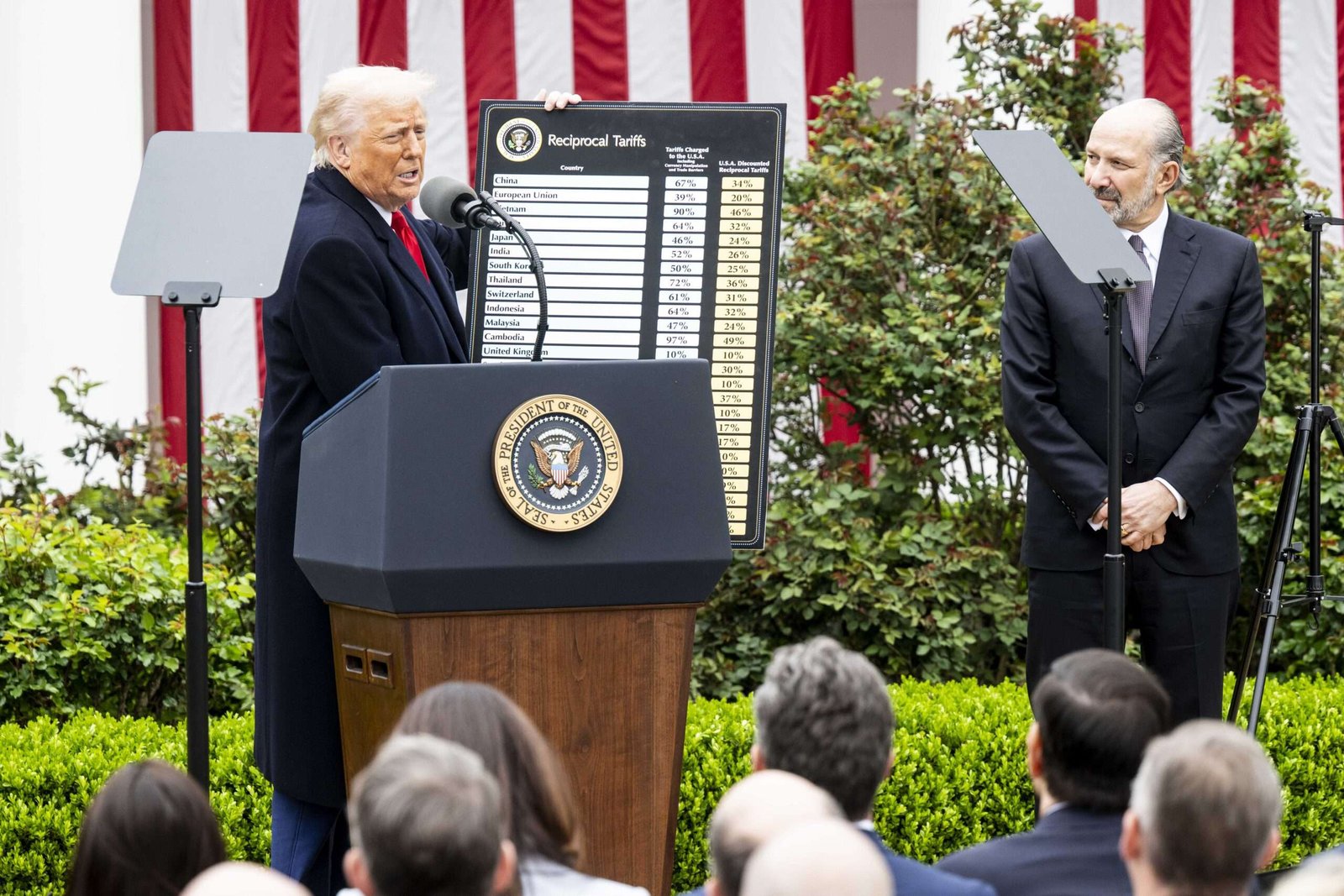
I have previously written about how Trump’s new Section 301 tariffs are illegal and harmful. The same goes for his earlier IEEPA tariffs (invalidated by the Supreme Court in a case I helped litigate), and Section 122 tariffs (struck down by the US Court of International Trade in May, though litigation continues). In an insightful recent article, economist David Hebert highlights an underappreciated type of harm caused by Trump’s tariff policies that cannot be fully remedied by court decisions:
[T]here’s a far worse outcome from this that cannot be undone by courts, elections, or policy reversals. These new tariffs and their justifications have only served to further destroy the relationships with allies and trading partners that we had previously taken as given. The costs of this will outlast every tariff schedule, court ruling, and this administration. They won’t show up on BLS reports, BEA analyses, or Fed surveys. But they will be felt by every single American for years to come….
Canada, the European Union, the United Kingdom, and Mexico now face 10 percent tariffs for their alleged forced labor practices. Canada and Mexico are, of course, also parties to the USMCA, a trade agreement that this very president negotiated, signed, and called “a colossal victory” only to then walk away from. That same week, the President hit Canada with an additional 50 percent tariff on goods ranging from “wine to hockey sticks to cement” regardless of whether or not those goods qualify under the USMCA.
So in the span of a week, the White House effectively told Canada, our closest trading partner and ally, that America’s word means nothing and then told them that they are complicit in forced labor.
An ordinary tariff is a tax. Trading partners are annoyed, sometimes retaliate, and sometimes negotiate. These tariffs are different. We didn’t just tax Japanese goods. We announced to the world, as an official finding of the United States government, that Japan is profiting from slavery and needs to be punished for it. Norway, Switzerland, Australia, the United Kingdom, and South Korea are guilty of this, too. Then we set a penalty that just so happens to approximate the Section 122 tariffs that just expired.
Foreign officials must now contend with an even clearer reality: not only is an agreement with the United States not worth the paper it’s printed on, but we will accuse you of horrendous practices if it means that an administration can re-impose tariffs. Our trading partners saw that the findings of investigations will be written to fit the desires of an administration instead of the facts on the ground. They learned that not only is America protectionist but that they will publish a serious moral accusation against a friend when doing so is politically convenient.
This changes how other countries will deal with us going forward.
Hebert goes on to explain how, as a result of this decline in US reputation and trustworthiness, foreign trading partners will be less willing to make agreements with us. Similarly, businesses and investors there will be less willing to trade with the United States, lest their commitments be disrupted whenever the current occupant of the White House feels like it.
I would add there is an additional way in which courts are limited in their ability to fix this problem: the judicial process moves relatively slowly. And a great deal of damage can be inflicted in the meantime. During the course of the IEEPA litigation, I had multiple conversations with business people that went something like this:
Business Owner: It’s great you’re challenging the tariffs. But when is your case finally going to be resolved?
Ilya: It’s actually moving at a fast pace, by the standards of the federal judiciary.
Business Owner: That’s no consolation to me. I’m losing money every day!
The US Court of International Trade, the Federal Circuit, and the Supreme Court all indeed considered decided the case substantially faster than usual practice. Nonetheless, the litigation took over ten months, during which the government collected some $166 billion in illegal tariff payments, and the US and world economies suffered serious damage. And we are still not done with the process of refunding the illegal tariff payments.
In addition to lost sales caused by higher prices, businesses and investors were hurt by the uncertainty over what the tariff schedule would be going forward, which made it difficult to plan ahead. And that uncertainty may well continue so long as there is fear that the president can impose massive new tariffs whenever he feels like it, after which it may takes months of litigation to overturn them. This is another cost of undermining the rule of law by letting one man’s whims dictate the tariff schedule, and thereby control a massive part of the economy.
Nonetheless, the courts and Congress are not as helpless in the face of this problem as Hebert suggests. First, the very fact that illegal tariff power grabs get invalidated (even if too slowly) creates some stability. If people know any such imposition will likely only last a few months, that affects expectations and planning. Uncertainty can be further reduced if the courts continue to rule the right way, and write strong opinions signalling that future tariffs will face tight judicial scrutiny.
Second, as I have emphasized previously, courts can reduce the damage caused by illegal tariffs if they refuse to stay initial rulings blocking them. In that event, illegal tariffs will only be in effect for a few weeks, as opposed to many months. Moreover, refusing to stay initial injunctions sends a signal that the initial ruling is likely to be sustained on appeal, further reducing uncertainty.
When the Federal Circuit stayed the initial ruling against the IEEPA tariffs, that enabled the Trump administration to collect some $166 billion in illegal tariff payments, and greatly increased the harm caused by the illegal policy. Courts should learn from that mistake, and not repeat it (though the Federal Circuit, sadly, did choose to repeat it in the Section 122 case).
Congress could do still more. Ideally, it should just repeal all those statutes that give the president discretionary authority to impose tariffs: Section 122, Section 232, Section 301, and so on. All should go! Basic Economics 101 shows that tariffs are almost never a good way to address problems. While Trump has pushed these authorities far beyond their proper legal bounds, they are pernicious even when used as Congress intended, and the statutory text permits.
Repeal is far from impossible, politically. Trump’s tariffs have become highly unpopular. More generally, survey data and experience going back to the nineteenth century show that public opinion can be turned against tariffs when reminded that they increase prices. For those reasons, the majority opinion is likely to support a serious effort to abolish the statutes that make them possible. Though it may be more difficult to overcome the resistance of interest groups that benefit from protectionism. It can’t happen while Trump is still in the White House, able to veto repeal legislation. But a more trade-friendly president could well be elected in 2028.
Even if discretionary tariffs are abolished, Congress would still retain the ability to impose tariffs by enacting new laws. It could also still simply ban importation of some types of goods (as it currently does with those produced by forced labor). But US trade would no longer be at the mercy of any one person’s whims.
If complete abolition of discretionary tariffs is impossible, Congress could at least reform any remaining delegations of tariff authority to 1) confine them to a narrow set of circumstances, and 2) eliminate judicial deference to executive determinations that the required circumstances actually exist. Make the government bear the burden of proof.
Even if all this were done, a malicious, ignorant, or stupid president could still try to impose illegal tariffs. But businesses and trading partners could confident that his efforts would have no legal effect, and would be swiftly invalidated by courts. He could still make bogus accusations of complicity in forced labor. But allies and trading partners would know his rants will likely have little effect. A rogue executive could still do some damage to US trade policy and credibility. But far, far less than is possible today.
Read the full article here
Fact Checker
Verify the accuracy of this article using AI-powered analysis and real-time sources.