Close Menu
FSNN | Free Speech News NetworkFSNN | Free Speech News Network
  • Home
  • News
    • Politics
    • Legal & Courts
    • Tech & Big Tech
    • Campus & Education
    • Media & Culture
    • Global Free Speech
  • Opinions
    • Debates
  • Video/Live
  • Community
  • Freedom Index
  • About
    • Mission
    • Contact
    • Support
Trending

Memecoins DOGE, SHIB pay the price of crypto’s institutional influx: Crypto Daily

6 minutes ago

World Foundation Raises $52.5M to Expand World ID

7 minutes ago

Claude Opus 5 Outscores Fable 5 on Most Benchmarks—At Half the Price

11 minutes ago
Facebook X (Twitter) Instagram
Facebook X (Twitter) Discord Telegram
FSNN | Free Speech News NetworkFSNN | Free Speech News Network
Market Data Newsletter
Friday, July 24
  • Home
  • News
    • Politics
    • Legal & Courts
    • Tech & Big Tech
    • Campus & Education
    • Media & Culture
    • Global Free Speech
  • Opinions
    • Debates
  • Video/Live
  • Community
  • Freedom Index
  • About
    • Mission
    • Contact
    • Support
FSNN | Free Speech News NetworkFSNN | Free Speech News Network
Home»News»Media & Culture»Trump’s FAA Moves To End the 50-Year Ban on Domestic Supersonic Flight
Media & Culture

Trump’s FAA Moves To End the 50-Year Ban on Domestic Supersonic Flight

News RoomBy News Room3 hours agoNo Comments4 Mins Read963 Views
Share Facebook Twitter Pinterest Copy Link LinkedIn Tumblr Email VKontakte Telegram
Trump’s FAA Moves To End the 50-Year Ban on Domestic Supersonic Flight
Share
Facebook Twitter Pinterest Email Copy Link

Listen to the article

0:00
0:00

Key Takeaways

Playback Speed

Select a Voice

Supersonic flight was always focused on crossing oceans in record time. The Concorde famously brought flight times between New York and London down to three hours before its last retirement in 2003. But flying supersonic within the country has been off the table since the Federal Aviation Administration (FAA) banned overland supersonic flights in March 1973 due to loud sonic booms.

The Trump administration wants to change that—though the bureaucracy is moving slowly. Last year, President Donald Trump signed an executive order promising to “empower our engineers, entrepreneurs, and visionaries to deliver the next generation of air travel” by lifting the ban. Earlier this month, the FAA announced a proposal for new sound-based rules that would replace the total ban. Members of the public have until August 17 to comment.

The proposal sets a limit of 0.11 pounds per square foot of overpressure in the ground from sonic booms. (For comparison, the Concorde produced 1.94 pounds per square foot at peak overpressure.) The new limit is based on research by the startup Boom Supersonic, which is pioneering a technique to ensure that the shock waves from breaking the sound barrier bounce harmlessly around the atmosphere instead of reaching the ground.

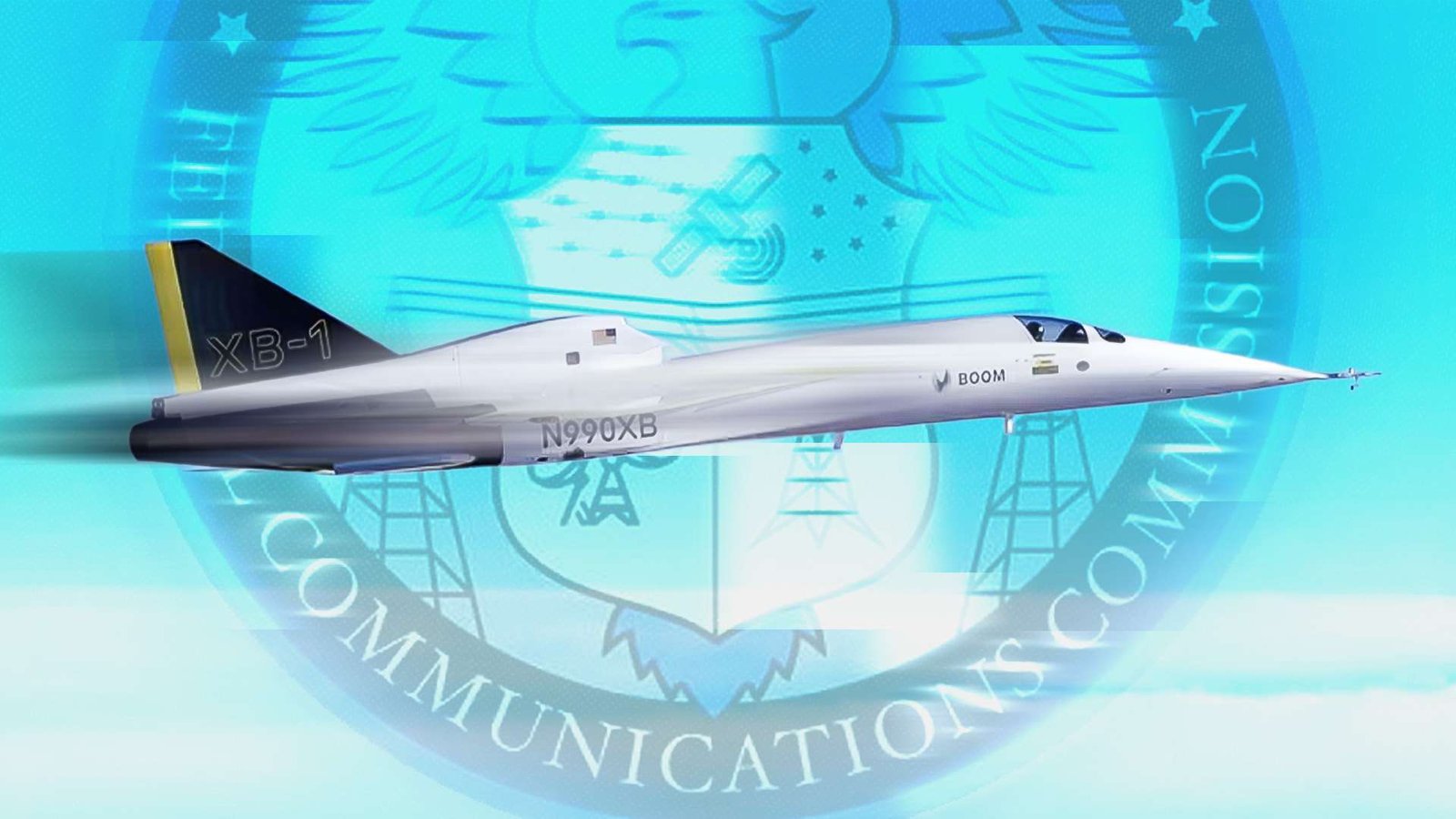
Boom Supersonic itself is cautiously optimistic about the FAA’s proposal. “We’re thrilled that supersonic flight is about to be legal again, on the heels of our historic demonstration of boomless supersonic flight aboard XB-1,” company spokeswoman Aubrey Scanlan tells Reason, promising to “provide our comments to the FAA after a full assessment” of the rules.

Supersonic passenger travel is a dream deferred by decades. In the 1960s, the working assumption of aircraft manufacturers around the world was that most long-haul flights would be supersonic. Airports, including the airfield in southern Florida that later became Alligator Alcatraz, were built to host the anticipated monster jets.

Sonic booms turned out to be more of a problem than expected. In 1964, the FAA and U.S. Air Force tried to prove the harmlessness of sonic booms by flying jets repeatedly over Oklahoma City. Instead, they ended up breaking windows, terrorizing citizens, and galvanizing a public backlash, leading to the FAA’s ban on overland supersonic flights.

The other problem with supersonic travel was the economics. The only supersonic passenger jet that made it to market was the Concorde, heavily subsidized by the French and British governments. Even so, tickets were $7,000 per round trip—which would be nearly double in today’s money. And a deadly accident in 2000 scared away many of the Concorde’s customers.

Boom Supersonic is promising to solve both the economic and technical problems. It is the first private company ever to develop a supersonic airplane with (mostly) private money. CEO Black Scholl told CNN in 2021 that he was aiming at flights with $100 tickets, and after the flight of its XB-1 prototype in 2024, the company reported 130 orders and preorders from airlines.

As for sonic booms, the theories behind boomless supersonic flight have existed for a few decades. Only recently have aerodynamic computer models allowed engineers to put them into practice. An object flying faster than the speed of sound generates a cone of pressure waves that sounds like a loud explosion to anyone it passes over. Boom Supersonic attempts to take advantage of a phenomenon called Mach cutoff, in which refraction through the atmosphere prevents those pressure waves from ever hitting the ground. The company announced the first successful “boomless cruise” in February 2025, though scientists caution that Mach cutoff depends on specific weather conditions.

Whether or not this company specifically succeeds, it’s important that the Trump administration is letting them try. And it’s about time. A 2016 paper by the Mercatus Center at George Mason University argued that the current FAA regulations on sonic booms were not only lagging behind the state of aeronautical technology, but actually stifling further innovation.

“An affordable and commercially viable supersonic transport is unlikely to spring from the mind of a single engineer, much less a committee of bureaucrats. Like the subsonic aviation industry that came before it, a supersonic aviation industry will require trial and error, competition, and a market discovery process to lead firms up the learning curve to commercial viability,” the paper states. “If we want rapid economic growth, we must continually question the limitations we impose upon ourselves and press forward the boundary of what is possible.”

Read the full article here

Fact Checker

Verify the accuracy of this article using AI-powered analysis and real-time sources.

Get Your Fact Check Report

Enter your email to receive detailed fact-checking analysis

5 free reports remaining

Continue with Full Access

You've used your 5 free reports. Sign up for unlimited access!

Already have an account? Sign in here

#CivicEngagement #MediaBias #MediaEthics #PoliticalCoverage #PoliticalDebate
Share. Facebook Twitter Pinterest LinkedIn Tumblr Email Telegram Copy Link
News Room
  • Website
  • Facebook
  • X (Twitter)
  • Instagram
  • LinkedIn

The FSNN News Room is the voice of our in-house journalists, editors, and researchers. We deliver timely, unbiased reporting at the crossroads of finance, cryptocurrency, and global politics, providing clear, fact-driven analysis free from agendas.

Related Articles

Cryptocurrency & Free Speech Finance

Claude Opus 5 Outscores Fable 5 on Most Benchmarks—At Half the Price

11 minutes ago
Media & Culture

Election Commission Says Musk Likely Broke The Law By Paying Voters. Will Anyone Do Anything About It?

36 minutes ago
Media & Culture

Trump’s Newest Tariffs Are Likely Illegal Too

39 minutes ago
Cryptocurrency & Free Speech Finance

Clarity Act on the Ropes as Ethics Fight and Shrinking Calendar Threaten Passage

1 hour ago
Media & Culture

Trump Can’t Just Pretend Iran War Casualties Don’t Count

2 hours ago
Cryptocurrency & Free Speech Finance

Nvidia, Meta, and Microsoft Tell Washington: Don’t Kill Open-Source AI

2 hours ago
Add A Comment
Leave A Reply Cancel Reply

Editors Picks

World Foundation Raises $52.5M to Expand World ID

7 minutes ago

Claude Opus 5 Outscores Fable 5 on Most Benchmarks—At Half the Price

11 minutes ago

Don’t let California turn universities into AI gatekeepers

33 minutes ago

Election Commission Says Musk Likely Broke The Law By Paying Voters. Will Anyone Do Anything About It?

36 minutes ago
Latest Posts

Trump’s Newest Tariffs Are Likely Illegal Too

39 minutes ago

Crypto market maker B2C2 explored sale talks with multiple potential buyers

1 hour ago

AI-to-Crypto Rotation? ETF Inflows Fuel Crypto Rally

1 hour ago

Subscribe to News

Get the latest news and updates directly to your inbox.

At FSNN – Free Speech News Network, we deliver unfiltered reporting and in-depth analysis on the stories that matter most. From breaking headlines to global perspectives, our mission is to keep you informed, empowered, and connected.

FSNN.net is owned and operated by GlobalBoost Media
, an independent media organization dedicated to advancing transparency, free expression, and factual journalism across the digital landscape.

Facebook X (Twitter) Discord Telegram
Latest News

Memecoins DOGE, SHIB pay the price of crypto’s institutional influx: Crypto Daily

6 minutes ago

World Foundation Raises $52.5M to Expand World ID

7 minutes ago

Claude Opus 5 Outscores Fable 5 on Most Benchmarks—At Half the Price

11 minutes ago

Subscribe to Updates

Get the latest news and updates directly to your inbox.

© 2026 GlobalBoost Media. All Rights Reserved.
  • Privacy Policy
  • Terms of Service
  • Our Authors
  • Contact

Type above and press Enter to search. Press Esc to cancel.

🍪

Cookies

We and our selected partners wish to use cookies to collect information about you for functional purposes and statistical marketing. You may not give us your consent for certain purposes by selecting an option and you can withdraw your consent at any time via the cookie icon.

Cookie Preferences

Manage Cookies

Cookies are small text that can be used by websites to make the user experience more efficient. The law states that we may store cookies on your device if they are strictly necessary for the operation of this site. For all other types of cookies, we need your permission. This site uses various types of cookies. Some cookies are placed by third party services that appear on our pages.

Your permission applies to the following domains:

  • https://fsnn.net
Necessary
Necessary cookies help make a website usable by enabling basic functions like page navigation and access to secure areas of the website. The website cannot function properly without these cookies.
Statistic
Statistic cookies help website owners to understand how visitors interact with websites by collecting and reporting information anonymously.
Preferences
Preference cookies enable a website to remember information that changes the way the website behaves or looks, like your preferred language or the region that you are in.
Marketing
Marketing cookies are used to track visitors across websites. The intention is to display ads that are relevant and engaging for the individual user and thereby more valuable for publishers and third party advertisers.