Close Menu
FSNN | Free Speech News NetworkFSNN | Free Speech News Network
  • Home
  • News
    • Politics
    • Legal & Courts
    • Tech & Big Tech
    • Campus & Education
    • Media & Culture
    • Global Free Speech
  • Opinions
    • Debates
  • Video/Live
  • Community
  • Freedom Index
  • About
    • Mission
    • Contact
    • Support
Trending

Bitcoin drops to $83,000 as oil climbs back above $100: Crypto Markets Today

17 minutes ago

Bitget Restores Bitcoin Withdrawals After $388M Hack

22 minutes ago

California Bans Public Officials From Issuing Meme Coins Under New Newsom Law

23 minutes ago
Facebook X (Twitter) Instagram
Facebook X (Twitter) Discord Telegram
FSNN | Free Speech News NetworkFSNN | Free Speech News Network
Market Data Newsletter
Monday, September 28
  • Home
  • News
    • Politics
    • Legal & Courts
    • Tech & Big Tech
    • Campus & Education
    • Media & Culture
    • Global Free Speech
  • Opinions
    • Debates
  • Video/Live
  • Community
  • Freedom Index
  • About
    • Mission
    • Contact
    • Support
FSNN | Free Speech News NetworkFSNN | Free Speech News Network
Home»News»Global Free Speech»The Royal Courts of Justice. Photo: StevovoB/NeedPix Years ago when still a baby defence barrister, a brief landed on my desk. The defendant, we shall call him Mohammad, was from Somalia. He was a PhD student travelling for his studies to Germany when civil war broke out. Mohammad’s sister was raped by soldiers; his father murdered. Newly married with a baby, he used all his money to pay for passage to the UK. This meant using forged travel documents. The family were eventually granted asylum. But Mohammad kept the forged passport; a symbol of his past life, perhaps. On a trip to visit German friends, the forged passport was discovered. He was charged with an offence to which he had no defence in law. The first trial saw running battles between me and the judge. At every opportunity he angrily reminded the court  of the defendant’s guilt. His summing up consisted of countering the arguments I had advanced in Mohammad’s defence. After two days deliberating, the jury were discharged, unable to reach a decision. The second trial was before a different judge. No angry exchanges. Just a measured, even-tempered stewardship of proceedings. A unanimous acquittal followed. Absent a bullying judge, this jury felt free to deliver a verdict according to their conscience; a principle called jury equity. I did not explicitly reference this principle in my closing speech. Nonetheless, it has often featured, in cases like Mohammad’s, when attempting to appeal to a jury’s sense of compassion. It was clear when Mohammad walked tearfully from the dock, that every right-minded person in that courtroom knew his prosecution, though lawful, was wrong. And so to the Filton trial and the unprecedented prosecution of my friend, Rajiv Menon KC, due to stand trial on 28 July for alleged contempt of court. Rajiv was lead counsel representing the first of six Palestine Action defendants charged with offences arising out of an incident in 2024 at an arms factory in Filton, Bristol, owned by Israeli-based Elbit Systems. During the incident, the defendents smashed equipment and one injured a police officer.  At the trial the judge made orders prohibiting defence barristers from mentioning jury equity in their closing speeches. That effectively meant forbidding them from telling the jury that they (the jury) were free to act on their conscience despite the law. The trial judge alleges that Rajiv disobeyed the order and has asked another judge to try him for contempt. The Filton trial was, in many ways, different from Mohammad’s. However, the principles at stake are the same. You may not agree with the Filton defendants’ cause or their methods. And, we can all sympathise with the police officer injured whilst doing her job, but we must all surely agree that every defendant deserves a fair trial. By severely limiting some defences, removing other defences altogether, and making orders disallowing defence counsel from referring to long-established basic principles like jury equity, a trial judge is at risk of reducing the jury’s role to a ceremonial one. That is why everyone should care about what happened in the Filton trial and what is happening now to Rajiv Menon. This is not just about a closing speech made by one defence barrister. Most defence barristers have, at some point, relied on the constitutional right of a jury to acquit even when a judge thinks that guilt is a forgone conclusion. It is a principle considered so important that it is enshrined on a plaque in the Central Criminal Court. And yet, today the very mention of it is being prohibited in protest trials, with the accompanying threat of contempt proceedings. This is about the essence of why the jury equity principle is necessary and has survived so long. It is recognised as a useful long-stop against state oppression. I would add, as a Black person who has observed first-hand the oppressive way in which our people are policed, the collective wisdom of twelve strangers along with jury equity, is sometimes our only chance of justice. Let’s be clear, this attack on jury equity and the heavy-handed attempt to gag defence counsel, is an attack upon basic freedoms. It will have a chilling effect on all defence barristers in politically sensitive cases as well as on the right to protest. Other important safeguards will be caught in the dragnet. Defence counsel’s obligation to fight fearlessly and the very concept of jury trial itself, are all up for grabs. In the 1980’s, during a wave of far-right attacks on Black communities in Bradford, twelve men were charged with offences linked to stockpiling 38 petrol bombs. One of the twelve, Tarlochan Gata Aura, admitted making and storing the bombs to protect his community. The late Sibghat Kadri QC, head of the chambers where I trained, was one of the defence barristers in that trial which ended with acquittals despite overwhelming evidence against them. Constantly interrupted by a hostile judge, the defence were warned against making the trial political. Kadri, a barrister who believed it was every lawyer’s duty to fight inside and outside the court, must be turning in his grave. READ MORE
Global Free Speech

The Royal Courts of Justice. Photo: StevovoB/NeedPix Years ago when still a baby defence barrister, a brief landed on my desk. The defendant, we shall call him Mohammad, was from Somalia. He was a PhD student travelling for his studies to Germany when civil war broke out. Mohammad’s sister was raped by soldiers; his father murdered. Newly married with a baby, he used all his money to pay for passage to the UK. This meant using forged travel documents. The family were eventually granted asylum. But Mohammad kept the forged passport; a symbol of his past life, perhaps. On a trip to visit German friends, the forged passport was discovered. He was charged with an offence to which he had no defence in law. The first trial saw running battles between me and the judge. At every opportunity he angrily reminded the court  of the defendant’s guilt. His summing up consisted of countering the arguments I had advanced in Mohammad’s defence. After two days deliberating, the jury were discharged, unable to reach a decision. The second trial was before a different judge. No angry exchanges. Just a measured, even-tempered stewardship of proceedings. A unanimous acquittal followed. Absent a bullying judge, this jury felt free to deliver a verdict according to their conscience; a principle called jury equity. I did not explicitly reference this principle in my closing speech. Nonetheless, it has often featured, in cases like Mohammad’s, when attempting to appeal to a jury’s sense of compassion. It was clear when Mohammad walked tearfully from the dock, that every right-minded person in that courtroom knew his prosecution, though lawful, was wrong. And so to the Filton trial and the unprecedented prosecution of my friend, Rajiv Menon KC, due to stand trial on 28 July for alleged contempt of court. Rajiv was lead counsel representing the first of six Palestine Action defendants charged with offences arising out of an incident in 2024 at an arms factory in Filton, Bristol, owned by Israeli-based Elbit Systems. During the incident, the defendents smashed equipment and one injured a police officer.  At the trial the judge made orders prohibiting defence barristers from mentioning jury equity in their closing speeches. That effectively meant forbidding them from telling the jury that they (the jury) were free to act on their conscience despite the law. The trial judge alleges that Rajiv disobeyed the order and has asked another judge to try him for contempt. The Filton trial was, in many ways, different from Mohammad’s. However, the principles at stake are the same. You may not agree with the Filton defendants’ cause or their methods. And, we can all sympathise with the police officer injured whilst doing her job, but we must all surely agree that every defendant deserves a fair trial. By severely limiting some defences, removing other defences altogether, and making orders disallowing defence counsel from referring to long-established basic principles like jury equity, a trial judge is at risk of reducing the jury’s role to a ceremonial one. That is why everyone should care about what happened in the Filton trial and what is happening now to Rajiv Menon. This is not just about a closing speech made by one defence barrister. Most defence barristers have, at some point, relied on the constitutional right of a jury to acquit even when a judge thinks that guilt is a forgone conclusion. It is a principle considered so important that it is enshrined on a plaque in the Central Criminal Court. And yet, today the very mention of it is being prohibited in protest trials, with the accompanying threat of contempt proceedings. This is about the essence of why the jury equity principle is necessary and has survived so long. It is recognised as a useful long-stop against state oppression. I would add, as a Black person who has observed first-hand the oppressive way in which our people are policed, the collective wisdom of twelve strangers along with jury equity, is sometimes our only chance of justice. Let’s be clear, this attack on jury equity and the heavy-handed attempt to gag defence counsel, is an attack upon basic freedoms. It will have a chilling effect on all defence barristers in politically sensitive cases as well as on the right to protest. Other important safeguards will be caught in the dragnet. Defence counsel’s obligation to fight fearlessly and the very concept of jury trial itself, are all up for grabs. In the 1980’s, during a wave of far-right attacks on Black communities in Bradford, twelve men were charged with offences linked to stockpiling 38 petrol bombs. One of the twelve, Tarlochan Gata Aura, admitted making and storing the bombs to protect his community. The late Sibghat Kadri QC, head of the chambers where I trained, was one of the defence barristers in that trial which ended with acquittals despite overwhelming evidence against them. Constantly interrupted by a hostile judge, the defence were warned against making the trial political. Kadri, a barrister who believed it was every lawyer’s duty to fight inside and outside the court, must be turning in his grave. READ MORE

News RoomBy News Room2 months agoNo Comments5 Mins Read2 Views
Share Facebook Twitter Pinterest Copy Link LinkedIn Tumblr Email VKontakte Telegram
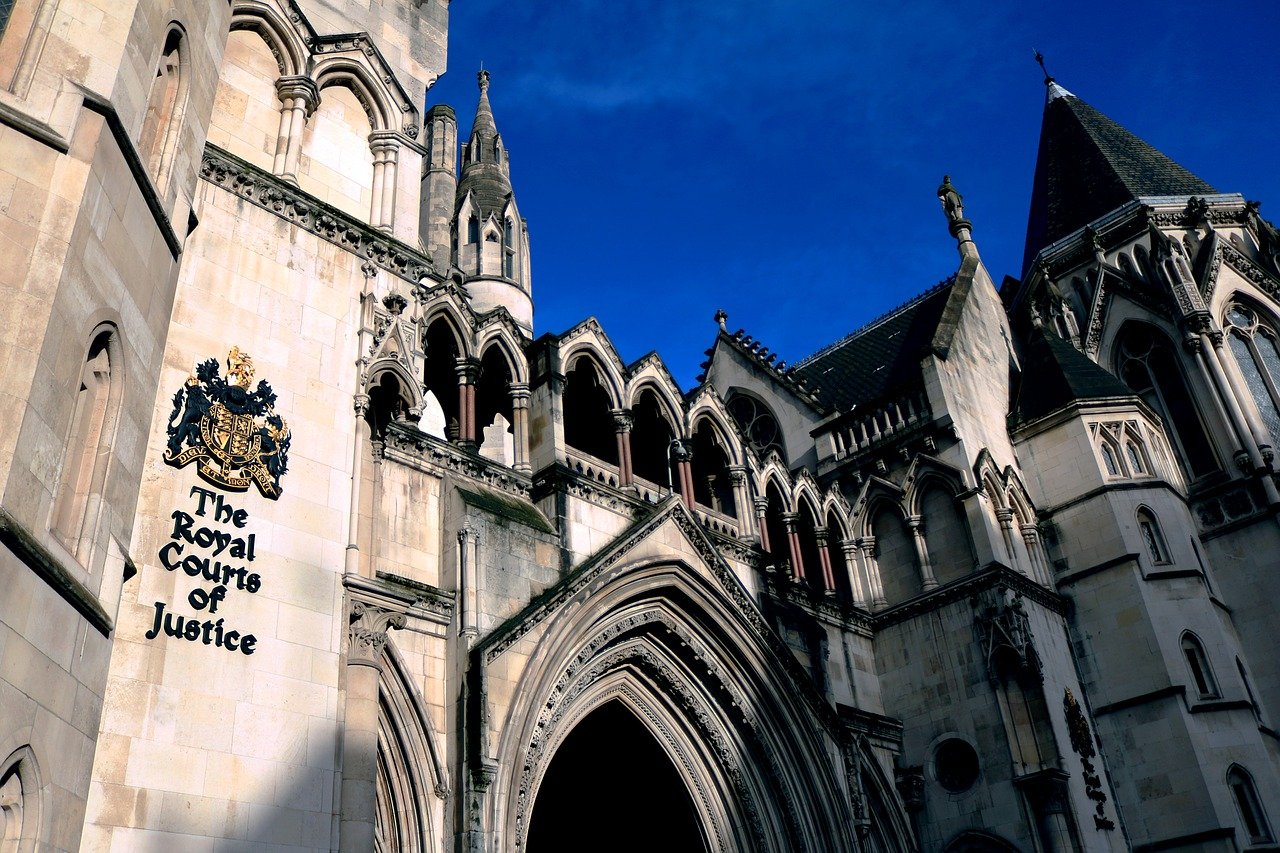
The Royal Courts of Justice. Photo: StevovoB/NeedPix


				Years ago when still a baby defence barrister, a brief landed on my desk. The defendant, we shall call him Mohammad, was from Somalia. He was a PhD student travelling for his studies to Germany when civil war broke out. Mohammad’s sister was raped by soldiers; his father murdered. Newly married with a baby, he used all his money to pay for passage to the UK. This meant using forged travel documents. The family were eventually granted asylum. But Mohammad kept the forged passport; a symbol of his past life, perhaps. On a trip to visit German friends, the forged passport was discovered. He was charged with an offence to which he had no defence in law. The first trial saw running battles between me and the judge. At every opportunity he angrily reminded the court  of the defendant’s guilt. His summing up consisted of countering the arguments I had advanced in Mohammad’s defence.
After two days deliberating, the jury were discharged, unable to reach a decision. The second trial was before a different judge. No angry exchanges. Just a measured, even-tempered stewardship of proceedings. A unanimous acquittal followed. Absent a bullying judge, this jury felt free to deliver a verdict according to their conscience; a principle called jury equity. I did not explicitly reference this principle in my closing speech. Nonetheless, it has often featured, in cases like Mohammad’s, when attempting to appeal to a jury’s sense of compassion. It was clear when Mohammad walked tearfully from the dock, that every right-minded person in that courtroom knew his prosecution, though lawful, was wrong.
And so to the Filton trial and the unprecedented prosecution of my friend, Rajiv Menon KC, due to stand trial on 28 July for alleged contempt of court. Rajiv was lead counsel representing the first of six Palestine Action defendants charged with offences arising out of an incident in 2024 at an arms factory in Filton, Bristol, owned by Israeli-based Elbit Systems. During the incident, the defendents smashed equipment and one injured a police officer.  At the trial the judge made orders prohibiting defence barristers from mentioning jury equity in their closing speeches. That effectively meant forbidding them from telling the jury that they (the jury) were free to act on their conscience despite the law. The trial judge alleges that Rajiv disobeyed the order and has asked another judge to try him for contempt. The Filton trial was, in many ways, different from Mohammad’s. However, the principles at stake are the same. You may not agree with the Filton defendants’ cause or their methods. And, we can all sympathise with the police officer injured whilst doing her job, but we must all surely agree that every defendant deserves a fair trial. By severely limiting some defences, removing other defences altogether, and making orders disallowing defence counsel from referring to long-established basic principles like jury equity, a trial judge is at risk of reducing the jury’s role to a ceremonial one.
That is why everyone should care about what happened in the Filton trial and what is happening now to Rajiv Menon. This is not just about a closing speech made by one defence barrister. Most defence barristers have, at some point, relied on the constitutional right of a jury to acquit even when a judge thinks that guilt is a forgone conclusion. It is a principle considered so important that it is enshrined on a plaque in the Central Criminal Court. And yet, today the very mention of it is being prohibited in protest trials, with the accompanying threat of contempt proceedings. This is about the essence of why the jury equity principle is necessary and has survived so long. It is recognised as a useful long-stop against state oppression.
I would add, as a Black person who has observed first-hand the oppressive way in which our people are policed, the collective wisdom of twelve strangers along with jury equity, is sometimes our only chance of justice. Let’s be clear, this attack on jury equity and the heavy-handed attempt to gag defence counsel, is an attack upon basic freedoms. It will have a chilling effect on all defence barristers in politically sensitive cases as well as on the right to protest. Other important safeguards will be caught in the dragnet.
Defence counsel’s obligation to fight fearlessly and the very concept of jury trial itself, are all up for grabs. In the 1980’s, during a wave of far-right attacks on Black communities in Bradford, twelve men were charged with offences linked to stockpiling 38 petrol bombs. One of the twelve, Tarlochan Gata Aura, admitted making and storing the bombs to protect his community. The late Sibghat Kadri QC, head of the chambers where I trained, was one of the defence barristers in that trial which ended with acquittals despite overwhelming evidence against them. Constantly interrupted by a hostile judge, the defence were warned against making the trial political. Kadri, a barrister who believed it was every lawyer’s duty to fight inside and outside the court, must be turning in his grave.


				READ MORE
Share
Facebook Twitter Pinterest Email Copy Link

Listen to the article

0:00
0:00

Key Takeaways

Playback Speed

Select a Voice

Years ago when still a baby defence barrister, a brief landed on my desk. The defendant, we shall call him Mohammad, was from Somalia. He was a PhD student travelling for his studies to Germany when civil war broke out. Mohammad’s sister was raped by soldiers; his father murdered. Newly married with a baby, he used all his money to pay for passage to the UK. This meant using forged travel documents. The family were eventually granted asylum. But Mohammad kept the forged passport; a symbol of his past life, perhaps. On a trip to visit German friends, the forged passport was discovered. He was charged with an offence to which he had no defence in law. The first trial saw running battles between me and the judge. At every opportunity he angrily reminded the court  of the defendant’s guilt. His summing up consisted of countering the arguments I had advanced in Mohammad’s defence.

After two days deliberating, the jury were discharged, unable to reach a decision. The second trial was before a different judge. No angry exchanges. Just a measured, even-tempered stewardship of proceedings. A unanimous acquittal followed. Absent a bullying judge, this jury felt free to deliver a verdict according to their conscience; a principle called jury equity. I did not explicitly reference this principle in my closing speech. Nonetheless, it has often featured, in cases like Mohammad’s, when attempting to appeal to a jury’s sense of compassion. It was clear when Mohammad walked tearfully from the dock, that every right-minded person in that courtroom knew his prosecution, though lawful, was wrong.

And so to the Filton trial and the unprecedented prosecution of my friend, Rajiv Menon KC, due to stand trial on 28 July for alleged contempt of court. Rajiv was lead counsel representing the first of six Palestine Action defendants charged with offences arising out of an incident in 2024 at an arms factory in Filton, Bristol, owned by Israeli-based Elbit Systems. During the incident, the defendents smashed equipment and one injured a police officer.  At the trial the judge made orders prohibiting defence barristers from mentioning jury equity in their closing speeches. That effectively meant forbidding them from telling the jury that they (the jury) were free to act on their conscience despite the law. The trial judge alleges that Rajiv disobeyed the order and has asked another judge to try him for contempt. The Filton trial was, in many ways, different from Mohammad’s. However, the principles at stake are the same. You may not agree with the Filton defendants’ cause or their methods. And, we can all sympathise with the police officer injured whilst doing her job, but we must all surely agree that every defendant deserves a fair trial. By severely limiting some defences, removing other defences altogether, and making orders disallowing defence counsel from referring to long-established basic principles like jury equity, a trial judge is at risk of reducing the jury’s role to a ceremonial one.

That is why everyone should care about what happened in the Filton trial and what is happening now to Rajiv Menon. This is not just about a closing speech made by one defence barrister. Most defence barristers have, at some point, relied on the constitutional right of a jury to acquit even when a judge thinks that guilt is a forgone conclusion. It is a principle considered so important that it is enshrined on a plaque in the Central Criminal Court. And yet, today the very mention of it is being prohibited in protest trials, with the accompanying threat of contempt proceedings. This is about the essence of why the jury equity principle is necessary and has survived so long. It is recognised as a useful long-stop against state oppression.

I would add, as a Black person who has observed first-hand the oppressive way in which our people are policed, the collective wisdom of twelve strangers along with jury equity, is sometimes our only chance of justice. Let’s be clear, this attack on jury equity and the heavy-handed attempt to gag defence counsel, is an attack upon basic freedoms. It will have a chilling effect on all defence barristers in politically sensitive cases as well as on the right to protest. Other important safeguards will be caught in the dragnet.

Defence counsel’s obligation to fight fearlessly and the very concept of jury trial itself, are all up for grabs. In the 1980’s, during a wave of far-right attacks on Black communities in Bradford, twelve men were charged with offences linked to stockpiling 38 petrol bombs. One of the twelve, Tarlochan Gata Aura, admitted making and storing the bombs to protect his community. The late Sibghat Kadri QC, head of the chambers where I trained, was one of the defence barristers in that trial which ended with acquittals despite overwhelming evidence against them. Constantly interrupted by a hostile judge, the defence were warned against making the trial political. Kadri, a barrister who believed it was every lawyer’s duty to fight inside and outside the court, must be turning in his grave.

Read the full article here

Fact Checker

Verify the accuracy of this article using AI-powered analysis and real-time sources.

Get Your Fact Check Report

Enter your email to receive detailed fact-checking analysis

5 free reports remaining

Continue with Full Access

You've used your 5 free reports. Sign up for unlimited access!

Already have an account? Sign in here

Share. Facebook Twitter Pinterest LinkedIn Tumblr Email Telegram Copy Link
News Room
  • Website
  • Facebook
  • X (Twitter)
  • Instagram
  • LinkedIn

The FSNN News Room is the voice of our in-house journalists, editors, and researchers. We deliver timely, unbiased reporting at the crossroads of finance, cryptocurrency, and global politics, providing clear, fact-driven analysis free from agendas.

Related Articles

Global Free Speech

Ahead of trial, CPJ, partners demand release of detained photojournalist Hamdi al-Zaeem

2 days ago
Global Free Speech

Journalist Henry Constantín detained in Cuba on ‘disobedience’ charge

3 days ago
Global Free Speech

The BBC clearly sees the value of television series That Mitchell and Webb Look. Marking the 20th anniversary of its original screening, the Beeb has re-released the series on iPlayer. But – and there is very often a “but” with these things – they’ve removed around 11 sketches from the BAFTA award-winning show. The official word is that these sketches don’t “work today”, which is polite speak for “they may cause offence”. The episodes singled out include scenes featuring a battle reenactment with characters in blackface, a contestant on a show wearing a burka and a lost tribe” in a garden centre. These sketches set out to challenge stereotypes, not to reinforce them; but 20 years on, this distinction seems to have been lost along the way. I’m a bit uncomfortable about this. I find it infantilising, to say the least. Can’t we trust audiences to make up their own minds, to switch off if they find the sketches in question unpalatable? Does the BBC think that we are just passive consumers, unable to disaggregate the mocking of racism from racism itself? These sketches set out to challenge stereotypes, not to reinforce them This act of censorship is distorting – of the shows, whose narratives and rhythms were built to include these sketches, and more broadly too. Conversations we were having 20 years ago have been erased, as if to suggest that they never happened. But they did! And with this erasure, the opportunity for thoughtful engagement and learning from our past is gone. “Let’s just pretend we were all lovely 20 years ago. It’s better that way” seems to be the message. Speaking as a minority myself, I find that knowing the nasty stuff that people said before – and indeed, still say today – is much more useful than pretending it never happened. This approach, I think, is also inconsistent. What it reveals is a cherry-picking (intended or not) of the groups that we can mock, and those that we can’t. Let’s face it, gender stereotypes are rarely deemed to have aged beyond the pale – if that were the case, we would have to wave goodbye to half the television made before the mid-2010s. Suppression like this sends a bad message to artists, namely that what they’re creating today may hold less value tomorrow. Or, even worse, that future audiences may deem them bigots – that Sword of Damocles hovering over the heads of any creative paying attention to the discourse of the moment. Suppression like this sends a bad message to artists The BBC’s decision reaffirms a broader trend. In 2020, Little Britain was removed from the iPlayer platform for similar reasons. It has since been reinstated – minus some sketches. Meanwhile, the UK’s arts space more broadly is seeing a retreat to the land of “safe”, as Index recently revealed in a year-long investigation into self-censorship in UK theatre. The BBC, it must be said, does remarkable stuff. The ongoing podcast investigation into the disappearance of US journalist Austin Tice is just one example. But this does not mean, however, that they don’t sometimes get it wrong. Chopping at That Mitchell and Webb Look is one example. Sure, the removal of the material isn’t the life-or-death story that Index often works on. Sure, Mitchell and Webb aren’t the faces of persecuted artists – they have huge platforms and agreed to the changes themselves. Still, one can’t help but think that the decision came from a place of conservatism, perhaps even fear. This is weak and dispiriting, indeed the very opposite of what enables creativity in the arts. We shouldn’t be encouraging this cultural timidity. Rather, we should harness culture and creativity as the starting points of a conversation about our here and now. That’s what the arts are for, after all. READ MORE

3 days ago
Global Free Speech

CPJ urges US senators to seek accountability for Israel’s killing of journalist Shireen Abu Akleh

3 days ago
Global Free Speech

4 Cameroonian journalists jailed for theft of minister’s glasses – that he later found

4 days ago
Global Free Speech

3 Tunisian journalists briefly detained as media crackdown intensifies 

4 days ago
Add A Comment

Comments are closed.

Editors Picks

Bitget Restores Bitcoin Withdrawals After $388M Hack

22 minutes ago

California Bans Public Officials From Issuing Meme Coins Under New Newsom Law

23 minutes ago

Federal Courts Are Running a Surplus Charging for Public Records

56 minutes ago

Live updates: Bitcoin sinks below $83,000 as Iran talks stall and oil climbs

1 hour ago
Latest Posts

Hong Kong Expands Financial Reporting Oversight to Crypto Firms

1 hour ago

Solana ETFs draw record $188 million in a week as Bitwise takes two-thirds of inflows

2 hours ago

Bitcoin ETFs draw $2.4B in biggest inflow week since October 2025

2 hours ago

Subscribe to News

Get the latest news and updates directly to your inbox.

At FSNN – Free Speech News Network, we deliver unfiltered reporting and in-depth analysis on the stories that matter most. From breaking headlines to global perspectives, our mission is to keep you informed, empowered, and connected.

FSNN.net is owned and operated by GlobalBoost Media
, an independent media organization dedicated to advancing transparency, free expression, and factual journalism across the digital landscape.

Facebook X (Twitter) Discord Telegram
Latest News

Bitcoin drops to $83,000 as oil climbs back above $100: Crypto Markets Today

17 minutes ago

Bitget Restores Bitcoin Withdrawals After $388M Hack

22 minutes ago

California Bans Public Officials From Issuing Meme Coins Under New Newsom Law

23 minutes ago

Subscribe to Updates

Get the latest news and updates directly to your inbox.

© 2026 GlobalBoost Media. All Rights Reserved.
  • Privacy Policy
  • Terms of Service
  • Our Authors
  • Contact

Type above and press Enter to search. Press Esc to cancel.

🍪

Cookies

We and our selected partners wish to use cookies to collect information about you for functional purposes and statistical marketing. You may not give us your consent for certain purposes by selecting an option and you can withdraw your consent at any time via the cookie icon.

Cookie Preferences

Manage Cookies

Cookies are small text that can be used by websites to make the user experience more efficient. The law states that we may store cookies on your device if they are strictly necessary for the operation of this site. For all other types of cookies, we need your permission. This site uses various types of cookies. Some cookies are placed by third party services that appear on our pages.

Your permission applies to the following domains:

  • https://fsnn.net
Necessary
Necessary cookies help make a website usable by enabling basic functions like page navigation and access to secure areas of the website. The website cannot function properly without these cookies.
Statistic
Statistic cookies help website owners to understand how visitors interact with websites by collecting and reporting information anonymously.
Preferences
Preference cookies enable a website to remember information that changes the way the website behaves or looks, like your preferred language or the region that you are in.
Marketing
Marketing cookies are used to track visitors across websites. The intention is to display ads that are relevant and engaging for the individual user and thereby more valuable for publishers and third party advertisers.