

 Freedom Index
Listen to the article
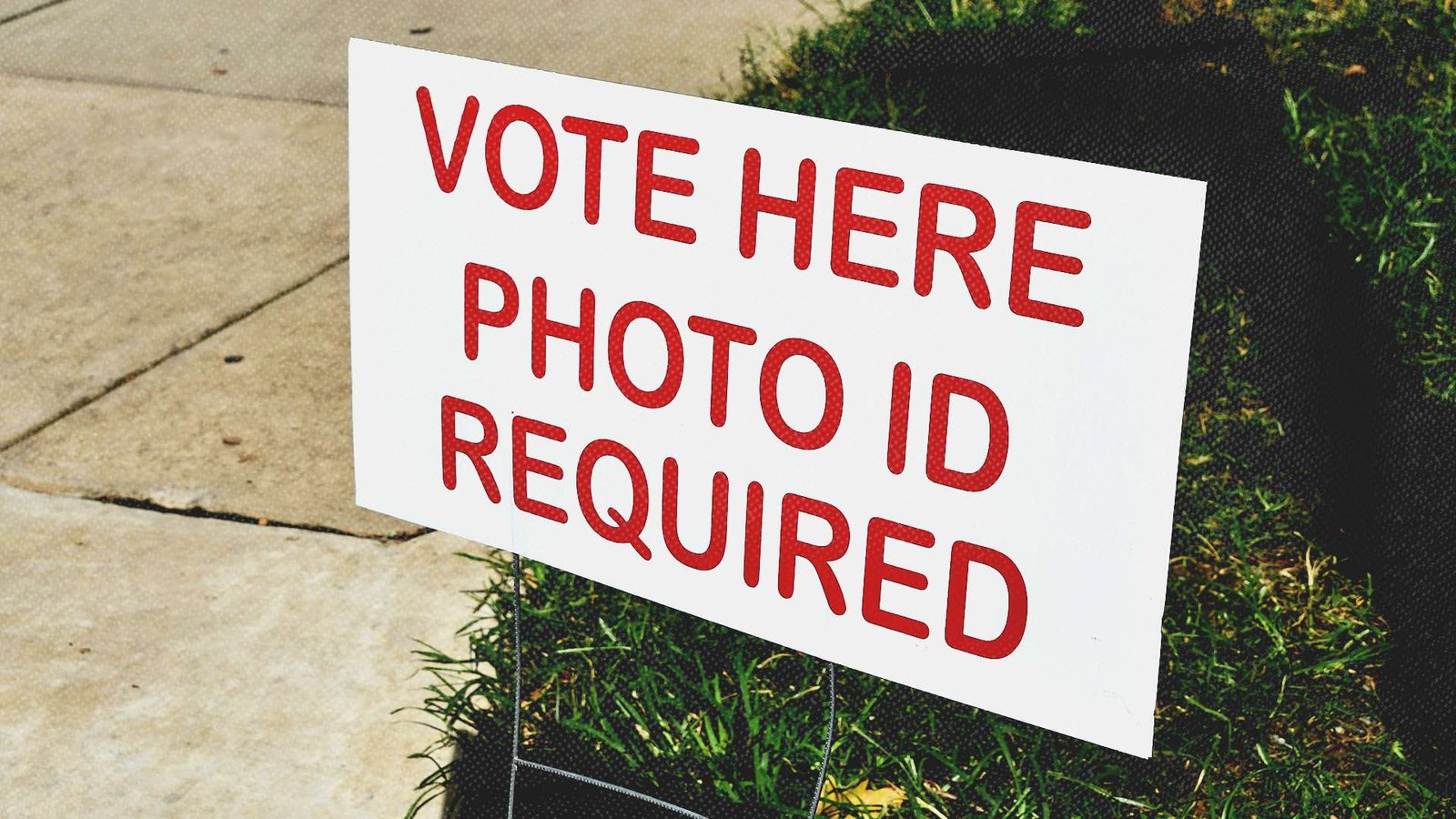
During his speech about election security last Thursday, President Donald Trump renewed his pitch for the SAVE America Act, focusing on the bill’s requirement that voters present a photo ID when they cast ballots in federal races. “How simple is that?” he said. “Could I have your photo, please? Photo voter ID. All voters must provide proof of citizenship.”
The bill, which is currently stalled in the Senate, would do more than that, and there are serious concerns about whether it could be implemented in time for this November’s elections even if it had enough support to pass. Furthermore, Trump’s claim that voter ID requirements are necessary to prevent widespread voting by noncitizens is not supported by the evidence, which suggests that such fraud is quite rare. Still, the policy seems commonsensical enough that a large majority of Americans support it, which raises the question of why Democratic politicians frequently resist the idea.
As Trump tells it, “the only reason you wouldn’t do it is you want to cheat because your policies are so bad, and your candidates are so pathetic, that you…can’t get elected any other way.” Contrary to that gloss, critics of voter ID laws offer plausible objections that do not hinge on a desire to facilitate illegal voting. They worry that ID requirements, especially the stricter versions, systematically disadvantage people who may have difficulty obtaining or producing the necessary documentation, including young, elderly, low-income, and minority voters. But like Trump’s warnings about massive voting fraud, such concerns seem misguided.
There is a partisan valence to this debate because Democrats anticipate, based on predictions of which voters are apt to be deterred by ID requirements, that the net effect will hurt their candidates. Conversely, many Republicans think such requirements will, on balance, help them win elections. But research on the actual impact of voter ID mandates has not produced much evidence to support those expectations.
According to Ballotpedia‘s tally, 36 states currently require voters to present identification at the polls. Twenty-four of those states explicitly require a photo ID. Beyond that distinction, state laws vary in the sorts of IDs they deem acceptable and the exceptions they allow.
What happens when a voter arrives at a polling place without an ID? “In 15 states,” Ballotpedia reports, “some or all voters can sign an affidavit or a form in lieu of providing identification,” and “four states allow election officials or other voters to vouch for a person’s identity instead of an ID.” In four states, “voters who live and vote in state-licensed nursing homes or care centers do not have to provide ID.” Nine states “have no exceptions to their voter ID laws.”
A 2014 report from the Government Accountability Office (GAO) reviewed 10 studies that sought to measure the impact of such laws. Five studies “found that ID requirements had no statistically significant effect on turnout,” while four studies “found decreases in turnout” and one “found an increase in turnout.”
The GAO did its own analysis, comparing turnout in Kansas and Tennessee, which had enacted voter ID laws, to turnout in four other states that did not have such requirements. It found that turnout among registered and eligible voters in general elections declined more in Kansas and Tennessee from 2008 to 2012 than it did in the comparison states. The estimated differences ranged from 1.9 to 2.2 percentage points in Kansas and from 2.2 to 3.2 percentage points in Tennessee. The differences were especially pronounced among younger voters, recent registrants, and African Americans.
Along similar lines, a 2020 study by political scientist John Kuk and two other researchers, based on data from 2012 to 2016, found that “the gap in turnout between more racially diverse and less racially diverse counties grew more in states enacting new strict photo ID laws than it did elsewhere.” That same year, sociologist Jennifer Darrah-Okike and two collaborators reported, based on survey data, that voter ID requirements “can reduce the probability of self-reported voting by as much as four percentage points, enough to swing a national election.” They said the results indicated that “Latino citizens face disproportionately negative suppressive effects.”
In 2014, by contrast, political scientist Rene Rocha and public policy professor Tetsuya Matsubayashi found “little evidence for the belief that minority turnout is uniquely affected by voter ID regulations.” That conclusion was based on three decades of survey data covering 49 states. “Our primary explanatory variables, photo ID and nonphoto ID laws, have no statistically discernible relationship with the probability that whites, blacks, and Latinos voted in the general elections between 1980 and 2010 except that the nonphoto ID law has a positive and significant relationship with Latino turnout,” Rocha and Matsubayashi reported. “In short, more stringent ID requirements for voting have no deterring effect on individual turnout across different racial and ethnic groups.”
In a widely cited 2021 study based on data from 2008 through 2018, economists Enrico Cantoni and Vincent Pons likewise reported that voter ID laws “have no negative effect on registration or turnout, overall or for any group defined by race, gender, age, or party affiliation.” That remained true “through a large number of specifications.”
Cantoni and Pons also found that “strict ID requirements have no effect on fraud—actual or perceived.” They concluded that “efforts to improve elections may be better directed at other reforms.”
Those results undermine Trump’s case for voter ID. But they also cast doubt on the concerns raised by the other side in this debate.
Several other studies have found little or no relationship between voter ID laws and voter turnout. In 2009, for example, political scientist Jason Mycoff and two other researchers reported, based on survey results and data from four federal elections between 2000 and 2006, that “voter identification laws do not affect voter turnout.”
In 2012, political scientists M.V. Hood III and Charles S. Bullock III reported that Georgia’s voter ID law produced “a suppression effect among those registrants lacking proper ID,” amounting to a reduction in turnout of “about four-tenths of a percentage point in 2008.” But they found no evidence of a “racial or ethnic component to this suppression effect.”
In 2021, political scientists Justin Grimmer and Jesse Yoder likewise estimated a small suppression effect from North Carolina’s voter ID law, which they said “caused a 0.7 percentage point turnout decrease” among the 3 percent of voters who lacked ID compared to other voters in the 2016 primary election. The difference persisted even after that law was suspended, increasing to 2.6 percentage points in the 2016 general election before dropping to 1.7 percentage points in the 2018 general election.
In 2023, political scientists Jeffrey J. Harden and Alejandra Campos looked at the impact of voter IDs on state and federal elections from 2003 to 2020. They found “negligible average effects” and concluded that “voter ID requirements motivate and mobilize supporters of both parties, ultimately mitigating their anticipated effects on election results.”
That is similar to the explanation that Cantoni and Pons suggested in 2021. “The likelihood that nonwhite voters were contacted by a campaign” increased by 4.7 percentage points in states that required photo identification, they said, “suggesting that parties’ mobilization might have offset modest effects of the laws on the participation of ethnic minorities.”
In 2024, economist Noah Braun noted that “the proliferation of voter ID laws across the US has had an ambiguous impact on turnout rates among registered voters, despite fear from civil-rights advocates that these laws would suppress turnout.” But based on data from Virginia, which enacted a voter ID law in 2014, he found an overall turnout decline in precincts where a relatively high percentage of residents did not have driver’s licenses, which he said was “driven almost entirely by declines in registration rates.”
Summing up the evidence, the MIT Election Lab says it remains unclear “whether implementing voter ID requirements leads to a decrease in racial minority turnout.” While “some scholars have found a decrease in racial minority turnout nationwide,” it says, “other studies have found no effect of voter ID laws on racial minority turnout, and some have even found an increase in youth turnout.”
Grimmer and political scientist Eitan Hersh offered a similar gloss in 2024. “Contrary to heated political rhetoric,” they wrote, “election policies have small effects on outcomes because they tend to target small shares of the electorate, have a small effect on turnout, and/or affect voters who are relatively balanced in their partisanship.”
Regarding voter ID laws specifically, Grimmer and Hersh noted that a 2017 review of the literature by political scientist Benjamin Highton found “modest turnout effects and only minor differences across politically relevant groups.” They added that more-recent studies have “estimated even smaller effects, close to zero.”
The weight of the evidence, in short, suggests that Democrats and Republicans are both wrong about the likely partisan impact of voter ID requirements. And that makes sense once you consider the burdens that such laws generally impose in practice.
In Texas, where I live, “acceptable forms of photo ID” include driver’s licenses, passports, citizenship certificates, handgun licenses, military IDs, and personal identification cards or election identification certificates issued by the state Department of Public Safety. But if you show up to vote without one of those, you can fill out a “reasonable impediment declaration,” saying you were unable to obtain an approved ID for any of several reasons, including “lack of transportation,” “work schedule,” “family responsibilities,” “disability or illness,” “lost or stolen identification,” and “lack of birth certificate or other documents needed to obtain acceptable form of photo ID.” Based on that declaration, you can “present an alternative form of ID, such as a utility bill, bank statement, government check, or a voter registration certificate.”
According to Ballotpedia, most states with voter ID laws likewise offer some form of accommodation for voters who have trouble meeting the usual requirements. While those alternatives might be a bit intimidating, they are unlikely to deter motivated voters who understand their options.
Campaigns and party organizations obviously have an interest in making sure voters are well-informed on that score, which is why researchers surmise that such efforts may account for the difficulty of documenting a consequential deterrent effect. Whether you fear such an effect or hope for it, your expectations should be tempered by the reality that people can and do adjust to changes in the requirements for casting a ballot.
Read the full article here
Fact Checker
Verify the accuracy of this article using AI-powered analysis and real-time sources.