

 Freedom Index
Listen to the article
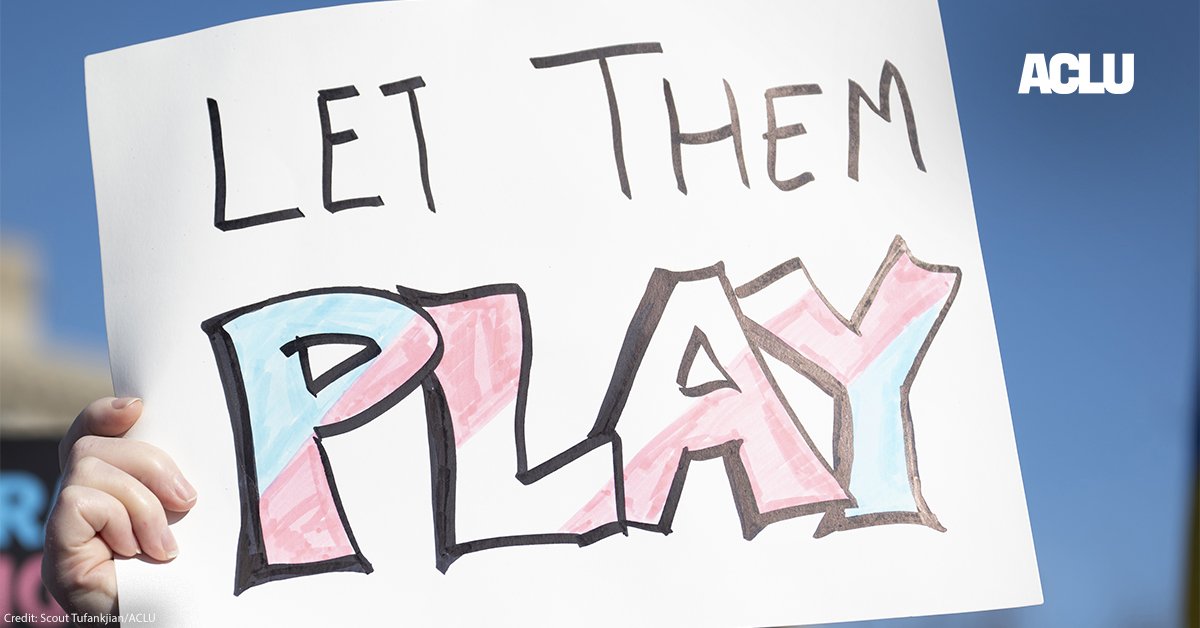
In a heartbreaking loss for transgender youth and their families, the Supreme Court upheld two laws in Idaho and West Virginia barring transgender women and girls from competing on athletic teams for women and girls. The Court ruled that state laws banning transgender women and girls from athletic teams do not violate either Title IX or the Equal Protection Clause.
The two cases in Idaho and West Virginia argued that the bans violate the rights of two transgender female student-athletes under the Equal Protection Clause of the Fourteenth Amendment of the U.S. Constitution. In addition, West Virginia v. B.P.J. argued that the ban violates Title IX, the federal law prohibiting sex discrimination in educational programs. Federal courts have blocked enforcement of these bans in both lawsuits.
Since 2020, 27 states have banned transgender youth from playing school sports. Many of these bans allow for invasive forms of sex testing that put all female student-athletes at risk and embolden intrusive challenges to student-athletes’ sex.
But we know that transgender people and their families are facing attacks on many fronts — from their safety at school and work to their access to medical care. ACLU experts explain what this most recent decision from the Supreme Court means for the freedom of transgender people to be themselves on and off the field.
How did the Court rule in West Virginia v. BPJ and Little v. Hecox?
The Court upheld laws in Idaho and West Virginia that categorically ban transgender women and girls from women’s and girls’ scholastic sports teams. The Court determined that it did not violate Title IX or the Equal Protection Clause to exclude transgender women and girls from women’s and girls’ sports teams.
Since 2020, 27 states have enacted similar laws, and many of these bans allow for invasive forms of sex testing that put all female student-athletes at risk and embolden intrusive challenges to student-athletes’ sex. The Court’s ruling nonetheless allows states to continue these exclusionary policies.
What does this mean for transgender students in states with sports bans?
In its ruling upholding the laws, the Supreme Court found the states are allowed, but not required, to force transgender student-athletes to compete on teams consistent with their sex assigned at birth and bar them from teams inconsistent with their sex assigned at birth. That means transgender student-athletes in states like West Virginia, Idaho, or the 25 other states with state-level bans remain barred from playing on teams consistent with their gender identity. In the future, other states may try to enact similar bans through the state legislature or by ballot initiative.
What does this mean for transgender students in states without bans?
The Court did not mandate discrimination against transgender athletes. This means that state laws or school policies permitting transgender student-athletes to participate in sports consistent with their gender identity remain valid. Under the Court’s reasoning, states like Idaho and West Virginia can ban transgender athletes, but states like California and New York can also still protect the rights of transgender athletes. In short, the Court’s ruling does not require states or school officials to ban transgender students from athletics.
What does this mean for transgender students’ access to bathrooms, locker rooms, and other school facilities?
The Court’s ruling specifically notes it only applies to the ability of transgender students to play on athletic teams consistent with their gender identity. The decision does not resolve the separate question of whether state laws or school policies can ban transgender students from restrooms or locker rooms consistent with their gender identity. The Court made very clear that the decision was based on the particular legal and practical realities of athletics.
What does this mean for educators, administrations, athletic associations, or other school officials?
Given that the Court did not require discrimination against transgender students, including transgender student-athletes, the decision reinforces that educators, administrators, athletic associations, and other school officials can still take action to protect transgender young people. Nobody is required to discriminate and given all that we know about the benefits of athletics and of inclusion, educators should act to protect all vulnerable young people from discrimination.
Does this ruling affect physical education classes, non-athletic gendered programs, such as Boys’ and Girls’ State conferences or chess clubs, or non-competitive school sports?
The Court made a point of distinguishing between sports and other educational contexts. The ruling does not resolve separate legal questions outside of the sports context.
Does this ruling affect college athletics or only K-12?
The ruling is about the permissibility of banning transgender athletes. The Idaho law applies to collegiate athletics and to K-12 athletics. The West Virginia law applies to grades 6-12 and collegiate athletics.
Could this ruling be used to challenge other protections for transgender people in healthcare, housing, or employment?
By its own terms, the ruling is confined to the context of school sports. That said, court decisions are often invoked in other contexts and it is possible that government officials and others will try to use the decision to legitimize discrimination against transgender people.
There is a ballot measure up for a vote in my state that would ban transgender women and girls from athletics. How does this ruling affect the ballot measure?
It means that if a ballot measure that bans transgender women and girls from women’s and girls’ sports is voted into law then it will be deemed lawful under Title IX and the Equal Protection Clause Constitution under the Court’s ruling.
We know this case was never just about sports. It’s just one part of an effort by politicians across the country to deny trans people the freedom to be themselves in schools, workplaces, and communities. The Trump administration has even claimed the Court’s ruling in this case “bolsters” their effort to “eliminate” transgender people from public life: censoring any mention of us across the federal government, defunding schools that protect the rights of transgender students, and targeting providers of gender-affirming care.
You can help us push back against this obsession by calling on your member of Congress to co-sponsor the No Place for Anti-LGBT Hate Act, a bill that would defund these Trump policies and end many of his most intrusive and extreme attacks on our safety and dignity.
Read the full article here
Fact Checker
Verify the accuracy of this article using AI-powered analysis and real-time sources.