Close Menu
FSNN | Free Speech News NetworkFSNN | Free Speech News Network
  • Home
  • News
    • Politics
    • Legal & Courts
    • Tech & Big Tech
    • Campus & Education
    • Media & Culture
    • Global Free Speech
  • Opinions
    • Debates
  • Video/Live
  • Community
  • Freedom Index
  • About
    • Mission
    • Contact
    • Support
Trending

How Did Justice Sotomayor Assign Dissents in 6-3 Cases This Term?

36 minutes ago

Bitcoin ETFs had their worst month ever in June, shedding $4.5 billion

52 minutes ago

Anthropic Restores Claude Fable 5 and Mythos 5 Access

55 minutes ago
Facebook X (Twitter) Instagram
Facebook X (Twitter) Discord Telegram
FSNN | Free Speech News NetworkFSNN | Free Speech News Network
Market Data Newsletter
Wednesday, July 1
  • Home
  • News
    • Politics
    • Legal & Courts
    • Tech & Big Tech
    • Campus & Education
    • Media & Culture
    • Global Free Speech
  • Opinions
    • Debates
  • Video/Live
  • Community
  • Freedom Index
  • About
    • Mission
    • Contact
    • Support
FSNN | Free Speech News NetworkFSNN | Free Speech News Network
Home»Opinions»Debates»Onuf and Cogliano on His Relevance Today
Debates

Onuf and Cogliano on His Relevance Today

News RoomBy News Room3 hours agoNo Comments4 Mins Read220 Views
Share Facebook Twitter Pinterest Copy Link LinkedIn Tumblr Email VKontakte Telegram
Onuf and Cogliano on His Relevance Today
Share
Facebook Twitter Pinterest Email Copy Link

Listen to the article

0:00
0:00

Key Takeaways

Playback Speed

Select a Voice

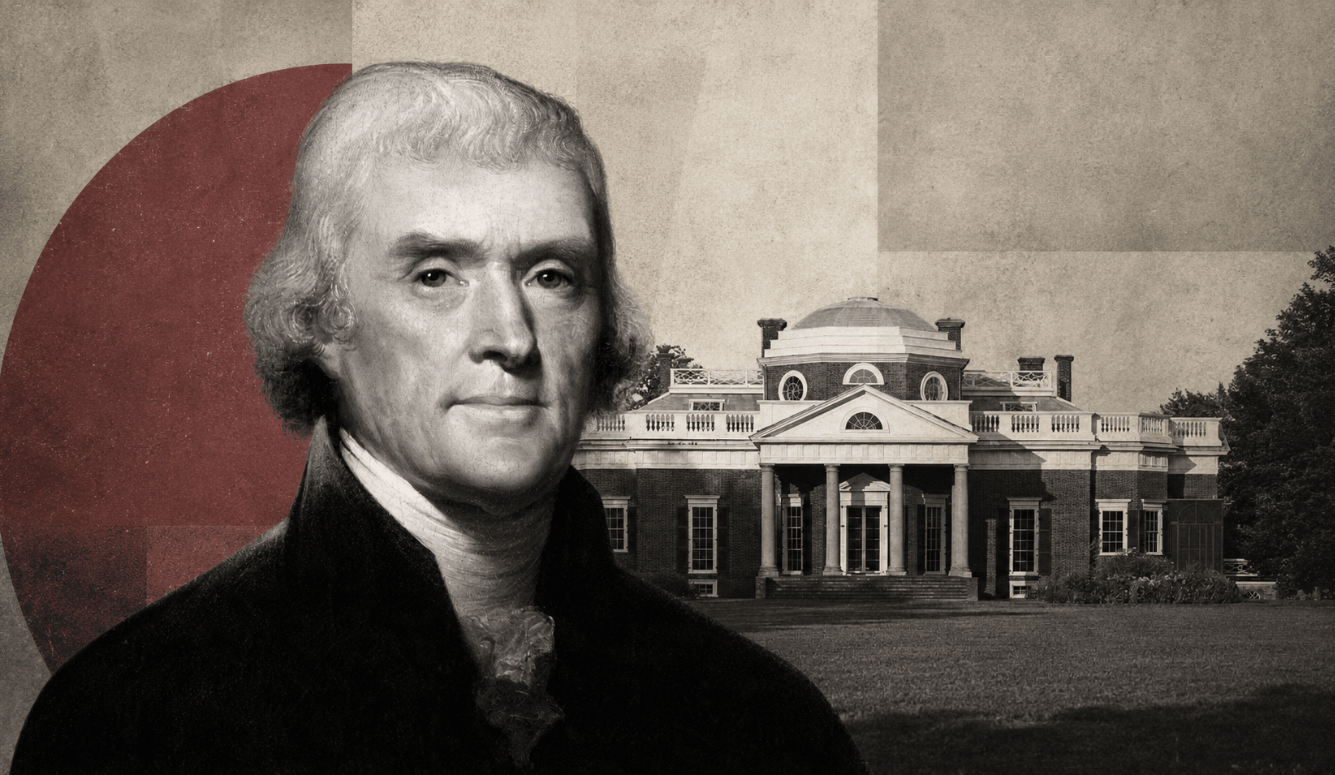
A review of Thomas Jefferson Survives: American Independence in His Time and Ours by Peter S. Onuf and Francis D. Cogliano; 256 pages; Liveright (June 2026)

The three essays in this new volume about Thomas Jefferson hope to show that Jefferson remains relevant to our time while they rescue him from trite generalisation. “Across generations,” write historians Onuf and Cogliano, “Americans have reinvented and reimagined Jefferson according to their contemporary needs and concerns, effectively taking him out of history and making them their contemporary.”

A historiography follows that illustrates how Jefferson has often been used and misused as a flag of convenience, and how his reputation has fallen in and out of fashion. Until the Civil War, advocates and opponents of slavery both enlisted him as a spokesman. Pro-slavery groups highlighted his support of states’ rights.  Abolitionists “drew on Jefferson’s antislavery writings and the egalitarian premise of the Declaration of Independence.” After the Civil War, the authors write, Jefferson’s reputation suffered, owing to his perceived support for secession, and because he was “the spokesman for agrarian democracy in a nation that was rapidly becoming more and more urban and industrial.”

By World War II, Jefferson’s reputation had rebounded. President Franklin D. Roosevelt was an ardent admirer and called him “a universal advocate of global liberty.” Of this period, Onuf and Cogliano write: “Jefferson was no longer the author of secession but rather the embodiment of the values for which the United States and its allies were fighting in World War II.” But between the 1960s and the present day, Jefferson’s reputation went into decline, particularly on the Left, which rejected him as “a plantation patriarch and enslaver who epitomizes the hypocrisy of the founders of the American republic.”  The Right, led by Donald Trump, now champions him as a victim of “cancel culture,” maligned in death for views and practices that were not unusual in his time. But unlike FDR, Trump “ascribed Jefferson’s beliefs to his supporters and not to all Americans.”

The use of Jefferson in this way, the authors write, is a “zero sum game for both sides.” But as “a historical figure situated in his own time and place, Jefferson has important things to say to us in our own radically uncertain and equally epochal historical moment.” They note that he believed that the “survival of the republic had to take precedence over everything else,” but that he also “challenged Americans with the question that every generation must confront: Are we capable of governing ourselves?”

Jefferson felt it essential that each succeeding generation live up to the principles enshrined in the Declaration of Independence. That document was conceived as a “narrative” for a “new nation,” and he believed that it was incumbent upon Americans to overcome life’s obstacles without abandoning the ideals that unite them: “Crucially, Jefferson had faith in the capacity of future generations to write their own histories and correct the mistakes of the past. … He believed that each generation is sovereign and, guided by the lessons of the past, must confront its own unique challenges.” And each generation, he believed, owed it to the next to bequeath them a “better country” and a “safer world.”

On the other hand, like many of his contemporaries in the revolutionary generation, Jefferson was “anxious about the future,” not least because he did not regard democracy as “fixed and permanent.” He was not, the authors concede, always a “consistent thinker and his actions often fell short of his words.” But he was still “the foremost advocate and the most vocal among the revolutionary leadership for an optimistic, democratic future for the new nation.”

Jefferson was not, however, an automatic supporter of independence from the British Empire. As a subscriber to the Whig school of history, he believed that time was a directional march of progress. But he also believed that King George III was being misled by a corrupt parliament and that the colonies ought to remain joined to the mother country. His mind was changed by Tom Paine’s influential 1776 pamphlet Common Sense. Paine believed there was nothing democratic about remaining a part of the British Empire—the King was not elected, there was no true constitution, and the House of Lords was cut off from the people. Only the minuscule House of Commons gave the people a voice and it was hardly representative of the populace in Britain or the New World.


Read the full article here

Fact Checker

Verify the accuracy of this article using AI-powered analysis and real-time sources.

Get Your Fact Check Report

Enter your email to receive detailed fact-checking analysis

5 free reports remaining

Continue with Full Access

You've used your 5 free reports. Sign up for unlimited access!

Already have an account? Sign in here

Share. Facebook Twitter Pinterest LinkedIn Tumblr Email Telegram Copy Link
News Room
  • Website
  • Facebook
  • X (Twitter)
  • Instagram
  • LinkedIn

The FSNN News Room is the voice of our in-house journalists, editors, and researchers. We deliver timely, unbiased reporting at the crossroads of finance, cryptocurrency, and global politics, providing clear, fact-driven analysis free from agendas.

Related Articles

Media & Culture

How Did Justice Sotomayor Assign Dissents in 6-3 Cases This Term?

36 minutes ago
Media & Culture

Neil Gorsuch Urges Supreme Court To Correct 2 Wrong Turns That Undermined Civil Liberties

2 hours ago
Media & Culture

Two Cheers for Chief Justice Roberts on the Unitary Executive

3 hours ago
Media & Culture

Edited Version of Trump v. Slaughter

4 hours ago
Media & Culture

JD Vance Brags About Being Able To Do Lots Of Watergates, Compares Himself To Nixon

5 hours ago
Media & Culture

Nina Totenberg Sincerely Apologizes For An Inexplicable Error

5 hours ago
Add A Comment
Leave A Reply Cancel Reply

Editors Picks

Bitcoin ETFs had their worst month ever in June, shedding $4.5 billion

52 minutes ago

Anthropic Restores Claude Fable 5 and Mythos 5 Access

55 minutes ago

Neil Gorsuch Urges Supreme Court To Correct 2 Wrong Turns That Undermined Civil Liberties

2 hours ago

Ripple-linked token holds $1 as network activity improves

2 hours ago
Latest Posts

Taiwan Lawmakers Pass First Crypto, Stablecoin Laws

2 hours ago

Two Cheers for Chief Justice Roberts on the Unitary Executive

3 hours ago

Onuf and Cogliano on His Relevance Today

3 hours ago

Subscribe to News

Get the latest news and updates directly to your inbox.

At FSNN – Free Speech News Network, we deliver unfiltered reporting and in-depth analysis on the stories that matter most. From breaking headlines to global perspectives, our mission is to keep you informed, empowered, and connected.

FSNN.net is owned and operated by GlobalBoost Media
, an independent media organization dedicated to advancing transparency, free expression, and factual journalism across the digital landscape.

Facebook X (Twitter) Discord Telegram
Latest News

How Did Justice Sotomayor Assign Dissents in 6-3 Cases This Term?

36 minutes ago

Bitcoin ETFs had their worst month ever in June, shedding $4.5 billion

52 minutes ago

Anthropic Restores Claude Fable 5 and Mythos 5 Access

55 minutes ago

Subscribe to Updates

Get the latest news and updates directly to your inbox.

© 2026 GlobalBoost Media. All Rights Reserved.
  • Privacy Policy
  • Terms of Service
  • Our Authors
  • Contact

Type above and press Enter to search. Press Esc to cancel.

🍪

Cookies

We and our selected partners wish to use cookies to collect information about you for functional purposes and statistical marketing. You may not give us your consent for certain purposes by selecting an option and you can withdraw your consent at any time via the cookie icon.

Cookie Preferences

Manage Cookies

Cookies are small text that can be used by websites to make the user experience more efficient. The law states that we may store cookies on your device if they are strictly necessary for the operation of this site. For all other types of cookies, we need your permission. This site uses various types of cookies. Some cookies are placed by third party services that appear on our pages.

Your permission applies to the following domains:

  • https://fsnn.net
Necessary
Necessary cookies help make a website usable by enabling basic functions like page navigation and access to secure areas of the website. The website cannot function properly without these cookies.
Statistic
Statistic cookies help website owners to understand how visitors interact with websites by collecting and reporting information anonymously.
Preferences
Preference cookies enable a website to remember information that changes the way the website behaves or looks, like your preferred language or the region that you are in.
Marketing
Marketing cookies are used to track visitors across websites. The intention is to display ads that are relevant and engaging for the individual user and thereby more valuable for publishers and third party advertisers.