Close Menu
FSNN | Free Speech News NetworkFSNN | Free Speech News Network
  • Home
  • News
    • Politics
    • Legal & Courts
    • Tech & Big Tech
    • Campus & Education
    • Media & Culture
    • Global Free Speech
  • Opinions
    • Debates
  • Video/Live
  • Community
  • Freedom Index
  • About
    • Mission
    • Contact
    • Support
Trending

SCOTUS Unanimously Ruled That the Second Amendment Trumps Anti-Drug Sentiment

27 minutes ago

Bitcoin could drop to $59,000 in the short-term as liquidity dries up

40 minutes ago

CFTC Sues Kentucky After Prediction Market Lawsuits

43 minutes ago
Facebook X (Twitter) Instagram
Facebook X (Twitter) Discord Telegram
FSNN | Free Speech News NetworkFSNN | Free Speech News Network
Market Data Newsletter
Wednesday, June 24
  • Home
  • News
    • Politics
    • Legal & Courts
    • Tech & Big Tech
    • Campus & Education
    • Media & Culture
    • Global Free Speech
  • Opinions
    • Debates
  • Video/Live
  • Community
  • Freedom Index
  • About
    • Mission
    • Contact
    • Support
FSNN | Free Speech News NetworkFSNN | Free Speech News Network
Home»News»Media & Culture»Supreme Court Limits the Ability To Sue Prison Guards for Religious Liberty Violations
Media & Culture

Supreme Court Limits the Ability To Sue Prison Guards for Religious Liberty Violations

News RoomBy News Room2 hours agoNo Comments4 Mins Read527 Views
Share Facebook Twitter Pinterest Copy Link LinkedIn Tumblr Email VKontakte Telegram
Supreme Court Limits the Ability To Sue Prison Guards for Religious Liberty Violations
Share
Facebook Twitter Pinterest Email Copy Link

Listen to the article

0:00
0:00

Key Takeaways

Playback Speed

Select a Voice

Another day, another unfortunate decision by the U.S. Supreme Court that shields rights-violating government agents from facing accountability.

No, I am not referring to a new case about qualified immunity, the judge-made doctrine that makes it hard to sue a bad cop for a constitutional violation.

And no, I am also not referring to the line of cases involving so-called Bivens immunity, which have made it even harder to sue an abusive federal officer for a constitutional violation.

I am referring here instead to the ability to sue a prison guard for a religious liberty violation under the terms of the Religious Land Use and Institutionalized Persons Act (RLUIPA). Among other things, that federal law says that if a state prison system accepts federal funding, it must generally refrain from imposing “a substantial burden on the religious exercise” of its inmates as a condition of receiving the funds.

Yet in a 6–3 decision issued today, the U.S. Supreme Court held that prison guards employed by the Louisiana Department of Corrections (LDC), which accepts federal funds and is therefore bound by the RLUIPA, may not be sued for damages by an inmate whose religious liberty was seemingly violated.

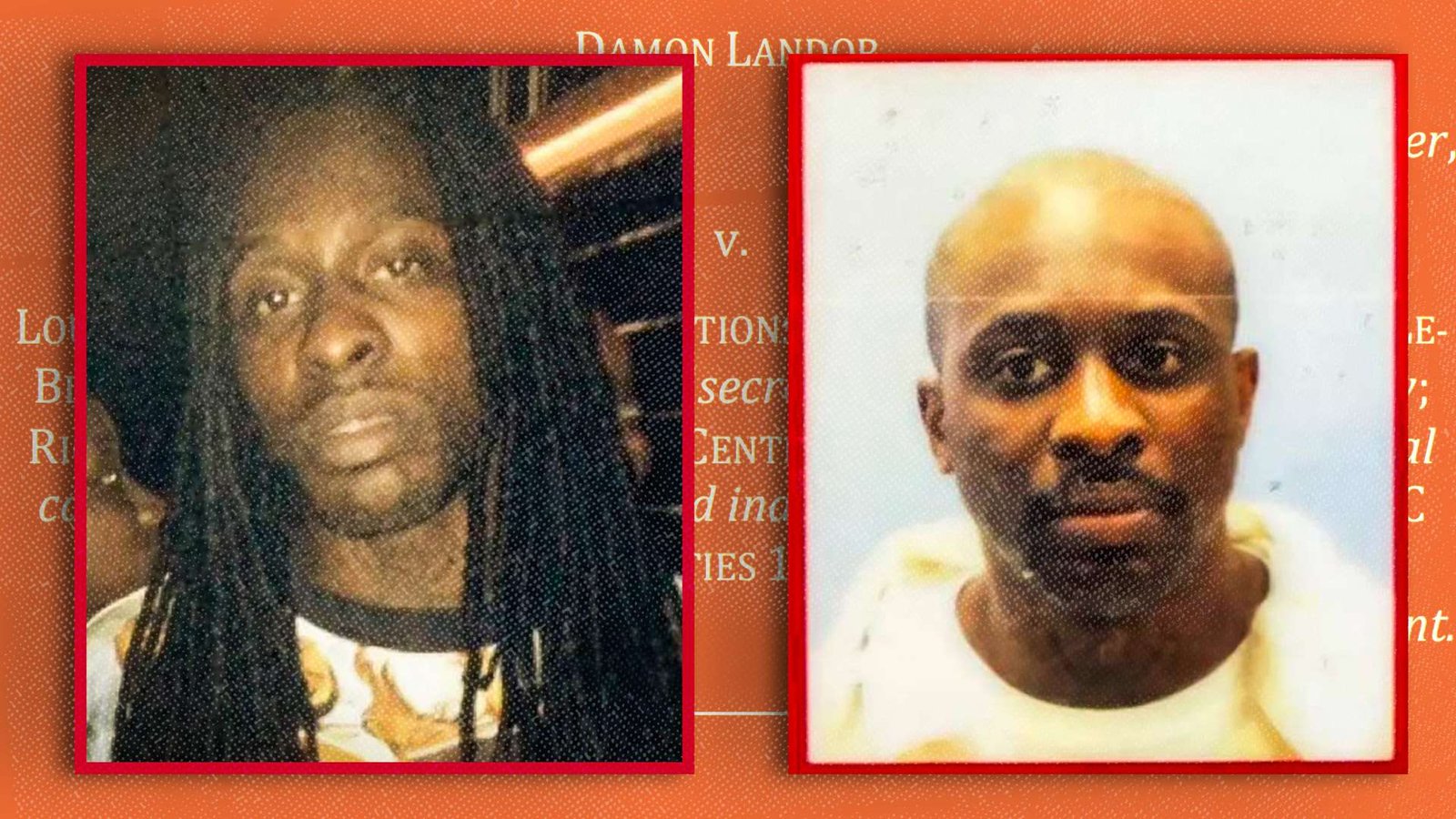
The inmate in question, Damon Landor, was a Rastafarian with long dreadlocks that he had been growing out for years as part of his religious practice. When LDC guards sought to shave his head, Landor produced a paper copy of a decision by the U.S. Court of Appeals for the 5th Circuit, which said that the prison’s ban on dreadlocks was illegal as applied to Rastafarians under the RLUIPA. But the guards just tossed Landor’s copy of the ruling in the trash and forcibly shaved his head anyway, leading to this lawsuit.

Writing for the majority, Justice Neil Gorsuch, joined by Chief Justice John Roberts and Justices Clarence Thomas, Samuel Alito, Brett Kavanaugh, and Amy Coney Barrett, shielded the guards entirely from Landor’s lawsuit.

Why? According to Gorsuch, if Congress wants to place such strings on the receipt of federal funds, the recipients have to agree to the strings. And while the Louisiana Department of Corrections “does not question that it has agreed to answer certain RLUIPA suits as a condition of accepting” federal funds, Gorsuch wrote, the individual prison guards being sued in this case did not enter into such an agreement. “And because they never agreed to answer suits like this one,” Gorsuch maintained, “Mr. Landor’s case cannot proceed against them any more than a breach of contract action might proceed against a defendant who never formed a contract.” In other words, while Landor may sue the prison system, he may not sue the guards.

I must say that I find Gorsuch’s argument here to be more than a little strained. These prison guards are agents of the state acting under the color of state law. Yet the guards now get a free pass from being sued despite the fact that the state agency they work for, the LDC, is admittedly bound by the terms of the RLUIPA, which the guards, acting in their official capacity as guards, seem to have clearly violated when they forcibly shaved Landor’s head, thus imposing an unlawful “substantial burden” on his religious exercise as a Rastafarian.

It seems to me that a guard ought to follow the same laws and requirements that bind the prison system that he or she works for, or else face the same kind of consequences that the system itself would face. But six members of the current Supreme Court think otherwise. As a result of their judgment in Landor v. Louisiana Department of Corrections, yet another category of government agent now enjoys extra protection from being sued over a likely rights violation.

Read the full article here

Fact Checker

Verify the accuracy of this article using AI-powered analysis and real-time sources.

Get Your Fact Check Report

Enter your email to receive detailed fact-checking analysis

5 free reports remaining

Continue with Full Access

You've used your 5 free reports. Sign up for unlimited access!

Already have an account? Sign in here

#CivicEngagement #FreePress #MediaAndPolitics #NarrativeControl #PublicDiscourse
Share. Facebook Twitter Pinterest LinkedIn Tumblr Email Telegram Copy Link
News Room
  • Website
  • Facebook
  • X (Twitter)
  • Instagram
  • LinkedIn

The FSNN News Room is the voice of our in-house journalists, editors, and researchers. We deliver timely, unbiased reporting at the crossroads of finance, cryptocurrency, and global politics, providing clear, fact-driven analysis free from agendas.

Related Articles

Media & Culture

SCOTUS Unanimously Ruled That the Second Amendment Trumps Anti-Drug Sentiment

27 minutes ago
Media & Culture

Seattle’s Sky-High Minimum Wage for Delivery Drivers Has Been a Disaster

1 hour ago
Media & Culture

Kotaku’s Pre-Judging AI In Gaming Coverage Is Getting Very Dumb

2 hours ago
Media & Culture

Clarence Thomas Explains Why the Commerce Clause Cannot Justify Federal Bans on Gun Possession

3 hours ago
Debates

China’s Ghost Cities Show Failed Tech Moonshot

4 hours ago
Media & Culture

The Government Seized Their $195,000 Home Over a $2,242 Debt. What Does the Supreme Court Say They’re Owed?

5 hours ago
Add A Comment
Leave A Reply Cancel Reply

Editors Picks

Bitcoin could drop to $59,000 in the short-term as liquidity dries up

40 minutes ago

CFTC Sues Kentucky After Prediction Market Lawsuits

43 minutes ago

Seattle’s Sky-High Minimum Wage for Delivery Drivers Has Been a Disaster

1 hour ago

Bitcoin drops to $62,000 as the chip selloff deepens for a second day

2 hours ago
Latest Posts

Democrats Urge Probe Into Trump Crypto Dealings With UAE

2 hours ago

Kotaku’s Pre-Judging AI In Gaming Coverage Is Getting Very Dumb

2 hours ago

Supreme Court Limits the Ability To Sue Prison Guards for Religious Liberty Violations

2 hours ago

Subscribe to News

Get the latest news and updates directly to your inbox.

At FSNN – Free Speech News Network, we deliver unfiltered reporting and in-depth analysis on the stories that matter most. From breaking headlines to global perspectives, our mission is to keep you informed, empowered, and connected.

FSNN.net is owned and operated by GlobalBoost Media
, an independent media organization dedicated to advancing transparency, free expression, and factual journalism across the digital landscape.

Facebook X (Twitter) Discord Telegram
Latest News

SCOTUS Unanimously Ruled That the Second Amendment Trumps Anti-Drug Sentiment

27 minutes ago

Bitcoin could drop to $59,000 in the short-term as liquidity dries up

40 minutes ago

CFTC Sues Kentucky After Prediction Market Lawsuits

43 minutes ago

Subscribe to Updates

Get the latest news and updates directly to your inbox.

© 2026 GlobalBoost Media. All Rights Reserved.
  • Privacy Policy
  • Terms of Service
  • Our Authors
  • Contact

Type above and press Enter to search. Press Esc to cancel.

🍪

Cookies

We and our selected partners wish to use cookies to collect information about you for functional purposes and statistical marketing. You may not give us your consent for certain purposes by selecting an option and you can withdraw your consent at any time via the cookie icon.

Cookie Preferences

Manage Cookies

Cookies are small text that can be used by websites to make the user experience more efficient. The law states that we may store cookies on your device if they are strictly necessary for the operation of this site. For all other types of cookies, we need your permission. This site uses various types of cookies. Some cookies are placed by third party services that appear on our pages.

Your permission applies to the following domains:

  • https://fsnn.net
Necessary
Necessary cookies help make a website usable by enabling basic functions like page navigation and access to secure areas of the website. The website cannot function properly without these cookies.
Statistic
Statistic cookies help website owners to understand how visitors interact with websites by collecting and reporting information anonymously.
Preferences
Preference cookies enable a website to remember information that changes the way the website behaves or looks, like your preferred language or the region that you are in.
Marketing
Marketing cookies are used to track visitors across websites. The intention is to display ads that are relevant and engaging for the individual user and thereby more valuable for publishers and third party advertisers.