Close Menu
FSNN | Free Speech News NetworkFSNN | Free Speech News Network
  • Home
  • News
    • Politics
    • Legal & Courts
    • Tech & Big Tech
    • Campus & Education
    • Media & Culture
    • Global Free Speech
  • Opinions
    • Debates
  • Video/Live
  • Community
  • Freedom Index
  • About
    • Mission
    • Contact
    • Support
Trending

Metaplanet acquires Siiibo Securities in $13.1m deal to advance Bitcoin strategy

13 minutes ago

TRM Warns of World Cup Crypto Scams Targeting Fans

16 minutes ago

Maine Kampf

57 minutes ago
Facebook X (Twitter) Instagram
Facebook X (Twitter) Discord Telegram
FSNN | Free Speech News NetworkFSNN | Free Speech News Network
Market Data Newsletter
Friday, June 12
  • Home
  • News
    • Politics
    • Legal & Courts
    • Tech & Big Tech
    • Campus & Education
    • Media & Culture
    • Global Free Speech
  • Opinions
    • Debates
  • Video/Live
  • Community
  • Freedom Index
  • About
    • Mission
    • Contact
    • Support
FSNN | Free Speech News NetworkFSNN | Free Speech News Network
Home»News»Media & Culture»2 Texas Grandmothers Who Overcame Addiction Wanted To Become Social Workers. The State Wouldn’t Let Them.
Media & Culture

2 Texas Grandmothers Who Overcame Addiction Wanted To Become Social Workers. The State Wouldn’t Let Them.

News RoomBy News Room5 hours agoNo Comments4 Mins Read1,045 Views
Share Facebook Twitter Pinterest Copy Link LinkedIn Tumblr Email VKontakte Telegram
2 Texas Grandmothers Who Overcame Addiction Wanted To Become Social Workers. The State Wouldn’t Let Them.
Share
Facebook Twitter Pinterest Email Copy Link

Listen to the article

0:00
0:00

Key Takeaways

Playback Speed

Select a Voice

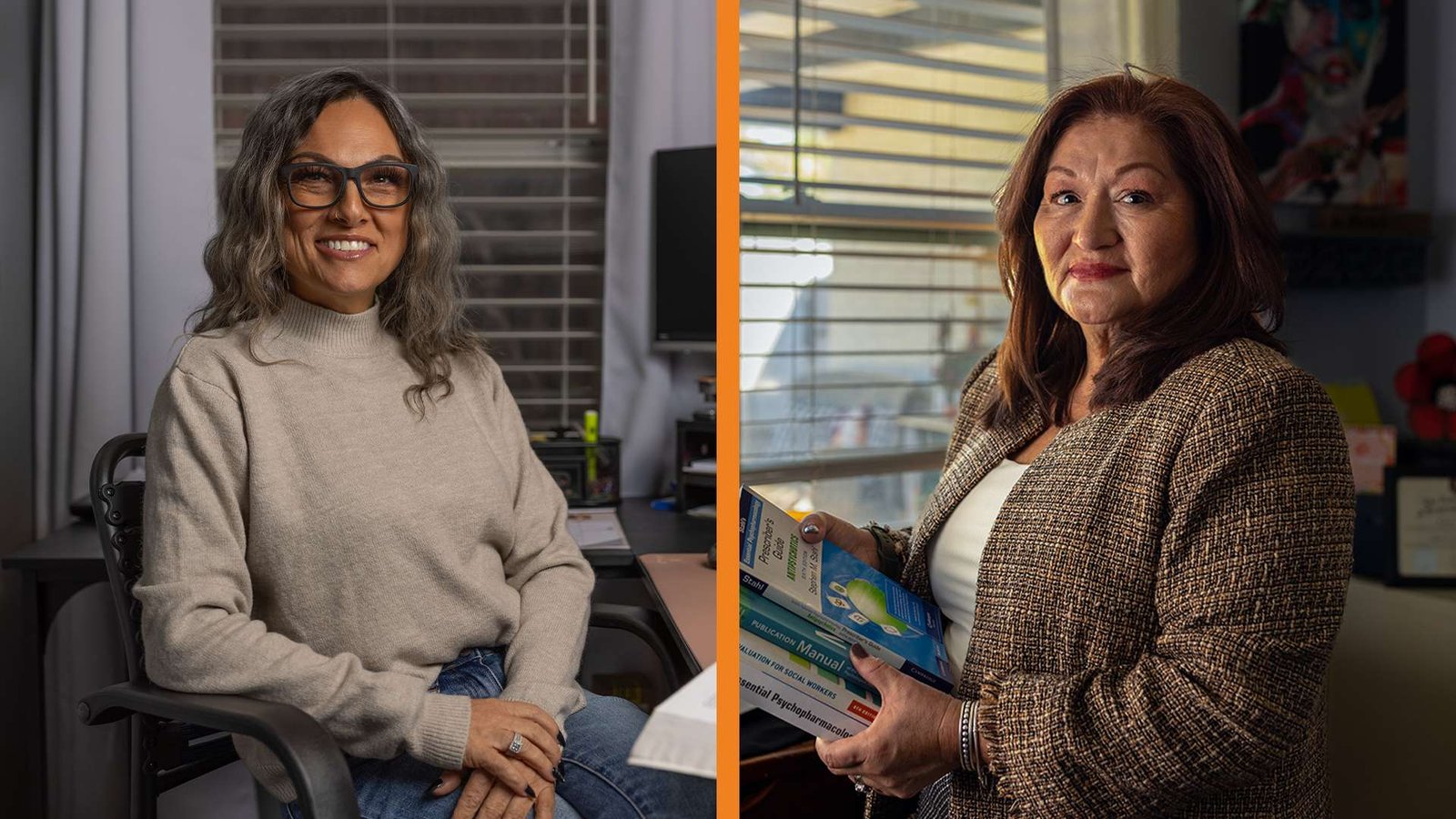
Last week, Texas’ 15th Court of Appeals dismissed a case brought by two women who’ve been denied social workers licenses in the state. Despite their master’s degrees and what the court described as “many strong…letters of recommendation,” the women’s decades-old criminal offenses, committed in the throes of addictions they have since overcome, made them categorically ineligible for licensure under state law.

The plaintiffs, Katherin Youniacutt and Tammy Thompson, plan to appeal the ruling to the Supreme Court of Texas. “We’re confident, under the existing precedent, that we’re entitled to proceed with our case,” Arif Panju, an attorney at the Institute for Justice (I.J.), who is representing the women, tells Reason.

Youniacutt and Thompson, who struggled with substance abuse earlier in their lives, say in their petition before the court that they’ve reformed themselves. Youniacutt, “a victim of clerical abuse” as a child, turned to alcohol to cope, and in 2007, pled guilty to assaulting an off-duty police officer with her car while under the influence.

Thompson began using methamphetamine in the wake of an ugly divorce. When she was threatened in 2006 by a man with a baseball bat, she was protected by friends and onlookers and left the scene before police arrived. Two years later, Thompson learned that the man had accused her of assaulting him with the bat, and “though she does not recall ever picking up the bat or striking him,” she pled guilty to the charges and received two years’ probation, eventually resulting (because of her drug use) in a 4-year prison sentence in 2010.

After earning their master’s degrees in social work, Youniacutt and Thompson, who are both sober, were eager to become “licensed master social workers” and begin treating others who struggle with trauma and substance abuse. 

The Texas State Board of Social Worker Examiners even assured both of them in 2019 that although their histories “may present a barrier to licensure,” they would not be disqualified, and the Board would consider extenuating circumstances before making a decision.

However, later that year, Texas passed a law banning from every healthcare profession anyone who was ever “previously convicted of…the commission of a felony offense involving the use or threat of force.” The Board of Examiners did not contact either woman to notify them of the change.

When, after paying hundreds of dollars in exam and application fees, the women finally completed all the licensing requirements—Thompson in 2021 and Younicacutt in 2023—their applications were denied.

Now the two women have challenged the lifetime ban’s legality under the Texas Constitution, arguing that it amounts to an “unreasonable” imposition on their “right to earn an honest living in the occupation of [their] choice.” After a district court allowed the case to proceed—agreeing that the ban was “irrational”—the state district attorney filed an appeal, which proved successful last week.

The Court of Appeals decided that, in fact, “requiring licensed social workers not to have committed violent felonies is still arguably rationally related to the State’s interest.”

Panju tells Reason that the Court of Appeals essentially “deferred blindly to the Legislature.” He says it merely pointed to a legislative study noting that “concerns have been raised regarding the prevalence of licensed healthcare professionals using their privilege and position of authority to commit crimes against vulnerable patients.” And then it concluded that on those grounds alone, the lifetime ban—as applied to two grandmothers who’d utterly turned their lives around—was entirely rational.

“That’s not how economic freedom works in the United States,” says Panju. “And certainly not in Texas.” After the ruling handed down by the Texas Supreme Court in Patel v. Texas Department of Licensing and Regulation (2015), he says a restriction on economic liberty must do a lot more work to justify itself.

“Under the test laid out by the Supreme Court,” he says, the court has to “actually look at the people bringing the challenge—Ms. Thompson and Ms. Youniacutt—and look at the real-world effect of the law on them, as part of the analysis.” The Court of Appeals didn’t do that: “It just…pulled out the ‘Government Always Wins’ rubber stamp,” and dismissed their complaint “at the level of abstraction.”

Asked about their Supreme Court prospects, Panju says he’s “confident, under the existing precedent, that we’re entitled to proceed with our case.”

Once the motion to dismiss is defeated, he says, all the details of “the real-world effects of the law on…Ms. Youniacutt and Ms. Thompson” will be considered, and “we’ll have this declared unconstitutional.”

Until then, these two Texas grandmothers will be banned from guiding others through the same challenges they faced.

Read the full article here

Fact Checker

Verify the accuracy of this article using AI-powered analysis and real-time sources.

Get Your Fact Check Report

Enter your email to receive detailed fact-checking analysis

5 free reports remaining

Continue with Full Access

You've used your 5 free reports. Sign up for unlimited access!

Already have an account? Sign in here

#CivicEngagement #Journalism #MediaBias #PoliticalMedia #PublicDiscourse
Share. Facebook Twitter Pinterest LinkedIn Tumblr Email Telegram Copy Link
News Room
  • Website
  • Facebook
  • X (Twitter)
  • Instagram
  • LinkedIn

The FSNN News Room is the voice of our in-house journalists, editors, and researchers. We deliver timely, unbiased reporting at the crossroads of finance, cryptocurrency, and global politics, providing clear, fact-driven analysis free from agendas.

Related Articles

Media & Culture

Maine Kampf

57 minutes ago
Media & Culture

Brickbat: Volunteer Medicine

2 hours ago
Media & Culture

President Trump storms out of NBC interview

3 hours ago
Media & Culture

Is It the Phones?

4 hours ago
Cryptocurrency & Free Speech Finance

Bithumb CEO Booked as Suspect Over South Korea Bribery Case

5 hours ago
Media & Culture

Federal Circuit Stays Enforcement of Ruling Against Trump’s Section 122 Tariffs

6 hours ago
Add A Comment
Leave A Reply Cancel Reply

Editors Picks

TRM Warns of World Cup Crypto Scams Targeting Fans

16 minutes ago

Maine Kampf

57 minutes ago

Pakistani authorities detain journalist Sohrab Barkat again over reporting on Kashmir

1 hour ago

Bitcoin traders eye $75,000 as Japan set to hike rates to 31-year high

1 hour ago
Latest Posts

Avalanche Treasury Lists on Nasdaq, Shares Fall 16%

1 hour ago

Brickbat: Volunteer Medicine

2 hours ago

There’s one simple signal for whether the BTC price has bottomed. Right now, it hasn’t.

2 hours ago

Subscribe to News

Get the latest news and updates directly to your inbox.

At FSNN – Free Speech News Network, we deliver unfiltered reporting and in-depth analysis on the stories that matter most. From breaking headlines to global perspectives, our mission is to keep you informed, empowered, and connected.

FSNN.net is owned and operated by GlobalBoost Media
, an independent media organization dedicated to advancing transparency, free expression, and factual journalism across the digital landscape.

Facebook X (Twitter) Discord Telegram
Latest News

Metaplanet acquires Siiibo Securities in $13.1m deal to advance Bitcoin strategy

13 minutes ago

TRM Warns of World Cup Crypto Scams Targeting Fans

16 minutes ago

Maine Kampf

57 minutes ago

Subscribe to Updates

Get the latest news and updates directly to your inbox.

© 2026 GlobalBoost Media. All Rights Reserved.
  • Privacy Policy
  • Terms of Service
  • Our Authors
  • Contact

Type above and press Enter to search. Press Esc to cancel.

🍪

Cookies

We and our selected partners wish to use cookies to collect information about you for functional purposes and statistical marketing. You may not give us your consent for certain purposes by selecting an option and you can withdraw your consent at any time via the cookie icon.

Cookie Preferences

Manage Cookies

Cookies are small text that can be used by websites to make the user experience more efficient. The law states that we may store cookies on your device if they are strictly necessary for the operation of this site. For all other types of cookies, we need your permission. This site uses various types of cookies. Some cookies are placed by third party services that appear on our pages.

Your permission applies to the following domains:

  • https://fsnn.net
Necessary
Necessary cookies help make a website usable by enabling basic functions like page navigation and access to secure areas of the website. The website cannot function properly without these cookies.
Statistic
Statistic cookies help website owners to understand how visitors interact with websites by collecting and reporting information anonymously.
Preferences
Preference cookies enable a website to remember information that changes the way the website behaves or looks, like your preferred language or the region that you are in.
Marketing
Marketing cookies are used to track visitors across websites. The intention is to display ads that are relevant and engaging for the individual user and thereby more valuable for publishers and third party advertisers.