

 Freedom Index
Listen to the article
Two years ago, the Netflix film Rebel Ridge turned a common law enforcement tactic into a cinematic study of injustice. In fictionalized form, the movie brought home to audiences the reality that civil asset forfeiture is nothing more than legalized theft. Unfortunately, as documented in a recent Institute for Justice (I.J.) report, while several states have sought to reform the use of civil forfeiture, it remains a source of profit for many law enforcement agencies and a cause of grief to unlucky victims who rarely get to argue their cases in a courtroom.
You are reading The Rattler from J.D. Tuccille and Reason. Get more of J.D.’s commentary on government overreach and threats to everyday liberty.
Civil asset forfeiture is “a legal process enabling law enforcement agencies to seize property which is suspected of having connections to criminal activity,” Northeastern University criminology professor Nikos Passas explained when Rebel Ridge spurred Americans to wonder whether cops could really take money and property without convicting anybody of a crime. “The difference between criminal and civil forfeiture is that the criminal one requires a conviction. A civil forfeiture targets the property itself, and often it is done without charging the owner with wrongdoing.”
The problem, he added, “is that by giving a profit motive, a financial motive, to law enforcement it introduces a bias….It clearly has been abused.”
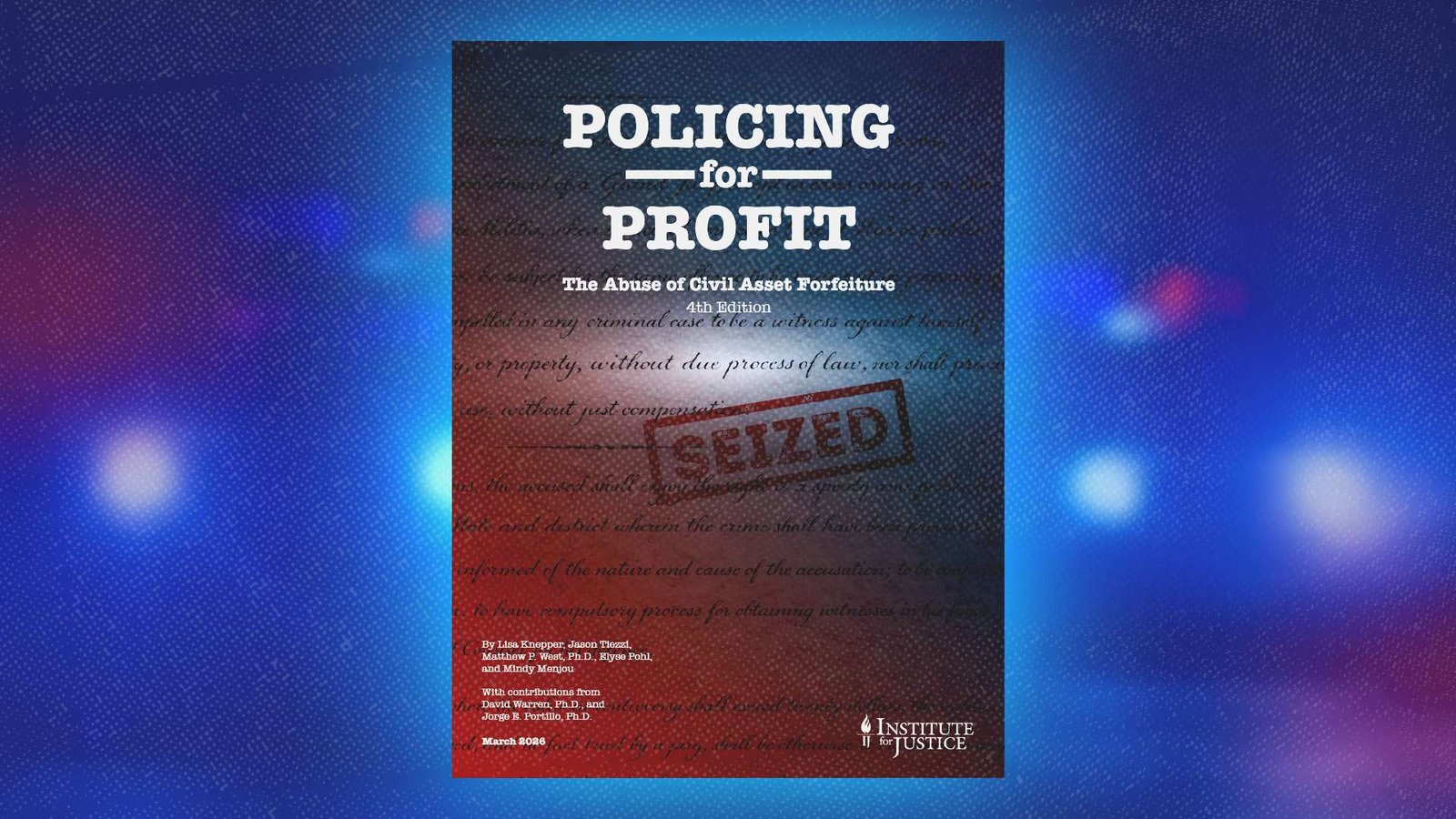
I.J. has long tracked and battled those abuses. In the fourth edition of Policing for Profit: The Abuse of Civil Asset Forfeiture, authors Lisa Knepper, Jason Tiezzi, Matthew P. West, Elyse Pohl, and Mindy Menjou document legal changes that have reformed or even abolished civil asset forfeiture in some states, and the work that remains to rein in abuses. Change has been slow because stealing under color of law is a huge moneymaker for government agencies against which people have little recourse.
“Most forfeitures never reach a courtroom, available data show. For example, in a large sample of Indiana cases, just 4% were decided by a judge. Instead, forfeiture typically happens by default,” the recent report notes.
Why is that? It’s often because in their seizures, police departments take enough money or property to be lucrative, but not at a value that would justify a legal fight.
“Very few owners who contest forfeiture have legal representation—just 6% in Arizona and 7% in Oregon—likely because it is prohibitively expensive,” according to the report. “A straightforward state-court forfeiture case costs an estimated $3,300, nearly twice the median cash forfeiture of $1,678 across 24 states.”
Since it’s a civil process and not a criminal one, people on the receiving end of civil forfeiture aren’t entitled to public defenders. Many find the cost of hiring attorneys to be much higher than the value of what is stolen from them by authorities. The money winds up in government coffers without a fight. Those who do fight end up running a gauntlet.
“Even owners who successfully reach a judge typically wait months. Adding together statutory deadlines, the median forfeiture process takes more than six months on paper just to reach a courtroom….In practice, cases frequently take far longer. In Virginia, for example, half of successful challenges lasted more than nine months, and a quarter stretched beyond 16 months.”
When police seize money and property, the system works in their favor. They just wait for owners to run out of resources and patience and then pocket the proceeds. It’s easy to see why Rebel Ridge‘s cinematic fantasy about overcoming corrupt officials and finding justice is so satisfying.
Passas and I.J. both point out that civil forfeiture has a long history, but its modern usage really dates to ’70s- and ’80s-era worries over organized crime. Yet the piddling amounts law enforcement seizes on average are obviously not proceeds from criminal kingpins.
“Most forfeitures involve modest sums of cash, not the proceeds of major criminal enterprises,” emphasizes the I.J. report. “And available data suggest many forfeitures stem from opportunistic seizures rather than deliberate investigations aimed at rooting out criminal activity.”
As Reason has frequently documented, many forfeiture targets are small business owners carrying cash for business reasons, people with money and property that tempts the authorities, and travelers whom officials figure they’ll never see again. They’re rarely cartel bosses.
The terrible incentives and opportunities for outright corruption inherent in a form of legalized theft led many states to implement reforms of various degrees of seriousness. Three states outright banned civil asset forfeiture: Maine, Montana, and New Mexico. “North Carolina has only criminal forfeiture in most cases, though prosecutors can pursue civil forfeiture in racketeering cases, where the standard of proof is preponderance of the evidence,” according to I.J.
Fifteen states now allow civil forfeiture only after a criminal conviction, though many retain loopholes that still permit abuse. Other states have raised the standard of proof in civil forfeiture proceedings from preponderance of the evidence to clear and convincing, imposing a stronger burden on authorities to make a case before nabbing other people’s money and property. “Arizona and Washington, along with Alabama and Delaware, also improved innocent owner protections,” which provide some recourse for owners whose property—cars, for example—were in the possession of others when seized.
Overall, though, most states rate a “D” grade at best on I.J.’s report card of civil forfeiture laws. Massachusetts gets an “F.”
The fundamental problem, as the I.J. report emphasizes, is that “civil forfeiture does not require the government to allege, let alone prove, a specific person committed a specific crime to deprive people of cash, cars, or other property.” Authorities grab money and property and keep it, secure in the knowledge that most people don’t have the means to resist.
The most important reform I.J. recommends is to abolish civil asset forfeiture. It should not be possible to seize property without going through the process of proving the owner’s guilt in a criminal proceeding with all appropriate due process. Failing that, the financial incentives for government agencies to seize property they’ll keep in whole or in part should be eliminated. “If retaining civil forfeiture, lawmakers should raise the standard of proof and require the government to prove an innocent owner deserves to be deprived of their property,” I.J. says.
At the end of the day, civil asset forfeiture is legalized theft. There’s no good way to put a positive spin on a practice that lets government officials rob the public.
Read the full article here
Fact Checker
Verify the accuracy of this article using AI-powered analysis and real-time sources.