Close Menu
FSNN | Free Speech News NetworkFSNN | Free Speech News Network
  • Home
  • News
    • Politics
    • Legal & Courts
    • Tech & Big Tech
    • Campus & Education
    • Media & Culture
    • Global Free Speech
  • Opinions
    • Debates
  • Video/Live
  • Community
  • Freedom Index
  • About
    • Mission
    • Contact
    • Support
Trending

France Is Banning Zyn and Threatening To Jail People for 5 Years

20 minutes ago

bitcoin on sidelines as markets surge on Iran peace hopes

37 minutes ago

HYPE Hits $65 As ETF Flows Fuel Growth: Is $100 Next?

38 minutes ago
Facebook X (Twitter) Instagram
Facebook X (Twitter) Discord Telegram
FSNN | Free Speech News NetworkFSNN | Free Speech News Network
Market Data Newsletter
Wednesday, May 27
  • Home
  • News
    • Politics
    • Legal & Courts
    • Tech & Big Tech
    • Campus & Education
    • Media & Culture
    • Global Free Speech
  • Opinions
    • Debates
  • Video/Live
  • Community
  • Freedom Index
  • About
    • Mission
    • Contact
    • Support
FSNN | Free Speech News NetworkFSNN | Free Speech News Network
Home»News»Media & Culture»My Kid Vibe Coded Their Way To Actually Learning Math
Media & Culture

My Kid Vibe Coded Their Way To Actually Learning Math

News RoomBy News Room1 hour agoNo Comments5 Mins Read1,984 Views
Share Facebook Twitter Pinterest Copy Link LinkedIn Tumblr Email VKontakte Telegram
My Kid Vibe Coded Their Way To Actually Learning Math
Share
Facebook Twitter Pinterest Email Copy Link

Listen to the article

0:00
0:00

Key Takeaways

Playback Speed

Select a Voice

from the sometimes-it-can-be-a-useful-tool dept

I’ve spoken to enough teachers and professors to know that LLM tools are absolutely a challenge for many of them in the classroom. Many struggle with making sure they’re actually teaching students how to learn, worrying that the tools are doing the work for them, and skipping over the actual learning. Many are (understandably) resorting to outright bans on students using the tools (which they often know they can’t enforce). Others say that students can use these tools but are fully responsible for any work they turn in, hoping that this will encourage students to be wary of relying too much on the tech. Still others are trying clever workarounds (I appreciate the assignment in which students are asked to have an LLM generate an essay and then the student has to review/grade the essay themselves, which is engaging and also teaches some of the limitations of the tools).

But I’ve also heard from both teachers/professors and students that there are concerns that as students go out into the job market, having some skills with these tools is often a requirement in whatever fields they pursue, leading them to wonder how to best teach the subject in a world where LLM tech isn’t likely to go away, and is seen as part of the toolbox that many employers will expect their employees to use.

I don’t necessarily have good answers to that, but I did recently have an experience in my own home that struck me as potentially relevant as an example of how the tech can actually be useful as a learning tool. I’ve been meaning to write about this for a few months now, but there always seemed to be something more urgent to cover. With the school year almost over, I figure I should get this out. For all the talk of how kids are cheating using AI, it might be worth showing at least one example where the tool is genuinely useful — in this case, one of my kids and their friends.

At the beginning of this year I had actually set up my kids with some (very sandboxed) agentic coding tools, after walking them through how I used such tools for a fairly simple project so they could see both how it worked, but also some of the limitations with the tools.

Soon after that, my 12-year-old had asked about my opinion on AI in schools. We talked through how using them to avoid doing the work is genuinely damaging to learning, but there are cases where they can be legitimately helpful. I used the calculator analogy: you first have to learn basic arithmetic by hand, but once you genuinely understand it, a calculator is a perfectly legitimate tool for tackling harder problems — it stops being a crutch and starts being a multiplier.

Apparently that analogy stuck, because what happened later was that analogy made real.

Once I had set my kids up with the tools, they did what most people do with them: created some fun games. A couple of months went by and they hadn’t used them much more. In early March, however, the 12-year-old came home and told me there was a math test that Friday and some classmates were doing an online study group. They worked through some problems together in a live voice chat, but afterward my kid stayed at the computer for a while longer before calling me over to take a look.

“I vibe coded a system to help study.”

I was… surprised. Even more interesting, the app had been packaged up (as an HTML file) and shared with the study group. My kid then explained that because AI can’t be trusted to always get things right, they’d gone through and checked the AI’s math themselves — making some (minor) corrections along the way — and that the process had given them a stronger grasp of the material than just passively studying would have.

I never got a full explanation on the “errors” that they found, though the sense I get is that it wasn’t anything major (outright incorrect math or explanations or anything) but more minor mistakes that they used the tools to fix directly within the app.
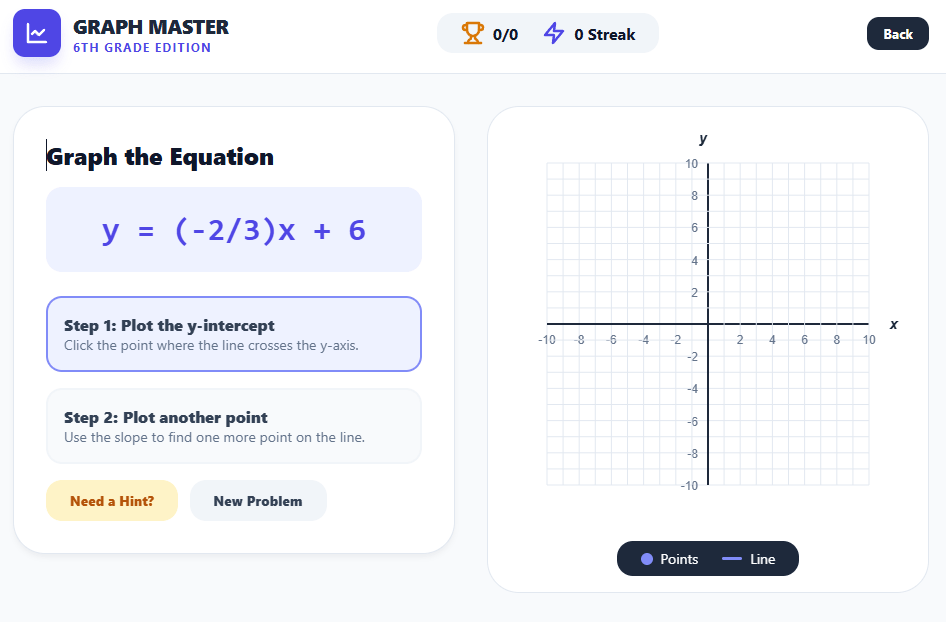
After acing the test that week, the next obvious thing to do over the weekend was plan out a study tool for the rest of the semester:
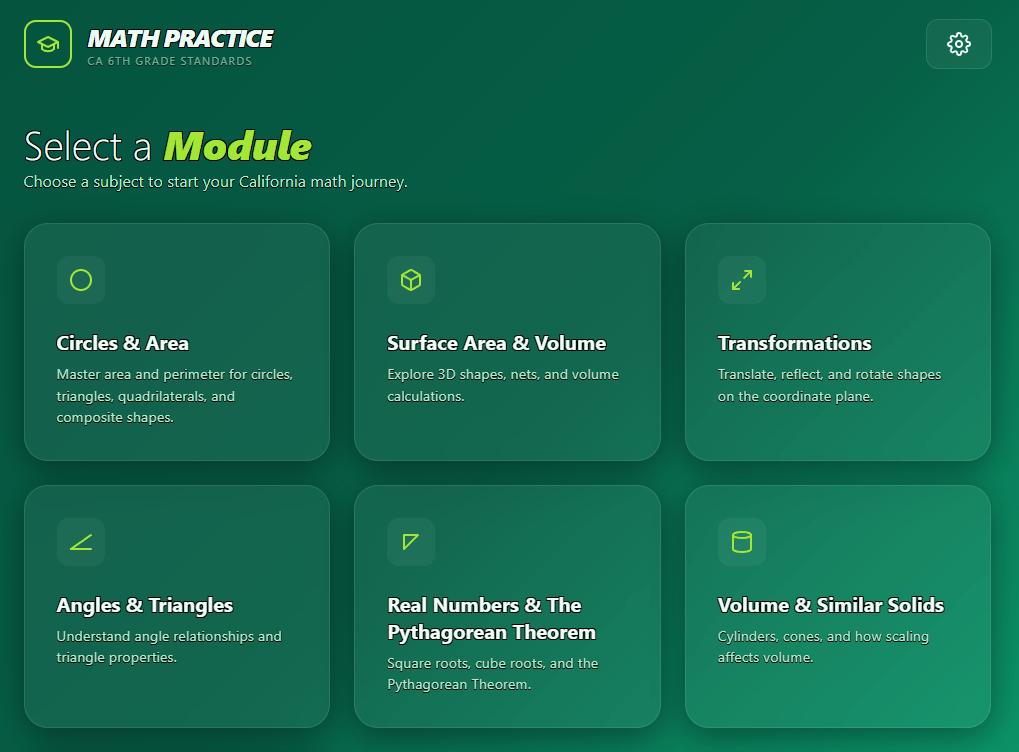
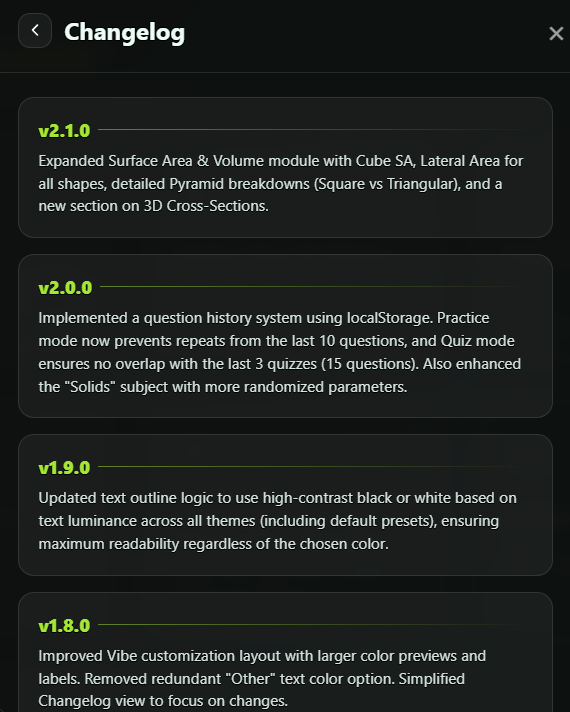
Among other things, this version of the app includes an onscreen pop-up calculator — but only for the topics where a calculator is allowed on exams. I have no idea if this was a more literal implementation of the calculator analogy we’d discussed earlier! It also (for fun) lets you adjust the color scheme.
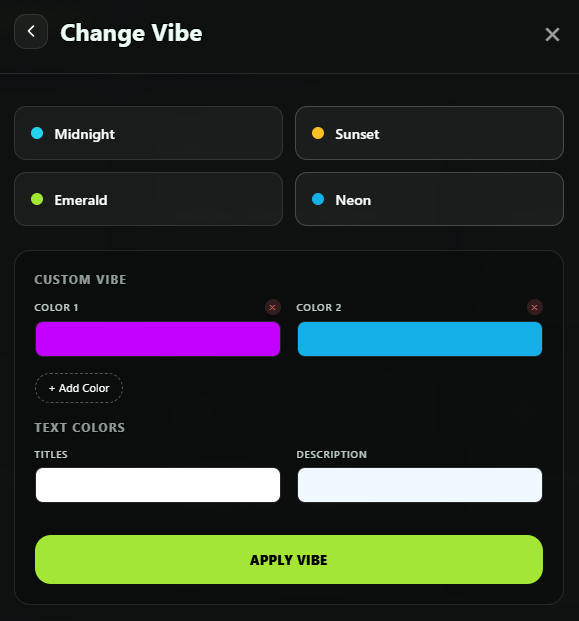
And it has a changelog as updates were made to the app.
There are plenty of reasonable concerns about kids using AI to cheat, and those concerns aren’t wrong. It’s a real issue. But the framing of “AI as cheating tool” has crowded out a more interesting question: what does it actually look like when a kid uses these tools well?

The calculator analogy holds: the LLM tool generated a first draft — a study tool, a set of practice problems, a scaffolded explanation of the material. My kid then had to engage critically with that output: checking the math, finding the gaps, making corrections. That process of verification was part of the studying. The tool actually created the conditions for more active, more engaged learning than just reviewing problems in a book. And it certainly didn’t substitute in for the learning, like most people worry about with these tools in classroom settings. Quite the opposite.

That’s a meaningfully different frame than “AI does your homework.” The homework here was, in part, checking the tool’s work — and it turns out that’s not a bad way to learn math.

Filed Under: ai, ai in schools, cheating, llms, math

Read the full article here

Fact Checker

Verify the accuracy of this article using AI-powered analysis and real-time sources.

Get Your Fact Check Report

Enter your email to receive detailed fact-checking analysis

5 free reports remaining

Continue with Full Access

You've used your 5 free reports. Sign up for unlimited access!

Already have an account? Sign in here

#DigitalMedia #DigitalTransformation #InformationAge #MediaTech #OpenInternet #PlatformEconomy
Share. Facebook Twitter Pinterest LinkedIn Tumblr Email Telegram Copy Link
News Room
  • Website
  • Facebook
  • X (Twitter)
  • Instagram
  • LinkedIn

The FSNN News Room is the voice of our in-house journalists, editors, and researchers. We deliver timely, unbiased reporting at the crossroads of finance, cryptocurrency, and global politics, providing clear, fact-driven analysis free from agendas.

Related Articles

Media & Culture

France Is Banning Zyn and Threatening To Jail People for 5 Years

20 minutes ago
Cryptocurrency & Free Speech Finance

This Half-Gigabyte AI Model Runs Local Agents on Your Phone

42 minutes ago
Media & Culture

Does Anyone Know What’s Happening in Iran?

1 hour ago
Cryptocurrency & Free Speech Finance

Some Non-Enhanced Athletes Beat Their Juiced Rivals at the ‘Steroid Olympics’

2 hours ago
AI & Censorship

More License Plate Reader Mission Creep: School Residency Verification, Background Checks, and Noise Complaints

2 hours ago
Media & Culture

A Reprieve for Build-To-Rent

2 hours ago
Add A Comment
Leave A Reply Cancel Reply

Editors Picks

bitcoin on sidelines as markets surge on Iran peace hopes

37 minutes ago

HYPE Hits $65 As ETF Flows Fuel Growth: Is $100 Next?

38 minutes ago

This Half-Gigabyte AI Model Runs Local Agents on Your Phone

42 minutes ago

My Kid Vibe Coded Their Way To Actually Learning Math

1 hour ago
Latest Posts

Does Anyone Know What’s Happening in Iran?

1 hour ago

Trump praises prediction markets, defends CFTC as court cases compound

2 hours ago

Bitcoin Mining Stocks Rally as AI Infrastructure Boom Accelerates

2 hours ago

Subscribe to News

Get the latest news and updates directly to your inbox.

At FSNN – Free Speech News Network, we deliver unfiltered reporting and in-depth analysis on the stories that matter most. From breaking headlines to global perspectives, our mission is to keep you informed, empowered, and connected.

FSNN.net is owned and operated by GlobalBoost Media
, an independent media organization dedicated to advancing transparency, free expression, and factual journalism across the digital landscape.

Facebook X (Twitter) Discord Telegram
Latest News

France Is Banning Zyn and Threatening To Jail People for 5 Years

20 minutes ago

bitcoin on sidelines as markets surge on Iran peace hopes

37 minutes ago

HYPE Hits $65 As ETF Flows Fuel Growth: Is $100 Next?

38 minutes ago

Subscribe to Updates

Get the latest news and updates directly to your inbox.

© 2026 GlobalBoost Media. All Rights Reserved.
  • Privacy Policy
  • Terms of Service
  • Our Authors
  • Contact

Type above and press Enter to search. Press Esc to cancel.

🍪

Cookies

We and our selected partners wish to use cookies to collect information about you for functional purposes and statistical marketing. You may not give us your consent for certain purposes by selecting an option and you can withdraw your consent at any time via the cookie icon.

Cookie Preferences

Manage Cookies

Cookies are small text that can be used by websites to make the user experience more efficient. The law states that we may store cookies on your device if they are strictly necessary for the operation of this site. For all other types of cookies, we need your permission. This site uses various types of cookies. Some cookies are placed by third party services that appear on our pages.

Your permission applies to the following domains:

  • https://fsnn.net
Necessary
Necessary cookies help make a website usable by enabling basic functions like page navigation and access to secure areas of the website. The website cannot function properly without these cookies.
Statistic
Statistic cookies help website owners to understand how visitors interact with websites by collecting and reporting information anonymously.
Preferences
Preference cookies enable a website to remember information that changes the way the website behaves or looks, like your preferred language or the region that you are in.
Marketing
Marketing cookies are used to track visitors across websites. The intention is to display ads that are relevant and engaging for the individual user and thereby more valuable for publishers and third party advertisers.