Close Menu
FSNN | Free Speech News NetworkFSNN | Free Speech News Network
  • Home
  • News
    • Politics
    • Legal & Courts
    • Tech & Big Tech
    • Campus & Education
    • Media & Culture
    • Global Free Speech
  • Opinions
    • Debates
  • Video/Live
  • Community
  • Freedom Index
  • About
    • Mission
    • Contact
    • Support
Trending

Bitcoin Dives Below $75K for First Time in a Month as Crypto Liquidations Near $1 Billion

19 minutes ago

The Art of the Deal

58 minutes ago

Argentina Launched an AI to Predict the Future. It Couldn’t Predict a Typo

1 hour ago
Facebook X (Twitter) Instagram
Facebook X (Twitter) Discord Telegram
FSNN | Free Speech News NetworkFSNN | Free Speech News Network
Market Data Newsletter
Saturday, May 23
  • Home
  • News
    • Politics
    • Legal & Courts
    • Tech & Big Tech
    • Campus & Education
    • Media & Culture
    • Global Free Speech
  • Opinions
    • Debates
  • Video/Live
  • Community
  • Freedom Index
  • About
    • Mission
    • Contact
    • Support
FSNN | Free Speech News NetworkFSNN | Free Speech News Network
Home»Cryptocurrency & Free Speech Finance»Argentina Launched an AI to Predict the Future. It Couldn’t Predict a Typo
Cryptocurrency & Free Speech Finance

Argentina Launched an AI to Predict the Future. It Couldn’t Predict a Typo

News RoomBy News Room1 hour agoNo Comments5 Mins Read1,658 Views
Share Facebook Twitter Pinterest Copy Link LinkedIn Tumblr Email VKontakte Telegram
Argentina Launched an AI to Predict the Future. It Couldn’t Predict a Typo
Share
Facebook Twitter Pinterest Email Copy Link

Listen to the article

0:00
0:00

Key Takeaways

Playback Speed

Select a Voice

In brief

  • Argentina’s Ministry of Human Capital launched the “Digital Twin” initiative designed to simulate the impact of social policies before they’re implemented.
  • The promotional video triggered instant mockery for grammatical errors, an AI-generated avatar of Minister Sandra Pettovello, a Singaporean flag, and a visible Amazon AWS logo.
  • Opposition politicians filed formal information requests, and privacy experts warned the system lacks a governance framework and could enable algorithmic surveillance at scale.

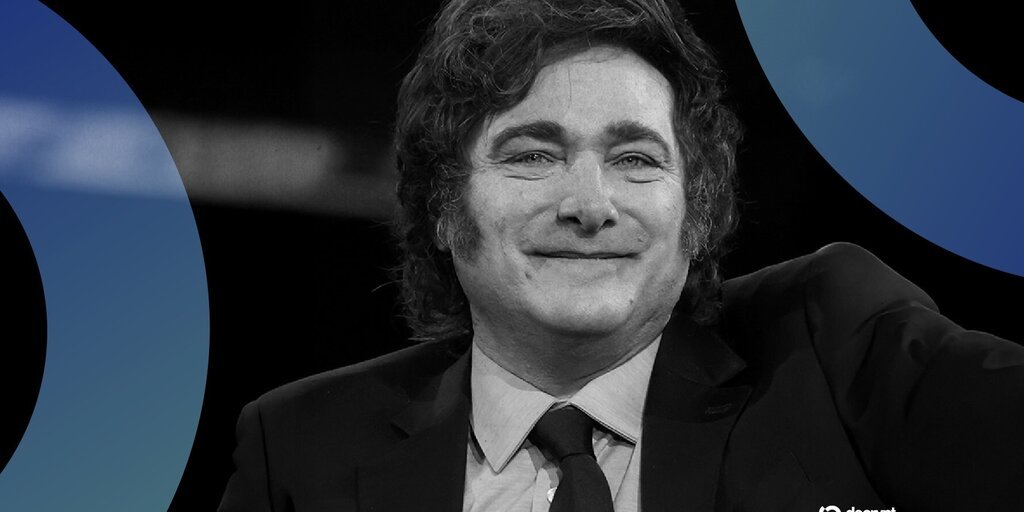
Argentina’s Ministry of Human Capital has a bold claim: It can predict the future of social policy using artificial intelligence. President Javier Milei announced the “Gemelo Digital Social” initiative (which roughly translates to “Social Digital Twin”) on Friday via X, calling it “a paradigm change in social policy.”

He closed the announcement with “MAGA. VLLC!”—a nod to Trump’s slogan alongside his own—lest anyone miss the political branding.

ARGENTINA SE ADELANTA AL FUTURO, PORQUE EL FUTURO NO ESPERA
Por primera vez, nuestro país lidera el futuro social.
El Ministerio de Capital Humano presenta el Gemelo Digital: un cambio de paradigma en la política social con el uso de Inteligencia Artificial.
MAGA.
VLLC! pic.twitter.com/4DY1Wexziq

— Javier Milei (@JMilei) May 22, 2026

The system, a “social digital twin,” is designed as a virtual, dynamic replica of Argentine society. It ingests data from multiple government and private sources, then uses AI to simulate scenarios, anticipate impacts, and optimize policy decisions in real time.

The stated goal: move Argentina from a “reactive state”—one that responds to social problems after the fact—to a “predictive state” that can model poverty, track the effects of subsidies, and map human capital development from childhood to adulthood.

Digital twins are established technology. They’ve been used in engineering, urban planning, and infrastructure for years—simulating how a bridge holds under load, or how traffic flows before a road is built. Argentina’s government claims this would be the first time the concept is applied to social policy at a national scale.

The system would aggregate data, identify patterns, project scenarios, and convert social experience into what the ministry calls “public intelligence.” In practice: a centralized database drawing from government agencies and the private sector—health, income, education, consumption—fed through an AI model that tells policymakers what’s coming. Think of it as a weather forecast for poverty.

It’s not an unprecedented idea in government. Decrypt reported in April 2025 that the U.K. Ministry of Justice was secretly building an AI system to predict who might commit murder, scraping mental health records, addiction history, and self-harm reports from over 100,000 people. That program drew immediate comparisons to the Phillip K. Dick novelette and film “Minority Report” and triggered a civil liberties firestorm.

Argentina’s stated purpose is softer—social optimization rather than crime prediction—but the underlying architecture is similar: aggregate enough personal data and let an algorithm tell you what happens next.

The internet reacts

The vision was futuristic. The execution was not.

The promotional video released to announce the Gemelo Digital was riddled with errors that sparked instant mockery. At the 0:35 mark, a graphic listed “MULTIPLES FUENTES”—missing the mandatory accent on the esdrújula múltiples. The bigger blunder appeared at 0:54: a full-screen declaration that the system was the “PRIMER SISTEMA QUE AYUDA PREDICIR EL FUTURO”—dropping the preposition “a” before the verb (which makes the whole thing sound weird in Spanish) and misspelling “predecir” as “predicir.”

The digital twin system that promises to predict the future could not predict a typo.

“No predijo los errores de ortografía,” quipped user @pablomen0 on X—”It didn’t predict the spelling errors.”

Developer and tech commentator Maximiliano Firtman catalogued the full embarrassment: “Grammar and spelling errors, a fake minister presenting with holograms, Singaporean flags, Amazon AWS logo, a terrible speech. Incredible.”

It fits a pattern. Just weeks ago, an official photo of Milei at his desk in the Casa Rosada (the presidential palace) went viral because through the window behind him, the Casa Rosada appeared again. An AI-generated image of a president, inside the palace, looking out at the same palace. The presidency’s digital communications team has a recurring problem with unsupervised AI output.

The political backlash arrived fast. Opposition senator Agustín Rossi filed a formal information request demanding transparency on the program’s legal framework, data protections, and citizen rights guarantees. “The future cannot become surveillance over citizens,” Rossi wrote on X. Milei’s government—which has faced repeated scrutiny over its relationships with tech operators since the Libra meme coin scandal—has not addressed the governance question publicly.

Privacy experts went further. Mass aggregation of real data on Argentine citizens legally requires strict anonymization protocols. No such framework has been announced.

Analyst Julián Roô framed the concern at a structural level: “Argentina will be the laboratory rat for analyzing how a society works when algorithms classify citizens by risk, productivity, or behavior. From today, Argentina moves from social policies based mainly on human decisions to automated predictive systems fed by AI and big data.”

Political analyst Pablo Munoz Iturrieta wrote: “It sounds futuristic and efficient. The thing is, this sounds like the wet dream of any authoritarian technocrat.”

Me da la impresión que con medidas como estas Argentina se está convirtiendo en un experimento del globalismo tecnócrata.

Ante casos como estos es que tenemos que cuestionarnos si a esto se refería @AgustinLaje en su gran obra Batalla Cultural cuando se refiere a nuestros… https://t.co/yJ3gj7eraa

— Pablo Munoz Iturrieta (@PMunozIturrieta) May 22, 2026

Senator Rossi’s formal information request remains pending. The Ministry of Human Capital has not elaborated on either the video errors or the data governance framework the system would operate under.

Daily Debrief Newsletter

Start every day with the top news stories right now, plus original features, a podcast, videos and more.



Read the full article here

Fact Checker

Verify the accuracy of this article using AI-powered analysis and real-time sources.

Get Your Fact Check Report

Enter your email to receive detailed fact-checking analysis

5 free reports remaining

Continue with Full Access

You've used your 5 free reports. Sign up for unlimited access!

Already have an account? Sign in here

Share. Facebook Twitter Pinterest LinkedIn Tumblr Email Telegram Copy Link
News Room
  • Website
  • Facebook
  • X (Twitter)
  • Instagram
  • LinkedIn

The FSNN News Room is the voice of our in-house journalists, editors, and researchers. We deliver timely, unbiased reporting at the crossroads of finance, cryptocurrency, and global politics, providing clear, fact-driven analysis free from agendas.

Related Articles

Cryptocurrency & Free Speech Finance

Bitcoin Dives Below $75K for First Time in a Month as Crypto Liquidations Near $1 Billion

19 minutes ago
Media & Culture

The Art of the Deal

58 minutes ago
Cryptocurrency & Free Speech Finance

Crypto trader sees Hyperliquid, AI tokens leading next altcoin rally

2 hours ago
Cryptocurrency & Free Speech Finance

Binance Denies WSJ Report Alleging $850M in Iran-Linked Crypto Transactions

2 hours ago
Cryptocurrency & Free Speech Finance

Clarity Act could usher in a new era of crypto ‘yield-as-a-service’

3 hours ago
Cryptocurrency & Free Speech Finance

3 Wacky Hermes Skills You Should Try

3 hours ago
Add A Comment
Leave A Reply Cancel Reply

Editors Picks

The Art of the Deal

58 minutes ago

Argentina Launched an AI to Predict the Future. It Couldn’t Predict a Typo

1 hour ago

Crypto trader sees Hyperliquid, AI tokens leading next altcoin rally

2 hours ago

Binance Denies WSJ Report Alleging $850M in Iran-Linked Crypto Transactions

2 hours ago
Latest Posts

Clarity Act could usher in a new era of crypto ‘yield-as-a-service’

3 hours ago

3 Wacky Hermes Skills You Should Try

3 hours ago

Today in Supreme Court History: May 23, 1991

5 hours ago

Subscribe to News

Get the latest news and updates directly to your inbox.

At FSNN – Free Speech News Network, we deliver unfiltered reporting and in-depth analysis on the stories that matter most. From breaking headlines to global perspectives, our mission is to keep you informed, empowered, and connected.

FSNN.net is owned and operated by GlobalBoost Media
, an independent media organization dedicated to advancing transparency, free expression, and factual journalism across the digital landscape.

Facebook X (Twitter) Discord Telegram
Latest News

Bitcoin Dives Below $75K for First Time in a Month as Crypto Liquidations Near $1 Billion

19 minutes ago

The Art of the Deal

58 minutes ago

Argentina Launched an AI to Predict the Future. It Couldn’t Predict a Typo

1 hour ago

Subscribe to Updates

Get the latest news and updates directly to your inbox.

© 2026 GlobalBoost Media. All Rights Reserved.
  • Privacy Policy
  • Terms of Service
  • Our Authors
  • Contact

Type above and press Enter to search. Press Esc to cancel.

🍪

Cookies

We and our selected partners wish to use cookies to collect information about you for functional purposes and statistical marketing. You may not give us your consent for certain purposes by selecting an option and you can withdraw your consent at any time via the cookie icon.

Cookie Preferences

Manage Cookies

Cookies are small text that can be used by websites to make the user experience more efficient. The law states that we may store cookies on your device if they are strictly necessary for the operation of this site. For all other types of cookies, we need your permission. This site uses various types of cookies. Some cookies are placed by third party services that appear on our pages.

Your permission applies to the following domains:

  • https://fsnn.net
Necessary
Necessary cookies help make a website usable by enabling basic functions like page navigation and access to secure areas of the website. The website cannot function properly without these cookies.
Statistic
Statistic cookies help website owners to understand how visitors interact with websites by collecting and reporting information anonymously.
Preferences
Preference cookies enable a website to remember information that changes the way the website behaves or looks, like your preferred language or the region that you are in.
Marketing
Marketing cookies are used to track visitors across websites. The intention is to display ads that are relevant and engaging for the individual user and thereby more valuable for publishers and third party advertisers.