

 Freedom Index
Listen to the article
There are several weird aspects to the “Anti-Weaponization Fund” established by President Donald Trump’s settlement of his lawsuit against the IRS. Perhaps most puzzling of all, the amount of taxpayer money allocated to the compensation fund, $1.776 billion, is plainly arbitrary, which is consistent with the mysterious math that Trump has deployed in his long history of frivolous litigation.
The lawsuit that provided the pretext for this arrangement, which was provoked by an IRS contractor’s illegal leaking of Trump’s tax returns, pitted the president against two agencies he oversees: the IRS and the Treasury Department. Those defendants were represented by a Justice Department that Trump has not hesitated to use in pursuit of his personal vendettas. That strange situation prompted a federal judge to question whether the case featured a genuine controversy between adverse parties, as would have been required for the lawsuit to proceed.
Trump avoided that glaring problem by dropping his lawsuit in exchange for an IRS apology, immunity from IRS audits, and the $1.776 billion fund, which is supposed to compensate people who have “incurred harm” from “lawfare” and “weaponization” of government based on “improper and unlawful political, personal, and/or ideological reasons.” It is highly unusual, if not unprecedented, for the Justice Department to settle a lawsuit by agreeing to pay unidentified “individuals, groups, and entities” whose grievances have nothing to do with the plaintiff’s specific claims.
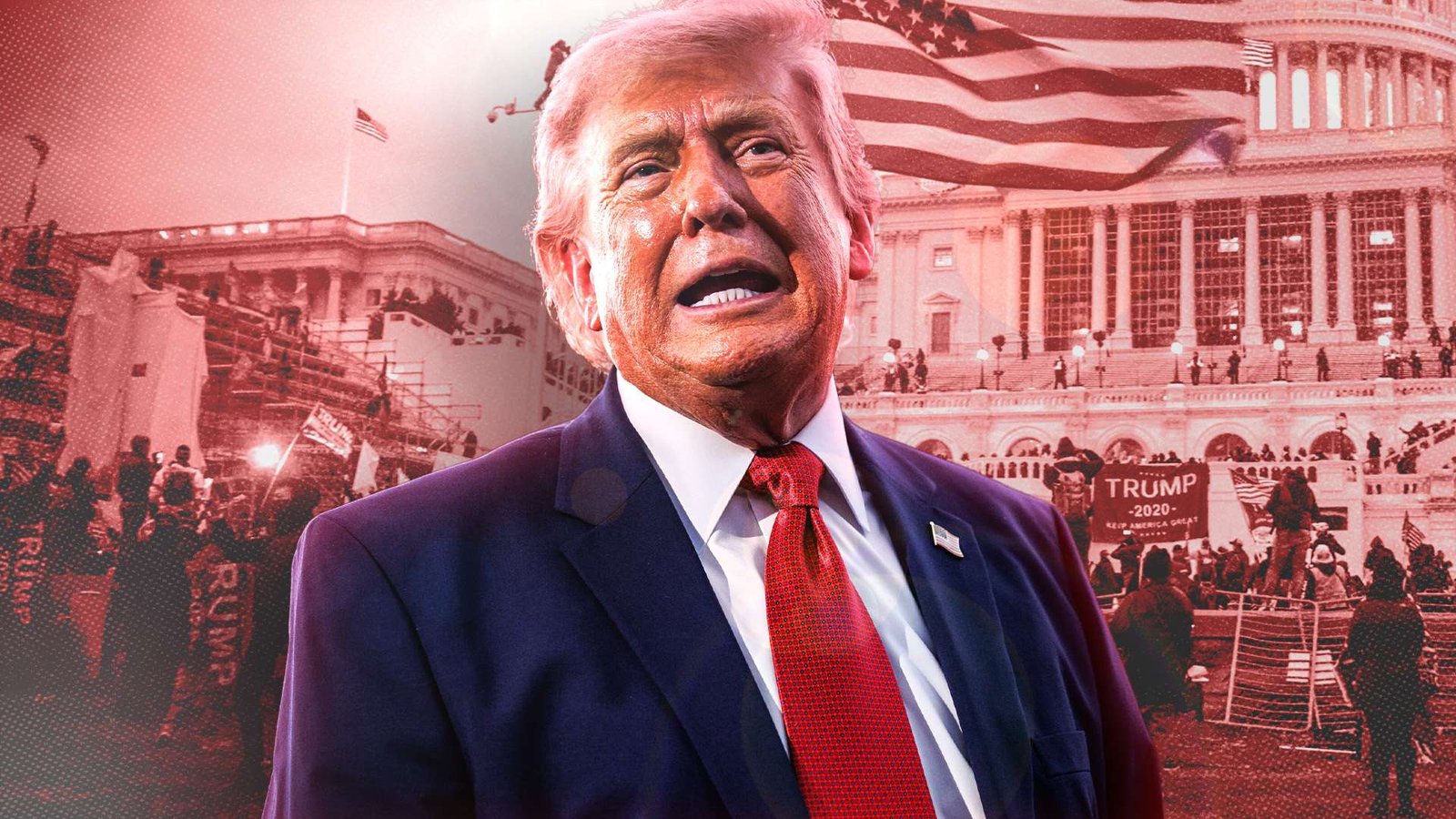
The board charged with doling out the money will be appointed by Acting Attorney General Todd Blanche, and its members will serve at the president’s pleasure. So it seems likely that the main beneficiaries will be people aligned with Trump, such as the 1,600 or so supporters who were prosecuted (and later pardoned by Trump) for assaulting the U.S. Capitol on January 6, 2021, whom the president has often described as victims of government persecution.
When all is said and done, the DOJ figures, $1.776 billion should cover it. But while the reference to the nation’s founding year is surely patriotic, it has nothing to do with any estimate of the sum that will be required to pay claims from purported victims of “lawfare and weaponization” between now and January 1, 2029, when the fund is scheduled to stop operating. In other words, the dollar figure is totally disconnected from reality. In that respect, it resembles the numbers that Trump routinely deploys in lawsuits seeking compensation for the injuries allegedly inflicted by his enemies.
The complaint in Trump v. Internal Revenue Service, which was filed on January 29 in the U.S. District Court for the Southern District of Florida, says Trump, two of his sons, and the Trump Organization “incurred substantial financial and other damages” as a result of news reports based on the leaked tax information. How substantial? The damages, according to the lawsuit, total at least $10 billion, about 50 percent more than Trump’s estimated net worth.
Trump likes that number. For reasons that are hard to fathom, his calculation of damages in several cases involving widely varying allegations arrives at exactly the same result.
In his July 18 defamation lawsuit against The Wall Street Journal, which a federal judge dismissed last month without prejudice because it failed to allege “actual malice,” Trump claimed the newspaper’s reporting on his alleged birthday letter to Jeffrey Epstein caused “overwhelming financial and reputational damages” that were “expected to be in the billions of dollars.” The complaint averred that the combination of compensatory and punitive damages should be “not less than $10 billion.” Trump did not even try to explain how he arrived at that preposterous figure.
Last December, Trump sued the BBC for editing the speech he gave before the Capitol riot in a way that suggested he had urged his supporters to literally “fight like hell.” Unlike most of Trump’s lawsuits against news outlets, this one at least cites a genuine example of journalistic malpractice. Trump argues that the BBC defamed him and violated Florida’s Deceptive and Unfair Trade Practices Act. Each of those counts, he figures, is worth at least $5 billion, which conveniently adds up to a familiar total.
In October 2024, Trump sued CBS in the U.S. District Court for the Northern District of Texas because he did not like the way 60 Minutes had edited a pre-election interview with Kamala Harris. By making Harris seem slightly more cogent, he claimed, CBS had violated the Texas Deceptive Trade Practices Act. According to his original complaint, the network’s “false, misleading, and deceptive conduct” had inflicted damages “reasonably believed to be at least $10,000,000,000” in Texas alone. A footnote claimed that “CBS’s distortion of the 60 Minutes Interview damaged President Trump’s fundraising and support values by several billions of dollars, particularly in Texas”—a completely unsupported assertion that, even if taken at face value, would not come close to justifying Trump’s estimate of damages within Texas.
In case that was not absurd enough, an amended complaint that Trump filed on February 7, 2025, a few weeks after he started his second term, doubled his estimate of the damages inflicted by CBS. The revised complaint added a claim under a provision of the federal Lanham Act that applies when someone “misrepresents the nature, characteristics, qualities, or geographic origin of his or her or another person’s goods, services, or commercial activities.” By violating that provision, Trump asserted, CBS had cost him an amount “reasonably believed to be no less than $10,000,000,000″—a pretty striking coincidence.
In the end, Paramount, apparently keen to appease the president while its merger with Skydance Media was pending, settled that ridiculous lawsuit for $16 million. That was 99.9 percent less than the amount Trump had claimed was minimally adequate.
Trump used similarly inscrutable math in his September 15 defamation lawsuit against The New York Times, which complained that the newspaper’s reporting had deflated his self-image as an astute businessman. That 85-page complaint was so full of bragging and invective that a federal judge struck it four days after it was filed, saying it was “decidedly improper and impermissible.” Trump’s lawyers tried again on October 16, filing an amended complaint that was less than half as long. But they did not change their estimate of the damage that the Times supposedly had caused, which they said was “not less than $15,000,000,000.”
Trump did not specify compensatory damages when he sued CNN in October 2022, arguing that the news outlet had defamed him by calling his claim that former President Joe Biden stole the 2020 presidential election “the Big Lie.” But he asserted that CNN should have to pay “punitive damages in the amount of $475,000,000.” In the end, Trump got $0, because a federal judge dismissed his lawsuit in July 2023, noting that he had failed to allege any false statements of fact.
CNN’s sins evidently were less serious than the tort that Chicago Tribune architecture critic Paul Gapp supposedly committed by slamming one of Trump’s real estate projects. Gapp had called a Manhattan skyscraper proposed by Trump “aesthetically lousy” and “one of the silliest things anyone could inflict on New York or any other city.” When Trump sued Gapp for defamation in 1984, he demanded $500 million in compensation for those insults. Adjusted for inflation, that amounts to about $1.6 billion today.
Trump was even more upset when financial journalist Tim O’Brien dared to suggest that he was not worth as much as he claimed. In a 2006 defamation lawsuit, Trump said that offense, which was similar to the one that the Times would later commit, justified $5 billion in damages, about $8.4 billion in current dollars. Like the lawsuit against Gapp, that claim was laughed out of court.
Trump was more circumspect when he sued The Des Moines Register and pollster J. Ann Selzer in December 2024. By conducting and publishing a pre-election poll that erroneously gave Harris a lead in Iowa, he claimed, the defendants had violated the state’s Consumer Fraud Act. As a result, the complaint claimed, Trump “sustained actual damages due to the need to expend extensive time and resources, including direct federal campaign expenditures, to mitigate and counteract the harms.” Uncharacteristically, the lawsuit did not offer an estimate of those purported expenses. But based on Trump’s prior experience with such matters, I would guess the damages amount to at least $10 billion.
Read the full article here
Fact Checker
Verify the accuracy of this article using AI-powered analysis and real-time sources.