Close Menu
FSNN | Free Speech News NetworkFSNN | Free Speech News Network
  • Home
  • News
    • Politics
    • Legal & Courts
    • Tech & Big Tech
    • Campus & Education
    • Media & Culture
    • Global Free Speech
  • Opinions
    • Debates
  • Video/Live
  • Community
  • Freedom Index
  • About
    • Mission
    • Contact
    • Support
Trending

Ethereum Foundation’s high-profile departures spark fresh debate

4 minutes ago

SEC’s ‘Crypto Mom’ to Join Law School, Signaling End of Time at Regulator

6 minutes ago

Crypto Backing or Trump Pump? Fairshake PAC Claims Primary Victories

7 minutes ago
Facebook X (Twitter) Instagram
Facebook X (Twitter) Discord Telegram
FSNN | Free Speech News NetworkFSNN | Free Speech News Network
Market Data Newsletter
Wednesday, May 20
  • Home
  • News
    • Politics
    • Legal & Courts
    • Tech & Big Tech
    • Campus & Education
    • Media & Culture
    • Global Free Speech
  • Opinions
    • Debates
  • Video/Live
  • Community
  • Freedom Index
  • About
    • Mission
    • Contact
    • Support
FSNN | Free Speech News NetworkFSNN | Free Speech News Network
Home»News»Media & Culture»House Transportation Bill Eliminates Obscure Rule That Effectively Bans Driverless Trucks
Media & Culture

House Transportation Bill Eliminates Obscure Rule That Effectively Bans Driverless Trucks

News RoomBy News Room2 hours agoNo Comments3 Mins Read357 Views
Share Facebook Twitter Pinterest Copy Link LinkedIn Tumblr Email VKontakte Telegram
House Transportation Bill Eliminates Obscure Rule That Effectively Bans Driverless Trucks
Share
Facebook Twitter Pinterest Email Copy Link

Listen to the article

0:00
0:00

Key Takeaways

Playback Speed

Select a Voice

The bipartisan surface transportation reauthorization bill released earlier this week by the House Transportation and Infrastructure Committee would reform an obscure safety rule that has served as a de facto ban on driverless commercial trucks. 

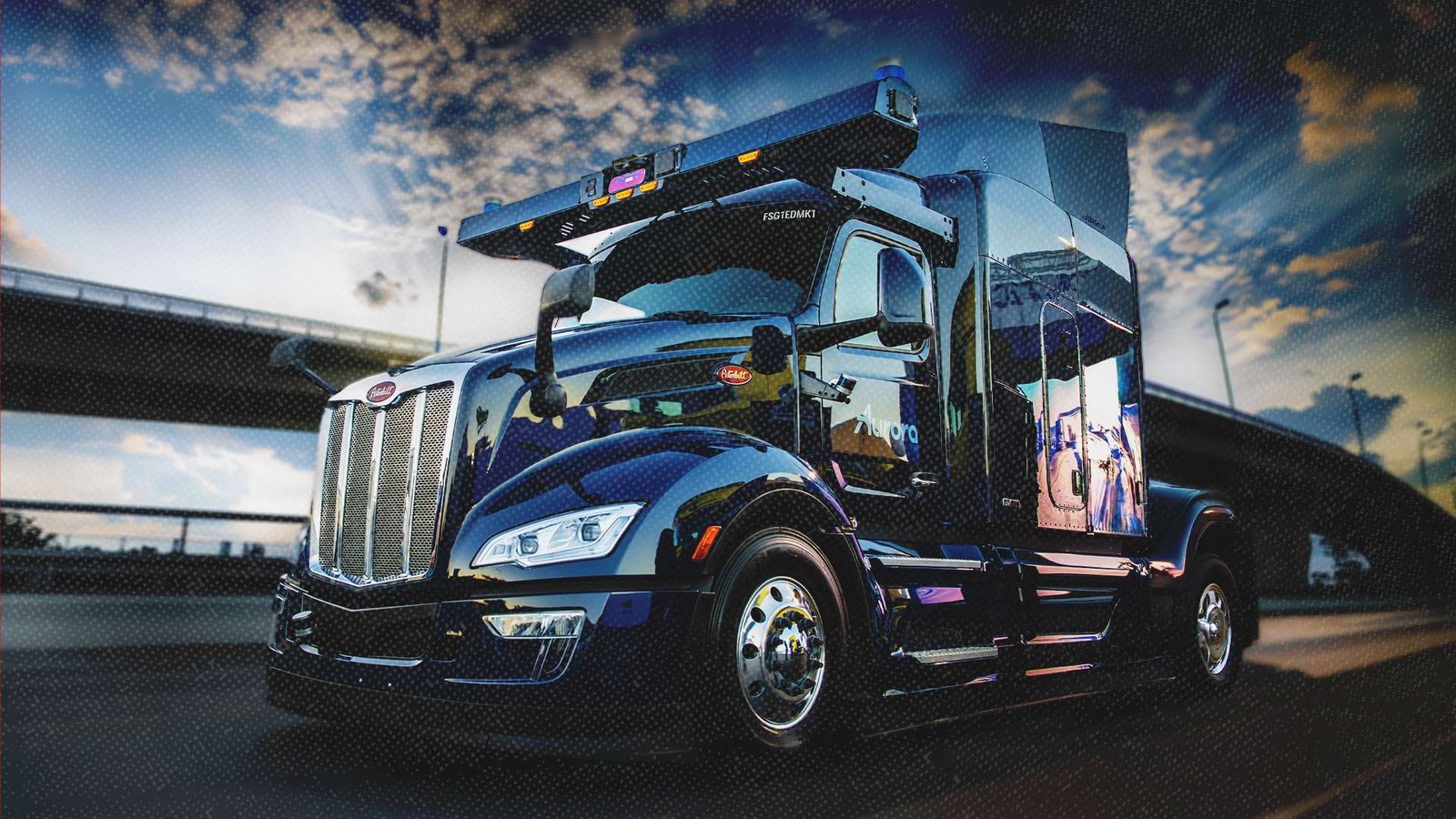
The BUILD America 250 Act would allow driverless truck operators to use cab-mounted beacons to warn drivers of a disabled truck on the road. Current federal regulations require that roadside warning placards be placed around disabled trucks. 

That requirement has been a serious source of grief for autonomous trucking companies, as it effectively requires a human operator to be on board to place those warning placards. 

For that reason, they’ve been agitating for a rule change that would allow cab-mounted warning beacons that wouldn’t require a human to place them. 

In 2023, the autonomous trucking company Aurora and Waymo’s now-shuttered driverless trucking division requested a waiver from the regulation from the Federal Motor Carrier Safety Administration (FMCSA). 

The Biden administration ultimately rejected that waiver request.

The companies then challenged that denial in court. Last October, they reached a settlement with the Trump administration that granted Aurora a limited waiver allowing them to use cab-mounted warning beacons, provided they collect data on the safety efficacy of this alternative. 

This was still only a partial win for the industry. 

The terms of the waiver require it to be reapproved every three months. It also only applied to Aurora. Other companies seeking regulatory relief must apply for their own specific waiver. Under a new administration, FMCSA could also revoke the waiver. 

To give the industry greater regulatory certainty, Section 5405 of the BUILD America 250 Act declares that “cab-mounted warning beacons shall be considered permissible warning devices for a commercial motor vehicle stopped upon the traveled portion or the shoulder of a highway” and that they can be used in lieu of roadside placards. 

Section 5405 would also forbid the FMCSA from issuing rules in the future that disallow cab-mounted warning beacons. 

The safety case for requiring roadside warning placards has always been weak. The Biden administration conceded as such when, after denying Aurora’s request for a waiver, it announced it would perform its own study on the efficacy of the warning devices. 

In support of their waiver request, Aurora and Waymo submitted their own safety studies showing drivers reacted similarly to cab-mounted warning beacons and roadside placards. In theory, the cab-mounted beacons could improve safety by relieving a driver from having to walk out onto the road to place physical warning placards. 

Beyond the warning device rule, the BUILD America 250 Act would also create a whole new framework for regulating autonomous trucks going forward. 

Traditional federal safety regulations establish objective “performance” standards that regulated commercial vehicles must meet.

Marc Scribner, a transportation policy analyst at the Reason Foundation (which publishes this website), says performance standards are a poor fit for emerging driverless technologies.  

“There isn’t agreement yet on what an appropriate performance standard is and how you’d test that,” he says. 

The Transportation and Infrastructure Committee’s bill would instead allow manufacturers to establish their own “safety case” showing that their technology is at least as safe as human-operated commercial vehicles. 

Scribner describes this more flexible approach as “a strong step in the right direction.”  

A Transportation and Infrastructure Committee markup of the 1,000-page bill is scheduled for tomorrow. 

Read the full article here

Fact Checker

Verify the accuracy of this article using AI-powered analysis and real-time sources.

Get Your Fact Check Report

Enter your email to receive detailed fact-checking analysis

5 free reports remaining

Continue with Full Access

You've used your 5 free reports. Sign up for unlimited access!

Already have an account? Sign in here

#FreePress #Journalism #MediaAndPolitics #PressFreedom #PublicOpinion
Share. Facebook Twitter Pinterest LinkedIn Tumblr Email Telegram Copy Link
News Room
  • Website
  • Facebook
  • X (Twitter)
  • Instagram
  • LinkedIn

The FSNN News Room is the voice of our in-house journalists, editors, and researchers. We deliver timely, unbiased reporting at the crossroads of finance, cryptocurrency, and global politics, providing clear, fact-driven analysis free from agendas.

Related Articles

Cryptocurrency & Free Speech Finance

Crypto Backing or Trump Pump? Fairshake PAC Claims Primary Victories

7 minutes ago
Media & Culture

Trump Sued Himself And Walked Away With A $100 Million Tax Debt Erased

46 minutes ago
Media & Culture

The New York Times Sues Pentagon Over ‘Retaliatory’ Escort Requirement

47 minutes ago
Cryptocurrency & Free Speech Finance

US Treasury Sanctions Sinaloa Cartel Over Crypto-Fueled Fentanyl Trafficking

1 hour ago
Cryptocurrency & Free Speech Finance

Qwen 3.7 Max Preview: What Alibaba’s New AI Gets Right and Where It Falls Short

2 hours ago
Media & Culture

Tennessee Book Ban Update: State Jumps The Shark By Banning ‘Roots’

3 hours ago
Add A Comment
Leave A Reply Cancel Reply

Editors Picks

SEC’s ‘Crypto Mom’ to Join Law School, Signaling End of Time at Regulator

6 minutes ago

Crypto Backing or Trump Pump? Fairshake PAC Claims Primary Victories

7 minutes ago

Trump Sued Himself And Walked Away With A $100 Million Tax Debt Erased

46 minutes ago

The New York Times Sues Pentagon Over ‘Retaliatory’ Escort Requirement

47 minutes ago
Latest Posts

Crypto custody firm Copper is looking to sell the company for $500 million

1 hour ago

Bitcoin Reclaims $77.5K As Altcoins Finally Show Strength

1 hour ago

US Treasury Sanctions Sinaloa Cartel Over Crypto-Fueled Fentanyl Trafficking

1 hour ago

Subscribe to News

Get the latest news and updates directly to your inbox.

At FSNN – Free Speech News Network, we deliver unfiltered reporting and in-depth analysis on the stories that matter most. From breaking headlines to global perspectives, our mission is to keep you informed, empowered, and connected.

FSNN.net is owned and operated by GlobalBoost Media
, an independent media organization dedicated to advancing transparency, free expression, and factual journalism across the digital landscape.

Facebook X (Twitter) Discord Telegram
Latest News

Ethereum Foundation’s high-profile departures spark fresh debate

4 minutes ago

SEC’s ‘Crypto Mom’ to Join Law School, Signaling End of Time at Regulator

6 minutes ago

Crypto Backing or Trump Pump? Fairshake PAC Claims Primary Victories

7 minutes ago

Subscribe to Updates

Get the latest news and updates directly to your inbox.

© 2026 GlobalBoost Media. All Rights Reserved.
  • Privacy Policy
  • Terms of Service
  • Our Authors
  • Contact

Type above and press Enter to search. Press Esc to cancel.

🍪

Cookies

We and our selected partners wish to use cookies to collect information about you for functional purposes and statistical marketing. You may not give us your consent for certain purposes by selecting an option and you can withdraw your consent at any time via the cookie icon.

Cookie Preferences

Manage Cookies

Cookies are small text that can be used by websites to make the user experience more efficient. The law states that we may store cookies on your device if they are strictly necessary for the operation of this site. For all other types of cookies, we need your permission. This site uses various types of cookies. Some cookies are placed by third party services that appear on our pages.

Your permission applies to the following domains:

  • https://fsnn.net
Necessary
Necessary cookies help make a website usable by enabling basic functions like page navigation and access to secure areas of the website. The website cannot function properly without these cookies.
Statistic
Statistic cookies help website owners to understand how visitors interact with websites by collecting and reporting information anonymously.
Preferences
Preference cookies enable a website to remember information that changes the way the website behaves or looks, like your preferred language or the region that you are in.
Marketing
Marketing cookies are used to track visitors across websites. The intention is to display ads that are relevant and engaging for the individual user and thereby more valuable for publishers and third party advertisers.