

 Freedom Index
Listen to the article
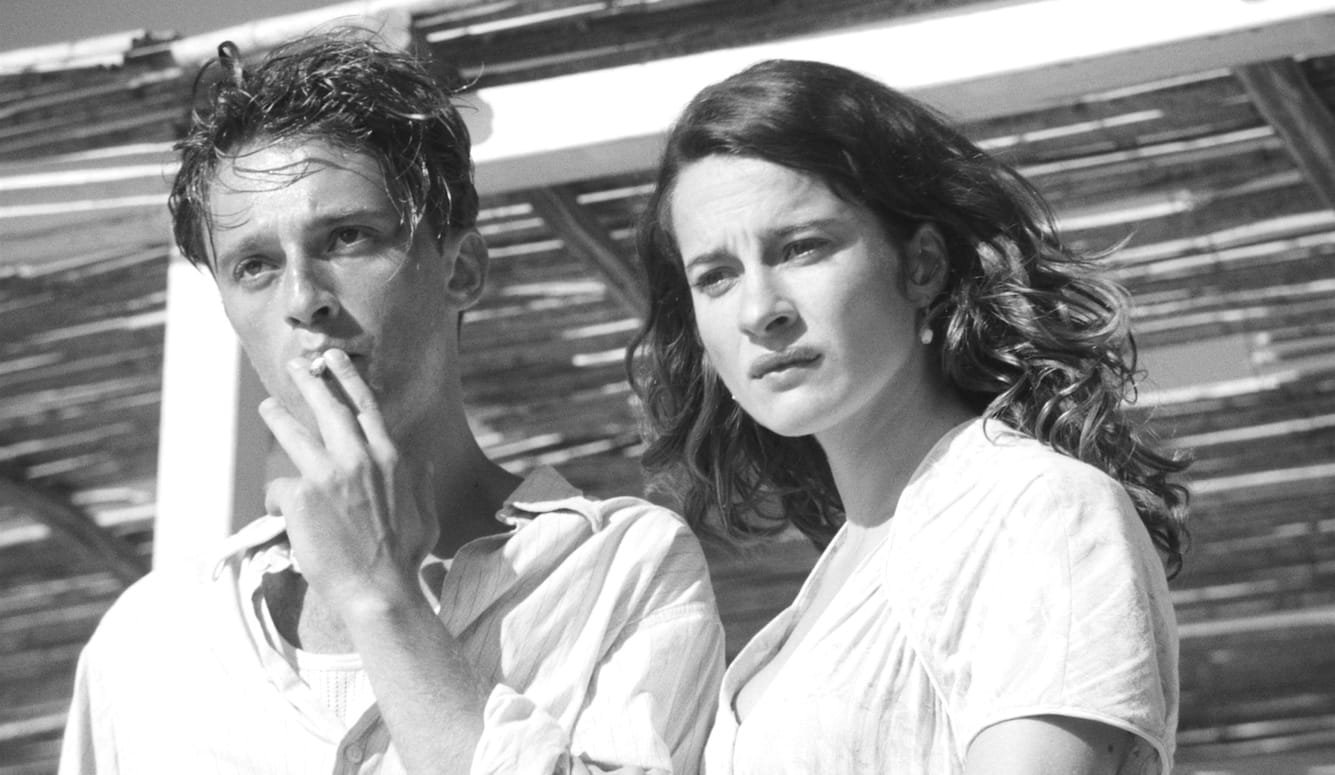
The Lumière awards in Paris are French cinema’s equivalent of the Golden Globes—not as coveted as the César awards, but still fairly prestigious, in the way that a silver medal at the Olympics might be. On 18 January 2026, the Lumière for Best French Film of 2025 went to L’Étranger, François Ozon’s adaptation of Albert Camus’s 1942 novella. It was not even nominated for Best Film or Best Director at the Césars. (The novel is known as The Outsider to British readers and The Stranger to Americans. To avoid confusion in what follows, I will refer to Ozon’s film as L’Étranger and Camus’s novel as The Outsider.)
The film has evidently divided critical opinion. So has its source material, which was widely regarded as a classic of modern literature throughout the second half of the 20th century, but has seen its reputation slowly decline since the end of the Cold War. In the 21st century, Camus’s novella is increasingly seen as dated and irrelevant, if not openly racist. Set in colonial Algeria during the late 1930s, it tells the story of a young man known only as Meursault who murders a nameless Arab in the aftermath of a knife fight on the beach. The Arab’s sister—whose relationship with a French pimp is the proximate cause of the knife fight—is also unnamed, and progressive critics allege that this betrays the author’s colonial racism. By denying the Arabs in his story the dignity of a name, a personality, or a history, Camus reveals his own inhumanity by seeking to diminish theirs.
Ozon’s adaptation is, in most respects, scrupulously faithful to the original novel, but he has expanded its scope somewhat in ways that have upset people on all sides. Many of Camus’s admirers (including his daughter Catherine) have complained that the film is too politically correct. Ozon and his creative team, they argue, appear to have deferred to modern progressive sensibilities by introducing the theme of colonisation into a philosophical work. Progressive critics, on the other hand, have griped that Ozon does not dwell on the evils of colonialism enough or provide an adequate voice to the Arabs in this story.
These are not the only criticisms of L’Étranger but they are mostly unfair. Ozon has clearly worked hard to do justice to his source material, and he has managed to present it in the best possible light, without undue reverence for the text. The real problems with the film originate in the novel, and they have nothing to do with racism or colonialism or any related concern.
I. The Author
Sixty-six years after his death in a car accident at the age of 46, Albert Camus remains one of the most celebrated French writers of the 20th century. He was associated with the Existentialist movement, and with a loosely defined habit of thought that he referred to as “absurdism”—less a coherent philosophy than a feeling provoked by the terror of realising that the world is indifferent to our existence.
Camus was born in French Algeria on 7 November 1913. His father, an agricultural labourer, was killed early in the First World War, before his son’s first birthday. His mother was deaf and illiterate. He contracted tuberculosis at the age of seventeen when he was still a scholarship student at a lycée (academic high school) in Algiers. At university, he completed a dissertation on Christian metaphysics and neo-Platonic philosophy. He aimed to support himself as a teacher, but he yearned to become a writer, despite the discomfort he felt among literary people. Even the books he enjoyed reading made him feel ashamed of his background. Marcel Proust and André Gide, two of the most prominent prose writers of the period, lived their lives surrounded by high culture, opulence, and bourgeois comfort. When they described their own experiences, even their suffering must have seemed luxurious. What did a working-class boy from the colonies have to write about that didn’t seem impoverished, embarrassing, and trivial by comparison?
Camus secretly preferred lowbrow writers. Like many French intellectuals of the period, he loved American pulp fiction, which he read in translation. His favourite novelist was James M. Cain, who remains best-known for The Postman Always Rings Twice (1934) and Double Indemnity (1936), both of which were adapted for the screen in the 1940s. Those who seek the roots of French Existentialism in the philosophy of Kierkegaard, Schopenhauer, Nietzsche, or some other such purely intellectual source tend to forget that it originates as much from popular crime novels as from more respectable-seeming materials.
As a result of his tuberculosis, Camus was declared ineligible for both military service and the teaching profession, so he drifted into journalism instead. He joined the Communist Party, partly out of sincere opposition to fascism, but mainly because he was led to believe that this was a shrewd career move for a young intellectual. But he was not really a Marxist, and he was expelled after two years on suspicion of being a “Trotskyist agitator.” Still, he proved to be a charismatic lecturer, and he got his first taste of the stage through his involvement with the local workers’ theatre movement.
Albert Camus: Unfashionable Anti-Totalitarian
The Stranger portrays a solitary passionless man wandering through a world without pattern or purpose.
In 1938, Camus began writing Caligula, his first full-length stage play, but it wasn’t published until May 1944. Camus wanted to write a neo-classical tragedy, but he was slow to realise that his evolving ideas didn’t suit the grand style of traditional French drama. Even though he found some success later in life adapting other writers’ work for the stage, he always felt overawed by the theatre. This is why his Caligula is such an unexpectedly pompous and awkward literary experiment. It strains uncomfortably for effect, as do all four of his major original plays.
Camus made his first trip to France in the summer of 1937. Until that point, he had not really understood that he lived in a foreign country. Of course, Algeria was officially considered a part of France at the time, and Algiers was thought of as the fourth-largest French city—its population was two-thirds European. Oran, Algeria’s second-largest city, was seventy percent European, with a Muslim population of only fourteen percent. In the countryside, the European presence was minimal, but Camus had little reason to stray beyond urban areas, and could ignore the reality that Europeans made up less than a sixth of the Algerian population.
Camus was by no means blind to the Arab and Berber populations, but he only became fully conscious of them after his trip to France, which then had a relatively homogeneous population. The climate and atmosphere of the Algerian cities was also something he took for granted until his change of scenery. Up to this point, he felt no qualms about the possibility of writing prose fiction set on the European continent. Now, his experience of French life seemed inadequate. He tried to use his training in philosophy to help him make sense of his anxiety, alienation, and inferiority complex. Writing was a compulsion for him, even if he had not yet settled on a form. Was he an essayist, a dramatist, or a novelist? Or was he doomed to spend his life as a newspaper reporter? His notebooks from the period demonstrate how uncertain he was about what he had to say and how he intended to say it.
In the end, Camus hedged his bets and settled on three different forms at once—a play (Caligula), an essay (The Myth of Sisyphus), and a novel, which he finally began drafting in early 1940, before sailing to France to take up a job at a newspaper in Paris. He felt lonely outside of working hours, and spent most of his spare time writing. This enabled him to complete the first draft of The Outsider on 1 May 1940. Shortly afterwards, the German occupation of France began, and he was compelled to leave Paris. He spent three months in Clermont-Ferrand, then moved to Lyon in mid-September. Finally, in January 1941, he made it back to Oran, where he resumed work on Caligula, The Myth of Sisyphus, and The Outsider in chaotic circumstances. A few months later, he began sending out manuscripts. On 8 December, he received the publisher’s official letter of acceptance, and The Outsider was published in April 1942.
Read the full article here
Fact Checker
Verify the accuracy of this article using AI-powered analysis and real-time sources.