

 Freedom Index
Listen to the article
Men are spiking women’s drinks with abortion pills and it’s the U.S. Food and Drug Administration’s fault. At least that’s Louisiana’s contention in a case the Supreme Court is now eyeing.
But there’s scant evidence to support Louisiana’s fantastical claim.
Nor does the state’s argument that in-person prescribing requirements could stop abortion-pill coercion really hold up under scrutiny. Women like Rosalie Markezich, the plaintiff at the center of this case, may certainly feel pressured by partners to take abortion pills. But fear of abuse doesn’t stop at a doctor’s door, and women with controlling or violent partners could still face reproductive coercion no matter how many prescribing rules are put in place.
You are reading Sex & Tech, from Elizabeth Nolan Brown. Get more of Elizabeth’s sex, tech, bodily autonomy, law, and online culture coverage.
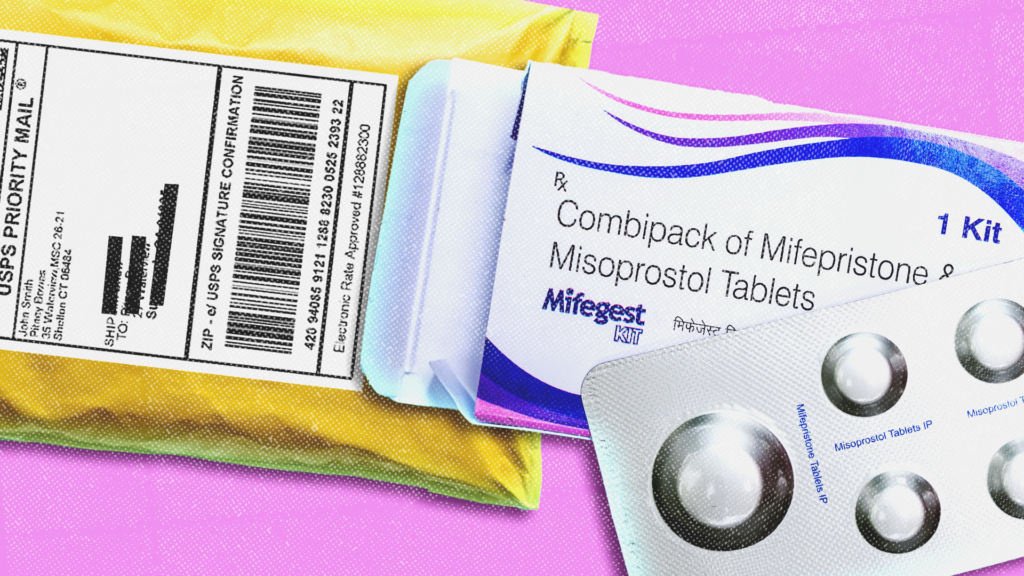
The case concerns the FDA removing an in-person dispensing requirement for abortion pills. Remote prescribing and mail-order pills have become a last resort for abortion access in states with bans. This has made them a major target in ban states like Louisiana.
Last October, Louisiana and Markezich sued the FDA, the Department of Health and Human Services (HHS), and various officials—including Robert F. Kennedy Jr.—over the FDA’s 2023 decision to do away with a requirement that mifepristone must be prescribed and dispensed in person. That decision made permanent a temporary allowance for mail-order prescriptions during the COVID-19 pandemic.
Louisiana alleges that “bad actors have been able to obtain FDA-approved abortion drugs from prescribers in other states and then secretly spike women’s drinks without their knowledge.”
But there simply isn’t any evidence that anything like this is happening at any scale.
Notably, Louisiana does not cite even one such case in its complaint. It simply asserts that this happens and then moves on.
If this sort of thing were happening frequently, we would certainly know about it. These cases would make not just local news but headlines across the country. There would be prosecutions and lawsuits and trials.
But searching Google for stories of men spiking partners’ drinks (or vitamins, or bodies, or anything else) with abortion pills since 2023 turns up only four potential cases out of Texas and three from elsewhere in the country (one in Massachusetts, one in Illinois, and one in Ohio). Some of these allegations are unproven, several took place in states where abortion is legal, and it’s not clear in any of the cases how the pills were obtained and whether remote prescribing had anything to do with it.
A Heritage Foundation report from March turned up just three recent cases (the same ones included in my tally above) of abortion-pill drink spikings and had to reach all the way back to 2007 to come up with four more.
Louisiana also alleges that because of remote prescribing, bad actors have been able to force women—like Markezich—”into taking these drugs against their will.”
Markezich lives in Louisiana, which has one of the nation’s most strict abortion bans. In 2023, she was pregnant and “did not want to have an abortion,” states her complaint. But “under immense pressure and fearing for her safety, Rosalie took abortion drugs that her boyfriend obtained via the U.S. Postal Service from a doctor in California.”
A doctor cannot legally prescribe abortion pills to someone other than the person who intends to take them, so a partner procuring them would either have to swindle a doctor, find a dirty doctor, or pressure their partner into consenting during a telehealth visit.
Only one of those possibilities might be overcome by a return to in-person prescribing only. If a patient were required to meet with a doctor in person to take the pills, it would be difficult for a scheming partner to somehow trick the doctor. But there are other ways of obtaining pills deceptively. And a partner who is intimidating or abusive enough to coerce a partner’s consent to take abortion pills or to remotely ask a doctor for them would likely still feel such pressure if a partner drove them to an abortion clinic.
In Markezich’s case, she said her boyfriend’s sister introduced him to a telehealth service where he used Markezich’s contact information to fill out an online form, presumably pretending to be her. Markezich admits to paying for the pills herself, through her Venmo account, with money the boyfriend provided.
Markezich and Louisiana allege that if “Rosalie would have received the protection of a private in-person medical appointment,” then she would have “been able to tell a doctor that she did not want an abortion” and “the drugs that took her baby’s life would never have been provided.”
Maybe that’s so in Markezich’s case. But I imagine many women in abusive relationships would still feel pressured to tell a doctor whatever their partner wanted them to, because leaving that clinic without taking the pills could still result in more abuse. If a woman was literally being held physically captive by an abusive partner and the abortion doctor visit was their only time away from captivity, maybe the visit would make a difference. But most women in abusive marriages and partnerships are bound to their partners by combinations of love, fear, financial ties, custody concerns, and so on—things that wouldn’t go away just by getting to see a doctor alone.
Besides, an abusive partner intent on coercing an abortion will likely not give up just because pills couldn’t be dispensed legally. They could still find a dirty doctor, or buy mifepristone on the black market, or resort to other means of attempting to induce or coerce an abortion. And some of those options could wind up much more dangerous for the pregnant partner.
The prospect of black-market pills is something that merits serious consideration. We know from experience that prohibition doesn’t end access to a substance—especially when that substance is easily concealed and readily available in parts of the country. Prohibition just makes the whole situation more dangerous.
If mail-order pills are banned, sure, a few potentially abusive partners may be thwarted. But some will turn to black-market pills. And many, many more women seeking abortions will likely turn to black-market pills as well, putting themselves at risk of taking counterfeit or adulterated drugs that could be harmful and make them fearful of seeking help should complications arise.
Requiring in-person prescribing of abortion pills puts many more women in danger than it protects.
Noting that the FDA is actually in the process of reviewing its rules around abortion pills, a U.S. district court granted the federal government’s motion to stay the case pending the FDA’s review. “It is the completion of FDA’s promised good faith, evidence-based, and expeditious review of the mifepristone REMS, not ‘government by lawsuit,’ that this Court finds to be in the public interest,” wrote Judge David C. Joseph in an April 7 decision.
But Louisiana appealed to the U.S. Court of Appeals for the 5th Circuit, which granted its request to halt remote prescribing nationwide as the case plays out.
Two pharmaceutical companies—Danco Laboratories and GenBioPro—that are “intervenor defendants” in this case then asked the Supreme Court for an emergency stay on the 5th Circuit’s order.
The Supreme Court granted the abortion pill manufacturer’s stay request, meaning the revocation of remote prescribing will not take effect just yet. An order signed by Justice Samuel Alito is in effect until early next week.
I am sorry for what Markezich allegedly went through, and, if true, her boyfriend should be punished—just as perpetrators should be punished in the rare cases involving drinks spiked with abortion pills. But the idea that situations like hers could be prevented if pills had to be prescribed in person—or that saving a few women from such situations is worth putting countless more at risk—just doesn’t make sense.
The second phase of New Mexico putting Meta on trial is now underway. An expected three-week trial began Monday, in a case in which Meta—the company behind Facebook, Instagram, and WhatsApp—is accused by New Mexico of being a “public nuisance.”
“Typically, public nuisance cases weigh the impact of activities on shared physical commodities, such as air quality or public spaces — so-called ‘public goods,'” notes Source NM. “The bench trial will thus determine if the state has the power to mitigate the effects of ‘public health, welfare, or safety’ in digital spaces.”
Judge Bryan Biedscheid said in court on Monday that he would not “overreach” in this case and had “some concerns” about the state asking the court to mandate changes to Meta platforms. “I’m probably not the easiest sell on an idea where I would become a one-person legislature, judge and executive branch enforcer of administrative code provisions,” Biedscheid said.
Florida sheriff continues to persecute sex workers for sport: Polk County, Florida, is notorious for conducting massive “human trafficking” stings that mostly just arrest sex workers and their clients, then displaying the results in the most gross and offensive ways. In the latest—which the sheriff’s office dubbed “Polk Around and Find Out”—sheriff’s deputies arrested 266 people, with the aid of the Department of Homeland Security, and put out a graphic with the mugshots of all the arrestees who receive public benefits. Nearly half of those arrested were sex workers. Another 108 people were arrested for solicitation of an undercover cop posing as an adult sex worker.
surprisingly minimal results from school phone bans https://t.co/rCh6FVMab9
— Kelsey Piper (@KelseyTuoc) May 4, 2026
• Utah’s attempt to ban virtual private networks takes effect today. How it goes could be a test case for more such laws in other states.
• The White House is reportedly considering a move to make AI models get government approval before they can be released.
Read the full article here
Fact Checker
Verify the accuracy of this article using AI-powered analysis and real-time sources.