Close Menu
FSNN | Free Speech News NetworkFSNN | Free Speech News Network
  • Home
  • News
    • Politics
    • Legal & Courts
    • Tech & Big Tech
    • Campus & Education
    • Media & Culture
    • Global Free Speech
  • Opinions
    • Debates
  • Video/Live
  • Community
  • Freedom Index
  • About
    • Mission
    • Contact
    • Support
Trending

Bibi Tearing Up the Deal

37 minutes ago

Ethiopian journalist Salsawit Baynesagn detained without charge

44 minutes ago

GoMining challenges Jack Dorsey’s Square with a pure BTC payment rail

55 minutes ago
Facebook X (Twitter) Instagram
Facebook X (Twitter) Discord Telegram
FSNN | Free Speech News NetworkFSNN | Free Speech News Network
Market Data Newsletter
Friday, June 19
  • Home
  • News
    • Politics
    • Legal & Courts
    • Tech & Big Tech
    • Campus & Education
    • Media & Culture
    • Global Free Speech
  • Opinions
    • Debates
  • Video/Live
  • Community
  • Freedom Index
  • About
    • Mission
    • Contact
    • Support
FSNN | Free Speech News NetworkFSNN | Free Speech News Network
Home»News»Media & Culture»Victims of Communism Day – 2026
Media & Culture

Victims of Communism Day – 2026

News RoomBy News Room2 months agoNo Comments6 Mins Read1,838 Views
Share Facebook Twitter Pinterest Copy Link LinkedIn Tumblr Email VKontakte Telegram
Victims of Communism Day – 2026
Share
Facebook Twitter Pinterest Email Copy Link

Listen to the article

0:00
0:00

Key Takeaways

Playback Speed

Select a Voice

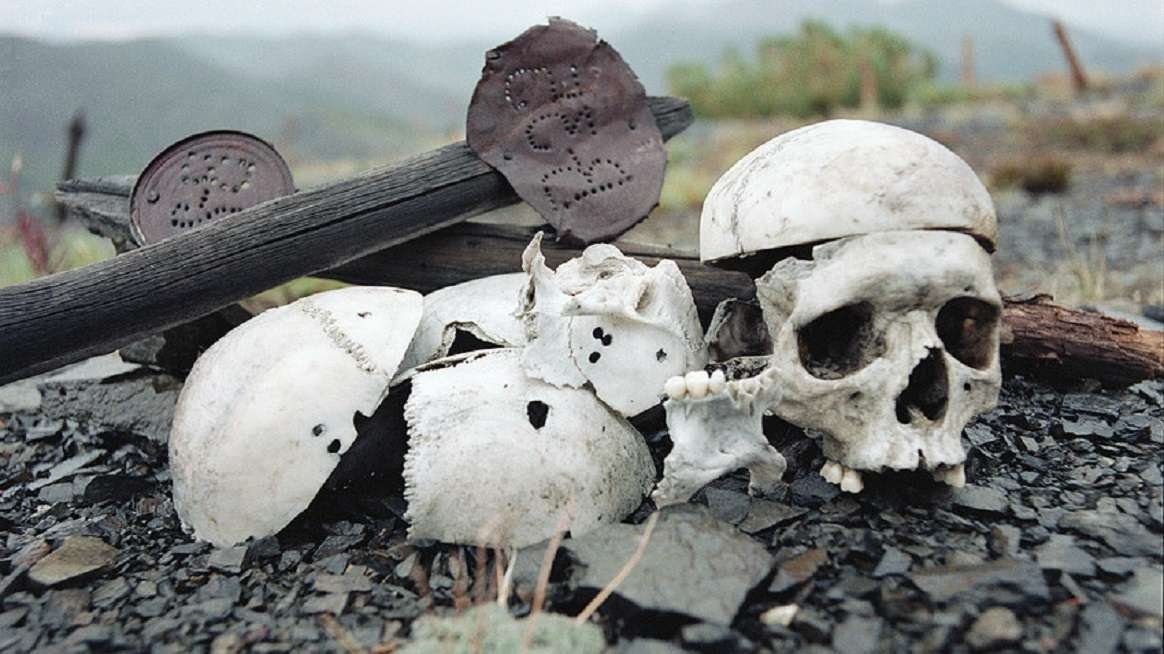
Bones of tortured prisoners. Kolyma Gulag, USSR (Nikolai Nikitin, Tass). (NA)


NOTE: This post largely reprints last year’s Victims of Communism Day post, with some modifications.

Today is May Day. Since 2007, I have advocated using this date as an international Victims of Communism Day. I outlined the rationale for this proposal (which was not my original idea) in my very first post on the subject:

May Day began as a holiday for socialists and labor union activists, not just communists. But over time, the date was taken over by the Soviet Union and other communist regimes and used as a propaganda tool to prop up their [authority]. I suggest that we instead use it as a day to commemorate those regimes’ millions of victims. The authoritative Black Book of Communism estimates the total at 80 to 100 million dead, greater than that caused by all other twentieth century tyrannies combined. We appropriately have a Holocaust Memorial Day. It is equally appropriate to commemorate the victims of the twentieth century’s other great totalitarian tyranny. And May Day is the most fitting day to do so….

Our comparative neglect of communist crimes has serious costs. Victims of Communism Day can serve the dual purpose of appropriately commemorating the millions of victims, and diminishing the likelihood that such atrocities will recur. Just as Holocaust Memorial Day and other similar events promote awareness of the dangers of racism, anti-Semitism, and radical nationalism, so Victims of Communism Day can increase awareness of the dangers of left-wing forms of totalitarianism, and government domination of the economy and civil society.

While communism is most closely associated with Russia, where the first communist regime was established, it had comparably horrendous effects in other nations around the world. The highest death toll for a communist regime was not in Russia, but in China. Mao Zedong’s Great Leap Forward was likely the biggest episode of mass murder in the entire history of the world.

November 7, 2017 was the 100th anniversary of the Bolshevik seizure of power in Russia, which led to the establishment of the first-ever communist regime. On that day, I put up a post outlining some of the lessons to be learned from a century of experience with communism.  The post explains why the lion’s share of the horrors perpetrated by communist regimes were inherent flaws  of the system. For the most part, they cannot be ascribed to circumstantial factors, such as flawed individual leaders, peculiarities of Russian and Chinese culture, or the absence of democracy. Some of these other factors, especially the last, probably did make the situation worse than it might have been otherwise. But, for reasons I explained in the same post, some form of dictatorship or oligarchy is  virtually inevitable in a socialist economic system where the government controls all or nearly all of the economy.

While the influence of communist ideology has declined since its mid-twentieth century peak, it is far from dead. Largely unreformed communist regimes remain in power in Cuba and North Korea. In Venezuela, the Marxist government’s policies have resulted in political repression, the starvation of children, and a massive refugee crisis – the biggest in the history of the Western hemisphere. The removal of President Nicolas Maduro has so far done little to change the nature of that regime.

In Russia, the authoritarian regime of former KGB Colonel Vladimir Putin has embarked on a wholesale whitewashing of communism’s historical record. Putin’s brutal and indefensible invasion of Ukraine owes more to Russian nationalist ideology than communism. But it is nonetheless fed in part by his desire to recapture the supposed power and glory of the Soviet Union, and his long-held belief that the collapse of the USSR was “the greatest geopolitical catastrophe of the century.” It is also telling that most communists in Russia and elsewhere have joined with far-right nationalists in  backing Putin’s line on the war.

In China, the Communist Party remains in power (albeit after having abandoned many of its previous socialist economic policies), and has recently become less tolerant of criticism of the mass murders of the Mao era (part of a more general turn towards greater repression).

China’s horrific repression of the Uighur minority is reminiscent of similar policies under Mao and Stalin, though it has not – so far – reached the level of actual mass murder. But imprisoning over 1 million people in horrific concentration camps is more than bad enough.

Far-left support for Hamas since the horrific October 7, 2023 terrorist attack is yet another reminder of the inherently evil nature of communist ideology. Backing terrorism is part of a long history of support for repression and mass murder. Not all extreme socialists of the type who support Hamas are communists. But the latter are a subset of the former.

In the West, the popularity of “democratic socialism” in some quarters is a sign that many have failed to learn the lessons of the communist experience. Democratic socialism has many of the same flaws as its authoritarian counterpart, and – as the Venezuelan case shows –  is unlikely to stay democratic for long, if implemented.

Victims of Communism Day is also a good time to remember our duty to help those victims. Among other things, it is unjust to deport migrants fleeing oppressive Marxist dictatorships, like those Cuba, Nicaragua and Venezuela, as the Trump Administration seeks to do to hundreds of thousands who entered the US legally under the CNVH program. Trump has recently ramped up efforts to deport Cubans back to their communist oppressors.

In a 2012 post, I explained why May 1 is a better date for Victims of Communism Day than the available alternatives, such as November 7 (the anniversary of the Bolshevik seizure of power in Russia) and August 23 (the anniversary of the Nazi-Soviet Pact). I also addressed various possible objections to using May Day, including claims that the date should be reserved for the celebration of labor unions.

But, as explained in my 2013 Victims of Communism Day post, I would be happy to support a different date if it turns out to be easier to build a consensus around it. If another date is chosen, I would prefer November 7; not out of any desire to diminish the significance of communist atrocities in other nations, but because it marks the establishment of the very first communist regime. November 7 has in fact been declared Victims of Communism Memorial Day by three state legislatures.

If this approach continues to spread, I would be happy to switch to November 7, even though May 1 might be still more appropriate. For that reason, I have adopted the practice of also commemorating the victims of communism on November 7.

I  would also be happy to back almost any other date that could command broad support. Unless and until that happens, however, May 1 will continue to be Victims of Communism Day at the Volokh Conspiracy.

Read the full article here

Fact Checker

Verify the accuracy of this article using AI-powered analysis and real-time sources.

Get Your Fact Check Report

Enter your email to receive detailed fact-checking analysis

5 free reports remaining

Continue with Full Access

You've used your 5 free reports. Sign up for unlimited access!

Already have an account? Sign in here

#MediaBias #MediaEthics #NarrativeControl #NewsAnalysis #PressFreedom
Share. Facebook Twitter Pinterest LinkedIn Tumblr Email Telegram Copy Link
News Room
  • Website
  • Facebook
  • X (Twitter)
  • Instagram
  • LinkedIn

The FSNN News Room is the voice of our in-house journalists, editors, and researchers. We deliver timely, unbiased reporting at the crossroads of finance, cryptocurrency, and global politics, providing clear, fact-driven analysis free from agendas.

Related Articles

Media & Culture

Bibi Tearing Up the Deal

37 minutes ago
Media & Culture

Celebrating American Freedom Means Celebrating Juneteenth

2 hours ago
Cryptocurrency & Free Speech Finance

Texas Brothers Plead Guilty to $8M Armed Crypto Kidnapping

2 hours ago
Media & Culture

Did California’s Gubernatorial Race Reveal the Limits of ‘Abundance’ Politics on the Left?

3 hours ago
Media & Culture

Review: The Short Life of a Formerly Enslaved Poet

4 hours ago
Cryptocurrency & Free Speech Finance

Franklin Templeton Files for ETFs That Funnel Stock Dividends Into Bitcoin

4 hours ago
Add A Comment

Comments are closed.

Editors Picks

Ethiopian journalist Salsawit Baynesagn detained without charge

44 minutes ago

GoMining challenges Jack Dorsey’s Square with a pure BTC payment rail

55 minutes ago

Former Ethereum Foundation Contributor Warns of ‘Slow-Burning’ Funding Crisis

57 minutes ago

Celebrating American Freedom Means Celebrating Juneteenth

2 hours ago
Latest Posts

A tiny proportion of sexual violence cases in Tigray have led to prosecution This article is written in two voices: First, Birhan Gebrekirstos Mezgbo, a researcher and advocate who lived through the Tigray war, then Veronica Blecker, director of the upcoming documentary on sexual violence in Tigray, Not Ours to Carry. Birhan: The moment everything shut down, it felt like the world had disappeared around us. No phone. No internet. No transportation. No banking. No way to know who was alive and who was not. My mother and sister were only around 120 kilometres away from me, but suddenly they felt unreachable, like they were in another universe. I couldn’t call them, I couldn’t travel to see them, and I had no way to know if they were safe. That silence was one of the hardest things I have ever lived through. Honestly, I don’t think the word “blackout” is enough to describe it. What made it worse was knowing that this darkness was not just about communication being cut. The darkness itself became dangerous. Everywhere you turned there was fear. Soldiers, killers, rapists, all operating inside this silence from which nobody could call for help or even tell the world what was happening. The blackout became part of the violence. At the time, I was meeting with survivors of conflict-related sexual and gender-based violence. I still remember walking for almost three hours to reach one survivor after being told where she was staying. When I arrived, she was gone. I walked that same route again and again, trying to find her. I never did. Veronica: The blackout was not simply the absence of communication. It was a weapon. The violence happened inside a closed circle, surrounded by guns and with no way in or out – not only from Tigray, but even within Tigray itself. Phone lines were cut, the internet was shut down, journalists were expelled, roads were blocked. The darkness was deliberate. It ensured that violence could happen unseen and unheard. Birhan: For survivors of conflict-related sexual violence, this darkness was devastating. Accessing medical care, reporting abuse, or seeking support became almost impossible. Ayder Hospital in Mekelle was one of the few facilities still functioning, sustained largely by the commitment of volunteer doctors and nurses. But reaching it could take weeks or even months. Along the way, survivors often faced even more violence. I still think about Abeba. She was raped three different times while trying to reach help in Mekelle. I often wonder whether her life would have been different if support had been available closer to where she lived. Instead, the journey to seek care exposed her to further harm. Eventually, she lost her life. For me, her story captures what the blackout did to so many survivors. The violence did not end with the assault. The darkness allowed it to continue. Veronica: Between 2020 and 2022, an estimated 600,000 people were killed in Tigray. The Commission of Inquiry on the Situation in the Tigray Region documented more than 280,000 cases of conflict-related sexual violence. A mere 25 military convictions have followed. Even if survivors could bring themselves to speak, to tell the world what was happening and what had happened to them, they are trapped inside a system of fear. In a system where armed men control every road and every community, speaking out can feel like a death sentence. I arrived after the blackout had already done its work. The violence had happened in the dark. There was physical evidence – detention sites, signs of torture, a landscape scarred by war. But there was little footage of the violence as it happened. The blackout had made sure of this. Every editorial decision – how to film testimony, how to protect identities, how to structure the narrative – was made in the knowledge that the official position was that there was nothing to document. These were the decisions that shaped Not Ours to Carry. The film captures what denial looks like in practice. One of the protagonists stands before the African Commission on Human Rights and reads survivor testimony into the official record. Later on, in the same session, the Ethiopian delegation responds on camera, rejecting in its totality what they call “baseless allegations”. The protagonist’s verdict: “Every time I go to these institutions, I feel like a clown in somebody’s circus. Going there and speaking is doing nothing but adding to their show.” Both governments were offered the right to reply. Ethiopia rejected the allegations in their totality. Eritrea did not respond. The denial is not historical. It is ongoing. What we documented is not only a record of violence. It is a record of censorship: the systematic suppression of evidence, testimony, and truth by governments that knew exactly what silence would allow. Survivors of conflict-related sexual violence carry two wounds. The first is what has been done to them. The second is being told that it didn’t happen – being told this by perpetrators, by institutions, by communities that impose shame rather than offer compassion and justice. The blackout prevented documentation. Then the world chose not to look. The silence did not end when the internet came back on. Birhan: I keep speaking because the difference between me and many of the women whose stories I carry is often nothing more than luck. I witnessed their pain and suffering, and I cannot simply move on with my life and ignore it. This is not only my voice; it carries the voices of hundreds of thousands of women and girls. From four-year-old children to grandmothers in their eighties. There can be no real accountability, and no meaningful future, if those voices continue to be ignored. That silence is not only theirs to break. It is ours too. Not Ours to Carry is premiering on 6 July at the Sevil International Women’s Documentary Film Festival, Azerbaijan’s only independent documentary film festival dedicated to women’s issues and gender equality If readers want to support survivors directly, donations go to One Stop Centres in Tigray here: https://www.notourstocarry.com/donate READ MORE

2 hours ago

Franklin Templeton proposes new funds that turn dividends into BTC: Crypto Daily

2 hours ago

Bitcoin’s ‘Deep Value’ Discount Faces Hawkish Fed Test: Bitwise

2 hours ago

Subscribe to News

Get the latest news and updates directly to your inbox.

At FSNN – Free Speech News Network, we deliver unfiltered reporting and in-depth analysis on the stories that matter most. From breaking headlines to global perspectives, our mission is to keep you informed, empowered, and connected.

FSNN.net is owned and operated by GlobalBoost Media
, an independent media organization dedicated to advancing transparency, free expression, and factual journalism across the digital landscape.

Facebook X (Twitter) Discord Telegram
Latest News

Bibi Tearing Up the Deal

37 minutes ago

Ethiopian journalist Salsawit Baynesagn detained without charge

44 minutes ago

GoMining challenges Jack Dorsey’s Square with a pure BTC payment rail

55 minutes ago

Subscribe to Updates

Get the latest news and updates directly to your inbox.

© 2026 GlobalBoost Media. All Rights Reserved.
  • Privacy Policy
  • Terms of Service
  • Our Authors
  • Contact

Type above and press Enter to search. Press Esc to cancel.

🍪

Cookies

We and our selected partners wish to use cookies to collect information about you for functional purposes and statistical marketing. You may not give us your consent for certain purposes by selecting an option and you can withdraw your consent at any time via the cookie icon.

Cookie Preferences

Manage Cookies

Cookies are small text that can be used by websites to make the user experience more efficient. The law states that we may store cookies on your device if they are strictly necessary for the operation of this site. For all other types of cookies, we need your permission. This site uses various types of cookies. Some cookies are placed by third party services that appear on our pages.

Your permission applies to the following domains:

  • https://fsnn.net
Necessary
Necessary cookies help make a website usable by enabling basic functions like page navigation and access to secure areas of the website. The website cannot function properly without these cookies.
Statistic
Statistic cookies help website owners to understand how visitors interact with websites by collecting and reporting information anonymously.
Preferences
Preference cookies enable a website to remember information that changes the way the website behaves or looks, like your preferred language or the region that you are in.
Marketing
Marketing cookies are used to track visitors across websites. The intention is to display ads that are relevant and engaging for the individual user and thereby more valuable for publishers and third party advertisers.