

 Freedom Index
Listen to the article
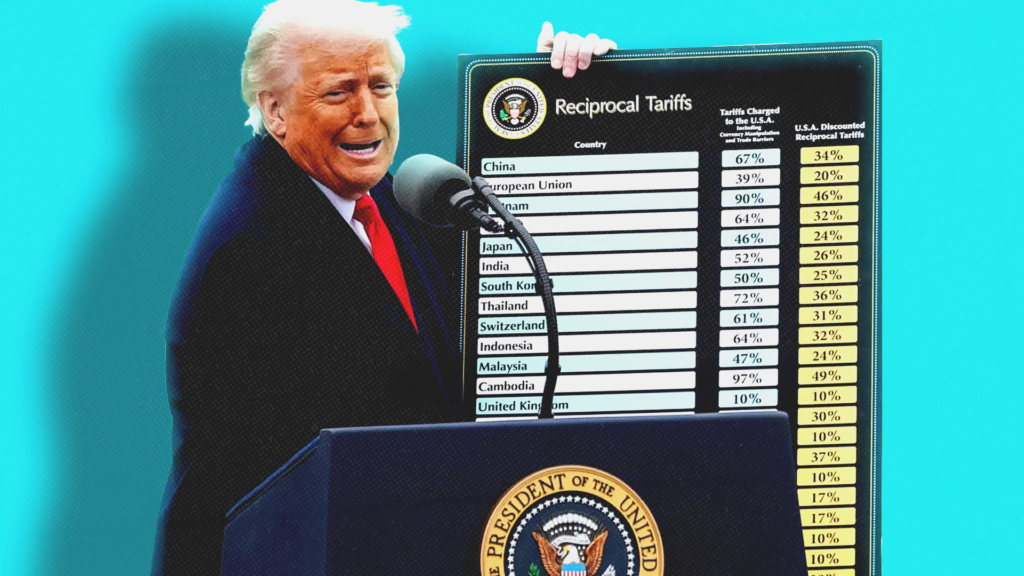
When President Donald Trump announced his Liberation Day tariffs last year, he promised that the higher taxes would cause manufacturing jobs to “come roaring back into our country.”
And just last week, the Trump administration claimed that was happening. Trump’s “policies are delivering the largest reshoring wave in American history,” the White House claimed, pointing to a number of promised investments by companies like Apple and U.S. Steel.
A new independent assessment calls that conclusion into question.
Trump’s tariffs “didn’t seem to drive significant near-term increases in reshoring or reduce America’s total import dependence,” concludes a new report from Kearney, a global management consulting firm.
However, the tariffs did have a significant impact on where the U.S. is getting its imports.
Imports from China declined by $135 billion last year relative to 2024, a reduction of about 10 percent. Meanwhile, imports from the 13 other Asian nations included in Kearney’s report increased by a cumulative $193 billion.
Those figures suggest that more international firms are shifting production out of mainland China and into other countries with low-cost manufacturing, like Vietnam, Malaysia, and India—but not bringing production back to the United States.
Meanwhile, American imports from Canada declined by $25 billion last year, while imports from Europe increased by about $62 billion despite higher tariffs and greater tensions between the Trump administration and European leaders. However, the Kearney report notes that much of the increase in European imports occurred in the first quarter of the year—possibly the result of companies trying to surge imports into the U.S. before the announced tariffs took effect—and that overall U.S.-European trade declined for the rest of the year.
So what about all that investment in American manufacturing that the Trump administration keeps bragging about?
That is happening. The Kearney report notes that capital investment in U.S. manufacturing has tripled since 2020, but that spending has resulted in just a 1.5 percent boost to U.S. manufacturing capacity. In some cases, that’s because it takes years for investments to turn into working factories.
In other cases, however, it’s because other government policies are getting in the way—including the tariffs.
The Kearney report points out that “structural constraints such as labor costs, infrastructure limitations, and workforce availability” act as “persistent barriers” to reshoring.
“But perhaps the greatest need is for clarity and stability, which are easy enough to attain in concept, but have been elusive in the past 12 months,” the Kearney report concludes.
Trump’s tariffs might have been a costly way to shift some manufacturing away from China, but the Kearney report is the latest indication that Trump’s trade policies are not accomplishing their primary goals. In fact, by creating instability and uncertainty—and by raising the cost of raw materials and contributing to rising inflation—the tariffs are seemingly creating headwinds for reshoring manufacturing jobs.
The White House will continue to hype any new investments in American factories, for obvious reasons. But it is becoming obvious that those investments are happening not because of the tariffs, but despite them.
Read the full article here
Fact Checker
Verify the accuracy of this article using AI-powered analysis and real-time sources.